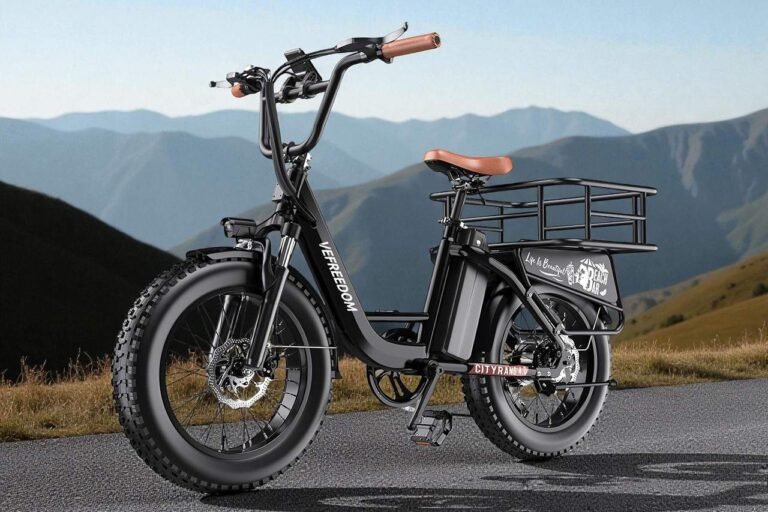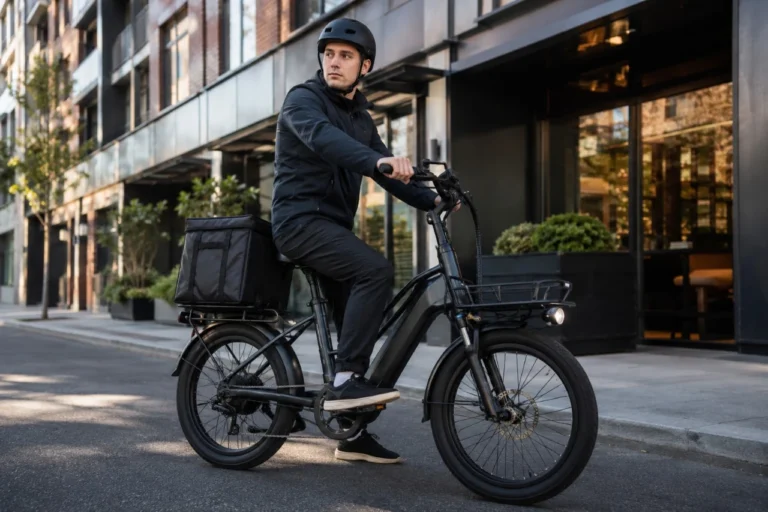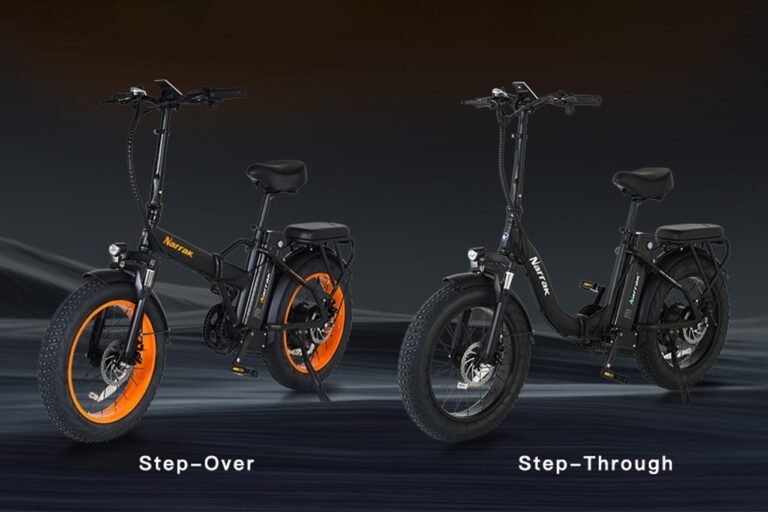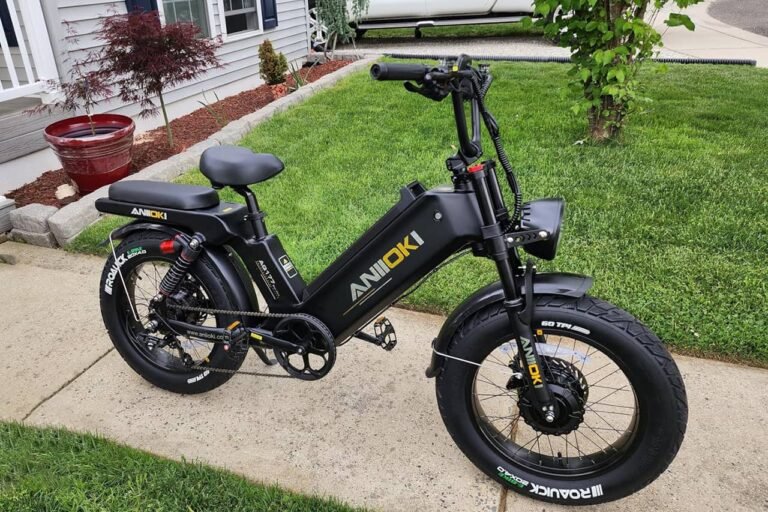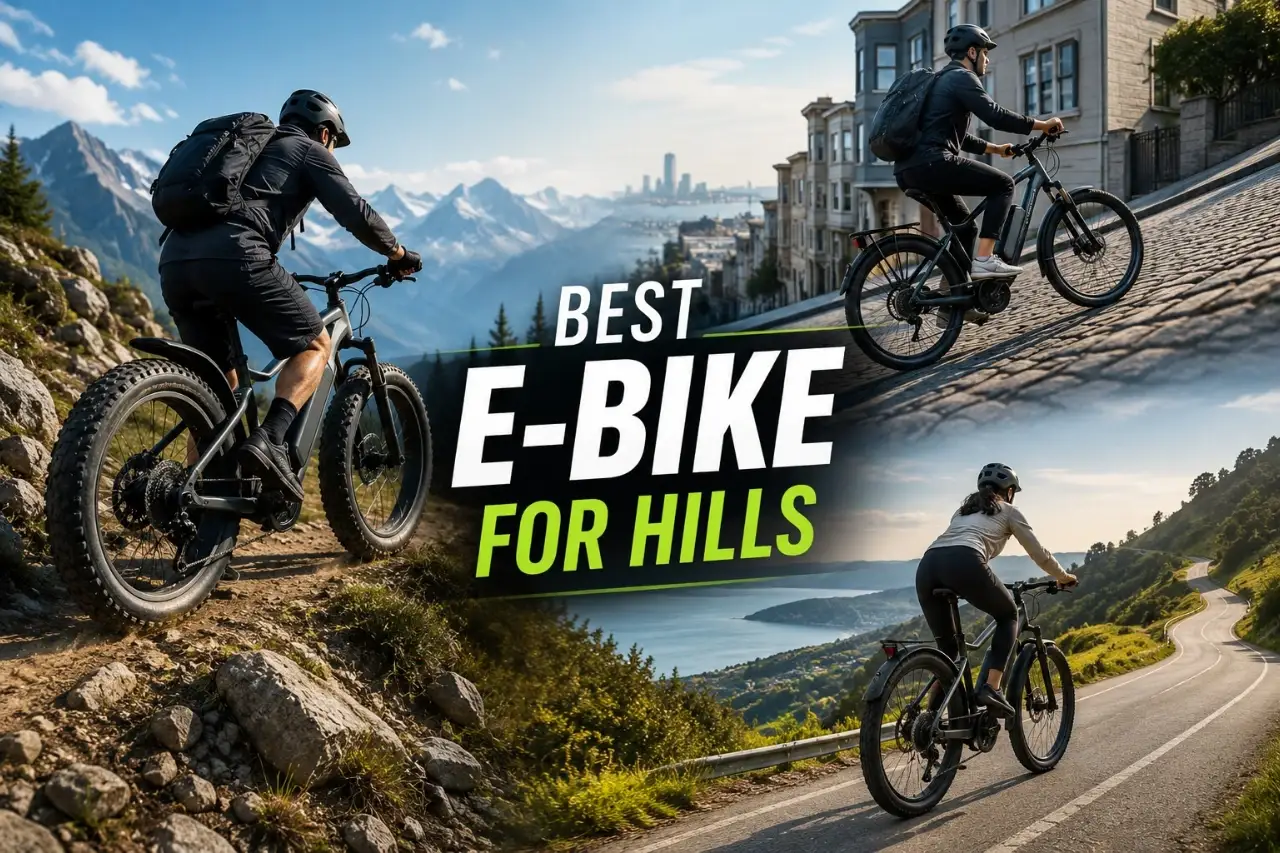
Finding an e-bike that handles hills well requires more than just picking the highest wattage number on the spec sheet. Motor torque, battery capacity, controller behavior, frame weight, tire size, and braking all contribute to how a bike actually performs on a climb. The single most important spec for hill riding is torque, measured in Newton-meters, not peak wattage, because torque determines how much force the motor applies to move you uphill.
Peak wattage and nominal wattage are not the same thing. A motor rated at 4,000W peak may run at 750W to 1,000W under continuous load. That burst of peak power helps on short, steep pitches, but sustained climbs depend on how the controller manages continuous output. Torque figures in the 80Nm to 160Nm range provide meaningful hill-climbing force for most adult riders. Riders carrying cargo or weighing over 220 pounds should prioritize higher torque ratings and larger battery capacity to avoid range loss on repeated climbs.
Braking matters on hills too. Hydraulic disc brakes, especially four-piston systems, give you shorter stopping distances on descents and better modulation in wet conditions. Fat tires add grip on loose or uneven terrain, though they increase rolling resistance on pavement.
GoEBikeLife assembled this guide to help urban commuters, weekend riders, and heavier cyclists match a bike to their actual terrain and load. We prioritize practical hill-climbing suitability, real-world range expectations, and rider fit over raw marketing numbers.
Best for long-range mountain riding: FREESKY Alaska Pro Dual Battery E-Bike
Best for trail and commute versatility: FREESKY Swift Horse Ultra 3500W E-Bike
Best for folding and urban commuting: Heybike Ranger 3.0 Pro Foldable E-Bike
Best for dual-motor off-road power: PUJH 6000W Dual Motor Fat Tire E-Bike
Best for speed-focused riders: E·Bycco 9000W Peak Dual Motor E-Bike
Best for maximum raw power output: XVYOOYVX 9000W Peak Dual Motor E-Bike
1. FREESKY Alaska Pro Dual Battery E-Bike

Best for: Long-range mountain and commute riding with minimal range anxiety
| Spec | Detail |
|---|---|
| Motor | 4,500W peak, single hub motor |
| Torque | 160Nm |
| Battery | 48V 45Ah dual (2,000Wh total) |
| Range | 120 to 200+ miles (claimed, PAS) |
| Top Speed | 40MPH |
| Tires | 26-inch fat tire |
| Suspension | Full dual suspension |
| Brakes | 4-piston hydraulic disc |
| Safety Cert | UL 2849 by TUV |
The Alaska Pro pairs a large-torque single motor with a dual-battery system that few bikes in its price range can match on paper. At 160Nm, it has enough torque to climb 45-degree grades, and the 2,000Wh total capacity means repeated climbs drain the battery far less than single-battery setups.
The 4-piston hydraulic brakes and full air-adjustable suspension make descents manageable. The smart key card startup and integrated lighting add practical commute convenience.
| Preview | Product | Price | |
|---|---|---|---|

| FREESKY 4000W Dual Battery 48V 45AH Electric Bike 200 Miles | 40MPH, 26″ Fat Tire Mountain… | $1,599.00 | View on Amazon |
Strengths:
- Dual-battery system extends range significantly on hilly routes
- 160Nm torque handles steep sustained climbs
- TUV-certified electrical system adds safety confidence
- Arrives 85% assembled with a two-year frame and motor warranty
Drawbacks:
- Heavy overall weight typical of dual-battery fat-tire bikes
- Claimed range figures are based on ideal PAS conditions; expect less at higher speeds or heavier loads
Ideal rider: Heavier adults, long-distance commuters, or off-road riders who need range and climb confidence without swapping batteries mid-ride.
Who should skip it: Riders needing a lightweight or compact bike for storage in tight spaces.
Verdict: GoEBikeLife recommends the Alaska Pro for riders who want a well-equipped single-motor bike with genuine long-range hill capability. The dual-battery setup is the standout feature here.
2. FREESKY Swift Horse Ultra E-Bike

Best for: All-terrain riders who want a proven Bafang motor and strong hill performance
| Spec | Detail |
|---|---|
| Motor | 3,500W peak Bafang, hub drive |
| Torque | 140Nm |
| Battery | 48V 35Ah Samsung cells (1,440Wh) |
| Range | 85 to 140 miles (claimed, PAS) |
| Top Speed | 38MPH |
| Tires | 26×4-inch CST fat tire |
| Suspension | Full dual suspension |
| Brakes | 4-piston hydraulic disc |
| Safety Cert | UL 2849 by TUV |
The Swift Horse Ultra uses a Bafang motor, a well-regarded brand in the ebike drivetrain space known for durable, consistent output. At 140Nm, the torque is high enough for 40-degree slopes, and the 35Ah Samsung-cell battery offers substantial capacity for riders tackling long climbs.
Note that the PAS mode is speed-limited by default and requires a manual unlock for full speed. Throttle-only mode caps at 20MPH. Buyers should factor that in if they plan to use throttle for hill starts.
| Preview | Product | Price | |
|---|---|---|---|

| FREESKY Electric Bike for Adults, 4000W BAFANG Motor, 48V 35Ah Battery | 38+MPH, 140 Miles… | $1,399.00 | View on Amazon |
Strengths:
- Trusted Bafang motor with overheating protection
- Samsung-cell battery with TUV certification adds reliability
- Integrated turn signals, brake lights, and swipe-to-lock system
- 400-pound weight capacity supports heavier riders
Drawbacks:
- Speed unlock step required for full PAS performance
- Range figures are based on a 75kg rider in PAS mode; expect less at heavier weights
Ideal rider: Riders in the 200-to-350-pound range who want a capable, reliable motor they can trust on daily hilly commutes or trail rides.
Who should skip it: Riders who want plug-and-ride simplicity without any setup steps to unlock top speed.
Verdict: A well-matched option for heavier riders who want Bafang reliability and strong hill torque at a competitive price point.
3. Heybike Ranger 3.0 Pro Foldable E-Bike
Best for: Urban commuters who need a foldable bike that still handles moderate hills
| Spec | Detail |
|---|---|
| Motor | 1,200W peak hub motor |
| Torque | 85Nm |
| Battery | 720Wh removable, IP65-rated |
| Range | Up to 90 miles (claimed, PAS) |
| Top Speed | 28MPH |
| Tires | 20×4-inch fat tire |
| Suspension | Full dual suspension |
| Brakes | Dual hydraulic disc, 2.3mm rotors |
| Gearing | Shimano 8-speed |
The Ranger 3.0 Pro is the compact, foldable option in this lineup. Its 85Nm torque is lower than the mountain-focused bikes here, but it handles city hills and moderate suburban grades well for most average-weight riders. The step-through frame and 10-second fold make it genuinely practical for transit-connected commutes.
The NFC unlock and Heybike app integration are useful quality-of-life features. The 720Wh battery is smaller than the mountain bikes here, so longer hilly routes will reduce range more noticeably.
| Preview | Product | Price | |
|---|---|---|---|

| Heybike Ranger 3.0 Pro Adult Electric Bike 28MPH 90Miles, 1200W Peak Motor, 720WH… | $1,499.00 | View on Amazon |
Strengths:
- Folds in about 10 seconds for storage or transit use
- Step-through frame suits a wide range of riders, including older adults
- Hydraulic brakes with thickened rotors perform well on descents
- NFC and app control add modern convenience
Drawbacks:
- 85Nm torque is adequate but will feel strained on steep, sustained grades
- 720Wh battery capacity is modest compared to mountain-focused options
- Fewer reviews than the other bikes in this guide
Ideal rider: City commuters or recreational riders dealing with rolling hills and occasional steep streets, especially those who need to fold and store the bike.
Who should skip it: Riders tackling long mountain climbs or carrying heavy loads regularly.
Verdict: The Ranger 3.0 Pro is a practical, well-designed folder for urban hill use. It is not a mountain bike replacement, but it handles city terrain confidently.
4. PUJH 6000W Dual Motor Fat Tire E-Bike
Best for: Off-road riders who want dual-motor power and rugged terrain capability
| Spec | Detail |
|---|---|
| Motor | 4,000W peak dual hub motors |
| Torque | 160Nm |
| Battery | 52V 25Ah (1,300Wh) |
| Range | 40 to 110 miles (claimed) |
| Top Speed | 38MPH |
| Tires | 24×4-inch fat tire |
| Suspension | Full, 7-level system |
| Brakes | Dual hydraulic disc |
| Load Capacity | 330 pounds |
The PUJH dual-motor bike gives riders the option to run one or both motors depending on terrain. Single-motor mode conserves battery on moderate grades; dual-motor mode unlocks full torque for steep or loose terrain. That flexibility is a practical advantage on varied off-road routes.
The 7-level suspension system, which includes front fork shocks, rear shock, and seat springs, is more layered than most bikes here. The 1,300Wh battery is smaller than the FREESKY dual-battery bikes, so long-range hilly rides may require planning.
| Preview | Product | Price | |
|---|---|---|---|

| PUJH 8000W Adults Dual Motor E-Bike Up to 100Mi 60V 24″ Fat Tire | 60V 20Ah Fast Electric… | $1,099.00 $799.00 | View on Amazon |
Strengths:
- Dual-motor flexibility lets riders manage battery use strategically
- 330-pound load capacity supports heavier riders and light cargo
- Generous accessory package includes phone holder, lock, pump, and spare tube
- 7-speed derailleur with trigger shifter suits off-road use
Drawbacks:
- Switching between motor modes is reported as non-intuitive by some riders
- 1,300Wh battery capacity is modest for sustained dual-motor use
- Minimum user height listed at 5 feet 5 inches; may not suit shorter riders
Ideal rider: Off-road enthusiasts and heavier riders who want dual-motor grunt and adjustable suspension for trail use.
Who should skip it: Commuters who prefer simple, straightforward controls or riders who need a lighter bike.
Verdict: The PUJH delivers solid dual-motor hill capability at a competitive price, though the mode-switching interface may require a learning curve.
5. E·Bycco 9000W Peak Dual Motor E-Bike

Best for: Speed-focused riders who want dual-motor performance and aggressive hill starts
| Spec | Detail |
|---|---|
| Motor | 9,000W peak dual motors |
| Torque | 200Nm |
| Battery | 52V 32Ah (1,664Wh) |
| Range | 25 to 100 miles (varies by motor mode) |
| Top Speed | 45MPH (no load) / 40MPH (loaded) |
| Tires | 24-inch fat tire |
| Suspension | Full, lockable front fork and rear hydraulic |
| Brakes | Dual hydraulic disc |
| Load Capacity | 330 pounds |
The E·Bycco EB7Pro claims 200Nm of torque across its dual motors, which is the highest torque figure in this roundup. On steep hills, that means strong initial acceleration and confident climbing even with a heavier rider. One reviewer noted reaching speeds beyond the claimed top speed, though real-world output may vary.
One independent reviewer with prior ebike industry experience noted the continuous wattage may be lower than the peak spec suggests. That said, at this price point, the bike delivers meaningful hill performance for most riders.
| Preview | Product | Price | |
|---|---|---|---|

| E·Bycco 9000W Peak Dual Motor Electric Bike for Adults, 52V 32AH Battery, Max 45-50MPH… | $1,299.00 | View on Amazon |
Strengths:
- 200Nm torque is well-suited for aggressive climbs
- Lockable, adjustable front fork improves off-road comfort
- Removable and lockable 52V 32Ah battery offers decent range in single-motor mode
- 90% pre-assembled; includes phone holder with USB charging port
Drawbacks:
- Peak wattage claims may overstate real continuous output
- Dual-motor mode reduces range significantly (25 to 60 miles)
- Only a one-year warranty compared to the two-year coverage on the FREESKY bikes
Ideal rider: Riders who prioritize climbing torque and higher speeds and are comfortable with the trade-off of shorter range in full-power mode.
Who should skip it: Riders who need long-range reliability on multi-hour hilly routes without charging stops.
Verdict: The E·Bycco offers strong torque numbers and appealing speed, but buyers should weigh the range trade-off in dual-motor mode and verify realistic continuous output expectations.
6. XVYOOYVX 9000W Peak Dual Motor E-Bike

Best for: Power-hungry riders who want the highest peak output in this price range
| Spec | Detail |
|---|---|
| Motor | 9,000W peak dual motors |
| Torque | 220Nm |
| Battery | 58V 1,972Wh |
| Range | 35 to 105 miles (varies by mode) |
| Top Speed | 47MPH |
| Tires | 24×4-inch fat tire |
| Suspension | Full, lockable front fork and rear hydraulic |
| Brakes | Hydraulic disc |
| Load Capacity | 330 pounds |
The XVYOOYVX leads this group on peak wattage and torque figures, with 220Nm claimed across dual motors and a 58V battery system. First-time ebike riders report it accelerates faster than a moped. The 600-lumen headlight and six distinct riding modes including dual-motor pure electric and walk assist add versatility.
It carries the fewest reviews among the bikes here and a somewhat lower average rating, which warrants added caution for buyers who value established track records.
| Preview | Product | Price | |
|---|---|---|---|

| XVYOOYVX 9000W Peak Electric Bike for Adults,58V Max-Output 1972Wh Dual Motor Ebike,47MPH… | $1,059.00 | View on Amazon |
Strengths:
- Highest claimed peak torque in this roundup (220Nm)
- 1,972Wh battery is the largest in this guide
- Six riding modes offer broad adaptability across terrains
- Includes a comprehensive accessory package (rack, fenders, phone holder, pump)
Drawbacks:
- Lower average rating and fewer reviews than the other options here
- Packaging quality has drawn some criticism from buyers
- Handlebar installation reported as awkward by some assemblers
- Charging takes 6 to 10 hours
Ideal rider: Experienced ebike riders who want maximum peak power and large battery capacity and can tolerate some setup challenges.
Who should skip it: New ebike riders or those who want a well-tested, highly reviewed option backed by a robust warranty.
Verdict: The XVYOOYVX has strong specs on paper, but its limited review base means less certainty about long-term reliability. Worth considering for experienced riders who want raw power and are comfortable with some assembly trial and error.
Buying Guide
What to Look for in an E-Bike for Hills
Choosing an e-bike for hilly terrain means looking past the peak wattage headline. The factors below are what GoEBikeLife uses in our buying criteria.
Motor torque is the key hill metric. Torque (measured in Nm) is how hard the motor pushes the wheel, not just how fast it spins. For moderate hills, 80Nm to 100Nm is adequate. For steep grades or heavier riders, look for 140Nm or higher.
Peak vs. nominal wattage. Most e-bikes advertise peak wattage, which is the maximum the motor can briefly sustain. Nominal wattage is the continuous operating power. A 4,000W peak motor may run at 750W to 1,200W continuously. Both numbers matter for sustained climbs.
Battery capacity (Wh) and range. Hills drain batteries faster than flat ground. A larger Wh figure means more reserve for repeated climbs. As a rough guide, 1,000Wh or more is preferable for hilly daily riding, and 1,500Wh or above suits long-distance or multi-climb routes.
| Rider Use Case | Suggested Torque | Suggested Battery |
|---|---|---|
| Light urban hills (city commuter) | 60 to 85Nm | 500 to 800Wh |
| Moderate hills (suburban/trail) | 100 to 140Nm | 900 to 1,400Wh |
| Steep or long climbs | 140 to 200Nm+ | 1,400Wh+ |
| Heavier riders (220+ lbs) on hills | 140Nm minimum | 1,500Wh+ preferred |
Braking on descents. Hydraulic disc brakes, especially multi-piston systems, offer better modulation and shorter stopping distances than mechanical disc brakes. On steep descents, this matters significantly.
Suspension type. Full suspension (front fork and rear shock) reduces fatigue on rough climbs and makes descents more controlled. For road and paved hill commuting, a quality front fork alone may suffice.
Gearing. Hub-drive motors handle gearing internally, while mid-drive motors (like the Bafang in the Swift Horse Ultra) interact with the bike’s gear system. More gears mean finer control on sustained climbs.
Frame weight and rider capacity. Heavier frames require more battery energy to move uphill. Check the maximum weight rating, which includes rider plus cargo. Most bikes here support 300 to 330 pounds.
Safety certifications. UL 2849 (full electrical system) and UL 2271 (battery pack), certified by testing bodies like TUV, are meaningful indicators of electrical safety for regular use.
Frequently Asked Questions
What type of e-bike is best for hills?
Fat tire e-bikes and mountain e-bikes with high-torque hub or mid-drive motors are generally the best choice for hilly terrain.
Full suspension and hydraulic brakes add control on both climbs and descents.
The key is prioritizing torque (Nm) and battery capacity (Wh) over raw peak wattage alone.
Is a 500W e-bike enough for hills?
A 500W nominal motor can handle gentle to moderate grades for average-weight riders (under 180 lbs) on shorter climbs.
On sustained steep hills or with heavier loads, a 500W motor may overheat or slow significantly.
Riders in hilly areas generally benefit from 750W nominal or higher.
Is a 750W e-bike good for steep hills?
A 750W nominal motor handles many residential and moderate trail climbs competently, especially with good torque figures (80Nm and above).
On very steep grades (over 20 to 25 percent incline) or with riders above 220 pounds, performance will vary and a higher-torque option may be more reliable.
Do fat tire e-bikes climb hills well?
Fat tires improve traction on loose, muddy, or uneven terrain, which helps on off-road climbs.
On paved hills, fat tires add rolling resistance, which can slightly reduce efficiency.
The motor and torque rating matter more than tire width for raw climbing ability on pavement.
How much torque do I need for hill riding?
For casual city hills, 60Nm to 85Nm is typically adequate. For moderate trail or suburban grade climbs, 100Nm to 140Nm gives a comfortable margin.
For steep mountain terrain or riders over 220 pounds, 140Nm to 200Nm or more provides reliable, sustained climbing power.
What should heavier riders look for in an e-bike for hills?
Heavier riders (220 pounds and above) should prioritize a confirmed weight capacity above their body weight plus gear, high torque ratings (140Nm minimum), and a battery capacity of at least 1,400Wh to offset the increased energy demand on climbs.
A robust aluminum frame and hydraulic brakes are also important for safety and durability under higher loads.
GoEBikeLife publishes independent e-bike reviews, comparisons, and practical buying guides. Some links on this page are affiliate links. If you make a purchase through an eligible link, we may earn a commission at no additional cost to you.