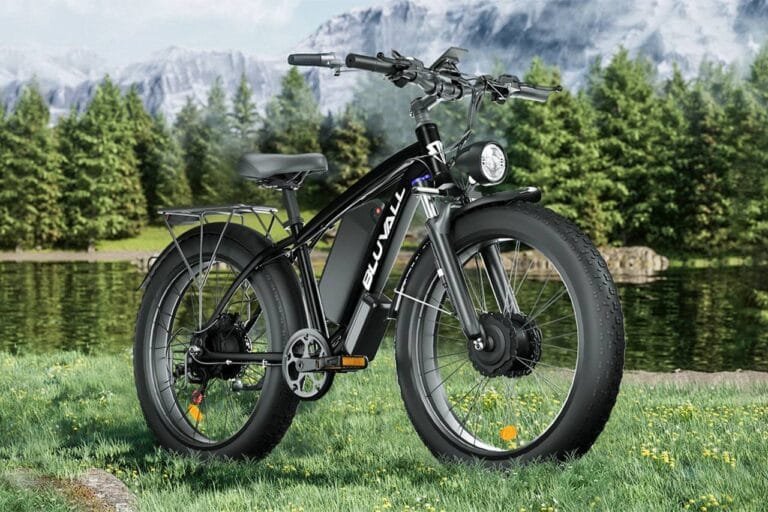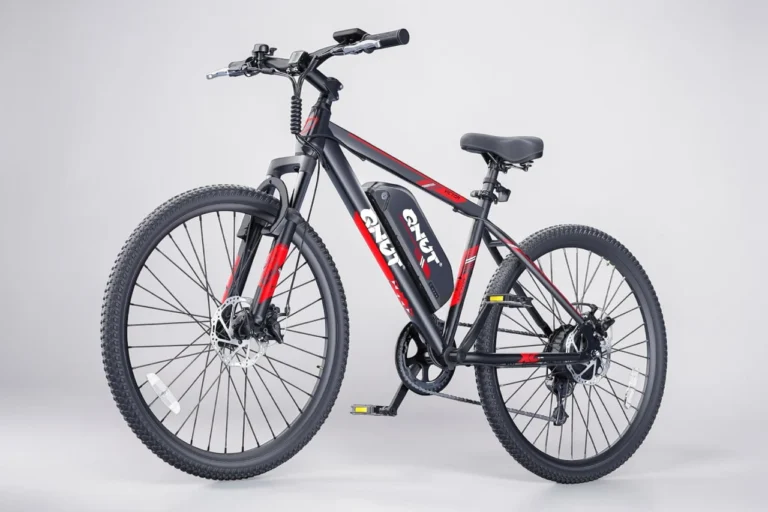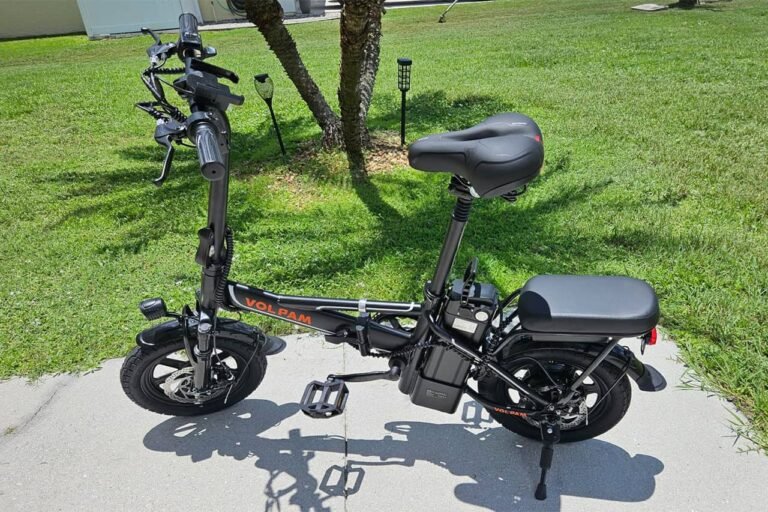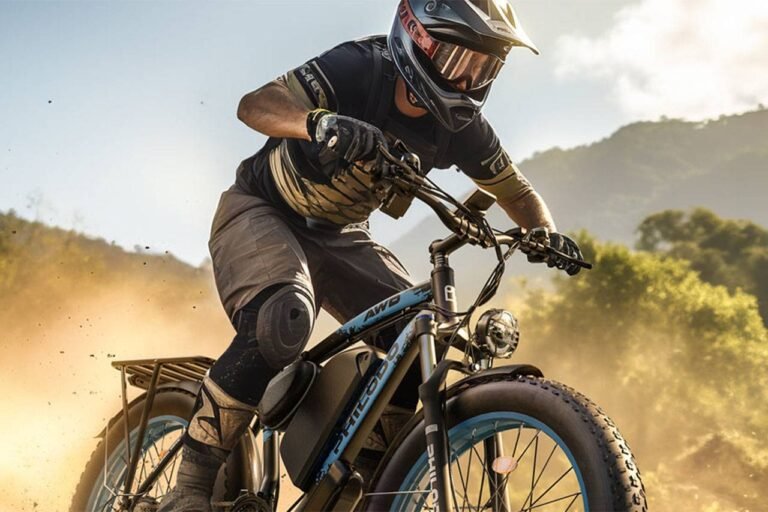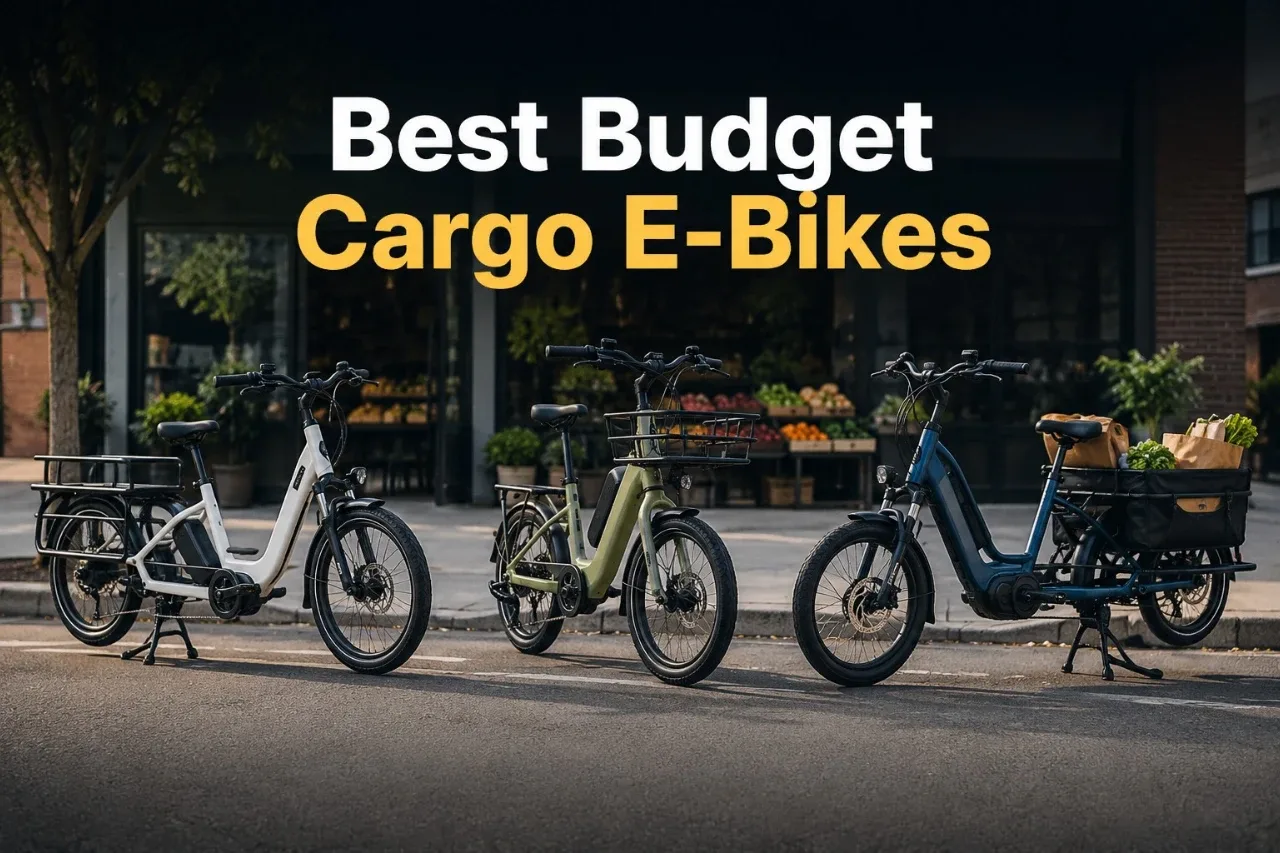
Choosing the right cargo e-bike on a budget means balancing motor power, battery capacity, payload rating, and frame stability without overspending. Budget cargo e-bikes have become a practical solution for U.S. riders who need to haul groceries, commute across town, run daily errands, or carry light loads without the cost of a premium cargo bike. The category spans folding fat-tire models, step-through commuters, and even three-wheeled trikes, so there is genuine variety at accessible price points.
Payload rating matters more than most buyers realize. A bike rated for 330 lbs handles a 200-lb rider plus a bag of groceries comfortably; a bike rated for only 250 lbs leaves little margin. Battery size determines real-world range, and manufacturer range claims are almost always based on flat terrain and light pedal assist, so expect real-world numbers to run 30 to 50 percent lower under load. Braking quality is critical on a heavy, loaded bike: hydraulic disc brakes stop faster and require less lever force than mechanical disc brakes. Fat tires improve stability on rough surfaces, which matters when cargo shifts your center of gravity.
The picks below cover a range of cargo use cases, from compact folding commuters to two-seat family haulers and stable trikes for riders who want three wheels.
Best for compact cargo commuting: ESKUTE Folding Fat Tire Cargo E-Bike
Best for long-range cargo riding: Jasion Thunder Fat Tire E-Bike
Best for two-seat family hauling: EUYBIKE Fat Tire Cargo E-Bike with Seat
Best for seniors and stability-focused riders: ESKUTE E Trike Electric Tricycle
Best for heavy-duty all-terrain cargo: VEFREEDOM 1500W Fat Tire E-Bike
1. ESKUTE Folding Fat Tire Cargo E-Bike

Best for: Compact cargo commuting with foldable storage
The ESKUTE D200 is a folding step-through e-bike designed for riders who need cargo capacity without committing to a full-size frame. It ships with a front basket and rear rack, making it usable for grocery runs or daily errands right out of the box. The folding mechanism collapses the frame without tools, which is genuinely useful for apartment dwellers or multi-modal commuters.
The 1200W peak hub motor handles moderate hills well, and three pedal assist levels give reasonable control over battery consumption. The 48V 13Ah battery carries a claimed range of up to 55 miles; expect roughly 25 to 35 miles under real-world load conditions. The 20×3-inch fat tires provide decent grip on pavement and light gravel, though they are narrower than the 4-inch tires found on more capable off-road models.
NFC unlock is a standout feature at this price point. The step-through frame accommodates riders of varying heights. One reviewer flagged that the rear basket included in the set did not fit correctly, and another noted assembly hole alignment issues, so some buyers may need minor adjustments out of the box. The front suspension helps absorb urban road chatter, though it is noted as soft for heavier riders.
| Spec | Detail |
|---|---|
| Motor | 1200W peak hub motor |
| Battery | 48V 13Ah |
| Claimed Range | Up to 55 miles (PAS mode) |
| Tires | 20×3 inches, fat tire |
| Max Payload | 350 lbs |
| Speeds | 7-speed trigger shifter |
| Brakes | Disc brakes |
| Suspension | Front fork |
| Frame | Carbon steel, step-through |
| Folding | Yes |
Pros:
- Folds compactly for storage and transport
- Includes front basket and rear rack
- NFC unlock adds security
- Step-through frame is easy to mount with cargo
- 350 lb payload rating
Cons:
- Rear basket fitment reported as inconsistent
- Assembly may require minor adjustments
- Front suspension is soft for heavier riders
- Real-world range lower than claimed under load
Who it is for: Urban commuters and errand riders who need a compact, foldable cargo e-bike with practical storage attachments and easy mounting.
Who should skip it: Riders over 6 feet tall, those who need aggressive off-road capability, or buyers expecting a completely tool-free, problem-free assembly experience.
2. Jasion Thunder Fat Tire E-Bike

Best for: Long-range cargo riding on varied terrain
The Jasion Thunder is a full-size fat-tire e-bike built around a high-capacity 48V 18Ah battery and a 1800W peak motor. The claimed 80-mile range and 85 Nm of torque place it among the more capable options in this price range. The 26×4-inch fat tires and aluminum frame support a 400-lb payload, making it a legitimate choice for heavier riders or those carrying meaningful loads.
Dual hydraulic disc brakes are a meaningful upgrade over the mechanical disc brakes found on cheaper alternatives. Hydraulic systems require less hand force and offer more consistent stopping power, which matters on a loaded bike. The 7-speed Shimano drivetrain paired with five pedal assist levels gives fine-grained control across terrain. Integrated turn signals, a headlight, and a brake light round out a solid safety package.
One buyer in Wisconsin noted the bike’s classification as a motorcycle under local law due to its power and speed specs; riders should verify local e-bike regulations before purchasing. A small number of buyers reported a bent gear sprocket and loose steering column out of the box, so inspecting the bike carefully on delivery is advised.
| Spec | Detail |
|---|---|
| Motor | 1800W peak hub motor |
| Battery | 48V 18Ah (864Wh) |
| Claimed Range | Up to 80 miles (PAS mode) |
| Tires | 26×4 inches, fat tire |
| Max Payload | 400 lbs |
| Speeds | 7-speed Shimano |
| Brakes | Dual hydraulic disc |
| Suspension | Front fork |
| Frame | Aluminum |
| Folding | No |
Pros:
- Hydraulic disc brakes for strong stopping power
- High payload capacity at 400 lbs
- Large battery supports extended range
- Integrated turn signals and lighting
- Shimano drivetrain for reliable shifting
Cons:
- Some units reported with factory defects at delivery
- May exceed Class 3 e-bike limits in some states
- Heavy bike with no folding option
- Real-world range under load will be well below 80 miles
Who it is for: Riders who prioritize range, payload, and safety features for longer cargo commutes or mixed-terrain use.
Who should skip it: Buyers in states with strict e-bike power regulations, or those needing a lightweight or foldable option.
3. EUYBIKE Fat Tire Cargo E-Bike with Seat

Best for: Two-seat family hauling and daily cargo errands
The EUYBIKE step-through cargo e-bike is built to carry both goods and passengers. The rear seat configuration makes it a practical family commuter for parents who need to carry a child or companion. The 48V 20Ah (960Wh) battery is one of the larger packs in this price range, with a claimed range of 70 to 80 miles in pedal assist mode and 35 miles in pure electric mode. The battery is removable and rated IP67 for water resistance.
The 1450W peak motor produces a listed 82 Nm of torque, which supports the added weight of a second rider on moderate inclines. Front suspension and a seat suspension absorber work together to reduce vibration for both rider and passenger. The 20×4-inch fat tires provide stability on mixed surfaces. Dual disc brakes include a power-off function for quick stopping under load.
This model carries a 330-lb maximum payload, which is lower than the Jasion Thunder. With two riders, that limit is reached quickly. The product currently has limited user reviews, so long-term reliability data is thinner than on more established models.
| Spec | Detail |
|---|---|
| Motor | 1450W peak (750W nominal) |
| Battery | 48V 20Ah (960Wh), removable, IP67 |
| Claimed Range | 70-80 miles PAS / 35 miles electric |
| Tires | 20×4 inches, fat tire |
| Max Payload | 330 lbs |
| Speeds | 7-speed |
| Brakes | Dual disc with power-off function |
| Suspension | Front fork + seat suspension |
| Frame | High carbon steel, step-through |
| Folding | No |
Pros:
- Rear passenger seat included
- Large 960Wh battery for extended range
- IP67 waterproof removable battery
- Front and seat suspension for two-rider comfort
- Includes basket and tools
Cons:
- 330-lb payload limits two-rider use for larger adults
- Limited user review data currently available
- High carbon steel frame is heavier than aluminum alternatives
- Claimed range will drop significantly with two riders
Who it is for: Parents or couples who want a cargo e-bike that doubles as a two-seat commuter, with a large battery and practical cargo accessories included.
Who should skip it: Heavier rider pairs near or over the 330-lb combined limit, or buyers who require a folding or lightweight frame.
4. ESKUTE E Trike Electric Tricycle

Best for: Seniors and stability-focused riders who need a cargo-capable three-wheeler
The ESKUTE T300 is a folding electric tricycle aimed at riders who prioritize balance and ease of use over speed or long range. The three-wheel design eliminates the balance demands of a standard e-bike, making it a strong choice for seniors, riders recovering from injury, or anyone who simply prefers a stable platform for hauling cargo and running errands.
The 500W nominal motor (1200W peak) is adequate for flat terrain and gentle hills at speeds up to 18 mph. The 48V 13Ah (624Wh) battery supports a claimed range of up to 65 miles, though real-world range under load on hilly terrain will be considerably less. The rear cargo rack and front basket handle everyday loads well. Three riding modes (pedal, pedal assist, and throttle) give riders full flexibility, including a throttle-only mode that requires no pedaling.
The trike weighs around 104 lbs, so two people are needed to unbox and set it up. At that weight, portability is limited even with the folding frame. One buyer reported an electrical system failure within the first use, though ESKUTE’s customer service response was noted positively by several reviewers.
| Spec | Detail |
|---|---|
| Motor | 1200W peak, 500W nominal |
| Battery | 48V 13Ah (624Wh), removable |
| Claimed Range | Up to 65 miles |
| Tires | 18×3 inches, fat tire |
| Max Payload | 350 lbs |
| Speeds | Single speed |
| Brakes | Disc brakes |
| Suspension | Front fork |
| Frame | Carbon steel, step-through, foldable |
| Wheel Count | 3 |
Pros:
- Three-wheel design for full stability
- Throttle-only mode requires no pedaling
- Front basket and rear cargo rack included
- Step-through frame for easy mounting
- Foldable frame for storage
Cons:
- Heavy at around 104 lbs, limiting portability
- Single-speed drivetrain limits climbing efficiency
- 18-inch wheels are smaller than most e-bike options
Who it is for: Seniors, riders with balance concerns, or anyone who wants a stable three-wheel cargo hauler for flat to moderate terrain and daily errands.
Who should skip it: Riders who need speed above 18 mph, those who want a lightweight portable option, or buyers planning to ride significant hills regularly.
5. VEFREEDOM 1500W Fat Tire E-Bike

Best for: Heavy-duty all-terrain cargo riding with maximum battery capacity
The VEFREEDOM A8 stands out for its 48V 20Ah (960Wh) battery, one of the largest packs in this price tier. The 1500W peak motor is paired with a listed 110 Nm of torque, which gives meaningful climbing ability on grades up to 30 degrees. Five riding modes (electric, pedal assist, bicycle, walking assist, and cruise control) offer genuine flexibility for varied routes.
The 20×4-inch fat tires and front suspension handle mixed surfaces well. The step-through alloy frame is accessible for riders of different heights, and the 330-lb payload rating suits most solo riders with cargo. The IP X6-rated removable battery charges in 5 to 6 hours on or off the bike. One long-term reviewer logged nearly 1,000 miles and reported reasonable tire and brake wear for a budget model.
Range claims of 80 miles are optimistic for heavier riders or hilly routes. A rider at 6 feet 2 inches and 200 lbs noted real-world range fell well short of advertised figures. The carbon steel frame is heavier than aluminum, which affects portability.
| Spec | Detail |
|---|---|
| Motor | 1500W peak brushless |
| Battery | 48V 20Ah (960Wh), removable, IPX6 |
| Claimed Range | Up to 80 miles (PAS mode) |
| Tires | 20×4 inches, fat tire |
| Max Payload | 330 lbs |
| Speeds | 7-speed |
| Brakes | Cable-controlled dual disc |
| Suspension | Front fork |
| Frame | Carbon steel, step-through |
| Folding | No |
Pros:
- Large 960Wh battery for extended riding
- Five riding modes including cruise control
- IPX6 waterproof removable battery
- Strong torque for hill climbing
- UL2849 certified
Cons:
- Range claims overstated for larger or heavier riders
- Mechanical disc brakes, not hydraulic
- Carbon steel frame adds weight
- No folding for compact storage
Who it is for: Riders who want maximum battery capacity and multi-mode flexibility for cargo commuting, mixed-terrain riding, or long solo trips.
Who should skip it: Taller or heavier riders expecting 80-mile real-world range, buyers who need hydraulic brakes, or anyone prioritizing a lightweight frame.
Buying Guide
Motor Power: What You Actually Need
For cargo use, a motor rated at 750W nominal or higher handles most loads on flat to rolling terrain. Peak wattage figures (1200W, 1500W, 2000W) represent brief bursts, not sustained output. For regular hill climbing with a loaded bike, look for motors with listed torque figures above 70 Nm rather than focusing solely on peak wattage.
Battery Capacity and Real-World Range
Battery capacity is measured in watt-hours (Wh). A 48V 13Ah battery equals roughly 624Wh; a 48V 20Ah battery equals 960Wh. More watt-hours means more range. Manufacturer range claims assume flat terrain, light rider weight, and low pedal assist. Under cargo load, expect 40 to 60 percent of the advertised figure on hilly routes.
Payload Rating
Always check the maximum weight recommendation and factor in your body weight plus the cargo you plan to carry. A 330-lb limit sounds generous, but a 220-lb rider leaves only 110 lbs for groceries, a child, or gear. If you carry heavy loads regularly, prioritize bikes rated at 350 lbs or above.
Brake Type
Hydraulic disc brakes stop faster with less hand force than mechanical disc brakes. On a heavy cargo bike traveling at speed, braking distance matters. Mechanical disc brakes are functional and common at budget price points, but hydraulic brakes are worth prioritizing if your routes include downhills or frequent stops.
Frame Design and Cargo Accessories
Step-through frames make mounting and dismounting easier when carrying cargo. Folding frames save storage space but add weight at the hinge points. Check whether cargo racks and baskets are included or sold separately, and verify that attachment points suit your intended load.
| Feature | Budget Priority |
|---|---|
| Battery (Wh) | 600Wh minimum; 900Wh+ for long range |
| Motor torque | 70 Nm+ for hills with cargo |
| Payload | 330 lbs minimum; 350+ preferred |
| Brakes | Mechanical disc (budget); hydraulic (preferred) |
| Tires | 4-inch fat tires for stability under load |
| Cargo accessories | Confirm racks/baskets are included |
Frequently Asked Questions
Which cargo e-bikes offer the best value for commuting and daily errands?
Step-through fat-tire e-bikes with included baskets or racks, a battery above 600Wh, and a payload rating of 330 lbs or more offer the best value for commuting and errands. Models like the ESKUTE D200 and VEFREEDOM A8 include cargo accessories in the base price, which reduces the additional cost of outfitting the bike for daily use.
What should I look for in a cargo e-bike for carrying kids and groceries?
Prioritize payload capacity, rear rack strength, and braking quality. A two-seat-capable model with dual disc brakes and a low step-through frame handles the added complexity of carrying a child safely. Confirm that any rear seat or child carrier is compatible with the bike’s rack mounting system before purchasing.
How much motor power and battery capacity do I need for a cargo e-bike on hilly routes?
For hilly routes with cargo, a motor with at least 70 Nm of torque and a battery of 750Wh or more is a practical baseline. Higher peak wattage helps on steep climbs, but torque output is the more relevant spec for sustained uphill performance. Plan for real-world range to drop by 40 to 50 percent compared to flat-terrain claims.
Are front-load electric cargo bikes practical for families compared to longtail models?
Front-load cargo bikes offer better visibility of what you are carrying, which is useful for young children, but they handle differently and can feel unstable at higher speeds. Longtail models (extended rear rack designs) are generally easier to ride because the weight stays behind the rider, which preserves more natural handling. For most budget buyers, a longtail or standard rear-rack model is the more practical starting point.
Which cargo e-bike brands are known for reliability and affordable replacement parts?
ESKUTE has built a visible U.S. customer service presence and multiple reviewers noted responsive support for issues. Jasion and VEFREEDOM both carry UL certifications and offer warranty coverage. For any budget brand, confirm that the seller provides a U.S.-based support contact and check whether common replacement parts such as batteries, brake pads, and tires are available through Amazon or the manufacturer’s website.
What is the lightest cargo e-bike that can still handle meaningful loads safely?
Fat-tire cargo e-bikes typically weigh between 55 and 70 lbs for two-wheel models, with trikes running significantly heavier. Among the options reviewed here, the folding ESKUTE D200 is among the more manageable in terms of portability while still carrying up to 350 lbs. Riders who need a lighter option may need to move up in budget to find aluminum-framed models designed specifically for weight reduction without sacrificing payload.
GoEBikeLife publishes independent e-bike reviews, comparisons, and practical buying guides. Some links on this page are affiliate links. If you make a purchase through an eligible link, we may earn a commission at no additional cost to you.