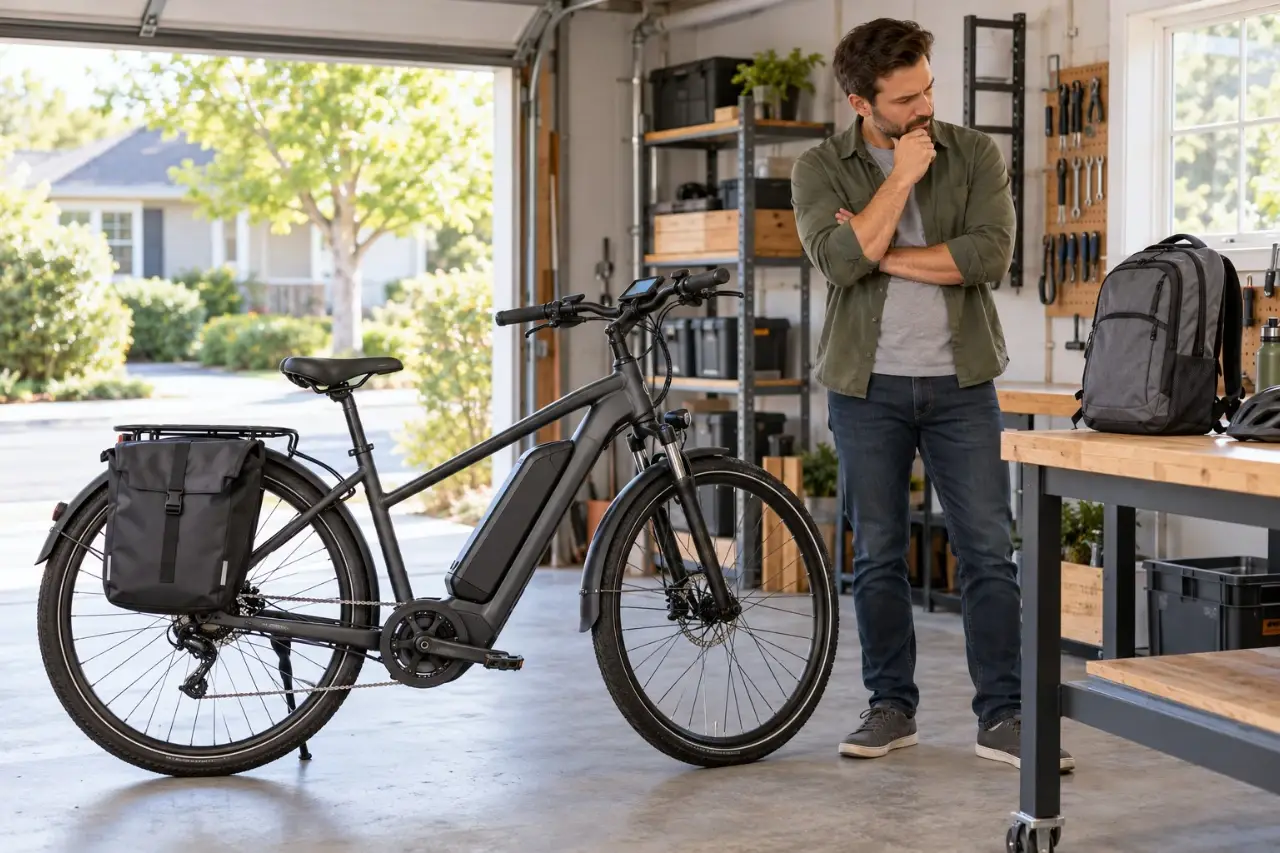
For most e-bike commuting, errands, and longer rides, a pannier is the more comfortable way to carry a moderate load because the bike supports the weight instead of your shoulders. A backpack is usually better for light loads, short trips, and valuables you want to keep with you after parking.
The better choice still depends on your bike and trip. A pannier must fit the rack securely and stay within both the rack and bike load limits. A backpack does not need a rack, but a heavy or bulky one can become uncomfortable and may restrict your movement or visibility.
E-Bike Pannier vs. Backpack: Quick Comparison
| Factor | Pannier | Backpack |
|---|---|---|
| Rider comfort | Better for moderate or heavier everyday loads | Best with light, compact loads |
| Bike setup | Requires a compatible, securely mounted rack | No rack required |
| Handling | Adds weight directly to the bike; balance and placement matter | Light loads usually have less effect on the bike itself |
| Heat and sweat | Keeps weight and fabric off your back | Can trap heat against your back |
| Security after parking | Usually should be removed if it contains valuables | Stays with you automatically |
| Weather protection | Varies by bag; some are water-resistant or waterproof | Varies by backpack |
| Best use | Commuting, groceries, work gear, longer rides | Short trips, valuables, light essentials |
Many riders use both: a pannier for the bulk of the load and a small backpack or personal bag for a phone, wallet, medication, electronics, or other valuables.
Why a Pannier Is Often More Comfortable
A backpack puts the load on your shoulders, upper back, and hips. With a light load on a short ride, that may not matter much, but shoulder pressure and trapped heat can become more noticeable as the ride gets longer or the bag gets heavier.
A rear pannier transfers that load to the bike, keeping weight off your back. The trade-off is that the e-bike may feel heavier when starting, stopping, walking, parking, or maneuvering at low speed. Motor assistance helps with acceleration, but it does not cancel the effects of extra mass on braking, balance, or cornering.
If you regularly carry cargo, include the rack, pannier mounts, and fasteners in your normal inspection routine. Our e-bike pre-ride safety checklist covers the other basic checks to make before riding.
How Each Option Changes Handling
A light backpack keeps cargo with your body
With a small, well-fitted backpack, the bike itself may feel closer to its unloaded setup. A large or poorly adjusted pack can shift as you turn or look over your shoulder, so adjust the straps to keep it secure without restricting breathing, arm movement, or head checks. Avoid hard, sharply protruding, or awkwardly shaped loads on your back.
Panniers keep weight off your body, but placement matters
Rear panniers usually position cargo lower than a backpack, but the bike may still feel different once loaded. A single heavy pannier can make the bike lean toward that side while stopped or feel unbalanced at very low speed. With two panniers, distribute weight as evenly as practical; with one, keep dense items low and toward the bike.
Allow more margin for braking and turning. Extra mass can require more braking force, and a shifting load can make emergency maneuvers harder to control. Enter corners conservatively until you know how the bike responds with cargo. See our guide to cornering an e-bike safely for more detail.
Check Rack and Pannier Compatibility Before You Ride
A pannier is only a good choice when it fits securely. Do not assume that every pannier works with every rear rack. Check the e-bike owner’s manual, rack instructions, and bag instructions for:


- Rack load rating: Stay within the rack’s stated cargo limit. The pannier itself counts toward that load.
- Bike payload limit: The total load on the bike may include the rider, cargo, accessories, and sometimes other equipment. Stay within both the bike’s overall limit and the rack’s separate limit.
- Rack compatibility: Confirm that the bike or frame is approved for the installed rack, especially when using an aftermarket rack.
- Rack-tube fit: Pannier hooks or clamps need to fit the rack rails as the bag manufacturer specifies.
- Lower retention: Use the bag’s intended lower hook, rail, strap, or retention system so the pannier cannot swing into the wheel.
- Heel clearance: Rotate the pedals slowly while the bike is stationary and make sure your heel does not strike the bag.
- Wheel and brake clearance: Nothing should touch the tire, spokes, brake rotor, caliper, chain, or derailleur.
- Light visibility: A loaded bag must not cover a required rear light or reflector.
Do not use a rack that is loose, bent, cracked, missing hardware, or mounted in a way the bike manufacturer does not approve. If the rack or pannier cannot be secured correctly, do not improvise with loose cords or attachments that could enter the wheel. Include rack fasteners in routine maintenance and follow any model-specific inspection or torque instructions. Our e-bike service interval guide explains when cargo use may justify more frequent checks.
Weather, Security, and Everyday Convenience
Panniers are convenient for errands because they carry work gear, groceries, a lock, or a roadside kit off your body. Weather protection varies: water-resistant and waterproof are not the same, so check the bag manufacturer’s rating and protect sensitive electronics when needed.
A backpack is simpler when you need to take everything into an office, store, café, or onto public transit. If you leave a pannier on a parked e-bike, remove valuables and do not treat its mounting clip as theft protection. Use a separate bike-locking strategy such as our e-bike parking security guide.
With either setup, secure every loose strap so it cannot enter the spokes, tire, brake, chain, or other moving parts.
Which Is Better for Commuting, Groceries, and Recreation?
Daily commuting
A pannier is usually the more comfortable default for work clothes, lunch, a laptop, or rain gear. Use a protective sleeve for electronics. A backpack still makes sense for a small load, a short trip, or a bag you need immediately after parking.
Grocery runs
Panniers are generally more practical for groceries. Put dense items low, keep the bag securely closed, and balance the load as well as practical. Do not hang heavy grocery bags from the handlebars, where a swinging load can interfere with steering, controls, cables, or braking. Stabilize the bike while loading and stay within the kickstand manufacturer’s limits.
Recreational and folding-bike rides
A small backpack is simple for water, keys, a phone, and a light layer. For longer rides, panniers can carry extra clothing, food, water, and repair supplies without loading your back. Our e-bike roadside essentials guide explains how to match tools and repair gear to your bike.
On a folding e-bike, confirm that the pannier does not obstruct the folding mechanism or make the folded bike unstable. Remove the bag before folding whenever the manufacturer’s instructions require it.
A Safe Loading Routine for Panniers
Before riding with a loaded pannier:
- Confirm the bike and rack load limits and make sure the rack is secure.
- Attach the pannier at every mounting point intended by its manufacturer.
- Put heavier items low and close to the bike rather than at the outside edge of the bag.
- Secure zippers, roll tops, buckles, and compression straps, and tuck away loose material.
- Rotate the pedals to check heel clearance and inspect both sides for contact with the tire, spokes, drivetrain, or brakes.
- Check that rear lights and reflectors remain visible.
- Walk the bike a short distance and make a few gentle steering movements before mounting.
- Begin at low speed and confirm normal braking and handling away from traffic before riding normally.
Stop if the bike pulls strongly to one side, the pannier shifts, a strap comes loose, you hear rubbing, or the bag contacts the wheel, brake, or drivetrain. Fix the load before continuing.
When a Backpack May Be the Better Choice
For a light, compact load, a backpack may be the better option when:
- the e-bike has no approved compatible rack;
- the available pannier does not attach securely;
- the bag would interfere with pedaling, a wheel, a brake, or a folding mechanism;
- you need to take all belongings with you immediately after parking; or
- the route requires frequent carrying or handling of the bike off the saddle.
A backpack is not a substitute for an unsuitable rack when the load itself is heavy, rigid, bulky, or awkward. If the item cannot be carried safely in either setup, use a cargo system approved for the bike or choose another way to transport it.
Pannier or Backpack: The Bottom Line
Choose a pannier when comfort and cargo capacity matter most and your e-bike has a compatible rack that can support the load. Choose a backpack when the load is light, the trip is short, or you need to keep your belongings with you after parking.
The safest setup is not simply the bag that holds the most. It is the one that stays within the bike and rack limits, attaches securely, keeps clear of moving parts, and still allows you to steer, brake, pedal, and look around normally. Start with a light load and learn how your e-bike handles before carrying more.
GoEBikeLife is reader-supported. We test and review e-bikes, create detailed comparisons, and publish practical buying guides for riders. Some links on this page are affiliate links, which means we may earn a commission at no extra cost to you.