A little joy belongs in every day.

Ebike battery technology trends are improving range, charging, and safety. Learn what changes matter for care, storage, and everyday riding with care.
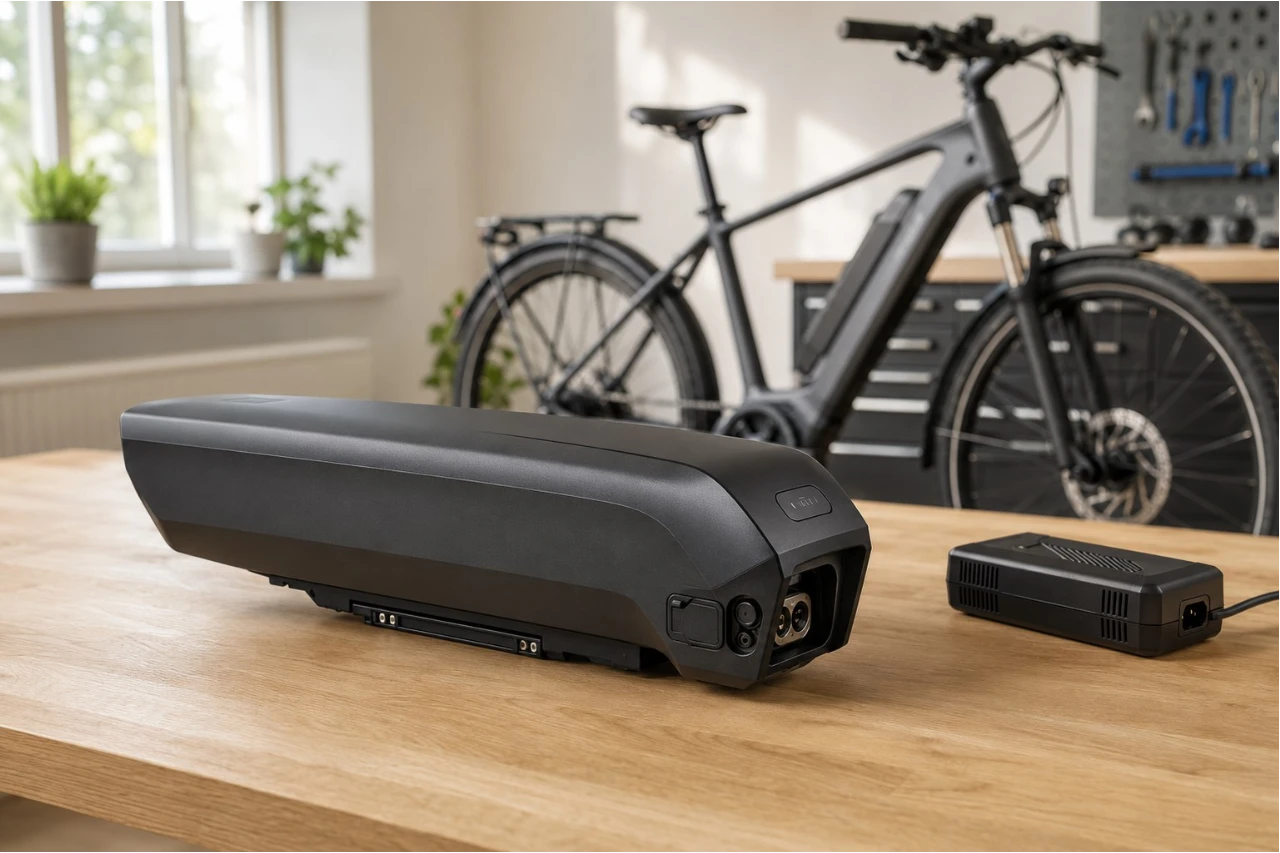
E-bike battery technology is improving, but most changes are practical rather than revolutionary. Riders can expect better battery monitoring, more energy in compact packs, improved charging controls, and chemistries designed for longer service life.
However, new technology does not eliminate the need for careful charging, storage, inspection, and system compatibility. A battery with an advanced battery management system can still become unsafe after physical damage, water intrusion, improper repair, or use with an incompatible charger.
The most important question is not whether a battery feature sounds impressive. It is whether that feature improves range, charging, safety, serviceability, or long-term ownership.
| Battery trend | Potential benefit | Current limitation |
|---|---|---|
| Higher energy density | More watt-hours without a much larger battery | Real-world range still depends on riding conditions |
| LFP battery chemistry | Long cycle life and good thermal stability | More weight and volume for the same capacity |
| Smarter battery management systems | Better monitoring, fault detection, and charge estimates | A BMS cannot prevent every type of battery failure |
| Charge-limit controls | May reduce the time a battery spends completely full | Not supported by every e-bike |
| Faster charging | Shorter charging times | Requires compatible cells, wiring, charger, and BMS |
| Improved diagnostics | More useful battery-health and error information | Some systems require proprietary apps or dealer tools |
| Solid-state batteries | Potential improvements in energy density and safety | Not yet common in consumer e-bikes |
| Better replacement support | Longer practical ownership of the e-bike | Replacement packs can still be expensive or unavailable |
Most modern e-bike batteries use rechargeable lithium-ion cells. Energy density describes how much energy a battery can store relative to its size or weight.
Continued improvements in cell design and battery packaging allow some manufacturers to provide more watt-hours without making the battery substantially larger. This can lead to longer potential range, cleaner frame integration, or a lighter battery with similar capacity.
However, a higher-capacity battery does not guarantee a proportional increase in real-world range.
Battery capacity is normally measured in watt-hours, abbreviated as Wh. When the manufacturer does not provide a Wh figure, it can be estimated with this formula:
Nominal voltage × amp-hours = watt-hours
For example:
48 volts × 15 amp-hours = approximately 720 watt-hours
Manufacturer figures may be rounded, so the official Wh rating should be used when available.
A 500 Wh battery stores about 25% more energy than a 400 Wh battery, but it will not necessarily provide exactly 25% more riding distance. Actual range is affected by:
This is why advertised range should be treated as an estimate based on specific test conditions rather than a guaranteed result. Riders can learn more about these variables in our guide to how far an electric bike can go.
More compact batteries also allow manufacturers to integrate the pack into the frame. An integrated battery can improve appearance and provide some protection from road spray and casual impacts. The trade-off is that it may be more difficult to remove, inspect, replace, or charge indoors.
Before buying an e-bike with an integrated battery, find out whether the pack is removable and what steps are required to remove it.
Lithium iron phosphate, usually called LFP or LiFePO4, is a type of lithium-ion battery chemistry known for good thermal stability and potentially long cycle life.
A charge cycle does not necessarily mean one charging session. It generally represents the use of energy equal to one full battery charge. Two partial discharges of approximately 50%, followed by recharging, would together equal roughly one cycle.
The main limitation of LFP is lower energy density compared with the lithium-ion chemistries commonly used in many e-bike batteries. An LFP pack may therefore be larger or heavier than another lithium-ion pack with the same watt-hour capacity.
This creates a clear trade-off:
LFP should not automatically be described as better or safer in every e-bike. Battery safety also depends on cell quality, pack construction, physical protection, the battery management system, charger compatibility, manufacturing consistency, and proper use.
Owners should never determine battery chemistry from appearance or marketing language alone. Follow the chemistry, charger, voltage, temperature limits, and storage instructions specified by the e-bike manufacturer.
Modern multi-cell e-bike battery packs normally include a battery management system, or BMS. This internal electronic system monitors important operating conditions such as:
A BMS can disconnect or limit the battery when monitored values move outside its programmed operating range. More advanced systems may also communicate with the bike display, record fault information, improve charge estimates, or support diagnostic checks.
Some e-bikes can display:
This information can help owners identify changes before they become severe. It can also help a qualified technician determine whether a problem is related to the battery, charger, controller, wiring, display, or electrical connections.
However, a BMS is not a guarantee that a battery is safe. It may not prevent every failure caused by damaged cells, water intrusion, defective components, improper repairs, incompatible chargers, severe impacts, or manufacturing faults.
Unexpected behavior should not be ignored. Warning signs can include:
Do not open the battery enclosure to investigate these problems. Document the symptoms, stop using the pack when safety is uncertain, and contact the manufacturer or a qualified e-bike battery technician.
Many lithium-ion batteries experience additional stress when they remain completely full or deeply discharged for extended periods. Some newer e-bike systems address this through charging controls or battery-health features.
Depending on the manufacturer, these features may include:
A lower routine charge limit can be useful for riders who charge frequently but do not need maximum range every day. A full charge can then be reserved for longer rides.
This does not mean every rider should manually stop every charging session at a particular percentage. Battery indicators are estimates, and charging recommendations differ between manufacturers. Use a charge-limiting feature only when it is officially supported by the e-bike system.
Partial charging is not inherently harmful to a lithium-ion battery. If the manufacturer permits it, charging only to the level required for the next ride can be a reasonable routine.
Unless the manufacturer specifically permits long-term connection, disconnect the charger after charging is complete instead of leaving the battery plugged in for days.
Battery chemistry is only one part of e-bike electrical safety. The battery, charger, motor, controller, wiring, and protective electronics must work together as a system.
In the United States, two safety standards are particularly relevant:
According to UL Solutions, UL 2849 uses a system-level approach rather than evaluating only one electrical component.
Certification does not mean that a battery can never fail. It does, however, provide more meaningful evidence than unsupported phrases such as “safe battery,” “smart protection,” or “certified cells.”
Buyers should also distinguish between:
These statements are not interchangeable.
When certification matters to a purchase, request the exact standard, certification organization, model number, and listing information. Buyers can also learn how to identify and verify a UL certification through UL’s consumer guidance.
Faster charging sounds like an obvious improvement, especially for delivery riders, commuters, and households that share an e-bike. However, charging speed cannot be increased safely by replacing the original charger with a random higher-output model.
A faster charging system must be designed around:
Charging a battery at a higher rate produces more heat and places greater demands on the cells and electrical system. The U.S. Consumer Product Safety Commission has noted the importance of the charger in controlling current and helping prevent charging conditions that could contribute to overheating or thermal runaway.
For a battery designed around standard charging, a more powerful charger is not automatically an upgrade. Even when the plug fits and the voltage appears similar, the charger may not communicate with or protect the battery correctly.
Use only the charger supplied with the e-bike or a replacement specifically approved by the manufacturer for that battery and model.
Solid-state batteries receive considerable attention because they replace the liquid or gel electrolyte found in many conventional lithium-ion cells with a solid electrolyte.
In theory, solid-state designs may eventually provide benefits such as:
However, solid-state batteries still face challenges involving manufacturing, cost, durability, charging performance, material interfaces, and large-scale production. U.S. Department of Energy programs continue to support projects intended to overcome barriers to commercial production.
Widespread solid-state batteries are therefore not yet a practical reality for ordinary consumer e-bikes.
Early products may first appear in specialized, premium, or limited-production applications. Riders should treat solid-state marketing claims cautiously unless the manufacturer clearly identifies:
A vague reference to “solid-state technology” is not enough to establish how a battery was designed or tested.
A battery can have impressive specifications and still create a poor long-term ownership experience if compatible replacements are unavailable.
E-bike batteries are not universally interchangeable. Packs that share the same voltage and physical shape may use different:
This makes replacement support an increasingly important part of battery ownership.
Before buying an e-bike, check:
An e-bike with a replaceable, supported battery may offer better long-term value than one with a slightly larger pack but no reliable replacement path.
If an older battery has lost substantial capacity, use an appropriate e-bike battery replacement guide before purchasing a third-party pack.
Better battery technology can add safeguards and provide more useful information. It cannot eliminate damage caused by poor storage, a crash, improper charging, water intrusion, or unauthorized repair.
The following practices remain important regardless of battery chemistry or BMS features.
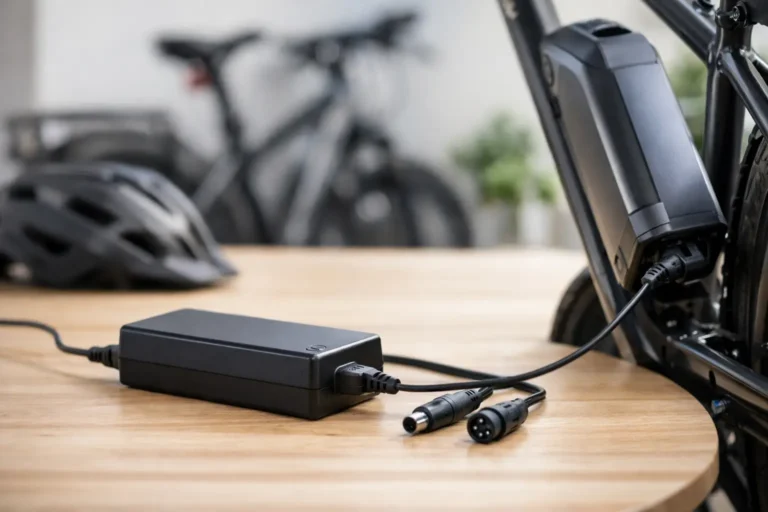
Use the charger supplied with the e-bike or one specifically approved for the battery and model. Check the charger housing, cable, connector, and plug before use.
Do not use a charger that has:
Charge on a hard, stable surface in a dry area. Keep the battery and charger away from excessive heat, direct sunlight, combustible materials, and exits that may be needed during an emergency.
Do not charge a battery where it can easily be knocked over, crushed, covered, or exposed to water.
For additional precautions, see our guide on how to charge an e-bike battery safely.
A battery may become warm after sustained climbing, high-assist riding, or carrying a heavy load. Allow it to cool before charging.
If a battery has been stored in freezing conditions, move it to a dry environment and allow it to reach the charging-temperature range specified by the manufacturer before connecting the charger.
Do not use external heaters, hair dryers, heat guns, or other direct heat sources to warm the battery.
Check for:
A removable battery should lock firmly into the bike without excessive movement. Keep its contacts clean and dry, following manufacturer instructions.
Do not use a battery that is swollen, leaking, cracked, badly corroded, unusually hot, or involved in a severe impact.
Storage conditions can have a substantial effect on battery condition and service life.
For short-term storage, keep the battery in a dry area with moderate temperatures. Avoid:
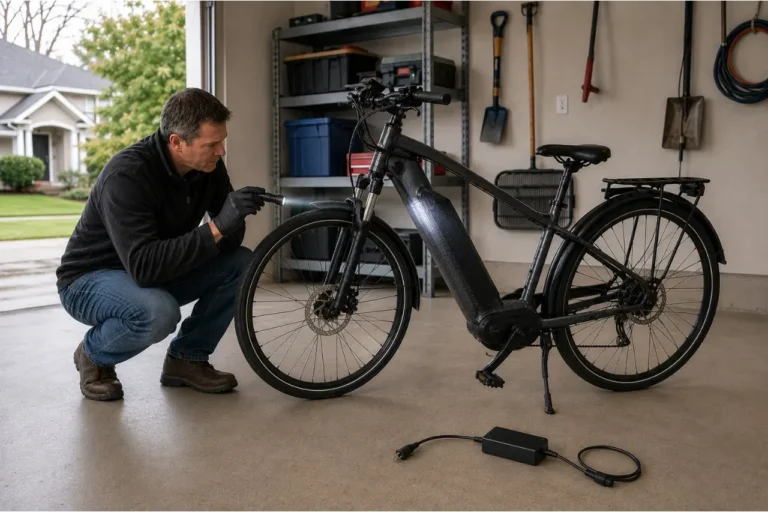
A garage may be suitable when it remains dry and within the manufacturer’s approved temperature range. It is not automatically the best storage location in every climate.
For longer storage, many manufacturers recommend leaving a lithium-ion battery partially charged rather than completely full or empty. The correct percentage varies by battery system. For example, Bosch recommends approximately 30%–60% charge for storage in a dry environment, but owners should always follow the instructions for their specific battery.
Check the charge periodically if the e-bike will remain unused for several months. A battery left deeply discharged may become difficult or impossible to recharge.
More information about aging and capacity loss is available in our guide to how long an e-bike battery lasts.
When the manufacturer permits it, remove the battery before carrying an e-bike on a vehicle rack. This can reduce rack weight and help protect the battery from rain, road debris, and vibration.
Place the removed battery inside the vehicle where it cannot:
Check the e-bike and rack instructions before transportation. Some batteries or bikes may require specific protective covers, contact caps, packaging, or mounting procedures.
Separate restrictions apply when transporting lithium-ion batteries by aircraft or commercial carrier. Contact the airline or carrier before traveling rather than assuming an e-bike battery can be checked or shipped normally.
Gradual range loss over several years can be a normal part of battery aging. A sudden change is different and should be investigated.
Stop using the battery and contact the manufacturer or a qualified technician if you notice:
If a battery emits smoke, gas, popping sounds, or intense heat, leave the area immediately, warn others, and call emergency services. Do not touch or carry the battery. Follow the instructions provided by local emergency personnel.
Battery cases should not be opened or repaired by an unqualified owner. A battery may retain dangerous electrical energy even when it appears discharged.
Battery marketing often focuses on voltage, amp-hours, and estimated range. Those numbers are useful, but they do not provide a complete picture.
Before buying an e-bike, check the following:
Look for watt-hours rather than relying only on advertised mileage. Watt-hours make it easier to compare batteries with different voltage and amp-hour ratings.
Check whether the manufacturer explains the rider weight, assist level, terrain, speed, and temperature used for its range estimate.
Find out whether the complete e-bike is certified to UL 2849 or another applicable standard. Verify the exact model instead of relying on a general brand-level statement.
Determine whether the battery can be removed for charging, storage, transportation, and replacement.
A replacement battery can represent a significant portion of the e-bike’s value. Confirm availability before the original pack reaches the end of its useful life.
Check whether an official replacement charger can be purchased separately.
Read what the warranty covers and whether it includes a defined capacity-retention threshold. A general product warranty may treat normal battery degradation differently from an electrical defect.
Review the approved charging, riding, and storage temperatures, especially if the bike will be used in very hot or cold conditions.
Connected battery information can be useful, but determine whether the system depends on a proprietary app, an active account, or an authorized dealer.
A slightly larger battery is not necessarily the better choice if the manufacturer provides weak parts support, unclear documentation, or no reliable replacement option.
When evaluating an e-bike, advertised battery capacity and range are only starting points. Battery removal, mounting security, charging access, charger size, display accuracy, replacement cost, warranty coverage, and long-term availability can have just as much influence on ownership.
We also distinguish between manufacturer specifications, published safety guidance, research-based analysis, and observations from hands-on use. A claimed range or battery lifespan should not be presented as an independent test result unless it was measured under documented conditions.
The most meaningful e-bike battery technology trends are improving energy density, monitoring, charging control, diagnostics, and long-term durability. LFP batteries offer an alternative balance between cycle life and weight, while solid-state batteries remain a developing technology rather than a mainstream consumer option.
For riders, advanced chemistry is only part of the decision. System-level safety, charger compatibility, replacement availability, warranty support, and responsible battery care are equally important.
A useful battery feature should help you ride, charge, store, diagnose, or maintain the e-bike more confidently. New technology can provide better information and additional safeguards, but it does not replace correct charging, thoughtful storage, regular inspection, or qualified service.
What battery chemistry is most common in e-bikes?
Most modern e-bikes use lithium-ion batteries. Specific cell chemistries vary between manufacturers and models. Buyers should use the chemistry and charging information provided by the manufacturer rather than identifying a battery by its appearance, voltage, or marketing name.
Are LFP batteries better for e-bikes?
LFP batteries can offer long cycle life and good thermal stability, but they normally store less energy for their weight than chemistries commonly used in compact e-bike batteries. They may suit applications that prioritize durability, while other lithium-ion chemistries may be preferable when weight and size matter more.
Are solid-state e-bike batteries available?
Solid-state batteries are still not common in mainstream consumer e-bikes. The technology has potential, but manufacturing cost, durability, charging performance, and large-scale production remain significant challenges. Treat solid-state marketing claims cautiously unless the manufacturer provides detailed specifications and verifiable testing information.
Does fast charging damage an e-bike battery?
Fast charging does not automatically damage a battery when the cells, BMS, charger, wiring, connectors, and cooling characteristics were designed for it. Using an unapproved higher-output charger can cause overheating or other unsafe conditions. Only use charging equipment approved for the specific battery system.
What does an e-bike battery management system do?
A BMS monitors factors such as voltage, current, temperature, overcharging, and excessive discharge. It may disconnect or limit the battery when readings move outside programmed limits. More advanced systems may also provide diagnostics and battery-health information, but a BMS cannot prevent every failure.
What safety certification should an e-bike have?
In the United States, UL 2849 applies to the complete electrical system of an e-bike, while UL 2271 applies to batteries used in light electric vehicles. Buyers should verify the exact model and standard because certification of a cell, charger, or battery alone is not the same as certification of the complete e-bike system.