Your e-bike feels strong one week and weak the next. You charge it the same way, ride the same route, and still watch the range fall faster than expected. This drop matters because it can cut rides short and strain your battery over time.
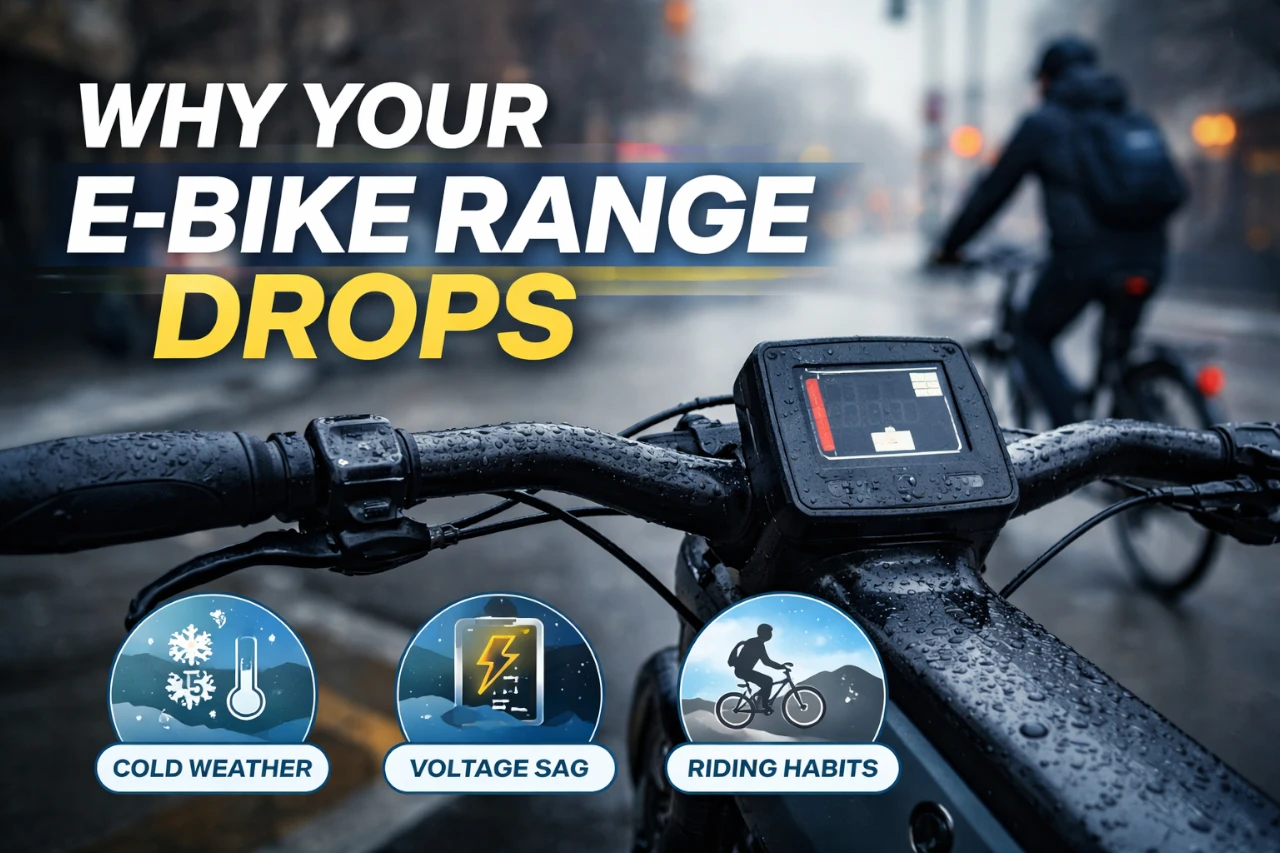
Your e-bike range drops because cold temperatures, riding habits, and battery limits reduce how much usable power your battery can deliver.
Lithium‑ion batteries lose capacity in the cold, voltage drops under load, and the system may shut down early to protect itself.
At freezing temperatures, range losses of 20% or more are common, and extreme cold can cut usable capacity in half, as explained in this guide on why e‑bike batteries lose range in cold weather.
This article breaks down what really causes range loss, why real-world range rarely matches the box, and how your riding style plays a role. You will also learn how the battery and control system respond in winter and what simple steps help you keep more range all year.
Key Takeaways
- Cold weather sharply reduces usable battery power.
- Riding style and assist level change range more than most expect.
- Smart battery care helps preserve range and battery life.
The Science Behind E-Bike Range Drop
Cold weather changes how your e-bike battery stores and delivers power. Lower temperatures cut usable capacity, raise internal resistance, and slow key chemical reactions inside li‑ion cells.
How Batteries Lose Capacity in Cold Weather
Your e-bike battery uses a lithium-ion battery pack rated at room temperature, around 25°C. In winter, you ride far below that point, so the battery cannot access all stored energy.
Tests show clear losses as temperatures fall. At 0°C, a battery can lose about 20% of usable capacity. At −20°C, it can lose around half, based on industry testing explained in this article on why e‑bike batteries lose range in cold weather.
What you feel on the bike:
- Shorter range even after a full charge
- Earlier cutoff near the end of a ride
- Less help on climbs
Cold does not remove energy forever, but it locks some of it away until the battery warms up.
Internal Resistance and Voltage Sag
Cold weather raises internal resistance inside li‑ion cells. Higher resistance makes it harder for the battery to move current when you ask for power.
When you accelerate or climb, the voltage drops faster than normal. Riders call this voltage sag. The motor controller reads that drop and limits power or shuts off to protect the pack.
Why this matters to you:
- The bike feels weak even at high charge
- Power cuts out sooner under load
- The last 20% of the battery feels unusable
This effect explains why cold rides feel worse than the range number alone suggests.
Chemical Reactions in Lithium-Ion Batteries
A lithium-ion battery depends on smooth chemical reactions to charge and discharge. Cold slows those reactions and can cause damage during charging.
Below about 5°C, lithium can plate onto the anode instead of moving correctly. Over time, this creates permanent loss and can lead to cell failure, as outlined in this guide on cold weather effects on e‑bike batteries.
Best practices that protect your battery:
- Charge indoors above 10°C
- Avoid charging right after a freezing ride
- Warm the battery before use
These steps reduce damage and help your battery deliver steadier power.
Major Winter Range Killers
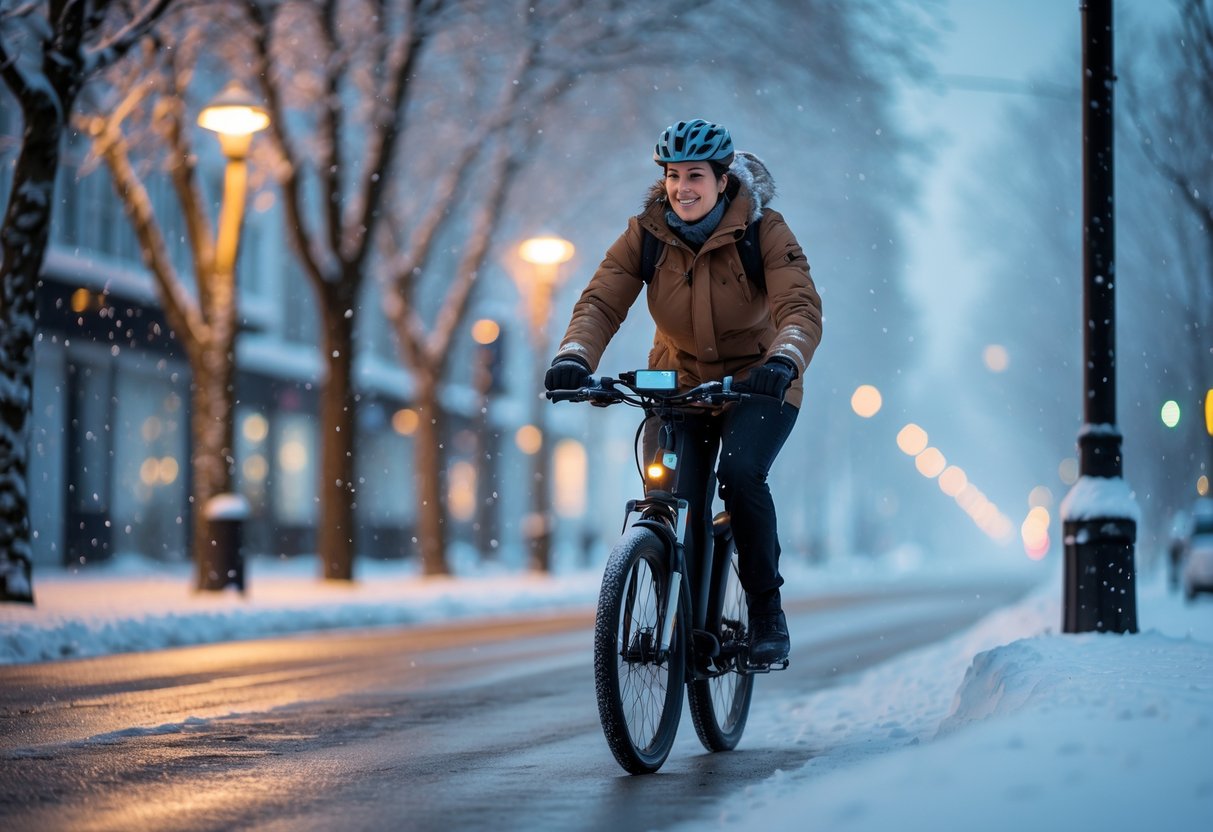
Cold weather cuts e‑bike range through battery limits, harder riding conditions, and mechanical drag. Low temperature lowers power output, winter air and terrain raise energy use, and tire setup often works against you.
Impact of Low Temperatures on Battery Output
Cold temperature slows the chemical reactions inside your battery. You still have energy stored, but the battery cannot deliver it as fast. That drop shows up as less power and fewer miles, especially on starts and hills.
At freezing and below, internal resistance rises. Voltage drops sooner under load, so the motor backs off earlier. This effect explains why many riders see sharp losses in winter, as reported in tests on e‑bike battery cold weather performance.
You can reduce the hit by starting rides with a warm battery. Store and charge it indoors, then install it just before you ride. Avoid full throttle starts in cold weather because high current draws make voltage sag worse.
Effects of Snow, Wind, and Cold Air
Winter air is denser than warm air. That increases aerodynamic drag, even at moderate speeds. A steady headwind can drain your battery faster than a short climb.
Snow and slush raise rolling losses and force the motor to work harder to keep speed. Packed snow feels slow; loose snow feels worse. Terrain matters more in winter because each surface change costs energy.
Cold weather habits also matter. Short trips with repeated stops waste energy on acceleration. Smooth pacing helps. Practical winter riding and storage habits that protect range and battery health appear in guides on e‑bike battery winter care.
Rolling Resistance and Tire Pressure
Low tire pressure increases rolling resistance. In winter, pressure drops as temperature falls, even if you did not change anything. Soft tires feel grippy, but they eat range.
Snow tires, studded tires, and fat tire e‑bikes add drag by design. Wider contact patches help control on ice and snow, but they demand more power on clear pavement.
Pressure trade‑offs to manage:
| Setup | Control | Range |
|---|---|---|
| Higher pressure | Less grip | Better |
| Lower pressure | More grip | Worse |
| Fat tires | High | Lowest |
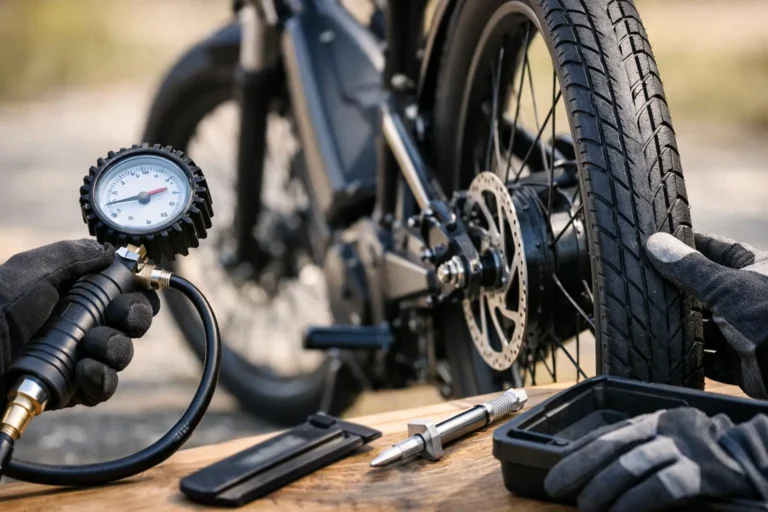
Check tire pressure before every cold ride. Adjust for terrain, not habit, and expect lower range when traction comes first.
How E-Bike Batteries and Management Systems Respond
Your e-bike range drops when the battery and its control system limit power to protect cells. These limits change with load, temperature, and battery health, even when the display still shows charge.
Role of the Battery Management System
The battery management system (BMS) acts like a traffic cop for energy. It watches cell voltage, current, and temperature in real time. When you climb hills or use high assist, current spikes. The BMS may limit output to prevent overheating or overcharging of cells.
Cold weather matters too. Lithium-ion cells deliver less power when cold, so the BMS reduces current to avoid damage. That cut feels like lost range. Battery University explains how temperature affects lithium-ion performance and safety.
Key protections you feel while riding:
- Current limits during hard acceleration
- Temperature limits in cold or hot weather
- Voltage limits as the pack nears empty
Premature Low-Battery Cutoffs
A sudden shutdown often comes from voltage sag, not an empty pack. Under load, voltage drops fast. If it falls below a safe level, the BMS cuts power to stop deep discharge.
This happens more on hills, with heavy riders, or at high assist. Older batteries sag more, so cutoffs happen earlier. You may see 20–30% left, then the bike turns off. That reading comes from average voltage, not real-time load.
To reduce cutoffs:
- Use lower assist on climbs
- Shift to keep cadence high
- Avoid full-throttle starts at low charge
NREL notes that high load increases voltage drop and triggers protective limits in battery systems.
Battery Health and Degradation
Battery degradation lowers both capacity and power over time. As cells age, internal resistance rises. You get fewer watt-hours and more voltage sag under the same load.
Heat, frequent fast charging, and deep discharges speed this up. The BMS tracks extremes, but it cannot reverse wear. Battery University shows that shallow cycles and moderate temperatures extend battery health.
Signs degradation affects range:
- Faster drops from 100% to 80%
- More cutoffs below 30%
- Less range in cold weather
Good habits slow the loss. Store the battery cool, avoid zero percent, and charge before it sits empty for days.
Real-World vs Advertised Range
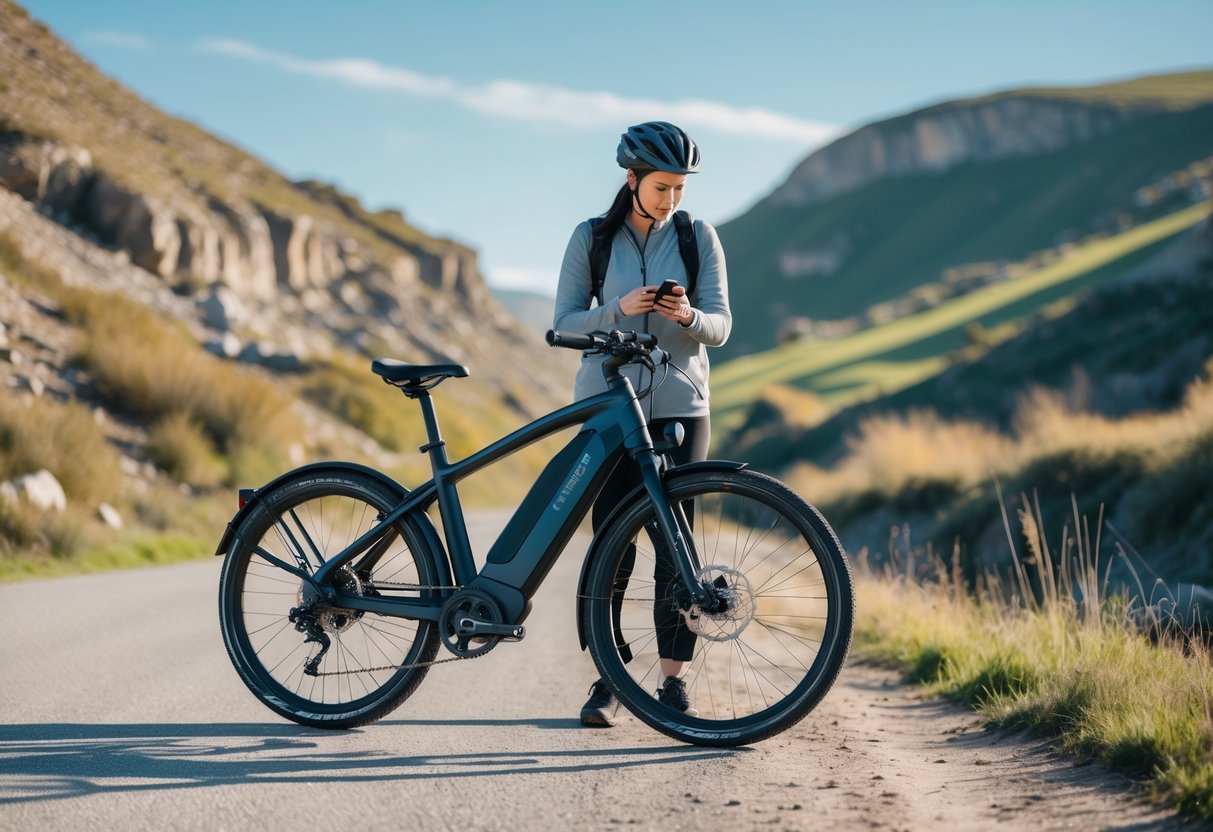
Your e-bike range often falls short of the advertised range because tests happen under ideal conditions. In daily riding, many small factors stack up and drain the battery faster. Knowing how brands test range and what changes it helps you set realistic expectations.
Controlled Environments vs Actual Riding
Brands test advertised range in a controlled environment. The bike runs on flat ground, with a steady pace, light rider weight, calm weather, and low assist.
You ride in the real world. You stop and start, climb hills, face wind, and ride on mixed surfaces. Each change pulls more power from the battery.
Many tests also use Eco mode only. If you ride in Tour or Turbo, your real-world range drops fast. Bosch explains this clearly in its range tool, which shows how assist level and terrain change results.
Understanding Manufacturer Claims
Advertised range is not a promise. It shows what the bike can reach under best-case settings.
Most brands list a wide range, like “30–80 miles.” The high number assumes low assist, flat roads, and light load. The low number reflects higher assist and harder riding.
Manufacturers follow internal test methods, not one shared standard. That makes direct comparison hard. Electric Bike Report points out that range claims vary because testing methods vary.
Treat advertised range as a ceiling, not an average.
Variables That Affect Battery Range
Your battery range depends on how and where you ride. The most important factors include:
| Factor | How It Reduces Range |
|---|---|
| Assist level | Higher assist uses more power |
| Rider + cargo weight | More weight needs more energy |
| Hills and terrain | Climbing drains batteries fast |
| Wind and temperature | Cold and headwinds cut range |
| Tire pressure | Low pressure increases drag |
Even small changes matter. PeopleForBikes notes that cold weather alone can reduce battery output by 10–20%.
When you plan rides, base expectations on your habits, not lab numbers.
Riding Style and Assist Modes
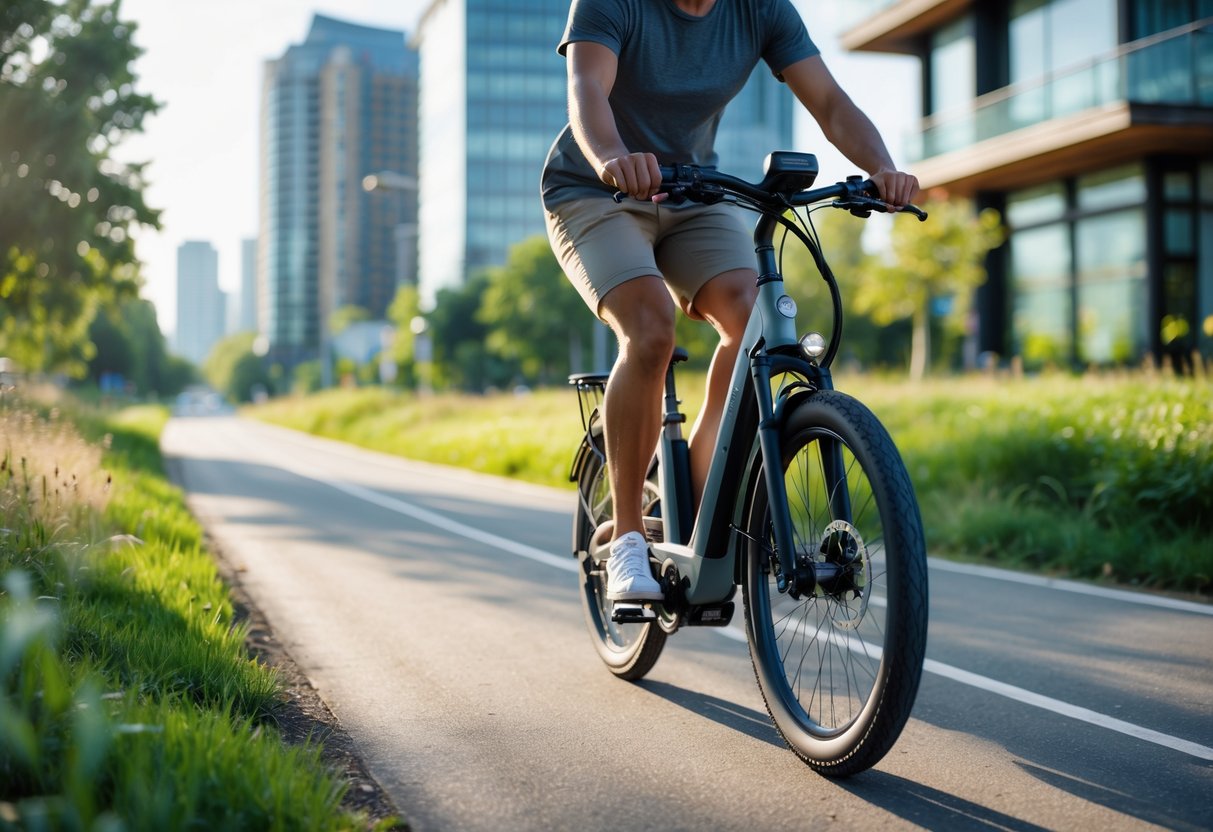
Your riding choices change how fast the battery drains. Assist modes, speed habits, and how you use gears all shape how hard the motor works and how much energy it uses.
Effect of Pedal Assist and Throttle Use
Pedal assist (PAS) adds motor power based on how hard you pedal. Higher pedal assist levels push the motor to work more, which cuts range faster. Light, steady pedaling lets the system add less power and saves energy.
Throttle use drains the battery faster than PAS. When you rely on the throttle, the motor does most of the work while you add little or no effort. This causes higher power draw, especially from stops and on hills.
Frequent starts and stops also matter. Each burst of acceleration pulls extra power. Smooth acceleration and fewer full stops help keep battery use steady.
Eco Mode vs High-Assistance Modes
Eco mode limits motor output and rewards steady pedaling. High-assistance modes increase support, torque, and power, which feels easier but costs range. Many systems let you tune these settings, such as support strength and power limits, through apps like the Bosch Flow app for customizing eBike assist modes.
How modes compare
| Mode type | Motor support | Battery use | Best use case |
|---|---|---|---|
| Eco mode | Low, smooth | Lowest | Long rides, flats |
| Tour/Normal | Medium | Moderate | Mixed terrain |
| Sport/Turbo | High, aggressive | Highest | Short climbs, headwinds |
Use Eco mode when you can hold a steady speed. Switch to higher assist only when terrain or traffic demands it.
Speed, Acceleration, and Gear Selection
Speed has a direct cost. Riding near top assist speed increases air resistance and power draw. A steady speed uses less energy than repeated acceleration and deceleration.
Gear selection helps the motor stay efficient. Shift to an easier gear before hills and starts so you can spin faster with less strain. This reduces peak motor load and heat.
Poor gear choice forces the motor to push hard at low cadence. That drains the battery faster. Aim for smooth cadence, early shifts, and controlled acceleration to stretch your range.
Battery Care and Winter Best Practices
Cold weather shortens range, but good habits protect your battery and keep power steady. Indoor storage, basic insulation, smart charging habits, and careful long‑term storage make the biggest difference.
Storing and Charging the Battery Indoors
Cold air slows battery chemistry and cuts usable power. Tests show that lithium‑ion batteries lose about 20% of capacity at 0°C and much more below that, which explains sudden range drops in winter, as reported in this analysis of why cold weather hurts e‑bike battery performance.
Store your battery indoors at room temperature whenever you can. Bring it inside after each ride, even if the bike stays in a garage.
Charge indoors above 10°C (50°F). Cold charging damages cells over time and increases wear on battery terminals. Wipe terminals dry before charging to prevent corrosion.
Using Battery Covers and Insulation
A battery cover or battery insulation cover helps slow heat loss during rides. It does not heat the battery, but it keeps it closer to its starting temperature for longer.
Use insulation when rides last more than 30 minutes in freezing weather. Neoprene covers work well and stay easy to remove.
Key points to follow:
- Install the cover before riding, not after the battery cools.
- Remove the cover indoors so trapped moisture can dry.
- Avoid blocking vents or the battery latch.
Battery insulation improves consistency, not total capacity. You still need indoor storage for best results.
Optimal Charging Habits for Cold Months
Winter increases stress per ride, so charging habits matter more. Avoid frequent top‑ups from 80% to 100% unless you need full range that day.
Aim to use the middle of the battery most of the time. This reduces deep charge cycles and slows wear.
Good winter charging rules:
- Let the battery warm to room temperature before charging.
- Unplug once fully charged.
- Do not charge immediately after a freezing ride.
These steps support long‑term battery maintenance and help the battery deliver steadier power on cold starts.
Long-Term Storage Tips
If you stop riding for weeks, store the battery at a storage charge, not full and not empty. Most makers recommend 40–60% for long rest periods, which aligns with common guidance in winter care advice like this overview of e‑bike battery winter storage and care.
Check the charge every 6–8 weeks and top up if it drops near 30%. Store in a dry place between 10–20°C (50–68°F).
Before storage:
- Clean the case and battery terminals.
- Remove the battery from the bike.
- Avoid sheds or cars where temperatures swing fast.
Maximizing E-Bike Range All Year
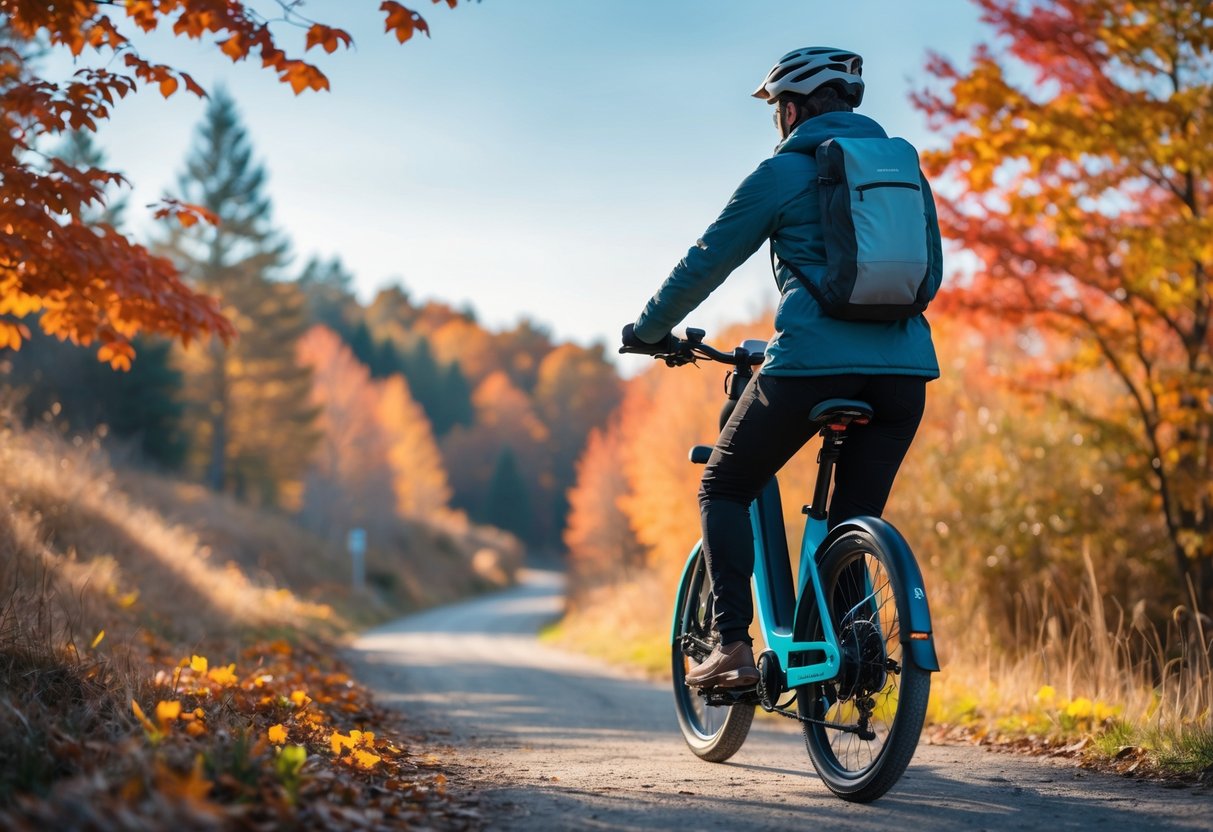
You can protect range by choosing efficient parts, caring for your ebike battery, and riding with the season in mind. Small choices add up and directly affect power consumption, battery life, and motor efficiency.
Choosing the Right E-Bike and Components
Your range starts with hardware. A mid-drive motor usually delivers better motor efficiency than a hub motor because it uses your bike’s gears and needs less power on hills. Bosch explains this advantage clearly in its system guides.
Battery capacity matters more than brand names. Look at watt-hours (Wh), not just ampere-hours (Ah). Wh shows total energy.
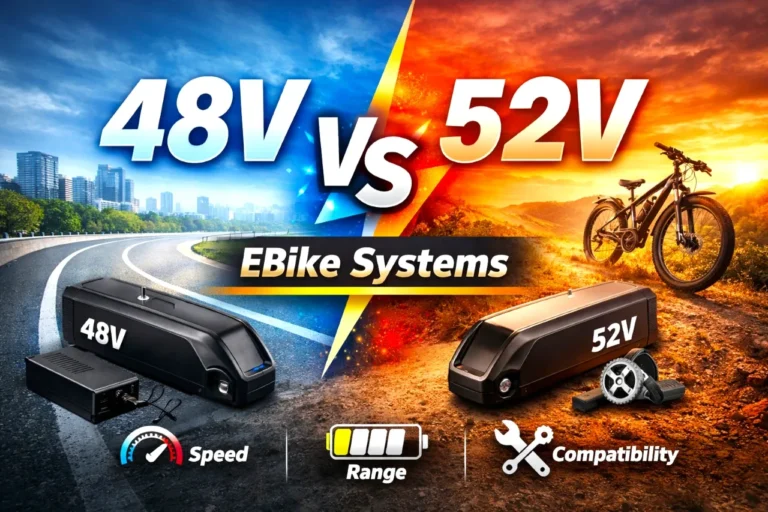
Example: 48V × 10Ah = 480Wh.
Other parts also affect range:
- Tires: Narrower, higher-pressure tires reduce rolling resistance.
- Weight: Heavier frames and racks increase power use.
- Gearing: Proper gearing lowers motor power draw on climbs.
Choose parts that match how and where you ride. Oversized motors with high torque drain batteries faster when you do not need them.
Monitoring Battery Capacity and Health
Your battery loses capacity over time. This change shortens range even if your riding stays the same. Battery University reports most lithium-ion packs keep about 70–80% capacity after 500 charge cycles.
Track changes using simple habits:
- Note how far you ride per charge every few months.
- Watch for faster voltage drops under load.
- Use the charger made for your battery.
Charging habits matter. Avoid storing your ebike battery at 100% or near empty for weeks. Store it near 40–60% charge when not riding. This practice slows battery lifespan loss and preserves usable watt-hours.
Adjusting to Seasonal Changes
Cold weather reduces chemical activity inside the battery. The U.S. Department of Energy notes that low temperatures lower available energy in lithium-ion cells. You may lose 20–30% range in winter.
Use these steps to limit losses:
- Store the battery indoors at room temperature.
- Install the battery right before riding.
- Use lower assist levels and pedal more.
Heat also hurts battery life. Avoid leaving your bike in direct sun or a hot car. High heat speeds battery aging and reduces long-term capacity, even if today’s ride feels normal.
Physical Damage and Safety
Physical damage increases power loss and risk. Bent wheels, rubbing brakes, and misaligned drivetrains raise motor power demand. That extra load cuts range on every ride.
Inspect your bike often:
- Check tire pressure weekly.
- Spin wheels to spot brake drag.
- Look for cracked battery cases or loose mounts.
Never ride with a damaged battery. Impact damage can affect internal cells and reduce safe output. Consumer Reports advises replacing batteries with visible cracks or swelling. Fixing small issues early protects range and keeps you riding safely.
Final Thoughts
Your e-bike range drops for clear reasons, and most of them relate to temperature, battery limits, and how you ride. Cold weather reduces how much energy your battery can use, even when it shows a full charge. Testing shows that lithium‑ion batteries lose about 20% of usable capacity at 0°C, with far worse losses at lower temperatures, as explained in this analysis of why e‑bike batteries perform poorly in cold weather.
You also learned that range loss is not a defect. Battery makers rate capacity at room temperature, not winter conditions. When you ride in the cold, voltage drops faster, power feels weaker on hills, and the system may shut down early to protect the battery.
A few habits can reduce mistakes that drain range faster than expected:
- Charge indoors above 10°C to prevent long‑term damage
- Start rides with a warm battery, not one left outside
- Avoid running the battery near empty, especially in winter
- Use lower assist modes when conditions are cold or windy
If you plan rides with these limits in mind, your e‑bike will feel more predictable and reliable. Understanding why your e‑bike range drops helps you adjust expectations and ride smarter, not harder.