Real rides. Real notes. No hype.

To maintain an ebike battery, charge it to about 80% for daily use, store it at 40-60% in a cool place, and avoid heat, freezing, and deep discharge.
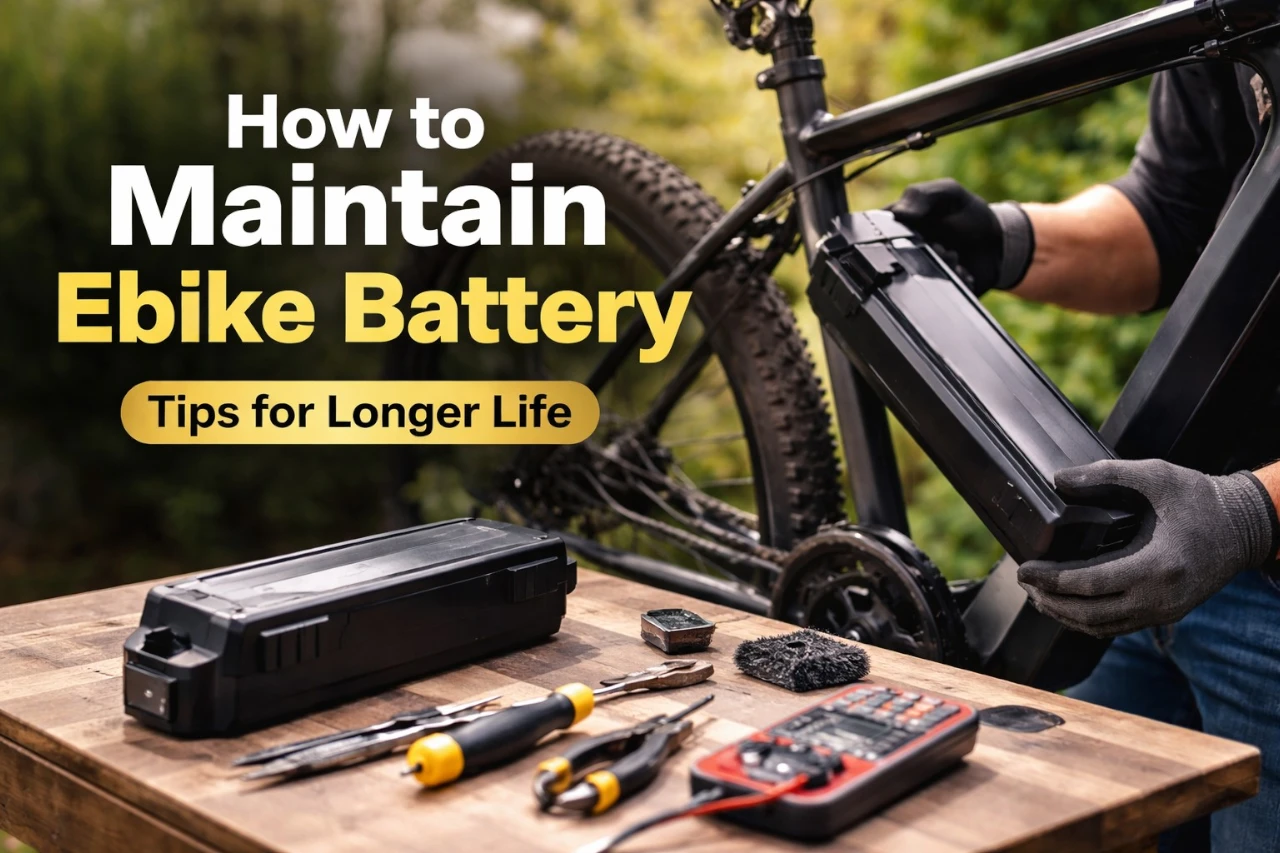
Your ebike battery is the most expensive part of your bike to replace. A new battery can cost anywhere from $300 to over $1,000 depending on your model. Taking care of it properly can extend its lifespan from 2-3 years to 5 years or more.
To maintain your ebike battery, charge it to 80% for daily use, store it at 40-60% charge in a cool dry place, and avoid extreme temperatures below 32°F or above 113°F. Following these basic rules protects the lithium cells inside from degradation and keeps your battery performing at its best.
This guide covers everything you need to know about ebike battery care. You’ll learn how charging habits affect battery life, the best storage practices, and how temperature impacts performance. You’ll also discover simple maintenance checks and when it’s time to replace your battery.
Key Takeaways
Your ebike battery is a lithium-ion pack managed by a Battery Management System (BMS) that protects cells from damage. The BMS monitors voltage, temperature, and current to prevent overcharging and deep discharge, which directly affects how long your battery lasts.
Your electric bike battery uses lithium-ion cells, the same technology found in laptops and smartphones. These cells store energy through chemical reactions between lithium ions moving between a positive and negative electrode.
Most ebike batteries use 18650 or 21700 cylindrical cells arranged in series and parallel configurations. A typical 36V battery contains 10 cell groups in series, while a 48V battery has 13 groups.
Lithium-ion batteries don’t have a “memory effect” like older nickel-based batteries. You can charge them at any level without harming capacity. However, they do degrade over time through chemical breakdown inside the cells, even when not in use.
The BMS is a small circuit board inside your battery pack that acts as a guardian for your cells. It constantly monitors each cell group’s voltage and temperature to prevent damage.
Key BMS functions include:
A quality BMS can extend your battery lifespan by preventing the conditions that cause battery degradation. When your battery suddenly stops working, it’s often the BMS protecting your cells rather than the cells being dead.
Battery capacity is measured in watt-hours (Wh) or amp-hours (Ah). A 500Wh battery at 36V equals about 14Ah, which typically provides 20-40 miles of range depending on terrain and assist level.
Your battery lifespan depends on charge cycles rather than age alone. One cycle equals using 100% of your battery’s capacity, whether that’s one full discharge or five 20% discharges. Most ebike batteries last 500-1,000 full cycles before dropping to 80% of original capacity, according to Battery University.
Heat accelerates battery degradation significantly. Storing or charging your battery above 77°F (25°C) can reduce lifespan by 20% or more. Keeping your battery between 20-80% charge also slows degradation compared to always charging to 100%.
Charging your ebike battery correctly protects its cells from degradation and keeps it performing well for years. Stick to partial charges when possible, charge at moderate temperatures, and always use the manufacturer’s charger.
You don’t need to wait until your battery is completely empty before charging. Modern lithium-ion ebike batteries handle frequent top-ups better than full discharge cycles.
Charge your battery when it drops to around 20-30% capacity. This prevents deep discharges that stress the cells. If you ride daily, plug in after each ride to keep the battery in its optimal range.
Keep your battery at room temperature during charging. Cold batteries (below 32°F) and hot batteries (above 95°F) charge less efficiently and can suffer permanent damage. Bring your battery indoors if you store your bike in a garage or shed.
Remove the battery from the charger once it reaches 100%. Leaving it plugged in for days can cause minor degradation over time. Some chargers have automatic shutoffs, but it’s still better to unplug when charging completes.
Partial charging to 80-90% instead of 100% significantly extends your battery’s lifespan. Research from Battery University shows that keeping lithium-ion batteries between 20-80% can double their cycle life.
Charging Strategy by Usage:
A full charge gives you maximum range but stresses the cells more. Save 100% charges for rides where you actually need the distance. For regular use, stopping at 80% gives you plenty of range while protecting your investment.
Only use the charger that came with your ebike or an exact replacement from the manufacturer. Generic chargers may have different voltage outputs or charging profiles that damage your battery.
Each battery chemistry and configuration requires specific charging parameters. A charger designed for a 36V battery won’t work safely with a 48V system. Using the wrong voltage can cause overheating, reduced capacity, or complete battery failure.
Check that your charger’s connector matches perfectly and fits snugly. Loose connections create resistance that generates heat and inefficient charging. Replace damaged charging cables immediately rather than forcing poor connections.
Smart chargers with built-in protections are worth the investment if you’re replacing your original charger. They monitor temperature, prevent overcharging, and balance cell groups for optimal battery health.
Proper storage protects your electric bike battery from damage and extends its usable life, whether you’re parking it overnight or storing it through winter.
When you’re not riding for a few days or weeks, keep your battery charged between 40% and 80%. This range reduces stress on the lithium-ion cells compared to storing at full charge.
Remove the battery from your bike if you won’t ride for more than a week. Store it in a cool, dry place away from direct sunlight. Check the charge level every two weeks and recharge if it drops below 40%.
Never leave your battery completely drained during storage. Lithium-ion batteries can enter a deep discharge state that makes them difficult or impossible to recharge, according to Battery University.
For storage periods longer than a month, charge your battery to 50-60% before putting it away. This charge level maintains cell health without the stress of a full charge.
Inspect your battery every 4-6 weeks during long-term storage. Recharge it to 60% if the level drops below 40%. Most quality ebike batteries self-discharge at roughly 3-5% per month when stored properly.
Store the battery separately from the bike in its original case or a protective container. Remove it from extreme temperatures and keep it in a location where you’ll remember to check it regularly.
Store your battery between 50°F and 77°F (10°C to 25°C). Higher temperatures accelerate degradation, while freezing temperatures can damage cells and reduce capacity.
Ideal storage locations:
Avoid these locations:
Keep your battery away from flammable materials as a safety precaution. Choose a spot with good air circulation and low humidity to prevent moisture buildup that can corrode connections.
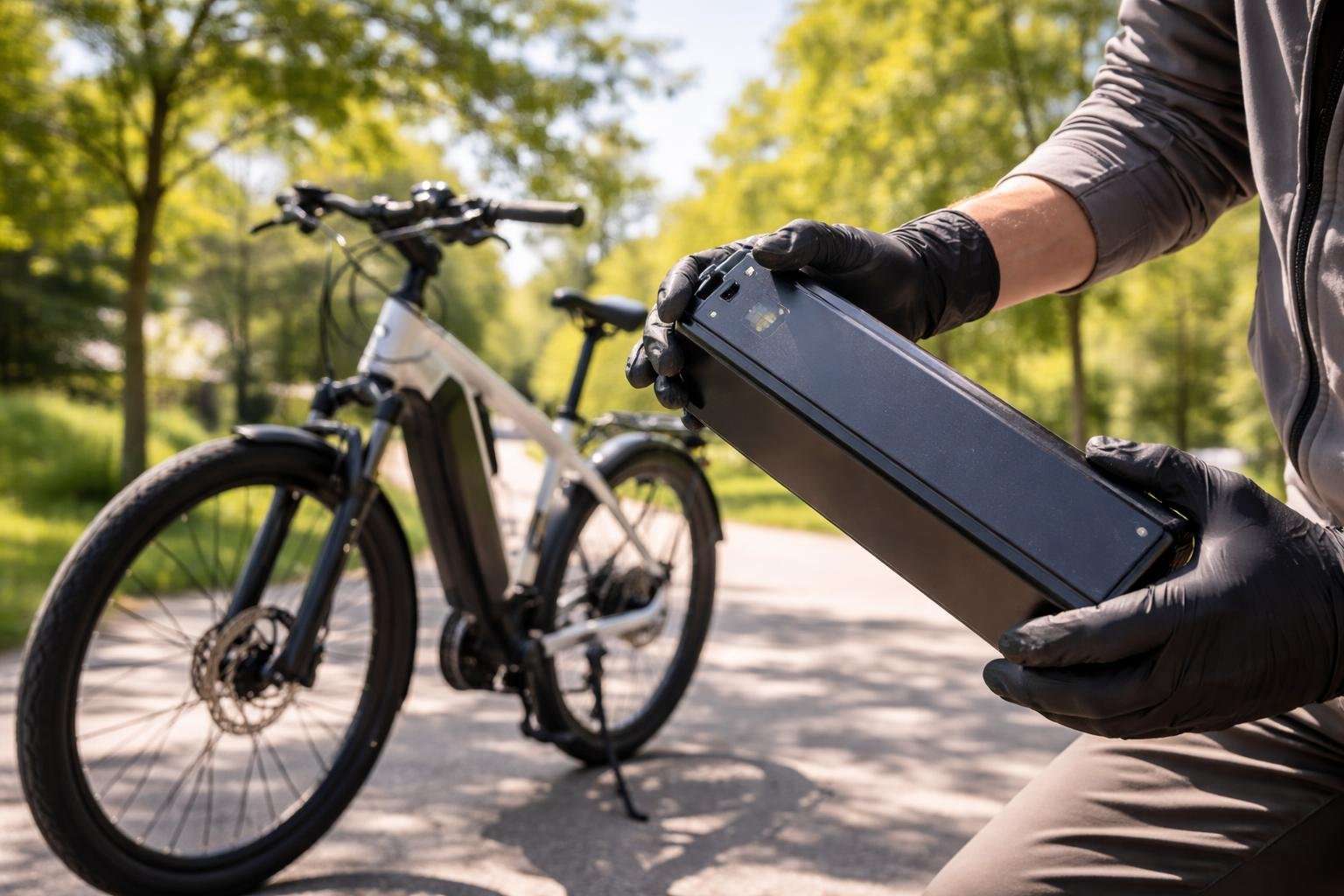
Temperature extremes and environmental conditions directly affect your ebike battery’s lifespan and performance. Proper temperature management prevents battery degradation and keeps your battery functioning at full capacity.
Never charge your battery when temperatures exceed 113°F (45°C). High heat accelerates chemical reactions inside lithium-ion cells, causing permanent capacity loss.
Store your battery in a cool, dry place away from direct sunlight. A garage or shed that gets hot in summer is not ideal. Indoor storage at room temperature works best.
If you ride in hot weather, let your battery cool for 30 minutes before charging. The battery generates heat during use, and charging while already warm compounds the stress on the cells.
Avoid extreme heat whenever possible. Parking your ebike in the shade protects both the battery and electronic components from heat damage.
Cold temperatures temporarily reduce battery range by 20-40% because chemical reactions slow down. This is normal and range returns when the battery warms up.
Store your battery indoors during winter months. Batteries left in freezing temperatures can suffer internal damage and lose capacity permanently.
Don’t charge a frozen battery. Bring it inside and wait until it reaches at least 32°F (0°C) before plugging in. Charging cold batteries can cause lithium plating, which reduces lifespan.
Keep your battery at room temperature between rides when possible. Some riders bring their batteries inside after each trip during winter.
Keep contacts clean and dry to prevent corrosion and electrical shorts. Wipe battery terminals with a dry cloth regularly, especially after riding in wet conditions.
Never pressure-wash your battery or submerge it in water. Most ebike batteries are water-resistant, not waterproof. Light rain is fine, but heavy downpours require extra protection.
Store batteries in low-humidity environments. Damp basements or humid garages can cause moisture buildup over time. Use silica gel packs in your storage area if needed.
Dry your battery exterior after wet rides before storing or charging. Moisture near charging ports creates corrosion risk even on sealed batteries.
Regular checks keep your ebike battery safe and extend its lifespan. Clean contacts prevent poor connections, visual inspections catch damage early, and a simple checklist ensures you don’t miss critical steps.
Dirty or corroded contacts reduce power flow and can damage your battery over time. Remove your battery from the bike once a month and inspect the metal terminals on both the battery and the bike’s mounting area.
Use a dry microfiber cloth to wipe away dust and debris from the contacts. For stubborn residue, apply a small amount of isopropyl alcohol (90% or higher) to the cloth and gently clean the terminals. Never spray liquid directly onto the contacts.
Keep contacts clean and dry at all times. Moisture leads to corrosion, which appears as white, green, or blue buildup on metal surfaces. If you spot corrosion, clean it immediately with a cotton swab dipped in white vinegar, then dry thoroughly.
After cleaning, let everything air dry for 10 minutes before reconnecting the battery. This simple battery maintenance step prevents connection problems and ensures efficient power transfer.
Inspect your battery case for cracks, dents, or swelling every two weeks. A swollen battery indicates internal damage and poses a fire risk—stop using it immediately and contact the manufacturer.
Look for loose screws or damaged mounting brackets that could let the battery shift during rides. Check the charging port for debris or bent pins that might prevent proper charging.
Pay attention to unusual signs during use. If your battery feels hot to the touch, smells strange, or loses charge much faster than normal, these are warning signs of internal problems that need professional attention.
Weekly Tasks:
Monthly Tasks:
Quarterly Tasks:
Store this battery maintenance checklist on your phone or print it for your garage. Following these battery care tips takes less than 15 minutes per month but can add years to your battery’s usable life.
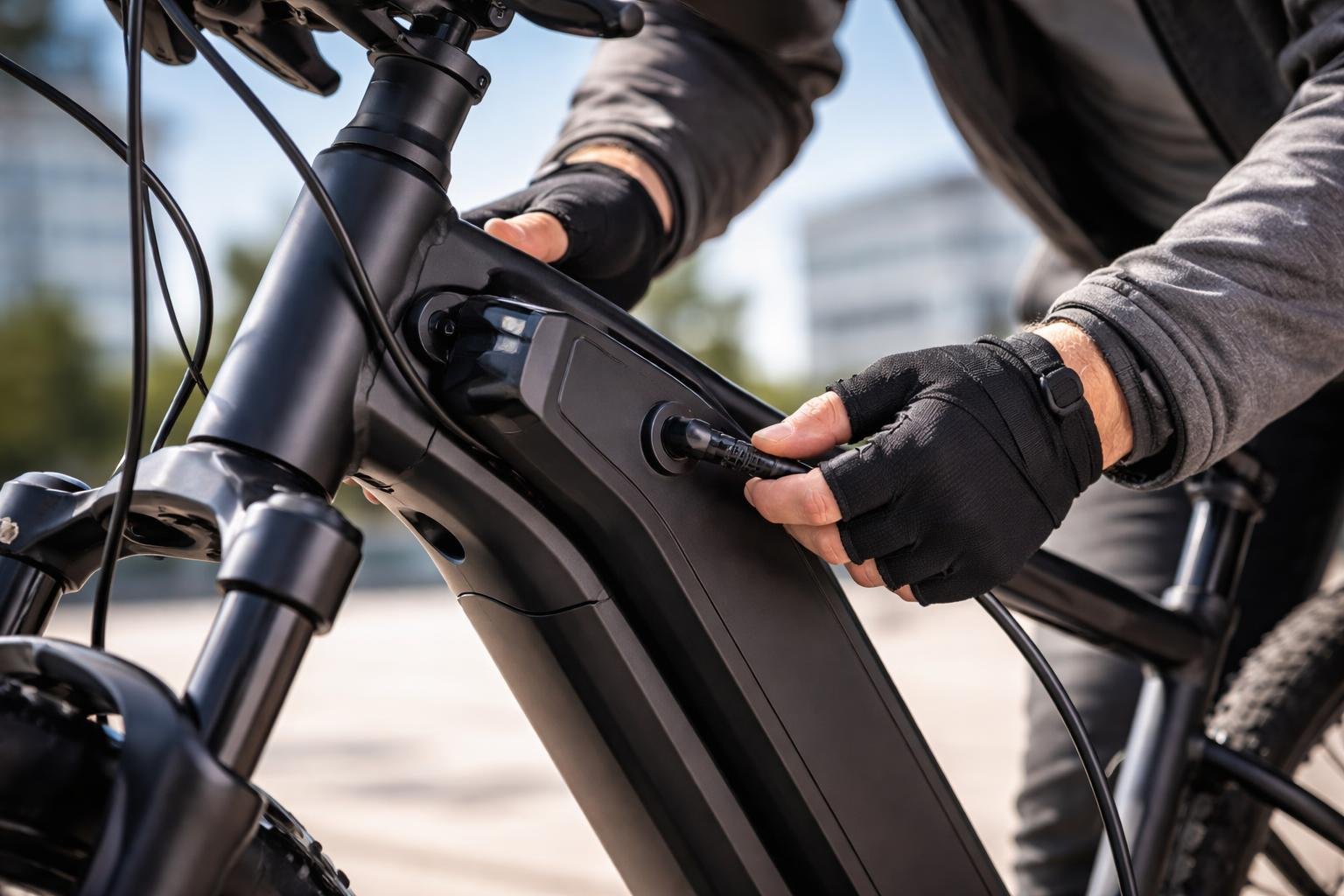
How you ride your ebike affects how long your battery lasts. Small changes in acceleration, discharge habits, and tire pressure can add months or years to your battery’s working life.
Lithium-ion batteries in ebikes last longer when you avoid draining them completely. Running your battery below 20% regularly causes extra stress on the cells and reduces their total lifespan.
Most battery manufacturers recommend recharging when you hit 20-30% capacity. This practice can extend battery life by 50% or more compared to frequent deep discharges, according to Battery University’s lithium-ion discharge research.
If you know you won’t use your ebike for weeks, store it at 40-60% charge rather than full or empty. Deep discharge during storage is particularly harmful because batteries naturally lose a small amount of charge over time.
Hard throttle starts drain your battery quickly and create heat that degrades cells faster. Smooth acceleration using pedal assist puts less strain on your ebike battery and keeps it cooler during rides.
Start in a lower pedal assist mode and gradually increase power as needed. This approach uses 15-25% less battery compared to starting in the highest power mode from a standstill.
Your legs should do some of the work. Even light pedaling while using assist mode reduces the load on your battery and motor, which means less heat buildup and better battery longevity overall.
Underinflated tires create rolling resistance that forces your motor to work harder and drain more power. Keeping your tires at the recommended PSI improves efficiency and reduces battery drain by up to 10%.
Check your tire pressure weekly with a gauge. Most ebike tires need 40-65 PSI depending on tire width and rider weight. The correct range appears on your tire sidewall.
Properly inflated tires also improve handling and reduce flat risks. This simple habit takes two minutes but protects your battery investment every ride.
Most ebike batteries last 3-5 years or 500-1000 charge cycles before needing replacement. Watch for clear signs like reduced range, longer charging times, and physical damage to know when it’s time for a new battery.
Your battery shows age through measurable performance drops. The most obvious sign is reduced range—if your ebike once traveled 40 miles per charge but now only reaches 20-25 miles, the battery has likely degraded significantly.
Charging behavior changes too. A healthy battery charges in 3-5 hours, but a degraded one might take much longer or stop accepting a full charge. You might notice your charge indicator jumping from 80% to 20% quickly, skipping the levels in between.
Physical signs matter just as much. Swelling or bulging of the battery case means internal damage and requires immediate replacement for safety reasons. If your battery gets unusually hot during charging or riding, this indicates cell failure.
Most manufacturers consider a battery at end-of-life when it holds less than 60-70% of its original capacity. Some ebike displays show battery health percentage, making this easy to track.
Always buy batteries designed specifically for your ebike model. Generic or third-party batteries might seem cheaper but can damage your motor controller or create safety risks.
Check these specifications when shopping:
Buy from authorized dealers or directly from your ebike manufacturer. Counterfeit batteries sold online often lack proper safety features and may use low-quality cells. Reputable brands include Samsung, LG, and Panasonic for cells.
Expect to pay $400-$900 for quality replacement batteries depending on capacity. Prices significantly lower than market average often indicate poor quality or safety risks.
Never throw lithium-ion batteries in regular trash—they contain toxic materials and can cause fires in landfills. Federal law requires proper recycling of these batteries.
Take your old battery to designated recycling centers. Call2Recycle (call2recycle.org) operates drop-off locations at many retailers including Home Depot and Lowe’s. Many bike shops also accept old ebike batteries for recycling.
Before disposal, discharge the battery to about 30% capacity and tape over the terminals with electrical tape. This prevents short circuits during transport. Store the battery in a cool, dry place until you can drop it off.
Some manufacturers offer trade-in programs where you return your old battery when buying a replacement. This ensures proper recycling and sometimes provides a small discount on your new purchase.


![How to Change Gears on a Bike: A Beginner’s Step-by-Step Guide [year]](https://goebikelife.com/wp-content/uploads/2023/12/How-to-Change-Gears-on-a-Bike-for-Beginners-768x512.jpg "How to Change Gears on a Bike: A Beginner’s Step-by-Step Guide [year]")