HiKNiGHT H6 Pro Electric Bike Review (2026): Dual Motor Speed vs Range

The HiKNiGHT H6 Pro is a heavy (~80 lb) dual-motor fat-tire e-bike that feels fast and stable, but range and suspension refinement depend on how you ride.
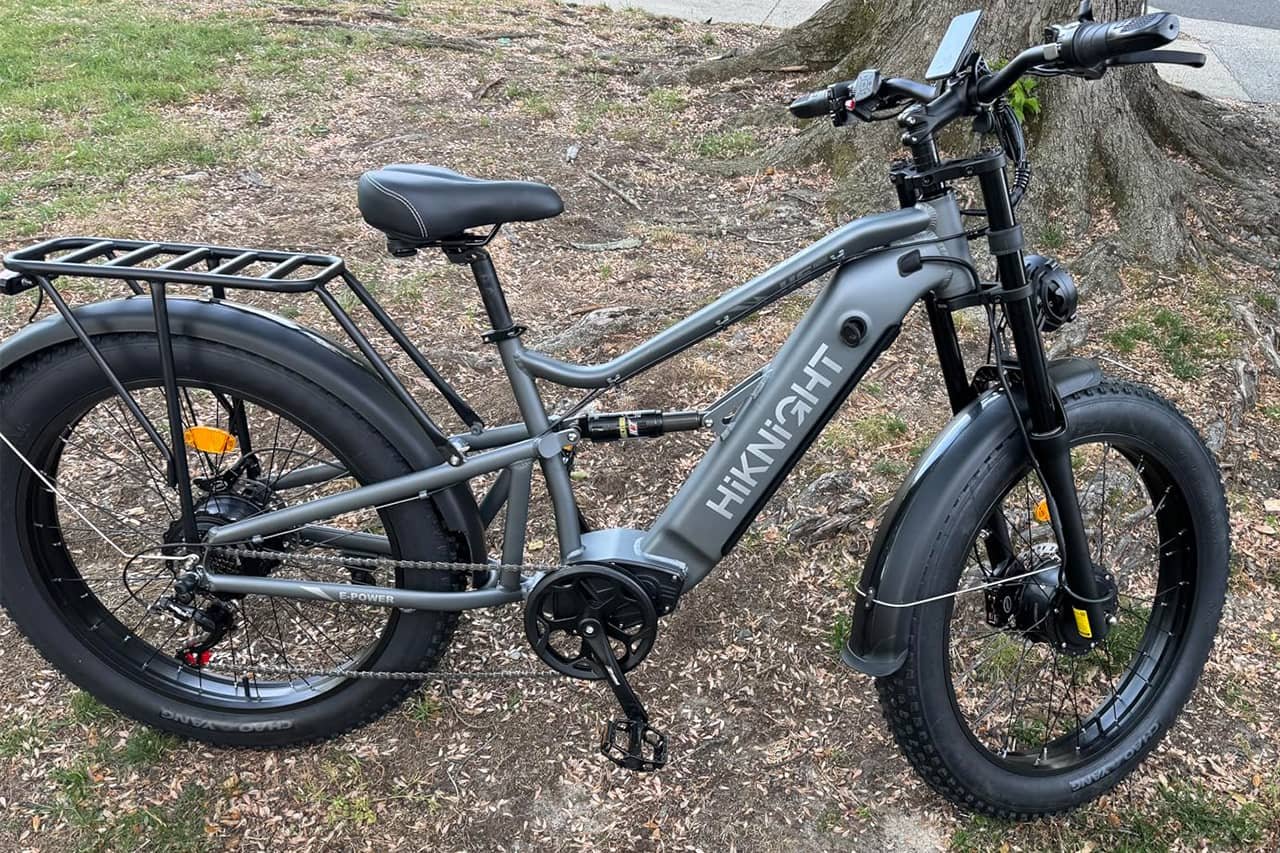
A dual-motor fat-tire e-bike at this price point usually comes with trade-offs. The HiKNiGHT H6 Pro leans hard into speed, traction, and “motorcycle-like” shove—then asks you to accept its weight, its optimistic range claims, and a suspension setup that may need tuning (or upgrading) to feel refined.

If your goal is a fast, stable, confidence-inspiring bike for pavement, gravel, and mellow trails—with the ability to flatten steep climbs on demand—the H6 Pro delivers a lot of performance per dollar. If you need something easy to lift, easy to haul, or truly capable of technical mountain-bike terrain, it’s the wrong tool.

Quick Take

What it does well

  • Serious acceleration and climbing in dual-motor mode, with a noticeable “surge” feel.
  • High-speed stability on mixed surfaces thanks to 26×4.0 fat tires and a long, planted stance.
  • Range can be genuinely strong if you pedal and manage power—especially for the price tier.

What you need to accept

  • It’s heavy (around ~79–80 lb), which impacts transport, storage, and everyday handling off the bike.
  • Range drops fast when you ride aggressively (dual-motor, high speed, throttle-heavy).

What the H6 Pro Is (and Isn’t)

The HiKNiGHT H6 Pro is best understood as a high-powered, dual-hub, fat-tire all-terrain e-bike with comfort-oriented suspension and a speed-first personality. It’s closer to a lightweight moped experience than a traditional bicycle feel when you use both motors.

It is not a technical mountain bike. The weight, the fat-tire handling characteristics, and the component tier make it better suited to:

  • pavement and broken city streets,
  • gravel roads,
  • hardpack dirt,
  • beach cruising or snow at sensible speeds,
  • and “chill off-road,” not aggressive rock gardens or jumps.

Key Specs That Actually Matter in Real Use

Here are the specs that change how it rides:

  • Dual hub motors (listed as dual 1000W with 3000W peak).
  • Top speed claimed up to ~38 mph (this is beyond legal limits in many places—more on that later).
  • Battery: 52V 20Ah (about 1040Wh), internal/removable design.
  • Tires: 26″ × 4.0″ fat tires.
  • Drivetrain: Shimano 7-speed.
  • Brakes: Hydraulic disc brakes.
  • Suspension: front fork plus rear/center shock (“full suspension” style).
  • Weight: listed around 79–80 lb.
  • Rider fit: commonly listed 5’5″–6’5″.
  • Load rating: 330 lb.

Unboxing, Assembly, and Setup

Assembly time

~45 minutes total: roughly 30 minutes to assemble plus ~15 minutes to dial in brakes and controls.

Setup issues you should expect

This is not unusual for direct-to-consumer e-bikes, but it matters if you’re not comfortable with basic wrenching:

  • Brake caliper alignment: rubbing is common until you center the calipers.
  • Lever feel and braking power: hydraulic systems often need lever reach adjustment and pad bed-in before they feel consistent.
  • Cockpit tightening: bars, stem, and controls should be checked and torqued carefully.
  • Suspension behavior: the most repeated complaint I saw is rear spring clanking/bottoming on bumps, which can feel cheap until addressed.

If you’re comfortable doing basic bike setup, this is manageable. If not, a quick shop tune-up is money well spent for safety on a fast bike.

Real-World Ride Experience

Weight and handling off the bike

I noticed immediately that it’s extremely heavy. At roughly 80 lb, lifting it onto a car rack felt like a mistake. That weight doesn’t matter much once you’re rolling, but it matters every day when you store it, load it, or move it up a step.

Power and acceleration

Within minutes of the first ride, I was cruising at 35+ mph without trying. In dual-motor mode, the bike has a punchy, almost “enduro-style” surge—strong acceleration and a lot of shove for a fat-tire platform. Steep hills feel dramatically easier, and the bike feels eager to pull.

Stability at speed

It felt planted and stable on city streets and dirt trails. The fat tires and overall stance give it a confidence-inspiring “stays in its lane” feel, especially compared with lighter, narrower-tire commuter e-bikes.

Range in real riding

I pushed 55 miles on a single charge and still had battery left. That’s notable for this price tier when you’re not riding full-throttle all the time. But it’s also clear that running both motors aggressively will reduce range quickly.

Where it’s not the right tool

Even though it’s fun on dirt and gravel, I would not treat it like a true mountain bike. It isn’t built for hard rock gardens, drops, or “send it” riding. It’s happier on pavement, gravel, and mellow off-road routes where traction and stability matter more than agility.

Power Delivery: Single vs Dual Motor

One of the smartest ways to use the H6 Pro is treating dual motor like a “boost mode” rather than your default.

Single-motor use (practical mode)

Single motor is the way to:

  • stretch range,
  • keep the bike calmer at moderate speeds,
  • reduce drivetrain stress,
  • and make the ride feel more like a powerful e-bike instead of a small electric vehicle.

Dual-motor use

Dual motor is for:

  • steep climbs,
  • quick merges and acceleration,
  • loose surfaces where you want extra traction,
  • and high-speed cruising when conditions are appropriate.

The trade-off is predictable: dual motor feels incredible, but it’s the fastest way to drain the battery.

Hill Performance

If your local routes include real climbs, this is where the H6 Pro separates itself from typical single-motor fat bikes.

  • In dual motor, it has the kind of torque that makes steep grades feel flatter.
  • The bike’s weight is less of a downside here because the motors compensate aggressively.

Practical tip: use dual motor for the climb, then switch back to single motor once you’re over the top. That strategy keeps the “wow” factor while protecting range.

Range Reality: What to Expect

The claimed “up to ~90 miles” range should be treated as best-case: lighter rider, low assist, conservative speed, flat terrain, and lots of pedaling.

Based on the riding notes and typical behavior of a ~1040Wh battery in a heavy, fast dual-motor bike:

  • 90 miles: possible only in conservative PAS conditions.
  • 40–50 miles: realistic for many riders who pedal and use dual motor only when needed.
  • ~20 miles: plausible if you ride aggressively with heavy throttle and frequent dual-motor, high-speed runs.

That range spread is not a flaw by itself—it’s a reality of power. The key is that this bike gives you choice: ride it like an efficient e-bike, or ride it like a thrill machine.

Comfort and Fit

The H6 Pro’s geometry generally suits mid-height riders well. The published fit range (often 5’5″–6’5″) seems believable given the seat adjustment range, but very tall riders should still confirm reach and handlebar height expectations.

Ride comfort

Comfort comes primarily from:

  • 26×4.0 tires acting like suspension,
  • plus the full suspension layout.

On rough surfaces, that combination can feel cushy and stable. The main comfort downside isn’t “it’s harsh”—it’s that the rear spring setup can be noisy or clunky when pushed over bumps.

Saddle comfort

Stock saddles are rarely perfect. If comfort is a priority, plan on a saddle swap. That’s normal in this category and not unique to HiKNiGHT.

Braking Performance (and a Safety Note)

Hydraulic disc brakes are the right call for a heavy bike that can reach very high speeds. Expect:

  • solid power once pads are bedded in,
  • better modulation than mechanical discs,
  • and improved consistency on long descents.

That said, braking feel depends heavily on setup:

  • caliper alignment,
  • rotor trueness,
  • pad bedding,
  • lever reach adjustment.

Important: a bike capable of 35–38 mph demands your attention. Even with hydraulics, stopping distances grow fast at those speeds—especially on loose surfaces. Treat high-speed riding like motorcycle territory: protective gear, clear visibility, and conservative judgment.

Handling: Stable, Not Nimble

This is the best way to describe it:

  • Stable at speed: yes.
  • Confidence-inspiring on mixed surfaces: yes.
  • Quick and nimble like a mountain bike: no.

Fat tires and a heavy frame create a planted feel, but they also reduce flickability. If your rides involve tight switchbacks, technical singletrack, or frequent lifting over obstacles, the H6 Pro will feel like too much bike.

Suspension: The Biggest “Needs Work” Area

The suspension is both a selling point and a common complaint.

What it does well

  • It takes the edge off broken pavement and chunky gravel.
  • Combined with fat tires, it can feel cushy for casual off-road.

The recurring issue: clank/bottom-out

The most repeated complaint I saw is a rear spring suspension clank/bottoming behavior over bumps. This can show up as:

  • noise over sharp hits,
  • a “cheap” feel when the shock compresses quickly,
  • and less control if you ride rough terrain at speed.

Practical upgrade path

If that behavior would bother you, a rear shock upgrade (often moving toward a higher-quality unit, potentially air if compatible) is a reasonable way to make the bike feel more refined.

Display, Lights, and Everyday Features

The H6 Pro includes the feature set most riders expect on a modern e-bike:

  • A large color LCD showing speed, battery, and mileage.
  • Bright headlight and taillight with turn signals for visibility.
  • Multiple riding modes (including PAS and throttle options).
  • 7-speed gearing for pedaling support.

Two real-world notes:

  1. The display and lights are only as good as your mounting and cable routing—double-check everything during setup.
  2. If you plan to ride at higher speeds in traffic, consider adding stronger rear visibility (extra light or reflective gear). The bike can move quickly enough that visibility becomes critical.

Who Should Buy It (and Who Shouldn’t)

Buy the HiKNiGHT H6 Pro if you want…

  • A fast e-bike that can feel “motorcycle-like” in dual-motor mode.
  • Strong hill performance without paying premium-brand prices.
  • A stable, planted ride for pavement, gravel, and mellow off-road.
  • A big battery that can deliver solid range when ridden sensibly.

Skip it if you…

  • Need a bike you can lift often (stairs, racks, small apartments).
  • Want a nimble, technical trail bike for aggressive off-road riding.
  • Expect the suspension to feel premium without tuning or upgrades.
  • Need predictable long range at high speed in dual-motor mode.

🔥 Save $100 on Your HiKNiGHT H6 Pro Today!

Get the ultimate electric bike experience for less. Use coupon code GEBL100 at checkout and enjoy instant $100 off your order!


Real Drawbacks

1) Weight: ~79–80 lb is a daily-life problem

  • Who it affects: anyone who carries a bike up steps, loads onto a rack, stores indoors, or transports frequently.
  • When it shows up: every time the bike is not rolling—loading, parking, moving through tight spaces.
  • Why it matters: it turns “quick errand” moments into friction, and it can be a deal-breaker for apartment living or frequent travel.

2) Range claims are optimistic unless you ride conservatively

  • Who it affects: riders who buy it for the headline “up to 90 miles,” or riders who plan to use dual motor heavily.
  • When it shows up: high-speed cruising, throttle-heavy riding, frequent dual-motor acceleration, and hilly routes.
  • Why it matters: your real range can drop dramatically (even toward ~20 miles in aggressive use), which changes trip planning and battery anxiety.

3) Rear suspension clank/bottom-out can feel unrefined

  • Who it affects: riders sensitive to noise, riders who hit bumps at speed, and anyone doing frequent off-road riding.
  • When it shows up: potholes, curb transitions, washboard gravel, and sharper off-road impacts.
  • Why it matters: it reduces perceived quality and can limit confidence when riding rough terrain fast—often pushing riders toward upgrades.

4) Not a true mountain bike despite the “off-road” vibe

  • Who it affects: riders expecting aggressive trail capability (rock gardens, drops, hard technical riding).
  • When it shows up: technical singletrack, repeated big impacts, high-speed rough descents.
  • Why it matters: the bike’s weight and component tier are better matched to casual off-road than to serious MTB abuse.

5) Out-of-box tuning is likely

  • Who it affects: beginners or anyone without basic mechanical confidence.
  • When it shows up: first ride—brake rub, lever feel, cockpit alignment, and general fastener checks.
  • Why it matters: this is a fast, heavy bike—small setup issues can become safety issues at speed.

Practical Ownership Tips

How to get the best experience

  • Use single motor as your default; save dual motor for hills and bursts.
  • Bed in your brake pads properly and adjust lever reach early.
  • Check every major fastener after the first few rides (especially with a heavy bike).

Transport advice (seriously)

If you plan to car-rack this bike, look at:

  • a rack rated for heavy e-bikes,
  • and ideally a loading ramp solution.

The bike’s weight is the number-one “ownership friction” factor.

Final Verdict

The HiKNiGHT H6 Pro is a high-powered, dual-motor fat-tire e-bike that prioritizes speed and climbing over portability and finesse. It can be wildly fun, surprisingly stable, and legitimately capable for commuting, gravel, and mellow trails—especially considering its price bracket.

But it asks you to live with real compromises: it’s heavy enough to complicate transport, the headline range is highly conditional, and the suspension may need tuning (or upgrades) to feel refined over bumps.

If you want a fast, grin-inducing ride and you can handle the weight and the realities of high power usage, the H6 Pro makes a strong case. If your lifestyle requires easy lifting, frequent transport, or true mountain-bike handling, you’ll be happier with a lighter, simpler e-bike.

Did this e-bike guide help you?
If you enjoyed this article or found it helpful, using the links in this article is a simple way to support GoEBikeLife. It doesn’t cost you anything extra.
Disclosure: As an Amazon Associate I earn from qualifying purchases.
Michael Thompson - E-Bike Reviewer & Test Rider
Michael Thompson

Michael Thompson puts every e-bike through its paces so our readers don’t have to guess. With over 15 years of riding experience and a deep interest in e-bike technology, he focuses on real-world testing—range, comfort, hill-climbing, braking, and long-term reliability. Michael explains the pros, cons, and best use cases of each model in clear, honest language, helping riders find the right e-bike for their daily commute, weekend adventures, or anything in between.

Leave a Reply

Your email address will not be published. Required fields are marked *