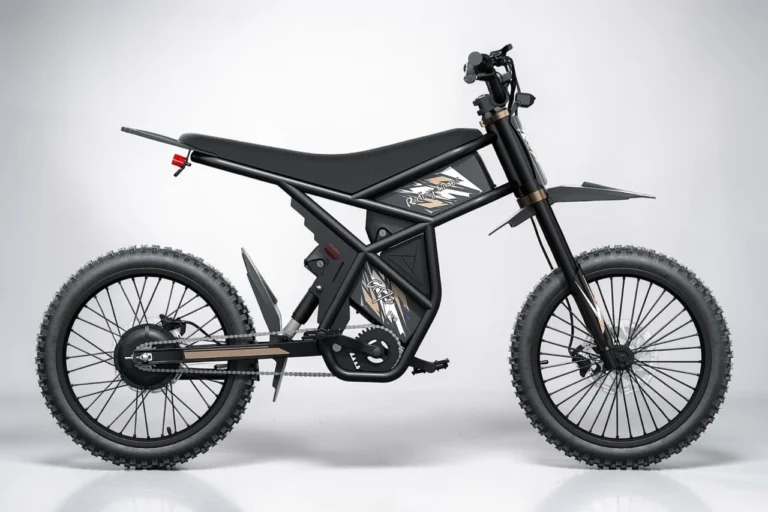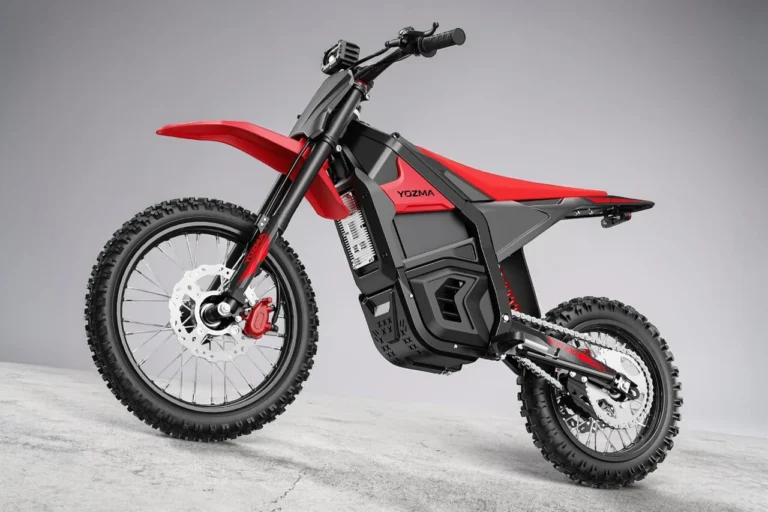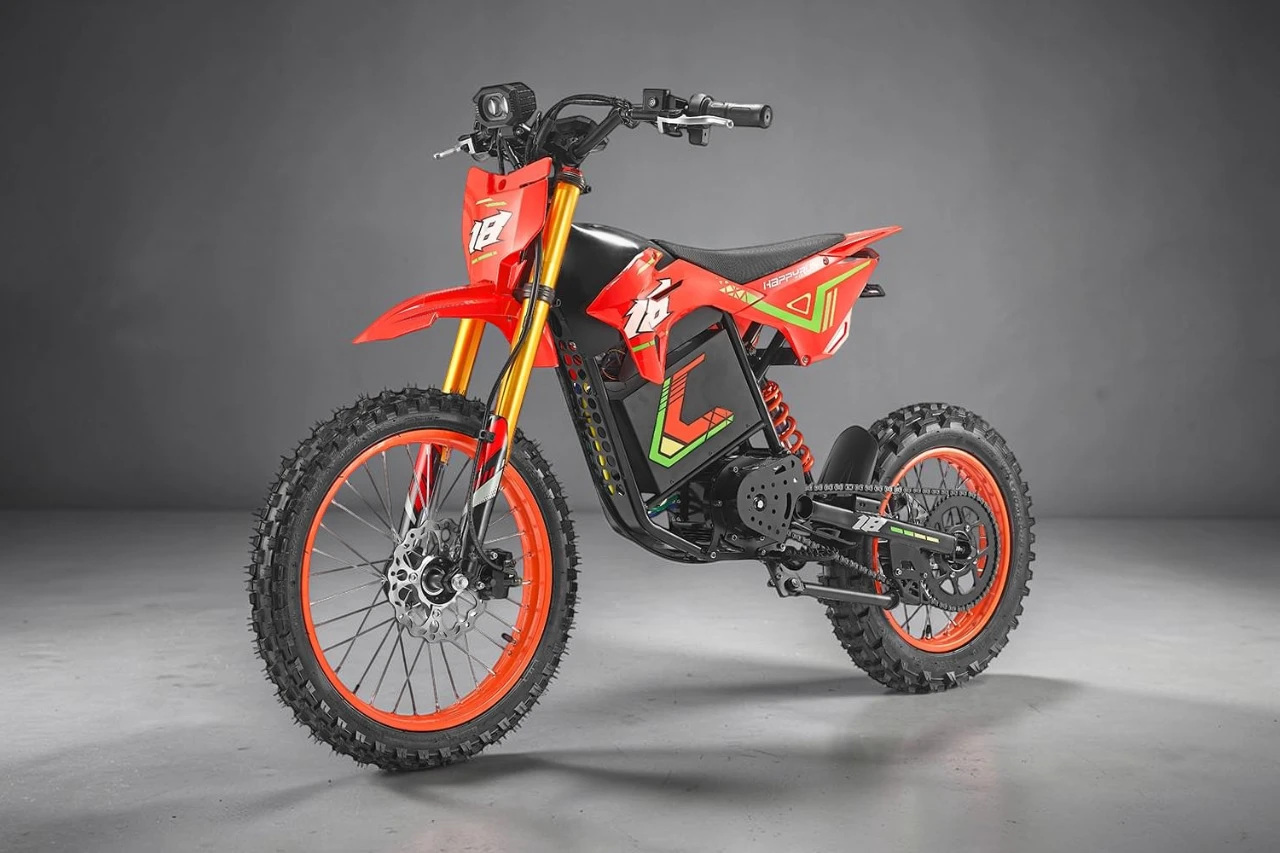
The HAPPYRUN F18 2.0 is not your typical electric bike. With a mid-drive motor rated at 2,000 watts and a manufacturer-claimed peak of 6,000 watts, this machine blurs the line between an e-bike and a small electric motorcycle. Riders looking for something to tear through dirt trails or handle rough backroads will find a lot to consider here.
This bike pairs a 60V 30Ah battery with a manufacturer-claimed 46 mph top speed, which means buyers need to think about local laws, riding location, and safety gear before they twist the throttle. The full suspension, hydraulic brakes, and mixed-size off-road tires point toward a machine built for trails rather than daily bike lanes.
The F18 2.0 fits riders who want serious off-road power and don’t mind treating it more like a motorcycle than a bicycle. If that sounds like your kind of ride, check the current price and availability on Amazon.
HAPPYRUN F18 2.0 Overview
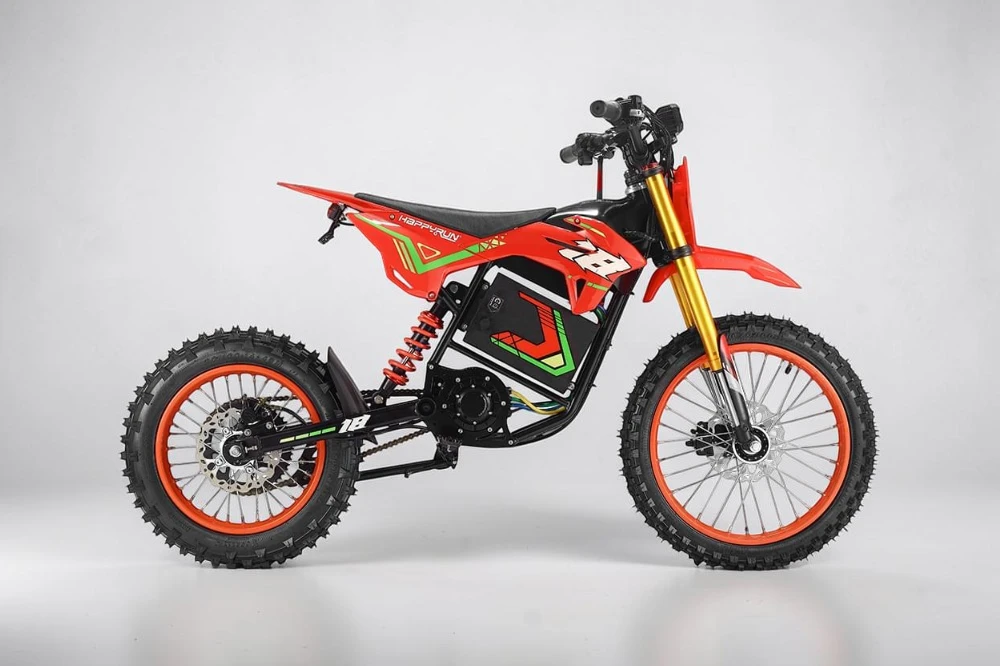
This machine sits closer to an electric dirt bike than a standard e-bike. The mid-drive motor, chain drive, and motorcycle-style frame all point to off-road use rather than city commuting. Its 300 lb payload and adjustable handlebars give it some flexibility for different rider sizes, though the recommended height range of 3’11” to 6’1″ seems broad for a bike capable of 46 mph.
Quick Verdict
The F18 2.0 delivers strong torque, a large battery, and trail-ready suspension in a package that looks and rides like a lightweight motorcycle. It works well for riders who want off-road thrills and understand the responsibility that comes with high speed. Casual commuters or first-time e-bike buyers may find it more machine than they need.
Who It Suits Best
| Rider Type | Good Fit? |
|---|---|
| Off-road and trail riders | Yes |
| Experienced e-bike or motorcycle riders | Yes |
| First-time e-bike buyers | Likely not |
| Urban commuters needing bike lane access | Likely not |
| Riders under 4’0″ or over 6’1″ | Worth checking fit first |
Mid-Drive Performance And Speed Control
The 2,000W rated mid-drive motor, with a manufacturer-claimed 6,000W peak, sends power through a chain drive to the rear wheel. Torque figures conflict across HAPPYRUN’s own materials, with one listing 120 Nm and another citing 245 Nm, so treat either number as an estimate rather than a confirmed spec. The claimed 30-degree incline capability suggests strong low-speed pulling power for steep trails.
Three Riding Modes
The bike offers three selectable speed settings:
- Gear 1: up to 17 mph
- Gear 2: up to 28 mph
- Gear 3: up to 46 mph
This tiered setup lets new riders start slow before working up to higher speeds.
Street-Legality Considerations
A 46 mph top speed puts this bike well outside typical U.S. e-bike classifications. It may legally qualify as a motor-driven cycle or off-highway vehicle, which can mean registration, insurance, or licensing requirements depending on the state. Riders should confirm local rules before assuming street use is permitted.
60V Battery And Practical Range
The 60V 30Ah lithium battery works out to roughly 1,800Wh of capacity, which is substantial for an e-bike-style vehicle. HAPPYRUN’s claimed 60-mile range reflects favorable conditions rather than a guaranteed number every rider will see.
Charging Expectations
The included 67.2V 3.7A charger takes an estimated six to eight hours for a full charge. That’s a reasonable overnight window, though riders who use the bike daily on longer trails may want to plan charging around rest periods rather than quick top-offs.
What Affects Real-World Mileage
Several factors will pull actual range below the claimed maximum:
- Riding at higher speed settings
- Hilly or loose off-road terrain
- Rider weight closer to the 300 lb payload limit
- Cold temperatures
- Frequent acceleration from a stop
Riders who mostly cruise at lower speeds on flatter trails will likely get closer to the advertised figure than those pushing Gear 3 constantly.
Full Suspension, Tires, And Trail Comfort
The F18 2.0 uses a hydraulic front fork paired with a rear hydraulic and coil-spring shock, which HAPPYRUN describes as full suspension. This setup is common on small off-road motorcycles and should absorb moderate trail impacts reasonably well, though it’s not built for extreme jumps or racing-level abuse.
Mixed-Size Wheel Setup
The front tire measures 70/100-17, while the rear is 90/100-14. The larger front wheel helps roll over roots and rocks, while the smaller rear wheel keeps the bike compact and easier to maneuver at low speed. This asymmetric setup mirrors small-displacement dirt bikes more than typical fat-tire e-bikes.
Handling Rough Terrain
Aggressive tread on both tires should provide decent grip on loose dirt and gravel. Combined with the suspension, the bike seems suited for moderate trail conditions rather than technical single-track riding. Riders tackling rocky or root-heavy trails should still ride cautiously given the bike’s weight and speed potential.
Hydraulic Brakes And Safety Controls
Front and rear hydraulic disc brakes with 190mm rotors give this bike motorcycle-grade stopping power. That matters given the bike’s weight, which HAPPYRUN lists inconsistently as either 125 lb or 143 lb depending on the source, plus a payload of up to 300 lb.
Emergency Kill Switch And NFC Unlocking
A magnetic kill switch connects to a tether that cuts motor power if the rider falls or separates from the bike. This is a meaningful safety feature on a machine capable of 46 mph. NFC card unlocking adds a layer of keyless security, letting the rider tap a card to activate the bike instead of using a traditional key.
Reverse Assist And Display Usability
The R-turn reverse assist lets riders back the bike up at low speed by holding a button while turning the throttle, useful given the bike’s substantial weight. The color display shows speed, battery level, and trip data, and is described as readable in direct sunlight, which matters for outdoor and trail use.
Pros & Cons

Pros
- Strong mid-drive motor with high claimed torque output
- Large 60V 30Ah battery with a claimed 60-mile range
- Full suspension suited for moderate off-road terrain
- Hydraulic disc brakes with 190mm rotors for reliable stopping power
- Magnetic kill switch adds a real safety layer at high speed
- NFC unlocking and reverse assist add convenience for a heavy machine
Cons
- Specification discrepancies across torque, weight, and throttle type need buyer verification
- 46 mph top speed likely requires registration or licensing in many states
- Bike weight, even at the lower listed figure, makes it hard for smaller riders to manage
- Charging time of 6 to 8 hours is longer than many standard e-bikes
- Not designed as a bike-lane commuter, which limits everyday practicality
Conclusion
The HAPPYRUN F18 2.0 offers real off-road capability backed by a powerful mid-drive motor, sizable battery, and motorcycle-style suspension and brakes.
It’s a machine built for trail riders who want speed and torque rather than a relaxed neighborhood cruiser. Given the conflicting specs in HAPPYRUN’s own materials, buyers should confirm torque, weight, and throttle details directly before purchase.
For riders prepared to handle a fast, heavy off-road electric vehicle responsibly, and who understand the legal gray area around its top speed, the F18 2.0 presents a reasonable option worth comparing against similar electric dirt bikes.
| Preview | Product | Price | |
|---|---|---|---|

| HAPPYRUN F18 2.0 Adult Off-Road Electric Motorcycle Dirt E-Bike | 6000W Peak Motor,60V… | View on Amazon |
Frequently Asked Questions
What is the real-world top speed of the HappyRun F18 2.0?
HAPPYRUN lists a peak speed of 46 mph in the highest of three gear settings. Real-world results will depend on rider weight, terrain, and battery charge level, so actual top speed may vary slightly from the claimed figure.
How far can the HappyRun F18 2.0 travel on a single charge?
The manufacturer claims up to 60 miles per charge from the 60V 30Ah battery. Riders using higher speed settings or tackling hilly trails should expect a shorter range than this maximum figure.
Is the HappyRun F18 2.0 suitable for off-road and dirt trail riding?
Yes, the full suspension, aggressive off-road tires, and high-torque mid-drive motor are designed with trail riding in mind. It’s better suited to dirt and uneven terrain than paved commuting.
How does the HappyRun F18 2.0 compare with the HappyRun G18 Pro?
Detailed G18 Pro specifications were not part of this review, so a direct comparison isn’t possible here. Buyers considering both models should compare motor power, battery capacity, and suspension type side by side before deciding.
What are the main pros and cons of the HappyRun F18 2.0?
Strengths include strong torque, a large battery, hydraulic brakes, and added safety features like the magnetic kill switch. Drawbacks include a heavy frame, long charging time, and spec inconsistencies that buyers should verify before purchase.
Is the HappyRun F18 2.0 worth buying for its price?
For riders who want serious off-road performance and understand the legal considerations of a 46 mph vehicle, the F18 2.0 offers a reasonable feature set for its category. Buyers focused on casual commuting or bike-lane use may find better value in a standard Class 2 or Class 3 e-bike instead.
GoEBikeLife publishes independent e-bike reviews, comparisons, and practical buying guides. Some links on this page are affiliate links. If you make a purchase through an eligible link, we may earn a commission at no additional cost to you.