Real rides. Real notes. No hype.

Fat Tire vs Regular Tire: learn how tire width changes comfort, range, handling, and flats—plus simple rules to choose the right setup.
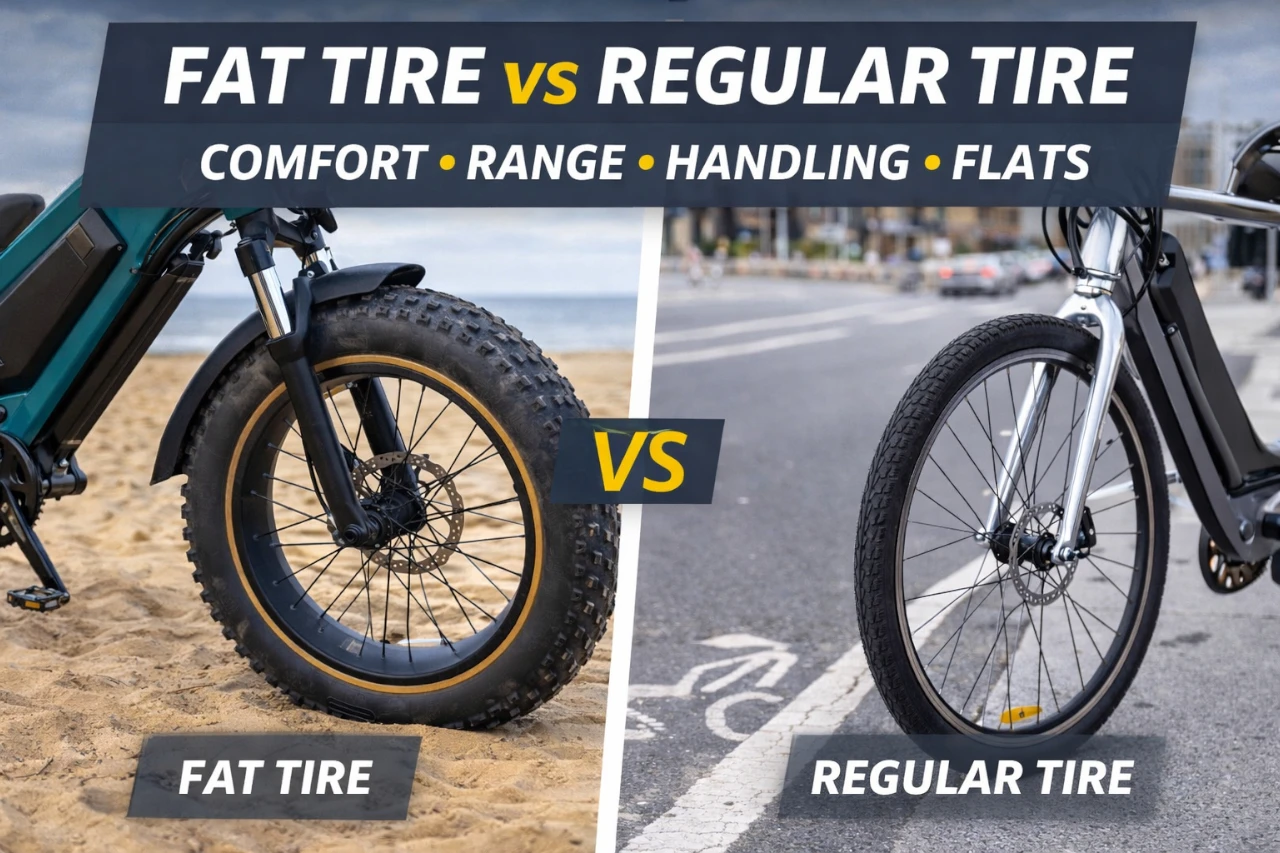
If you ride mostly pavement, bike lanes, and hard-packed paths, a regular tire e-bike (usually 2.0″–2.6″) is the smarter default: it’s more efficient, more precise, and usually gives you better range.
Choose a fat tire e-bike (3.5″–4.0″+) when your riding includes sand, snow, loose dirt, rutted trails, or rough roads—or when comfort is your #1 priority and you don’t mind giving up some range and agility.
My rule of thumb:
Want a short list to start with? Check my Best Fat Tire E-Bikes guide.
If you’re sticking to pavement, start with Best Commuter E-Bikes.
When people ask “fat tire vs regular,” they usually mean four things:
Let’s break it down the way you’ll actually feel it on real rides.
On rough pavement, fat tires feel like a built-in “softener.” You can run lower pressures, and that extra air volume takes the edge off cracks, pebbly asphalt, and small potholes.
Regular tires can still be comfortable—especially in the 2.2″–2.6″ range—but they don’t give you the same floaty cushion unless you add:
That comfort comes with a cost:
Comfort winner: Fat tires (especially on broken roads)
Best “balanced comfort” setup: Regular tires around 2.3″–2.6″
Also read: Tire Pressure Guide for E-Bikes
Fat tires typically reduce range because they:
In real riding, I treat fat tires like a “range tax.” Not always dramatic, but definitely noticeable—especially if you ride fast or do lots of stop-and-go.
If you ride in conditions where regular tires struggle (soft gravel, sand, snow), fat tires can actually keep you moving more efficiently because you’re not constantly spinning out. In those conditions, fat tires aren’t “wasting” energy—they’re giving you traction you can actually use.
Range winner (typical pavement use): Regular tires
Range winner (soft terrain): Fat tires (because traction reduces wasted spin)
Also read: Why Your E-Bike Range Drops?
Fat tires tend to feel:
But they can also feel:
Regular tires usually feel:
But on loose surfaces, they can feel:
Handling winner on pavement: Regular tires
Handling winner on loose terrain: Fat tires
This is where people get surprised, because “more rubber” doesn’t automatically mean “fewer flats.”
Fat tires can reduce pinch flats because you’ve got more air volume and often run lower pressure without bottoming out instantly.
But fat tires also:
Regular tires can be very flat-resistant if you choose:
Flat winner depends on setup, not just width.
A high-quality regular tire with puncture protection often beats a low-quality fat tire.
Also read: Fixing a Flat Tire on Your E-Bike
These aren’t universal rules, but they’re strong starting points for most riders:
| Tire Type | Typical Width | Pavement Pressure Feel | Mixed Path Feel | Notes |
|---|---|---|---|---|
| Regular | 2.0″–2.2″ | firmer, efficient | okay on gravel | great for commuting |
| Regular | 2.3″–2.6″ | balanced comfort | better stability | best “all-around” pick |
| Fat | 3.5″–4.0″ | plush, less efficient | very stable | great for rough roads |
| Fat | 4.0″+ | maximum float | best on sand/snow | heavier + range hit |
Important: pressure depends heavily on rider weight, tire casing, and terrain. Start safe, then adjust slowly.
Pick regular tires, ideally 2.2″–2.6″.
You’ll get better range, better efficiency, and easier steering in traffic.
A fat tire bike can make your daily ride feel calmer—especially if you don’t want to rely on suspension.
This is the clearest win for fat tires. Regular tires can work only on very hard-packed surfaces, but true soft sand/snow is where fat tires earn their keep.
Regular tires are usually paired with lighter builds. Fat tire bikes often feel like “carry a small motorcycle.”
Before deciding, you might also want to see the Best Folding E-Bikes — they balance compact design with real-world ride comfort.
Are fat tires safer?
They can feel safer on rough or loose terrain due to stability and traction. On clean pavement, safety is more about brakes, tire quality, and rider behavior.
Do fat tires always reduce range?
On pavement, usually yes. On loose terrain, they can reduce wheel spin and feel more efficient.
Can regular tires handle gravel trails?
Yes—especially 2.3″–2.6″ with appropriate tread. Deep sand/snow is where they struggle.
Which gets fewer flats?
The tire’s casing, tread, and protection level matter more than width. Width helps with pinch flats, not magically with punctures.
If you want one simple answer: regular tires are the best default for most riders, especially commuters.
Fat tires are the right choice when you need float, traction, and comfort more than you need range and nimble handling.
If you’re still on the fence, here’s the smartest compromise:
a regular tire e-bike in the 2.4″–2.6″ range—it keeps most of the comfort without most of the penalties.