Real rides. Real notes. No hype.

Run a practical E-Bike Range Test: understand watt-hours, assist level, hills, speed, and tire pressure—so you can plan rides with a safe buffer.
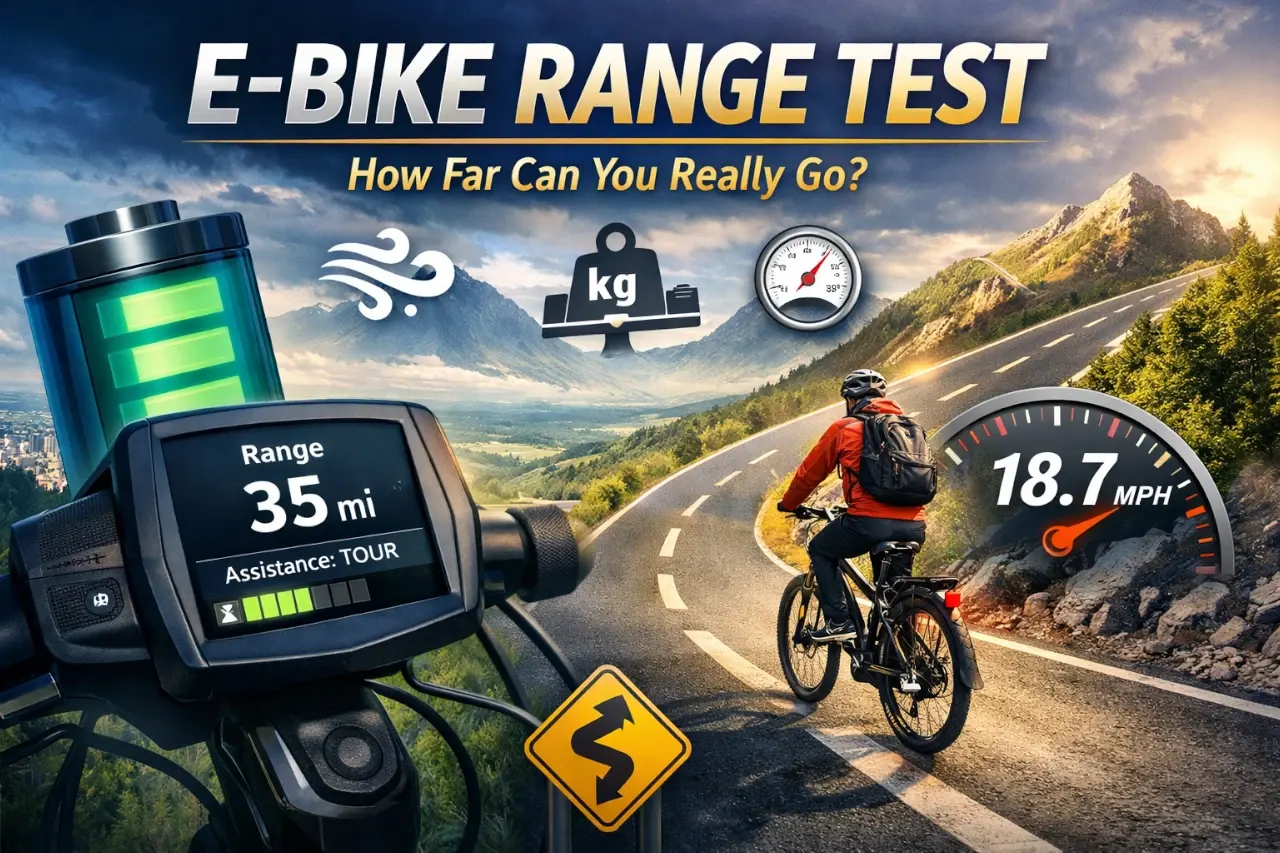
You want to know how far an e-bike really goes, not the number on the box. An e-bike range test shows what your electric bike can do on real roads, with real riding, and real limits. That riding range affects how you commute, explore, and plan each trip.
Most e-bike range tests show 20–70 miles per charge, depending on speed, assist level, terrain, rider weight, and battery size.
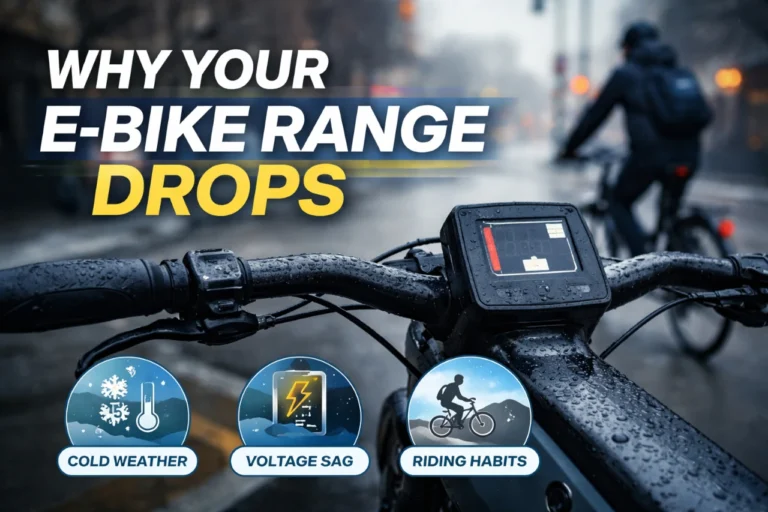
Your ebike range drops fast with high assist and hills, and climbs with steady pedaling and flat routes.
This guide breaks down how range tests work, what actually changes electric bike range, and how to spot claims that do not match real use. You will see common mistakes, simple ways to ride farther, and how to compare models like the best electric bikes without guessing.

Your real-world e-bike range rarely matches the box claim. Tests show that real-world performance depends on speed, assist level, rider weight, terrain, wind, and tire pressure, not just battery size. Sources like Bosch and Consumer Reports report wide swings in miles per charge under normal riding conditions (https://www.bosch-ebike.com/en/service/range, https://www.consumerreports.org/cars/electric-vehicles/how-far-can-an-electric-bike-go-a2020192100/).
| Factor | Effect on Real-World Range |
|---|---|
| Assist level | Higher assist cuts range fast |
| Speed | Faster riding drains more power |
| Terrain | Hills reduce range |
| Rider + cargo | More weight lowers range |
| Tires | Low pressure reduces efficiency |
Common Mistakes
Practical Tips
These steps help you ride with confidence and avoid surprises without changing how you ride day to day.
An e-bike range test measures how far you can ride on one full charge. The key number is watt-hours (Wh), which shows how much energy your battery stores. Higher Wh usually means more range, but your riding style changes the result.
Your energy consumption matters more than the label on the box. Speed, hills, wind, tire pressure, and cargo all affect power consumption. More motor power helps on climbs, but it also uses more energy per mile, which cuts range.
| Battery (Wh) | Typical Use | Rough Range* |
|---|---|---|
| 400 Wh | Flat, low assist | 25–40 miles |
| 500 Wh | Mixed riding | 30–50 miles |
| 750 Wh | Hills, higher assist | 40–70 miles |
*Ranges assume ~15–25 Wh/mile. Real results vary. Bosch explains these factors clearly in its range guide: https://www.bosch-ebike.com/us/service/range-assistant/
Common Mistakes
Practical Tips
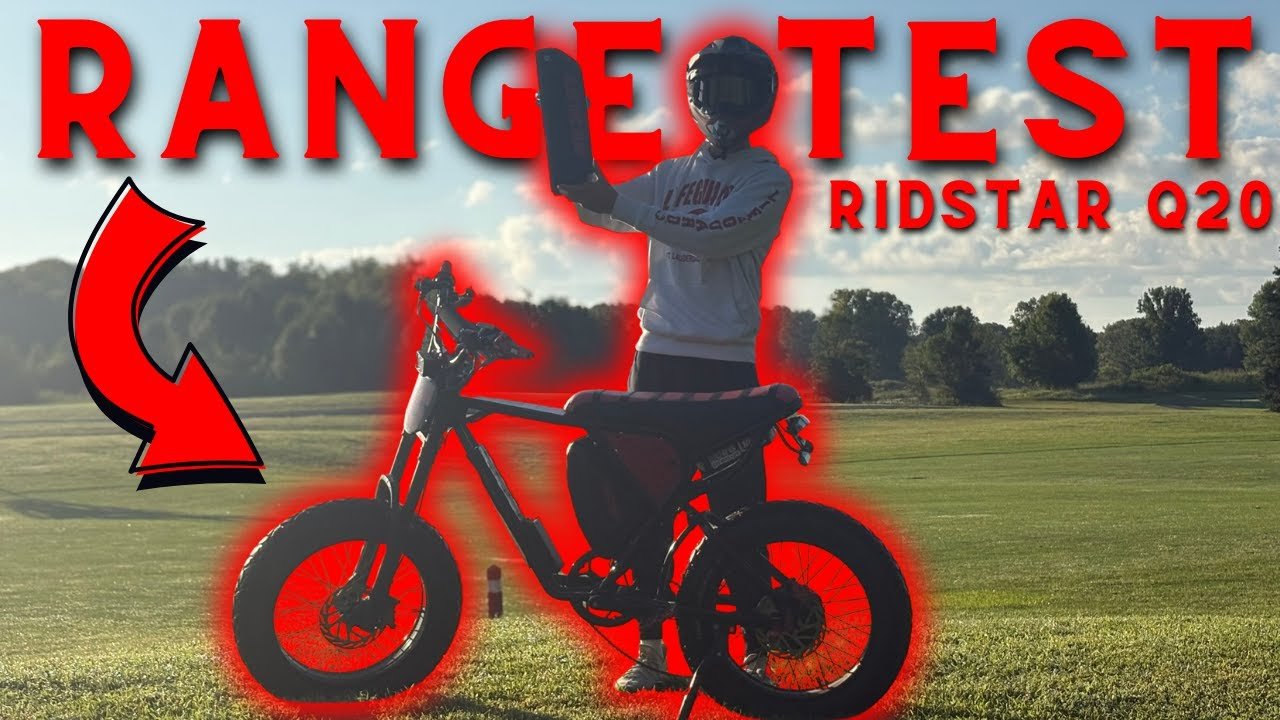
Range tests vary because you control most of the load. Rider weight has a clear impact; more weight asks the motor for more power. Higher average speed also drains the battery faster, especially above 20 mph where wind drag rises.
Assist level matters more than terrain. Riding in eco mode with low pedal assist (PAS) can double range compared to high assist. Using a throttle instead of pedal-assist skips your leg power and shortens rides. Consistent cadence helps the motor stay efficient.
Your riding style shapes results. Smooth starts, steady pace, and light braking save energy. Stop‑and‑go riding burns power fast. For context on bikes built to go farther, see longest range e-bikes.
| Factor | Lower Range | Higher Range |
|---|---|---|
| Assist levels | Turbo | Eco mode |
| Input | Throttle | Pedal assist |
| Speed | Fast bursts | Steady pace |
Common Mistakes
Practical Tips
Start with battery capacity and battery voltage because they set the ceiling for range. Capacity uses watt-hours (Wh), which come from voltage × amp-hours. A larger electric bike battery with more Wh usually goes farther, but weight and cost rise too. For buying basics, use an electric bike buying guide to match range needs to riding style.
Many range tests use a 48v battery because it balances power and efficiency for hills and cargo. Voltage affects how hard the motor can work; amp hours affect how long it can work. Battery size matters too, since bigger packs weigh more and change handling. The U.S. Department of Energy explains how battery capacity links to real-world energy use in simple terms: battery basics.
| Spec to Check | Why It Matters |
|---|---|
| Voltage | Higher voltage supports power at speed |
| Amp-hours | More time at a given power |
| Battery size | Affects weight and fit |
| Wh rating | Best single range indicator |
Common Mistakes
Practical Tips
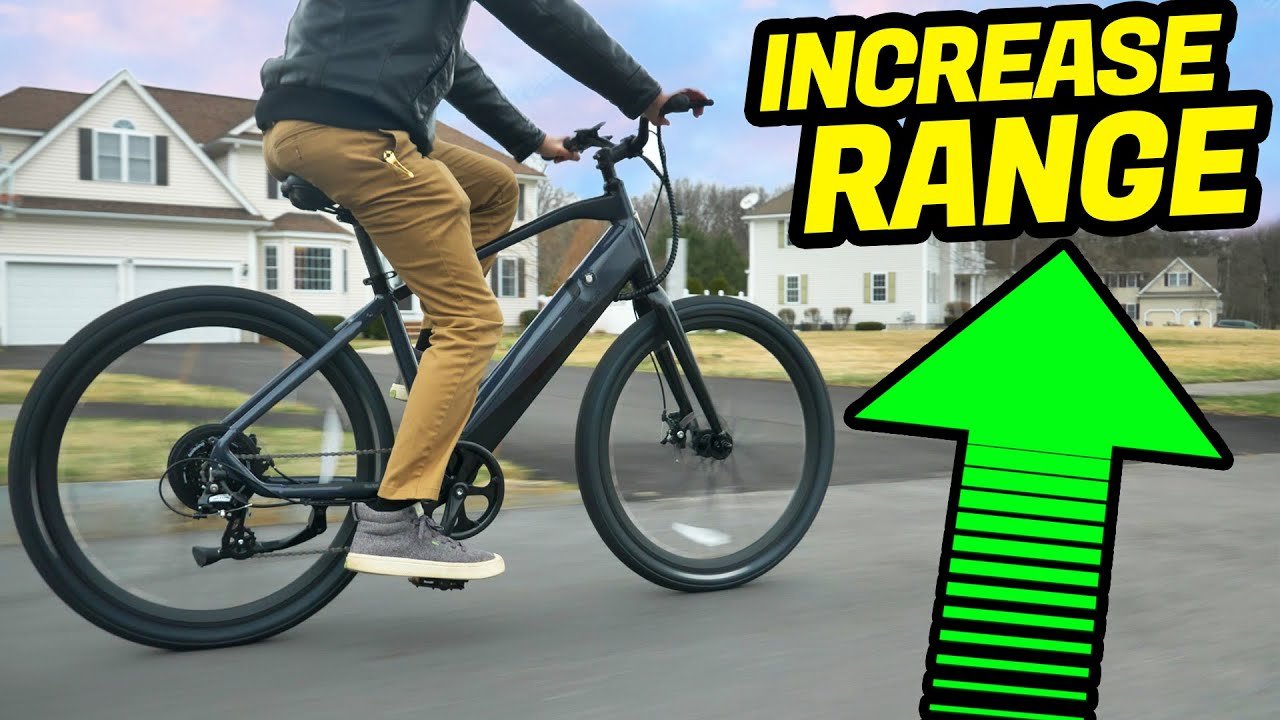
You get the clearest range results when you ride in a testing environment that matches your habits. On flat terrain at a steady riding speed, many commuters log longer miles than the label suggests. Add road bumps and stop‑and‑go traffic, and the track distance drops fast.
On hills and steep climbs, motors draw more power. Wind resistance also matters; headwinds cut range even on smooth roads. Riders who compare models often use notes from e-bike reviews to spot patterns across terrain and weather without guessing.
Cold tests show sharp changes. In cold weather and low temperature, lithium batteries deliver less energy, which shortens range; this effect shows up in lab and road data from the U.S. Department of Energy (https://www.energy.gov/energysaver/electric-vehicles-cold-weather). Wet roads and trail riding add rolling resistance, which reduces distance again.
| Scenario | Typical Impact |
|---|---|
| Flat commute, calm wind | Longest range |
| Hilly route, brisk pace | Shorter range |
| Cold, windy day | Much shorter range |
Common Mistakes
Practical Tips
You can ruin an e‑bike range test by changing too many variables. Small habits add up and hide the real limits of your bike.
Common Mistakes
Practical Tips
| What to Track | Why It Matters |
|---|---|
| Assist mode | Affects motor efficiency |
| Battery age | Impacts real capacity |
| Speed | Higher speed uses more power |
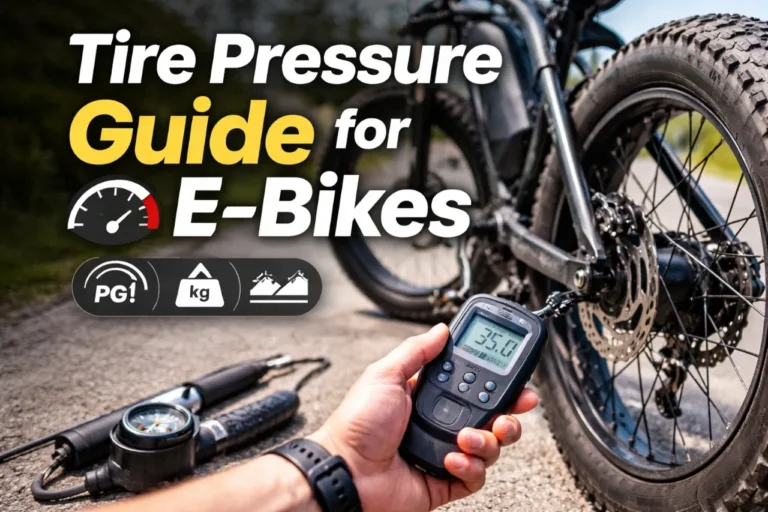
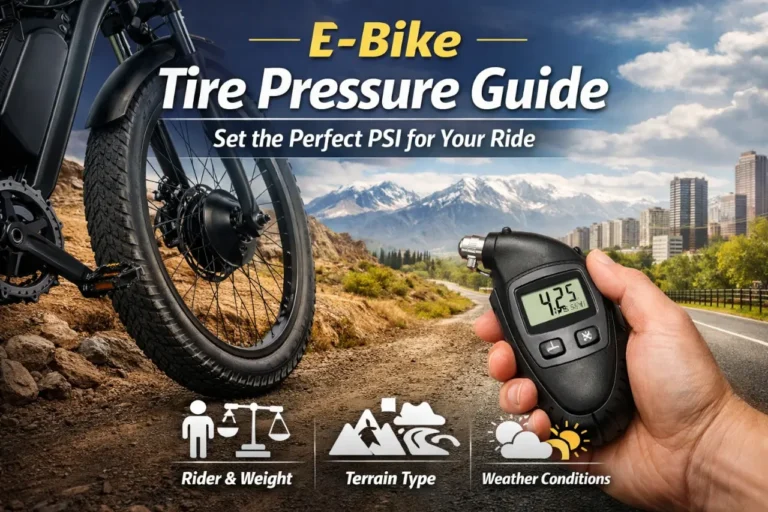
Set tire pressure before you test. Under‑inflated tires increase rolling resistance and cut range. Check the sidewall and use a gauge; studies show higher pressure within safe limits reduces energy loss on pavement (https://www.sheldonbrown.com/tires.html).
Match tire type to your route. Fat tires add comfort but raise rolling resistance on smooth roads. For range tests on pavement, use narrower, well‑inflated tires; save fat tires for sand, snow, or rough trails.
Control variables you can repeat. Ride the same loop, keep assist level steady, and avoid sharp starts. If you compare bikes, note battery size and weight; many budget e-bikes vary here, as seen in lists of electric bikes under $1000 (https://goebikelife.com/best-electric-bike-for-under-1000/).
Practical Tips
Common Mistakes
E-bike range tests work best when you treat them like real rides. Terrain, speed, and assist level matter more than lab numbers. Field testing shows how fast range drops when you push power or climb nonstop, as seen in Pinkbike’s e-bike field test range observations.
Battery size helps, but efficiency matters just as much. An 800Wh battery can still underperform if the motor, tune, or riding style wastes energy. You get better insight when you compare how the range was used, not just how far the bike went.
Common Mistakes
Practical Tips
Range testing rewards consistency and patience. When you control variables, you get numbers that help you plan rides, avoid cut-short days, and choose the right bike for your trails.