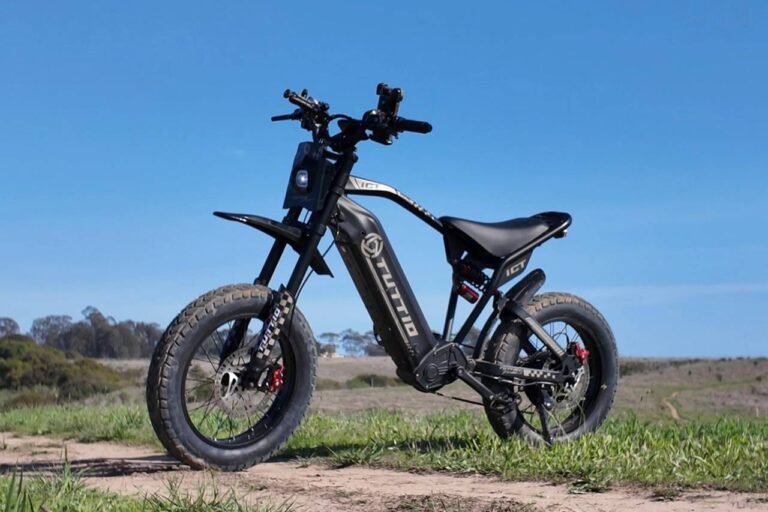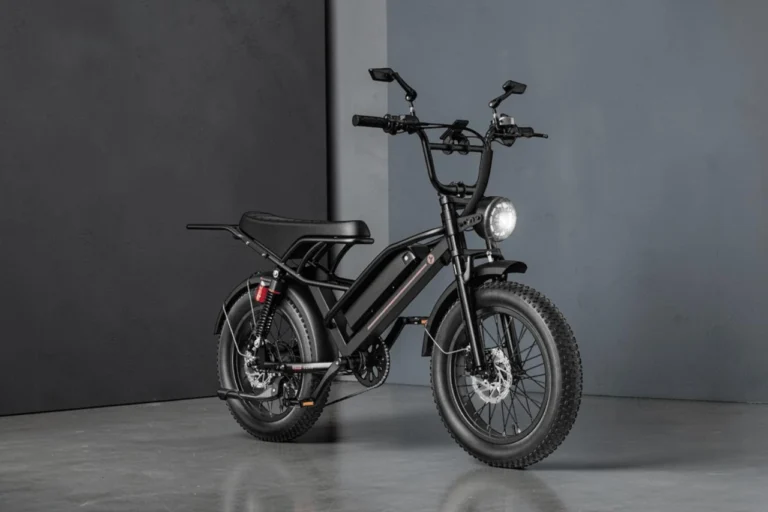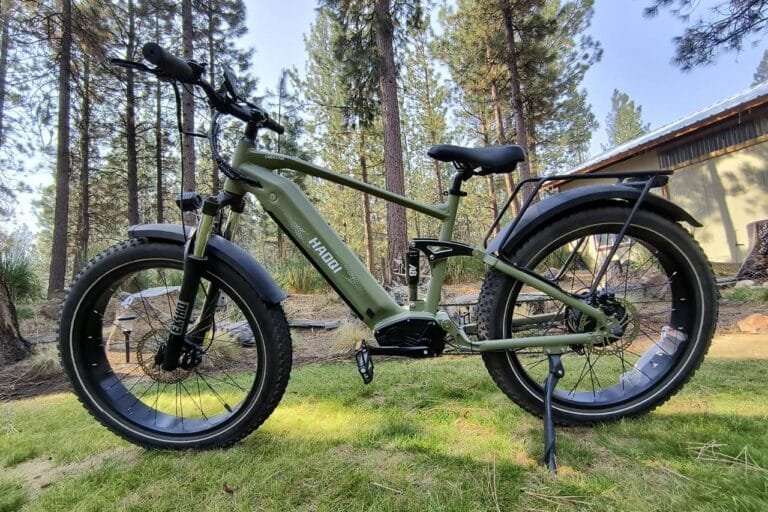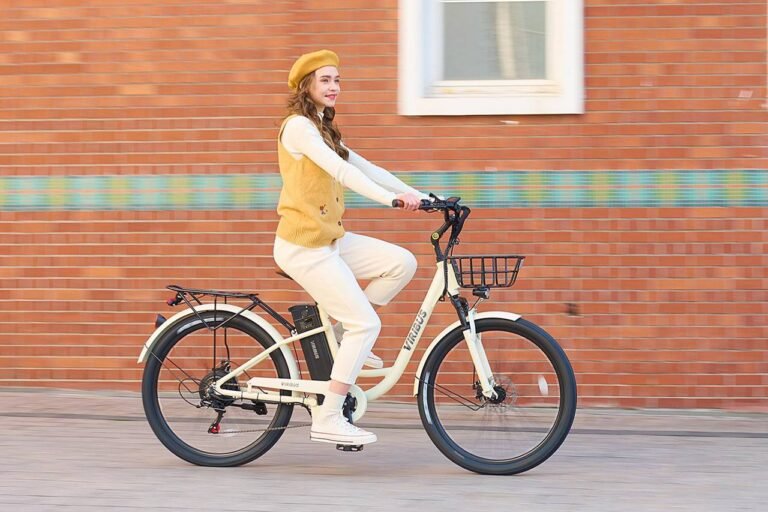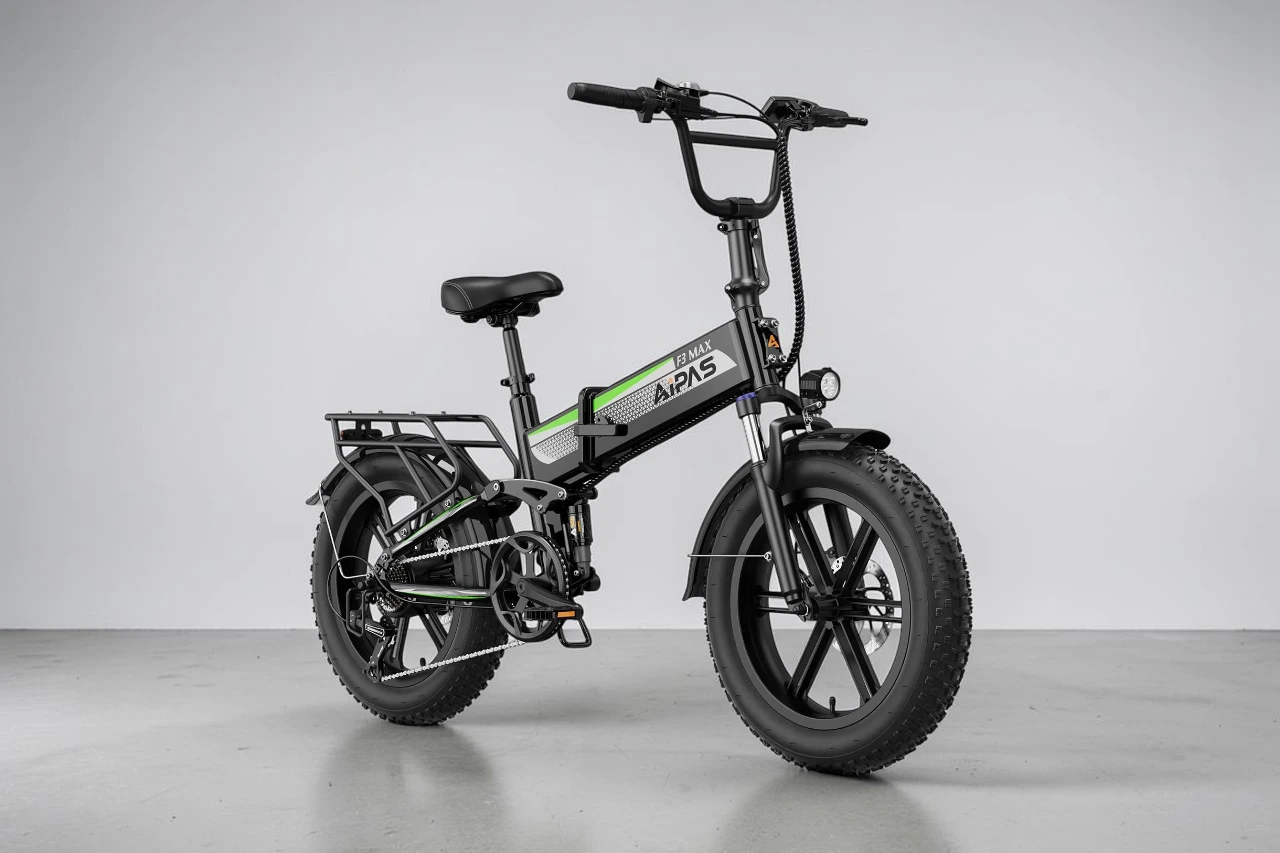
The Aipas F3 Max is not your typical compact folding electric bike. With an 1800W peak rear hub motor, a large 864Wh removable battery, full suspension, and oversized 20-inch fat tires, it combines the practicality of a folding commuter with the performance-oriented character of an adventure e-bike.
What caught my attention immediately was how much equipment Aipas has packed into this relatively compact design. Hydraulic disc brakes, an adjustable BMX-style handlebar, a rear cargo rack, integrated lighting, and a claimed 500-pound load capacity make the F3 Max an interesting alternative to more conventional folding models.
Of course, impressive specifications don’t automatically translate into a great riding experience.
I wanted to look beyond the advertised power and range to understand how the F3 Max handles acceleration, rough terrain, steep climbs, braking, and everyday riding. The riding observations available for this review provide a useful picture of its strengths, although the maximum battery range and several manufacturer claims have not been independently verified.
Here’s what stands out—and what I would consider before buying.
Quick Verdict
The Aipas F3 Max is a compelling choice for riders who want a powerful, comfortable folding e-bike that can handle commuting, recreational riding, and occasional off-road adventures.
Its biggest advantage is the combination of strong motor assistance and a surprisingly comfortable riding position. The 1800W peak motor delivers enthusiastic acceleration, while the wide tires, front suspension, and rear shock help smooth out rough paths.
I particularly like the adjustable handlebar arrangement. Rather than forcing riders into an aggressive forward-leaning position, the F3 Max allows for a relaxed, upright posture that feels more appropriate for everyday transportation.
The hydraulic brakes and useful commuter accessories strengthen the package.
However, this is not a lightweight folding bike. At approximately 85 pounds with the battery installed, it can be cumbersome to lift or carry. Its advertised 85-mile range also represents favorable riding conditions rather than what most riders should expect during high-speed use.
Best for: Commuters, heavier riders, RV travelers, recreational cyclists, and riders looking for a versatile fat-tire folding e-bike.
Not ideal for: Anyone who regularly carries a bike upstairs, needs a lightweight public-transit commuter, or wants a dedicated technical mountain bike.
Biggest strength: Strong acceleration combined with comfortable, confidence-inspiring handling.
Biggest trade-off: Substantial weight, ambitious range claims, and speed-classification questions.
Our verdict: The F3 Max offers an attractive mix of power, comfort, and equipment, provided its weight and riding characteristics suit your needs.

- 【POWER THROUGH CITY STREETS & STEEP HILLS】- Powered by a 1800W peak motor with 110Nm torque, the Aipas F3 Max…
- 【LONGER RIDES. FEWER CHARGES.】- A high-capacity 48V 18Ah (864Wh) removable battery delivers 40–60 miles of…
- 【FULL SUSPENSION BUILT FOR ROUGH TERRAIN】- A full suspension system with a front suspension fork and rear hydraulic…
- 【CONFIDENT BRAKING & ALL-AROUND VISIBILITY】- Upgraded 180mm dual hydraulic disc brakes deliver stronger stopping…
- 【FOLDABLE DESIGN FOR COMMUTE & ADVENTURE】- Built with a durable alloy frame, this foldable electric bicycle combines…
Aipas F3 Max Specifications at a Glance
| Specification | Aipas F3 Max |
|---|---|
| Motor | Rear hub motor, 1800W peak |
| Claimed torque | 110 Nm |
| Advertised top speed | 28 mph |
| Battery | 48V 18Ah removable lithium-ion |
| Battery capacity | 864Wh |
| Advertised maximum range | Up to 85 miles with pedal assist |
| Advertised electric-only range | Up to 40 miles |
| Pedal assist | 5 levels |
| Throttle | Half-twist |
| Drivetrain | Shimano 7-speed |
| Tires | 20 × 4.0-inch fat tires |
| Front suspension | Adjustable suspension fork |
| Rear suspension | Four-link suspension with rear shock |
| Brakes | Dual hydraulic disc brakes, 180mm rotors |
| Wheels | Integrated spoke-style wheels |
| Bike weight | Approximately 85 lb including battery |
| Claimed load capacity | 500 lb |
| Recommended rider height | 4’7″–6’5″ |
| Unfolded dimensions | 66 × 27 × 48 inches |
| Folded dimensions | 36 × 23 × 30 inches |
| Accessories | Rear rack, fenders, lights, turn signals, horn |
| Warranty | 1 year, according to the seller |
Specifications are based on manufacturer information and the supplied product details. Performance, component configurations, and accessories can vary by production batch.
Design and Build Quality: Compact BMX Styling Meets Everyday Practicality
The first thing I like about the Aipas F3 Max is its distinctive appearance.
It has the proportions of a compact BMX-inspired bike, but the oversized tires, substantial frame, tall handlebars, and integrated battery give it a much more rugged personality.
The main battery sits inside the large folding frame section. This keeps the battery relatively centralized while protecting it from the exposure common with some externally mounted designs.
The folding mechanism divides the frame near its midpoint, with a locking assembly designed to secure the two sections during riding.
The frame also incorporates rear suspension linkage, creating a more sophisticated appearance than the simple rigid-frame construction found on many inexpensive folding e-bikes.
Several details add to its everyday usefulness:
- A substantial rear cargo rack
- Full-length front and rear fenders
- Folding pedals
- Adjustable seat height
- An adjustable handlebar stem
- Integrated front and rear lighting
- A compact color display
I especially appreciate the folding pedals. They are a small feature, but they help reduce the bike’s width when storing it in a garage, RV, or vehicle.
The integrated wheels also give the F3 Max a distinctive appearance. Their broad spoke-style construction complements the bike’s chunky tires and adventure-focused styling.
One detail worth remembering is that the rear rack’s individual weight rating is not clearly established by the overall 500-pound load-capacity claim. I would confirm the rack limit before carrying particularly heavy cargo.
Overall, the F3 Max looks and feels designed for riders who want a practical, feature-rich electric bike rather than something minimalist.
Motor Performance: Strong Acceleration With Plenty of Low-Speed Pull
The F3 Max’s motor is arguably its most exciting feature.
Aipas advertises 1800W peak output and 110 Nm of torque, which are substantial figures for a 20-inch folding electric bicycle.
Peak wattage alone does not tell the full story, but the motor’s behavior during acceleration and hill climbing makes the torque-focused design easier to appreciate.
Acceleration and throttle response
The F3 Max’s power delivery feels particularly enthusiastic in its higher assistance settings.
One of the most useful characteristics is that the throttle response changes with the selected pedal-assist level. This makes it easier to control the bike rather than having maximum acceleration available in every setting.
During the riding evaluation, approximate throttle-only speed readings progressed as follows:
| Assist level | Approximate speed observed |
|---|---|
| PAS 1 | 10 mph |
| PAS 2 | 12–13 mph |
| PAS 3 | 15.6 mph |
| PAS 4 | 22.5 mph |
| PAS 5 | Up to approximately 32 mph |
These readings describe one riding session, not guaranteed speeds for every F3 Max. Rider weight, terrain, battery charge, settings, and conditions all affect performance.
I like the separation between the lower and higher assistance levels. PAS 1 and PAS 2 appear better suited to slower paths and maneuvering, while PAS 4 and PAS 5 provide the stronger acceleration appropriate for open, permitted riding areas.
At maximum assistance, the motor delivers noticeably stronger pull, and that response deserves respect—especially on loose terrain.
How fast is the Aipas F3 Max?
Aipas officially advertises a 28 mph top speed.
However, one flat-ground full-power run produced an indicated speed of approximately 32 mph with a rider weighing about 230 pounds. A separate downhill section produced higher speeds, but gravity-assisted downhill readings should not be confused with the motor’s rated top speed.
I would not assume that every production unit can reach 32 mph, or that this represents a legally compliant configuration.
Important: The conventional U.S. Class 3 category generally limits motor assistance to 28 mph while pedaling. The throttle-assisted speeds seen in the riding observations raise questions about the F3 Max’s classification in some jurisdictions. Buyers should confirm the delivered bike’s actual speed settings, motor labeling, and local riding restrictions before using it on public roads or shared trails.
Motor noise
Another positive detail is the motor’s relatively restrained sound.
The rear hub motor produces an audible electric whir, but the riding observations suggest it is not excessively high-pitched during normal acceleration.
For riders who regularly commute through residential neighborhoods or enjoy peaceful recreational rides, a reasonably smooth-sounding motor is a welcome characteristic.
My takeaway: The F3 Max’s motor is well suited to riders who prioritize strong acceleration, responsive throttle control, and assistance on inclines. Its potential speed, however, makes responsible setup and riding especially important.

Hill-Climbing Performance: Strong Torque Is the Main Attraction
Hill climbing is one area where the F3 Max makes a convincing impression.
Aipas claims the motor can tackle inclines up to 25 degrees. That’s a demanding claim, and I would not treat it as a verified continuous climbing capability without a measured gradient and controlled evaluation.
Still, the riding observations demonstrate useful low-speed torque.
On a loose dirt incline, the bike accelerated uphill from a standing start using throttle assistance in its highest setting. The climb reached approximately 9–10 mph near the top.
What impressed me most was the initial response. The motor delivered a strong pull rather than struggling to get moving.
That matters because steep starts can be challenging for heavy electric bikes, especially when the rider cannot carry momentum into the climb.
The combination of the rear hub motor, relatively compact wheel diameter, and substantial electric assistance makes the F3 Max an appealing option for hilly neighborhoods.
The Shimano 7-speed drivetrain adds flexibility when pedaling uphill. Selecting an easier gear allows the rider to contribute more comfortably without relying entirely on the throttle.
There are limits, though.
Loose dirt reduces available traction, and hard acceleration on steep grades can cause the rear tire to slip. A heavy bike also demands more from its motor and battery during sustained climbing.
I would start with a moderate assistance level on unfamiliar hills, maintain a stable riding position, and increase power progressively.
For everyday inclines and recreational dirt paths, the F3 Max looks capable. For extremely steep, technical mountain-bike terrain, I would prefer a purpose-built electric mountain bike.
Battery and Range: An 864Wh Pack Offers Real Long-Distance Potential
The F3 Max uses a 48V 18Ah removable battery, providing 864Wh of nominal energy capacity.
That’s a substantial battery for a folding bike, and it is one of the main reasons this model deserves consideration for longer rides.
Aipas advertises up to 85 miles using pedal assistance, along with a shorter electric-only range.
The important distinction is how the bike is ridden.
What range should you realistically expect?
Aipas provides an estimated 40–60 miles for more typical riding conditions in its product information, while the 85-mile figure represents a favorable pedal-assist scenario.
I would treat these as manufacturer estimates rather than promises.
The actual distance between charges depends heavily on:
Assistance level: PAS 1 uses less motor assistance than PAS 5, generally allowing the battery to last longer.
Throttle use: Frequent throttle-only acceleration increases energy consumption, particularly at higher speeds.
Rider and cargo weight: The greater the total load, the more energy the motor needs during acceleration and climbing.
Terrain: Long hills, loose surfaces, and soft sand generally demand more power than flat pavement.
Tire pressure and temperature: Both can affect rolling resistance and battery performance.
The 85-mile figure may be achievable under particularly economical conditions, but I would not plan a demanding high-speed ride around that number.
For my own buying decision, the more meaningful feature is the 864Wh battery capacity. It provides a useful energy reserve compared with smaller folding e-bike batteries, even if real-world range falls well short of the headline claim.
Removable battery convenience
The battery is housed inside the folding frame and can be removed for charging.
This gives owners two options: charge it while installed or remove it and charge it separately in a suitable location.
I appreciate that flexibility, especially for riders who store their bikes in garages or RV compartments without convenient electrical outlets.
The battery is also described as having an intelligent battery management system and IP65 protection. I would interpret the IP65 claim as applying to the specified battery assembly, not assume that every electrical connection or component on the entire bike has the same protection.
Charging time
Aipas advertises a charging time of approximately 4–6 hours, but its published specification also lists a 2A charger.
Those figures warrant clarification because a full recharge of an 18Ah battery using a 2A charger would ordinarily require longer than six hours.
I would confirm the charger supplied with the exact bike and the expected empty-to-full charging time before relying on the advertised estimate.
My takeaway: The 864Wh battery is a major selling point. Just buy it for its substantial capacity, not on the assumption that every ride will approach 85 miles.
Full Suspension and Ride Comfort: One of Its Most Appealing Features
The F3 Max uses a front suspension fork and a rear four-link suspension arrangement.
Together with its 20 × 4.0-inch tires, this setup is intended to reduce the harshness of rough pavement, gravel, and uneven dirt trails.
Front suspension
The front fork provides adjustable suspension behavior, including a lockout function.
This is useful because riders encounter different surfaces.
On smooth pavement, a firmer suspension setting can make the front end feel more controlled. On rougher paths, allowing the fork to absorb bumps generally improves comfort.
The front suspension appears especially helpful when crossing small rocks, ruts, and uneven patches.
Rear suspension
The rear suspension adds another level of comfort.
In the riding observations, the bike maintained a reasonably composed feel over uneven dirt and small trail obstacles.
The centrally mounted rear shock contributes to that impression, although the shock fitted to the reviewed configuration did not offer the same clearly accessible adjustment options as the front fork.
That limits how precisely riders can tailor rear suspension behavior to their weight and preferences.
I would also avoid confusing this arrangement with the sophisticated, highly adjustable suspension systems used on expensive off-road mountain bikes.
Its main benefit here is everyday comfort.
Fat tires and saddle comfort
The 4-inch-wide tires provide a large contact patch and additional cushioning over uneven ground.
They also contribute to the F3 Max’s stable, planted character on dirt and gravel.
The saddle has a broad, cushioned profile that suits the bike’s upright riding position.
I like this combination for commuting and recreational rides. It reduces the need to maintain an aggressive cycling posture, and the larger tires help absorb smaller surface imperfections before they reach the suspension.
The trade-off is additional weight and rolling resistance.
My takeaway: Comfort is one of the strongest reasons to choose the F3 Max. Its suspension, fat tires, and upright geometry work together to make mixed-surface riding more pleasant.

Handling and Off-Road Performance: Nimble for Such a Heavy Bike
At first glance, an 85-pound folding fat-tire bike might seem awkward to maneuver.
The F3 Max’s short-wheelbase proportions and upright handlebar position help counter that impression.
During tighter turns and low-speed maneuvers, the bike responded well to steering inputs. It was able to navigate winding paths and small obstacles without appearing excessively cumbersome.
I particularly like that its lower pedal-assist settings provide more manageable throttle response. That helps when negotiating narrow paths or maneuvering around pedestrians and obstacles.
Dirt and gravel trails
On loose dirt and gravel, the F3 Max demonstrates why its wide tires and suspension are valuable.
The bike maintains good forward momentum across modestly rough surfaces, and the suspension helps absorb repeated bumps.
However, the motor is strong enough that aggressive throttle input can overwhelm the available traction.
For that reason, I would use PAS 2 or PAS 3 on technical or unfamiliar sections rather than automatically selecting maximum assistance.
Is it a true electric mountain bike?
Not in the dedicated trail-bike sense.
The F3 Max has enough capability for recreational dirt paths, gravel roads, and mild off-road adventures, but it remains a heavy folding utility-style e-bike.
Its frame hinges, suspension design, overall weight, and geometry distinguish it from purpose-built e-MTBs.
I would not recommend using it for large jumps, high-impact downhill trails, or aggressive technical riding without explicit manufacturer approval.
For commuting routes that include dirt shortcuts or unpaved recreational paths, however, I think the F3 Max offers useful versatility.
Hydraulic Brakes: Appropriate Equipment for a Powerful E-Bike
The braking system is another meaningful advantage.
The F3 Max uses front and rear hydraulic disc brakes with 180mm rotors and two-piston calipers on the observed configuration.
This is the kind of equipment I want to see on a heavy, powerful electric bike.
Braking feel and control
The brakes demonstrated strong stopping ability during both paved and loose-surface riding.
They provided enough braking force to lock a wheel on dirt, illustrating both their power and the importance of careful modulation.
The most effective approach is to apply braking progressively rather than abruptly grabbing a brake lever.
On loose ground, locking a wheel can quickly reduce steering control and increase the risk of sliding.
I also like that the hydraulic system offers a more refined lever feel than many basic cable-operated disc brakes.
What about the claimed stopping distance?
Some promotional material highlights extremely short braking distances and times.
I would be cautious about treating those figures as universal.
Stopping distance changes significantly with rider weight, speed, surface traction, tire pressure, and braking technique. Without a controlled measurement under clearly stated conditions, an exact figure is not meaningful for every rider.
Still, the brake equipment itself is a notable strength.
For a bike that can accelerate quickly and carries substantial mass, dependable braking performance is essential.
Folding Design and Portability: Convenient Storage, Not Lightweight Transport
One of the F3 Max’s main selling points is its folding frame.
The hinge allows the bike to become significantly shorter for storage, and the pedals fold to reduce its overall width.
Aipas lists folded dimensions of approximately 36 × 23 × 30 inches.
That can make it useful for RV travel, garage storage, or transporting it in a sufficiently large vehicle.
How practical is it to fold?
The concept is straightforward, but folding any heavy electric bike requires care.
Before moving or storing the F3 Max, I would make sure the battery is switched off, support the frame while releasing the latch, and avoid putting fingers near the hinge.
When unfolding, the frame latch and handlebar stem must be properly secured before riding.
I would also check that the brake hoses, wiring, and other cables are not pinched during the process.
The biggest limitation: weight
The approximate 85-pound ready-to-ride weight is difficult to ignore.
Even when folded, this is not a bike most people will enjoy carrying long distances.
Lifting it into an SUV or RV compartment could be manageable for some owners, but it may require two people or appropriate loading equipment.
Removing the battery reduces the lifting weight somewhat, though the frame remains substantial.
I see the folding mechanism primarily as a storage and transportation feature—not a solution for carrying the bike up several flights of stairs.
My takeaway: The F3 Max is compact when folded relative to its full riding size, but it is not genuinely lightweight or effortless to carry.

Ergonomics and Rider Fit: An Upright Position That Makes Sense
One of my favorite aspects of the F3 Max is the adjustable cockpit.
The tall BMX-style handlebar and adjustable stem allow riders to create a comfortable, relatively upright riding position.
That is particularly useful for people who dislike leaning forward for extended periods.
The seatpost provides further height adjustment, helping the bike accommodate different rider proportions.
Aipas recommends the model for riders approximately 4’7″ to 6’5″ tall.
That is an unusually broad claimed range, although actual comfort depends on inseam length, reach, and personal fit preferences—not height alone.
In the riding observations, a rider just over six feet tall looked comfortably positioned without appearing cramped.
The ability to raise the handlebars farther is a useful feature for taller riders or anyone who prefers a more relaxed posture.
For shorter riders, I would pay special attention to minimum saddle height, reach, and the ability to put a foot down comfortably before purchasing.
The claimed 500-pound overall load capacity is another distinctive feature, but I would verify how Aipas defines that rating and avoid assuming it applies to the rear rack individually.
Display, Controls, and Everyday Features
The F3 Max offers an impressive collection of practical accessories.
Color LCD display
The color display is positioned near the left side of the handlebar.
It provides essential riding information without requiring an oversized central screen.
Its bright presentation makes the assist level and other key information relatively easy to identify.
I prefer this compact arrangement for a bike with multiple handlebar controls.
Five pedal-assist levels
The five assistance settings give riders meaningful control over motor output.
For urban cruising and slower paths, the lower settings make the bike easier to manage. Higher settings unlock stronger acceleration for more demanding riding situations where that power is appropriate.
Shimano 7-speed drivetrain
The Shimano shifter and Tourney rear derailleur give the F3 Max a conventional seven-speed mechanical gearing system.
This is useful even on a throttle-equipped e-bike.
Selecting the right gear helps maintain a comfortable pedaling cadence, especially when starting on hills or trying to reduce battery consumption.
It is a functional drivetrain rather than a premium performance groupset, but it fits the bike’s everyday utility focus.
Integrated lighting and turn signals
The F3 Max comes equipped with a front headlight, rear light, turn signals, and horn.
I appreciate seeing these accessories included because commuting riders often need them immediately after assembling a new bike.
The turn signals are particularly convenient for communicating intentions, although riders should still use appropriate hand signals and remain alert to traffic.
The lighting controls include multiple switches, which may take some familiarization.
For regular nighttime commuting, I would also evaluate the headlight’s actual road illumination rather than assume that having an integrated light automatically makes it sufficient for every dark road.
Rear rack and fenders
The rear rack increases the bike’s daily practicality.
It could be useful for carrying an appropriately secured bag, groceries, or commuting essentials, subject to the rack’s specified weight limit.
The front and rear fenders help reduce water and road debris thrown toward the rider.
Together, these accessories make the F3 Max easier to use as daily transportation without immediately buying several upgrades.
What I Don’t Like About the Aipas F3 Max
Despite its impressive feature set, there are several compromises I would want buyers to understand.
1. It is heavy for a folding electric bike
Approximately 85 pounds is substantial, particularly for anyone who needs to carry the bike or load it into a vehicle frequently.
Folding improves storage flexibility, but it does not eliminate the physical effort involved in moving a heavy bicycle.
2. The advertised 85-mile range is optimistic for fast riding
The large battery is genuinely appealing, but frequent throttle use, heavy loads, strong acceleration, and hills can reduce range significantly.
I would plan everyday rides around conservative battery expectations rather than the maximum advertised distance.
3. Rear suspension adjustability appears limited
The front suspension offers useful adjustment, but the rear shock on the observed bike does not provide the same obvious tuning flexibility.
Riders seeking highly customizable suspension may find this limiting.
4. Speed capability creates legal and safety questions
The manufacturer advertises a 28 mph Class 3 riding experience, yet higher throttle-assisted speeds were reported during the ride.
Depending on the delivered configuration, the bike may not qualify as a conventional Class 3 e-bike under some local laws.
This is especially important for people intending to use public bike paths, regulated trails, or city streets.
5. Battery safety documentation should be verified
Aipas markets the model as having been tested by SGS to the UL 2849 standard.
That is a relevant safety claim, but buyers should request and verify current documentation covering the exact model. Testing to a standard and maintaining an active third-party product certification are not necessarily the same thing.
I would not assume that a product listing alone establishes current certification status.
6. Some practical specifications need clarification
The charging-time claim does not clearly align with the listed charger output, and the rear rack’s independent carrying capacity is not established by the overall bike payload rating.
These are details I would want confirmed before buying.
None of these concerns automatically makes the F3 Max a poor choice, but they matter when evaluating it against competing folding e-bikes.
Who Should Buy the Aipas F3 Max?
I would recommend considering the F3 Max if you want:
- A folding electric bike with unusually strong motor assistance.
- An upright riding position for commuting or recreational cycling.
- A large removable battery for longer trips.
- Full suspension and fat tires for mixed pavement and light off-road use.
- Hydraulic brakes and useful commuter accessories.
- A high manufacturer-rated carrying capacity, subject to verified limits.
The F3 Max is especially interesting for RV owners, riders who alternate between paved and unpaved routes, and people who prioritize comfort over minimal weight.
I would look elsewhere if you need:
- A folding bike light enough for frequent stair carrying.
- A compact bicycle for crowded trains and buses.
- A dedicated mountain bike for aggressive trail riding.
- A clearly documented, speed-limited Class 1, 2, or 3 configuration without further verification.
- A lightweight fitness-focused bicycle with minimal motor assistance.
The F3 Max makes more sense as a versatile electric utility and adventure bike than as a highly portable conventional folder.
Aipas F3 Max FAQ
Is the Aipas F3 Max a good electric bike?
The Aipas F3 Max offers a strong combination of motor assistance, battery capacity, suspension comfort, and practical accessories. It is worth considering for commuting and recreational riding, especially if you value power and comfort more than low weight. Buyers should verify its speed configuration and current safety documentation.
How fast can the Aipas F3 Max go?
Aipas advertises a maximum speed of 28 mph. A higher indicated speed of around 32 mph was observed during one full-power ride, but that should not be treated as a guaranteed or universally legal operating speed. Local e-bike regulations and the specific bike configuration matter.
Can the Aipas F3 Max handle hills?
The F3 Max has strong low-speed motor assistance and demonstrated the ability to climb a loose dirt incline from a standing start. Its advertised 110 Nm torque rating supports its hill-focused positioning, although the manufacturer’s maximum 25-degree climbing claim has not been independently confirmed.
Does the Aipas F3 Max have a removable battery?
Yes. The F3 Max uses a 48V 18Ah removable battery housed within the folding frame. It can be charged while installed or removed for charging according to the manufacturer’s instructions.
Is the Aipas F3 Max good for heavy riders?
Aipas advertises a maximum load capacity of 500 pounds. This makes it an interesting option for heavier riders, but buyers should confirm the manufacturer’s definition of that limit, including cargo, and ensure that braking, tire, and component requirements are appropriate for their intended load.
Is the Aipas F3 Max easy to transport?
The bike folds to approximately 36 × 23 × 30 inches, making storage and vehicle transport more convenient. However, it weighs approximately 85 pounds with the battery, so lifting it can be challenging.
Final Verdict: Is the Aipas F3 Max Worth Buying?
After examining its equipment, riding behavior, and practical limitations, I think the Aipas F3 Max has a lot to offer the right buyer.
Its strongest qualities are easy to identify: enthusiastic acceleration, useful hill-climbing torque, a comfortable upright riding position, wide tires, full suspension, and a generous battery capacity.
The hydraulic brakes and integrated accessories make the package more appealing, particularly for riders who intend to use the bike for both transportation and weekend recreation.
I also like that Aipas has not treated the folding design as a reason to compromise entirely on comfort or carrying capability.
At the same time, the F3 Max requires realistic expectations.
It is heavy, its maximum advertised range is highly condition-dependent, and its speed configuration deserves careful attention before riding in areas with e-bike restrictions. I would also verify the current battery safety documentation and charger specifications before purchasing.
My conclusion: If you want a powerful folding fat-tire e-bike for comfortable commuting, gravel paths, occasional dirt trails, and RV adventures, the Aipas F3 Max deserves a place on your shortlist. It offers an appealing balance of practical equipment and enthusiastic motor performance, provided you are comfortable with its weight and have verified the specifications that matter most to you.
| Preview | Product | Price | |
|---|---|---|---|

| Aipas F3 Max Folding Electric Bike for Adults, Full Suspension 20″ Fat Tire | 1800W Peak… | $898.99 $853.99 | View on Amazon |
GoEBikeLife publishes independent e-bike reviews, comparisons, and practical buying guides. Some links on this page are affiliate links. If you make a purchase through an eligible link, we may earn a commission at no additional cost to you.