A little joy belongs in every day.

Why is ebike battery hot? Learn when warmth is normal, when it signals trouble, and the safe charging, storage, and service steps to take now safely.
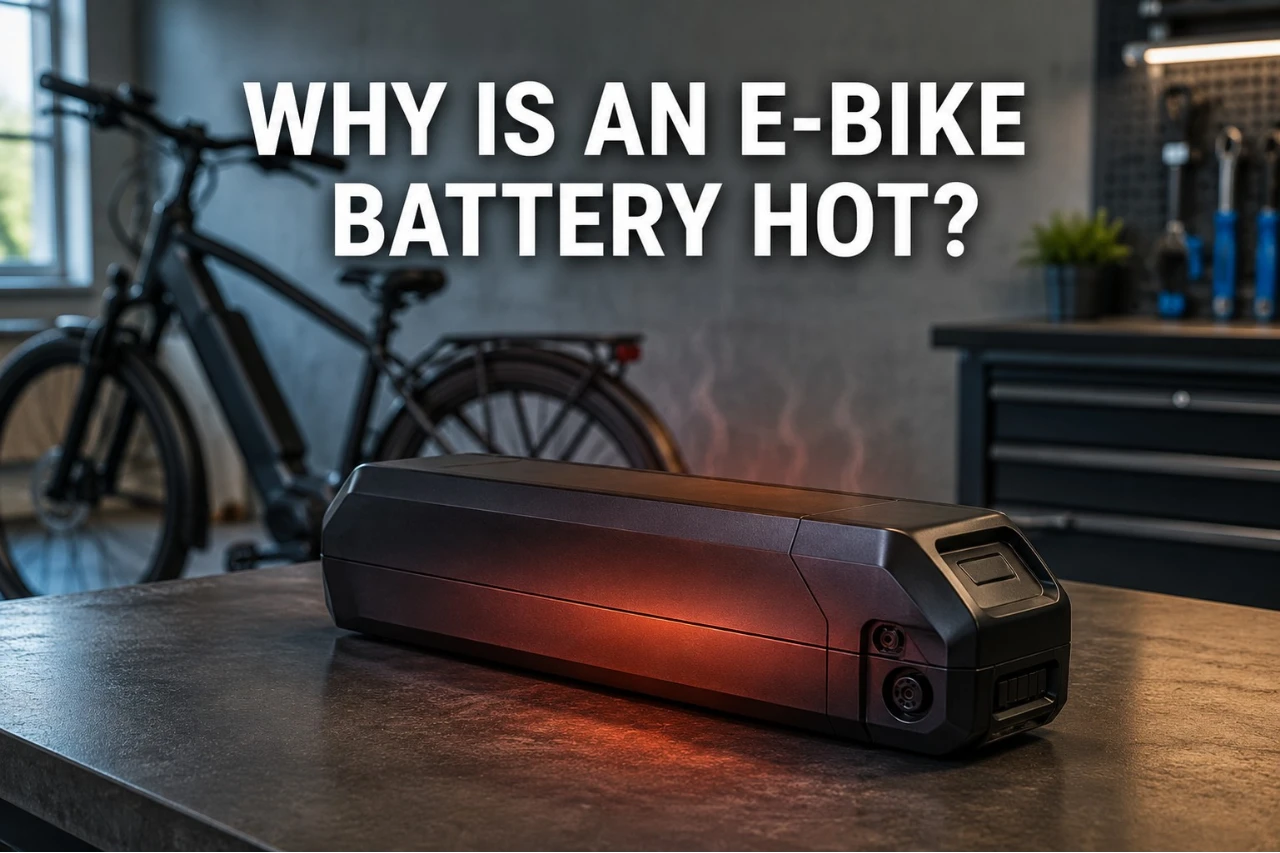
A battery that feels mildly warm after a long ride or while charging is often normal. But if you are asking, “why is ebike battery hot,” because the pack is uncomfortable to hold, unusually hot compared with normal use, swollen, leaking, or producing an odor, treat it as a safety concern. Stop using and charging the battery, follow the e-bike manufacturer’s instructions, and arrange professional help.
Lithium-ion batteries work by moving energy through chemical cells. That process produces some heat, especially under a heavy load or during charging. The key is knowing the difference between expected warmth and heat that points to a problem.
There is no single safe-to-touch temperature that applies to every e-bike battery. Battery case materials, battery location, outside temperature, and the manufacturer’s thermal protections all affect how the pack feels. Your owner’s manual is the first authority for operating and charging temperature limits.
As a practical rule, a battery that is slightly warm after climbing hills, riding fast with high assist, hauling cargo, or completing a charge may be operating normally. It should begin cooling after the ride or once charging ends.
A battery needs attention when the heat is unusual for your bike or use pattern. If the case is too hot to comfortably keep your hand on, it continues getting hotter after you stop riding, or it remains very hot long after charging, stop using it. Do not assume it will be fine because the bike still turns on.
| What you notice | Likely response |
|---|---|
| Mild warmth after a demanding ride or normal charge | Let it cool in a dry, open area before storage or another charge. |
| Hot case, but no smoke, damage, or odor | Stop riding and charging. Keep it away from combustible materials and contact the manufacturer or a qualified battery service provider. |
| Swelling, cracking, leaking, hissing, sharp chemical odor, smoke, or flames | Do not use or charge it. Move people away and contact emergency services if there is smoke, fire, or an immediate threat. |
Hard riding is the most common reason for normal battery warmth. High pedal assist or throttle use asks the battery to supply more current. Long climbs, strong headwinds, deep sand, snow, rough surfaces, frequent hard acceleration, and carrying a child or cargo can all increase demand.
A larger rider load does not automatically mean something is wrong. It does mean the battery and motor may work harder, particularly on a steep route. Reduce assist for part of the climb when practical, pedal steadily, and give the bike a short rest after sustained high-load riding. This can reduce heat, though it may also reduce speed or require more rider effort.
Hot weather adds another layer. A battery left in direct sun can start a ride already warmer than it should be. Parking in shade and allowing the battery to return to the manufacturer’s recommended operating range before riding can help. Avoid leaving an e-bike or removable battery in a closed vehicle, where interior temperatures can rise quickly.
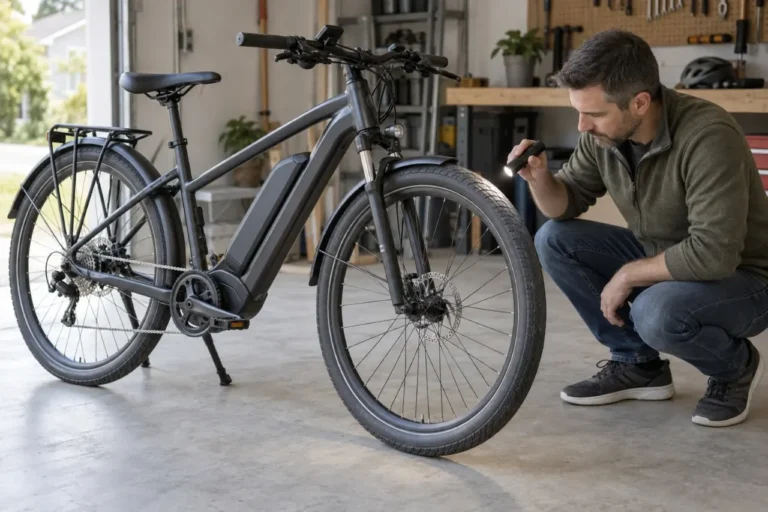
Heat can also come from an electrical or mechanical issue. A dragging brake, severely underinflated tire, or drivetrain problem makes the motor work harder than expected. Check that both wheels spin freely, the brakes release fully, and tires are inflated to the pressure range printed on their sidewalls. These are reasonable owner checks. Do not open the battery case to investigate a suspected internal fault.
Charging creates heat because energy is moving into the cells. Most e-bike battery systems use a battery management system, often called a BMS, to monitor cell voltage, temperature, and other conditions. It is a protection system, not a guarantee that every charging setup or damaged pack is safe.
A modest temperature rise can be normal, particularly near the end of a charge. Excessive heat may be related to charging a battery immediately after a ride, charging in a hot room, using a damaged charger or cable, poor ventilation, or an internal battery problem.
Use the charger supplied or specifically approved by the e-bike manufacturer for that battery. Chargers are not interchangeable simply because a plug fits. A mismatched charger can supply the wrong voltage or communicate incorrectly with the battery system.
Follow these charging practices:
A charger brick can become warm during normal operation, too. It should not be covered, placed on a bed or rug, or enclosed in a tight box that traps heat.
Heat is more concerning when it appears with visible damage or sudden changes in behavior. Stop using the battery and charger if the pack swells, the case separates, fluid appears, the connectors melt or discolor, or the battery suddenly loses power or refuses to charge after becoming hot.
A sweet, metallic, or sharp chemical smell, crackling, hissing, smoke, or vapor requires immediate caution. Do not attempt to cool a damaged battery with water, put it in a freezer, wrap it in a blanket, or take it apart. Do not place it in household trash or a curbside recycling bin.
If there is smoke, fire, or a credible immediate risk, get people away from the area and call emergency services. If you can do so without touching or handling a hot or damaged pack, disconnect charging power from the wall outlet. Do not re-enter a hazardous area to save the e-bike.
For a battery that is hot but not actively smoking or burning, keep it in a dry area away from combustible materials and do not charge or ride it. Contact the e-bike manufacturer for its battery evaluation and transport instructions. A qualified e-bike mechanic may help identify bike-side issues, but an internally damaged lithium-ion battery requires manufacturer-directed service or a qualified battery technician.
Store batteries indoors in a cool, dry location protected from direct sunlight and temperature extremes. The exact storage temperature and charge level vary by manufacturer, but many e-bike makers advise storing a battery partly charged rather than fully charged or completely empty for a long period.
For seasonal storage, remove the battery from the bike if the manufacturer permits it, check its charge periodically, and keep its terminals protected from moisture and metal objects. Never store a battery beside keys, loose tools, coins, or other metal items that could bridge the terminals.
If a battery has been in freezing weather, allow it to warm gradually indoors before charging. Charging a very cold lithium-ion battery can damage it. Likewise, wait to charge a battery that has been sitting in extreme heat until it has cooled to the manufacturer’s specified range.
Before riding again, compare the battery’s behavior with what is normal for your e-bike. Was the route unusually steep? Was the bike parked in sun? Did you use maximum assist for most of the trip? If there is a clear, one-time reason for mild warmth and the pack cools normally with no damage or odor, monitor it closely on the next few rides.
If the battery becomes hot repeatedly under ordinary conditions, do not keep testing it. Record what happened, including outside temperature, ride distance, assist level, charging time, and any warning lights. That information can help the manufacturer or service professional diagnose the issue without guesswork.
A cool-down period, the correct charger, and an honest response to warning signs go a long way. Your battery does not need to feel cold to be healthy, but unusual heat is always worth taking seriously before your next ride.
Is it normal for an e-bike battery to get warm?
Yes. Mild warmth after charging, climbing hills, carrying cargo, or using high pedal assist can be normal. The battery should gradually cool after charging or riding ends.
Why does my e-bike battery get hot while charging?
Charging naturally produces some heat as energy moves into the battery cells. Excessive heat may result from charging immediately after a ride, high room temperatures, poor ventilation, a damaged charger, or an internal battery problem.
Why does my e-bike battery get hot after riding?
Long climbs, frequent acceleration, high assist levels, heavy loads, headwinds, and underinflated tires can make the motor draw more power. This increased demand may cause the battery to become warmer than usual.
How hot is too hot for an e-bike battery?
There is no universal surface temperature that applies to every e-bike battery. Stop using the battery if it is too hot to touch comfortably, continues getting hotter after use, or develops swelling, leaking, unusual odors, hissing, or smoke.
How long should an e-bike battery cool before charging?
Allow the battery to cool until it is no longer unusually warm and is within the charging temperature range stated in the owner’s manual. A fixed waiting time does not apply to every battery, riding condition, or outdoor temperature.
Can I use an e-bike battery again after it cools down?
A mildly warm battery may be used again if it cools normally and shows no damage, odor, or performance changes. If it repeatedly becomes hot during ordinary riding or charging, stop using it and contact the manufacturer or a qualified battery technician.
What should I do if my e-bike battery becomes hot while charging?
Stop charging and unplug the charger from the wall if you can do so safely. Keep people away if the battery is smoking, hissing, leaking, or rapidly heating, and contact emergency services if there is a fire or immediate danger. The U.S. Fire Administration advises unplugging a noticeably hot charging battery and evacuating rather than attempting to fight a lithium-ion battery fire. (USFA battery guidance)
Can I use a different charger with my e-bike battery?
Use only the charger supplied with the e-bike or specifically approved by its manufacturer. A connector that fits does not confirm that the charger has the correct voltage, current, or communication system. The CPSC advises using only a charger provided or recommended by the manufacturer. (CPSC micromobility guidance)