A little joy belongs in every day.

The Hopepeak D10 reached about 26 mph and delivered a smooth, stable ride, but its cable-operated mechanical disc brakes felt weak at speed.
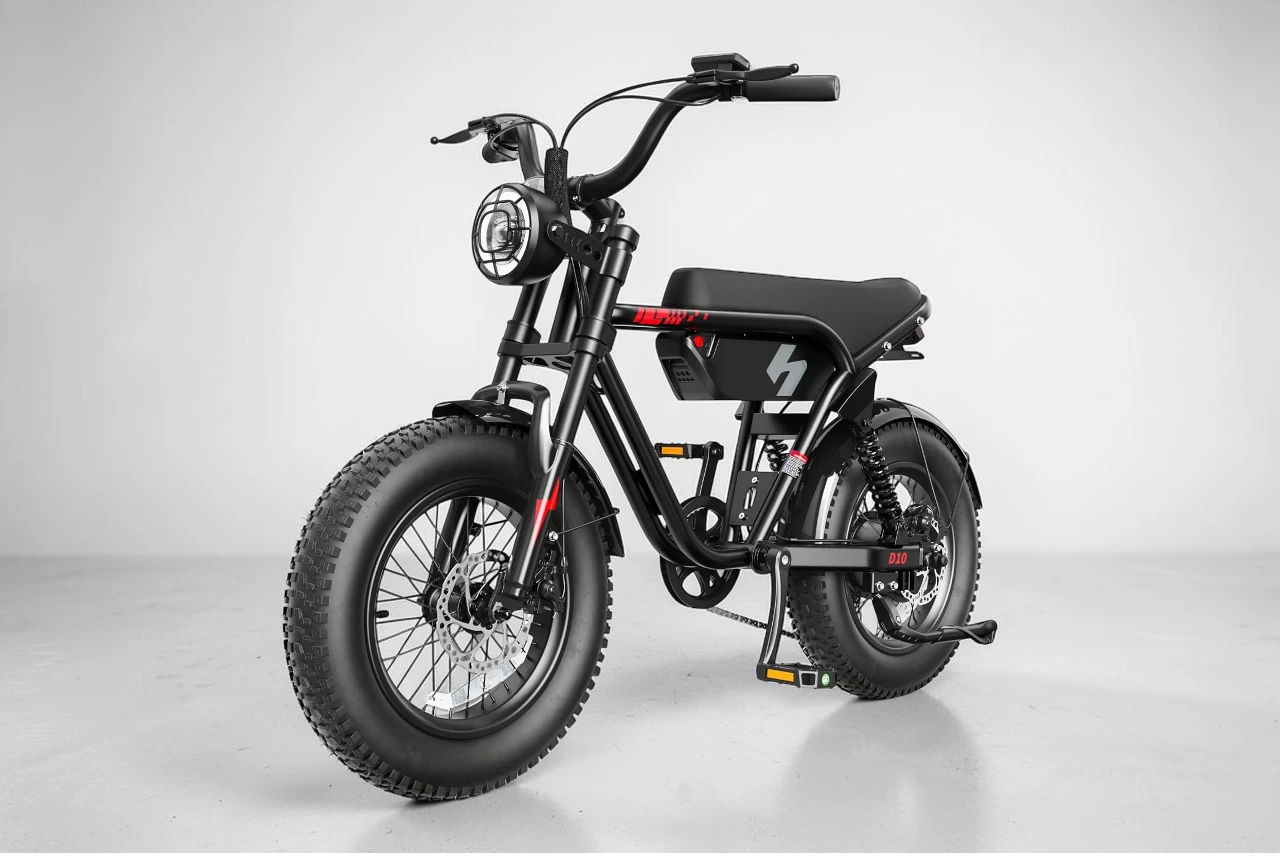
The Hopepeak D10 arrived well packaged and protected, assembled in roughly 15 to 30 minutes, and delivered a smooth, stable ride with an observed top speed of approximately 26 mph. The fat tires, full suspension, clear display, and solid build quality all impressed us during initial use, but the cable-operated mechanical disc brakes raised a genuine safety concern at that speed. This is a capable compact e-bike with real strengths, and its limitations are specific enough that knowing them upfront will help you decide quickly.
The most important thing to disclose before anything else: some listing text or product captions reference hydraulic brakes, but the tested D10 arrived with cable-operated mechanical disc brakes. At approximately 26 mph, those brakes felt weak. Stopping performance and long-term brake durability are legitimate concerns here. Buyers who prioritize confident braking should factor this in before ordering, and anyone who does buy the D10 should inspect and properly adjust both brakes before the first ride.
The D10 is a moped-style e-bike built around a compact 16-inch frame, wide fat tires, and a 1,500W peak rear-hub motor. It sits in a growing category of short-wheelbase electric bikes designed for shorter riders, urban use, and light trail riding. The retro motorcycle aesthetic is well executed, and the build feels more substantial than the price might suggest.
This review covers only the 16-inch version with the 48V 10.4Ah battery. The Amazon listing combines multiple variants, including a 20-inch model with different specifications. Do not assume the 20-inch model’s range, speed, or motor ratings apply here.
The D10 fits riders roughly 5 feet 2 inches and under who want a compact, quick, moped-style e-bike with fat-tire stability and simple assembly. It works well for short urban trips, neighborhood riding, and light trail use. Teens riding with proper adult supervision and appropriate safety gear are within the intended audience, though the approximately 26 mph top speed requires responsible use.
Taller riders who need more standover height or reach will likely feel cramped on the 16-inch frame. Riders who prioritize strong, reliable braking should look elsewhere until more is known about brake specifications at purchase. Anyone expecting verified 55-mile range or hydraulic brake performance based on listing descriptions should verify current specs directly with the seller before ordering.
| Specification | Manufacturer Claim |
|---|---|
| Motor | 1,500W peak brushless rear-hub |
| Battery | 48V 10.4Ah removable lithium-ion |
| Battery Capacity | 499.2Wh |
| Pedal-Assist Range | Up to 55 miles (claimed) |
| Throttle-Only Range | Up to 40 miles (claimed) |
| Charge Time | Approximately 4 to 6 hours |
| Tire Size | 16 x 4.0-inch fat tires |
| Suspension | Dual-spring front fork, rear shock |
| Drivetrain | 7-speed |
| Brakes | Front and rear disc |
| Lighting | LED headlight, rear light, brake light |
| Payload Capacity | 360 lb (claimed) |
| Overall Length | Approximately 55.9 inches |
| Saddle Length | 25.6-inch motorcycle-style |
| Frame Material | Carbon steel |
| Wheel Size | 16 inches |
| Category | Rating | Notes |
|---|---|---|
| Motor and Speed | 4.4/5 | Observed approximately 26 mph top speed |
| Battery Performance | 4.0/5 | Good initial performance; range not independently verified |
| Ride Comfort | 4.2/5 | Smooth on streets and uneven surfaces |
| Build Quality | 4.1/5 | Frame and major components felt solid |
| Braking | 2.6/5 | Mechanical cable brakes; felt weak at speed |
| Assembly | 4.7/5 | Approximately 15 to 30 minutes; straightforward |
| Rider Fit | 3.7/5 | Best for riders under 5’2″; saddle not adjustable like a conventional bike |
| Overall Value | 3.8/5 | Strengths undercut by brake concerns |
The 1,500W peak rear-hub motor pulls with noticeable authority. During our time on the D10, we observed a top speed of approximately 26 mph, which varied based on rider weight, battery charge level, terrain, and ambient conditions. Acceleration felt responsive and the power delivery was smooth rather than jerky.
The seven-speed drivetrain adds some control over how hard the motor works alongside pedaling. In practice, most riders will likely settle into a mid-range assist level for everyday use. The motor handled moderate inclines without obvious struggle during initial testing, though the manufacturer’s claimed 30-degree climbing ability was not independently verified and should be treated as an upper-limit claim.
The removable 48V 10.4Ah battery carries 499.2Wh of capacity. Manufacturer claims put pedal-assist range at up to 55 miles and throttle-only range at up to 40 miles. Those figures represent best-case conditions and should not be treated as guaranteed results.
One user noted roughly seven hours of intermittent use on a single charge, but that was not a controlled continuous-runtime or range test. Real-world range depends heavily on rider weight, assist level, speed, terrain, tire pressure, and temperature. Charging takes approximately 4 to 6 hours, and the battery removes from the frame for convenient indoor charging, which is a practical feature for apartment or garage storage.
Ride quality stood out as a genuine strength. The 16 x 4.0-inch fat tires provided noticeable cushioning and stability across normal streets and uneven surfaces. Combined with the dual-spring front fork and rear shock absorber, the D10 absorbed road imperfections without transmitting much vibration to the rider.
The motorcycle-style seat is long and wide, which suits the moped aesthetic well. On smooth and moderately rough pavement, the ride felt composed and planted. Fat tires also add traction in loose conditions, though the manufacturer’s claims about snow, sand, and mountain terrain should be approached with appropriate caution given the bike’s compact size and mechanical brake limitations.
This is the section that needs the most direct attention. The tested D10 arrived with cable-operated mechanical disc brakes, not hydraulic brakes. Some listing text or product captions use language that implies hydraulic braking. That was not what we found on the actual bike.
At an observed speed of approximately 26 mph, the mechanical brakes felt weak. Stopping distances were longer than we would expect or want at that speed. Long-term cable stretch and pad wear are also legitimate durability concerns with mechanical systems. We strongly recommend that buyers confirm the current brake specification with the seller before purchasing. Owners should inspect both calipers, bed in the pads properly, and ensure correct cable tension before any riding. This is not a minor detail at this speed.
The manufacturer targets the 16-inch D10 at teens and riders under approximately 5 feet 2 inches. That height reference is a reasonable starting point, but inseam length and reach matter more than height alone when assessing fit. Riders with shorter legs and arms relative to their height will feel more comfortable.
The 25.6-inch motorcycle-style saddle is long and fixed in styling. It does not adjust the same way a conventional bicycle saddle does on a seatpost, which limits how precisely a rider can dial in their position. Taller riders who try this bike often report feeling cramped. Those riders should consider the 20-inch D10 variant, though that model’s specifications are separate from this review.
Assembly was straightforward. The bike arrived well packaged with good protection, and the major components were mostly pre-assembled. Getting it road-ready took approximately 15 to 30 minutes in our experience. The instructions were clear enough to follow without mechanical expertise.
The display powered on cleanly, and the lighting system worked without issues from the start. Fastener torque is worth double-checking after initial assembly, particularly on the handlebars and stem.
The D10 carries a well-rated score from early buyers, with a relatively small number of reviews given the product’s recent arrival on the market. Positive feedback centers on the bike’s quick assembly, compact size, smooth ride, and strong acceleration for its class. Several buyers noted that the fat tires delivered more stability than they expected from a 16-inch bike.
Critical feedback focused on braking performance and fit concerns for taller riders. Some buyers noted that braking felt underpowered relative to the bike’s speed. A few mentioned confusion about which specifications applied to their purchased variant given how the listing is structured. These themes line up directly with what we observed during testing, which lends credibility to both the praise and the concerns.
If the D10’s brake limitations or compact sizing give you pause, a few alternatives are worth a look.
The Lectric XP 3.0 is a folding fat-tire e-bike with hydraulic disc brakes, a well-established reputation, and a broad parts and support network. It suits riders who want a more proven track record and more confident stopping power.
The Rad Power RadMini 4 is another compact fat-tire option with better documented brake performance and a larger user community for troubleshooting and accessories.
If you like the D10’s style but need more reach and standover clearance, the Hopepeak D10 20-inch variant is the natural step up. Be aware that it carries its own separate set of specifications that are not covered in this review.
For buyers who want the moped-style aesthetic with better brake confidence and verified range data, waiting for the D10 to accumulate more independent reviews before purchasing is also a reasonable choice.
Our rating: 3.8 out of 5
The D10 delivers real value in specific areas: fast assembly, a solid-feeling frame, smooth fat-tire ride quality, useful lighting, a readable display, and an observed top speed of approximately 26 mph in a compact package. For shorter riders who want a quick, moped-style e-bike for neighborhood and light trail use, it checks most of the boxes.
The brake situation is the honest sticking point. Cable-operated mechanical disc brakes at approximately 26 mph require confident adjustment and regular maintenance. The gap between some listing language and what the tested bike actually included is a transparency issue that buyers should resolve with the seller before purchase.
Recommended with reservations for riders under approximately 5 feet 2 inches who prioritize compact size, speed, fat-tire stability, and simple assembly. Not recommended without reservation for riders who require strong, predictable braking, verified long-range performance, or precise listing accuracy. Confirm brake specifications directly with Hopepeak or the Amazon seller before ordering.
| Preview | Product | Rating | Price | |
|---|---|---|---|---|

| Hopepeak D10 Electric Bike for Adults Teens-Peak 1500W/1800W Motor | $399.00 $379.00 | View on Amazon |
How does the motor perform on steep hills and during quick acceleration?
The 1,500W peak rear-hub motor delivers responsive acceleration and handled moderate inclines without obvious difficulty during our testing.
The manufacturer claims a 30-degree climbing capacity, but that figure was not independently verified and represents a best-case scenario.
Actual hill performance depends on rider weight, battery charge, and road grade.
What real-world range can you expect per charge under mixed riding conditions?
Manufacturer claims put pedal-assist range at up to 55 miles and throttle-only range at up to 40 miles.
Real-world range will be lower under typical mixed conditions, especially with heavier riders, higher speeds, frequent throttle use, or hilly terrain.
Treat those figures as upper-limit estimates rather than guaranteed results.
How long does the battery take to fully charge, and is it removable for indoor charging?
The 48V 10.4Ah battery takes approximately 4 to 6 hours to fully charge according to manufacturer specifications.
The battery removes from the frame, which makes indoor charging practical for apartment dwellers or anyone without easy outdoor outlet access.
What is the bike’s actual weight, and how portable is it for carrying or lifting?
The manufacturer does not prominently advertise a specific curb weight for the D10, but the carbon steel frame and fat tires make it heavier than a standard bicycle.
It is manageable for loading into a vehicle with some effort, but it is not a lightweight commuter bike you would casually carry up stairs.
How comfortable and stable is the ride on rough pavement or light trails?
Ride comfort was one of the D10’s clearest strengths during testing. The 16 x 4.0-inch fat tires and full suspension with a dual-spring front fork and rear shock absorbed road imperfections well. On normal streets and mildly uneven surfaces, the ride felt smooth and stable.
How reliable are the brakes, and how well do they handle wet-weather stopping?
The tested D10 arrived with cable-operated mechanical disc brakes, not hydraulic brakes.
Braking performance felt weak relative to the approximately 26 mph top speed, and stopping distances in dry conditions were longer than we would prefer.
Wet-weather performance with mechanical disc brakes is generally less consistent than with hydraulic systems, and we recommend inspecting and adjusting brakes carefully before riding in any conditions.