A little joy belongs in every day.

The YVY K20 is a budget fat tire e-bike with quick acceleration, stable handling, and good comfort, but its weight and pedal feel limit versatility.
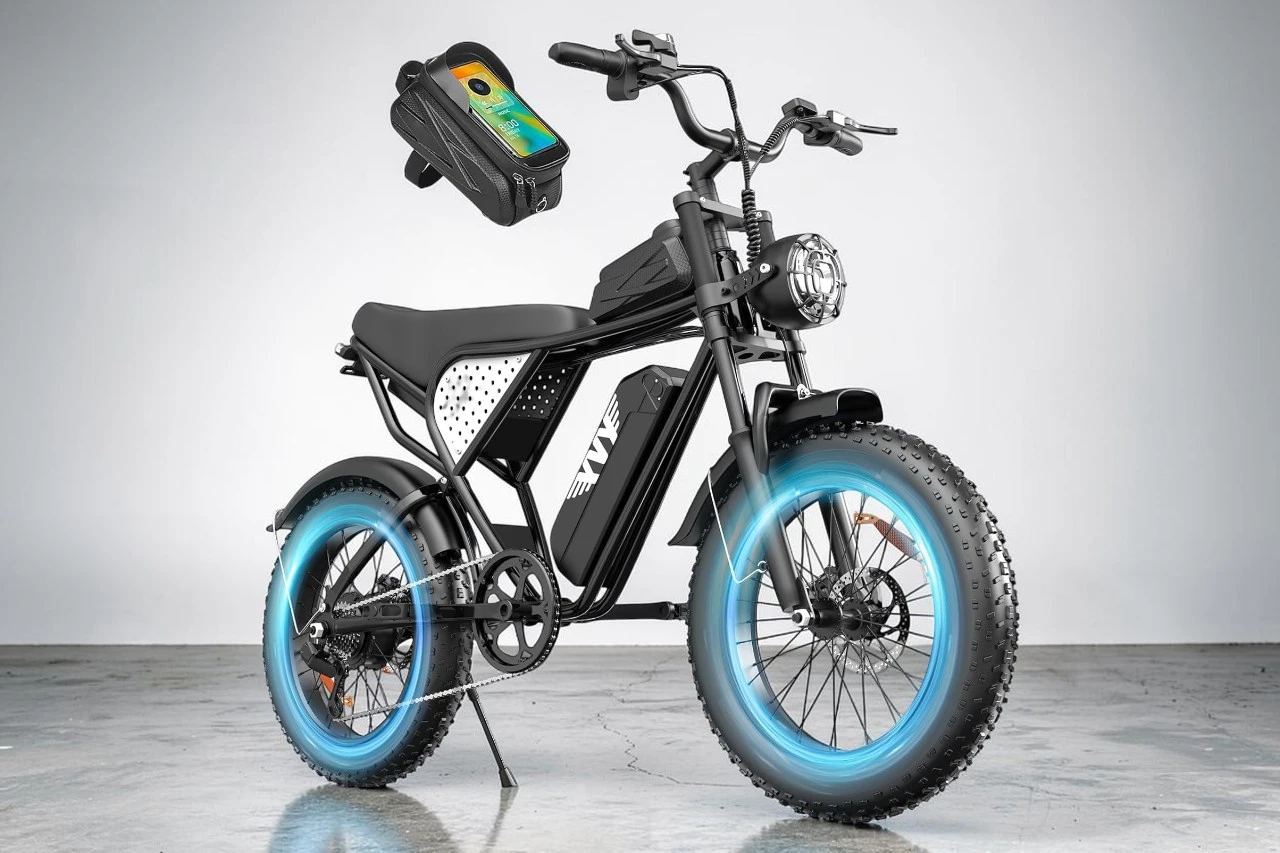
The YVY K20 is a fun, fast, budget-friendly fat tire e-bike that makes the most sense for riders who want strong throttle power and cushy comfort at a low price, but it is not the best fit for people who want a light, refined, pedal-efficient bike.
Best for
Not ideal for
Biggest strength: It delivers a lot of speed, comfort, and visual appeal for the money.
Biggest trade-off: The weight and budget-bike refinement limits are hard to ignore once the honeymoon phase wears off.
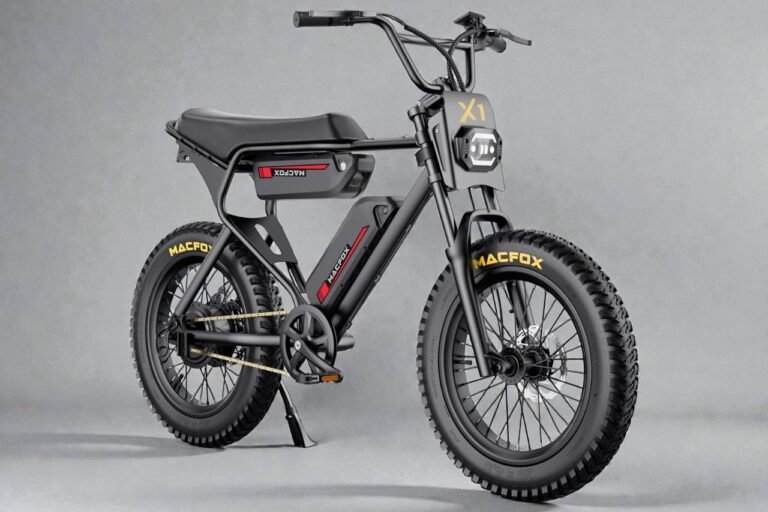
The YVY K20 is a compact 20-inch fat tire e-bike with a moped-style layout, dual suspension, integrated lights, and a removable battery. On paper, it aims to give buyers a lot for the price: fast claimed top speed, all-terrain tires, long claimed range, and a strong motor in a package that looks more aggressive than a typical city e-bike.
At the listed price of around $549, it sits firmly in the “value-first” category. That matters, because this bike is best judged by what it actually delivers on the road, not just by headline specs.
| Category | YVY K20 E-Bike |
|---|---|
| Motor | 1500W |
| Top speed | 30–35 mph |
| Battery | 48V 20Ah removable |
| Range | Up to 30 miles throttle / up to 80 miles PAS |
| Certification | UL 2849 |
| Tires | 20″ x 4.0″ fat tires |
| Gearing | Shimano 7-speed |
| Suspension | Dual suspension |
| Brakes | Disc brakes / hydraulic brakes |
| Frame | High carbon steel |
| Weight | 88 lb |
| Payload | 330 lb max |
| Riding modes | Throttle, pedal assist, pedal only |
| Extras | Headlight, taillight, fenders, phone holder/charger |
| Price | About $549 |
The first thing I noticed about the YVY K20 was that it does not feel timid. From a stop, it has the kind of punch that immediately separates it from a basic entry-level commuter e-bike. It gets moving quickly, and that matters a lot in real riding because quick takeoffs make street crossings, traffic-light starts, and short uphill bursts feel easier and less stressful.
On flatter roads, the bike feels fast enough to be entertaining, not just practical. I would not buy this bike expecting perfect top-speed consistency in every condition, because rider weight, wind, terrain, battery charge, and factory settings all change the result. But in day-to-day use, it feels legitimately strong for the price.
If your idea of fun is pressing the throttle and feeling the bike surge forward without a lot of effort, the K20 gets that part right.
This is one of the better parts of the bike. I found that hills feel much less intimidating here than they do on a regular bicycle or a weaker budget e-bike. The motor gives enough help that moderate climbs stop feeling like a workout and start feeling like a quick push uphill.
That does not mean it turns every steep grade into flat ground. On long or sharp inclines, speed still drops, and heavier riders will notice that more. But for normal neighborhood hills, overpasses, and rolling terrain, the K20 has enough pull to feel useful rather than strained.
For buyers living in hilly areas, that is one of the strongest arguments in this bike’s favor.
The K20’s comfort is one of its biggest selling points in real use. The fat tires take the edge off rough pavement, expansion joints, light gravel, and hard-packed dirt, and the suspension helps keep the ride from feeling harsh. I also found the seat more comfortable than I expected for a budget bike.
That combination makes a difference because this is not a bike that encourages aggressive, efficient pedaling. It is a bike that works best when you sit back a little, let the motor do its share, and roll through bad surfaces without getting rattled around.
If your local roads are cracked, patched, or uneven, the K20 feels more forgiving than a skinny-tire commuter e-bike.
The fat tires add confidence. On pavement, the bike tracks in a planted, secure way, and on dirt or looser surfaces it feels less nervous than a narrow-tire bike. For newer riders, that stability is reassuring.
The trade-off is that this is not a nimble, lightweight handler. You feel the mass of the bike in tighter turns, while parking, and whenever you need to change direction quickly. It is stable first, playful second.
I got used to it quickly, but the handling makes more sense if you think of the K20 as a compact moped-style cruiser rather than a traditional bicycle.
Braking felt strong enough for the kind of speed this bike encourages, which is important because a fast budget e-bike with weak brakes becomes a bad value very quickly. I also liked that the bike comes ready for basic day-to-day use with lights and fenders.
The headlight and taillight are a real benefit if you ride in the early morning, evening, or around traffic. I would still add extra visibility if I were commuting regularly at night, but the included setup is more useful than decorative.
Switching between ride modes is also simple. That matters more than people think. A budget e-bike becomes frustrating fast if basic controls are confusing. Here, the overall experience is approachable, even for someone new to e-bikes.
Who it affects: Apartment dwellers, smaller riders, and anyone who needs to lift the bike often.
When it shows up: Carrying it up steps, moving it into a car, repositioning it in a tight garage, or loading it onto a rack.
Why it matters: An 88 lb e-bike is not casually portable. Weight is easy to ignore on a product page, but it becomes very real the first time the battery is low and you need to maneuver the bike by hand.
Workaround: If possible, store it at ground level, remove the battery before lifting, and only use a rack that is rated for heavy e-bikes.
This is probably the biggest practical downside for many buyers.
Who it affects: Riders who want long pedal-heavy rides, exercise-focused use, or a more natural bicycle fit.
When it shows up: Longer rides, higher-cadence pedaling, or any time you try to ride it like a regular bike instead of a powered cruiser.
Why it matters: The moped-style layout looks cool and feels relaxed, but it is usually less efficient for serious pedaling than a standard commuter or hardtail e-bike.
Workaround: Treat it like a throttle-and-assist bike first. If you mainly want to cruise, that trade-off is easier to accept.
I enjoyed the comfort, but I would not choose this frame style for a workout-focused rider.
Who it affects: Buyers with longer commutes or anyone planning around the largest advertised range numbers.
When it shows up: Fast riding, heavy throttle use, hills, cold weather, or heavier rider loads.
Why it matters: Claimed range numbers are almost always best-case figures. Once you ride at higher speeds and use the power the way this bike invites you to, battery life drops faster.
Workaround: Plan conservatively. For a bike like this, it is smarter to treat throttle-only range as much lower than the headline number and view pedal-assist range as highly variable.
The battery life felt good in normal use, but I would not build my buying decision around the most optimistic claim.
Who it affects: Buyers who want dealer-level assembly, easy local service, or premium finishing quality.
When it shows up: Initial setup, brake rub, derailleur tuning, loose hardware after early rides, or future replacement-part questions.
Why it matters: A low-priced direct-to-consumer e-bike can offer great value, but support is often more remote, and local bike shops may only want to handle the standard bicycle parts, not diagnose electrical issues.
Workaround: Buy it only if you are comfortable doing minor checks yourself or paying a shop for a safety tune after assembly.
This does not make the bike a bad buy. It just means expectations need to match the price.
The listing’s size guide suggests a wide rider range, but I would be more cautious in real life.
For shorter riders, the main issue is not just seat height. It is the combination of weight, wide tires, and bulk. Even if the bike technically fits, it may still feel like a lot to handle at low speed or while parking.
For riders around my height at 5’10”, the bike looks proportionally fine and feels natural enough for casual riding. That is probably the sweet spot.
For taller or heavier riders, the payload rating is reassuring on paper, but the cockpit still looks compact. Heavier riders should also remember that real hill performance and range both change under load. The bike can handle bigger riders better than a flimsy commuter, but very tall riders may wish for a roomier layout.
Assembly looks manageable for a typical online e-bike. Based on the bike’s design and included equipment, I would expect the usual steps: handlebars, front wheel, pedals, fenders, lights, and basic alignment checks. It does not strike me as unusually complex, but it is still worth taking your time.
If you are not mechanically comfortable, paying for a basic professional setup is money well spent.
After the first few rides, I would re-check:
That early check matters because budget bikes often settle in after the first miles.
The bicycle-side parts are generally easier to live with than the electrical side. Things like tires, tubes, brake pads, chains, and 7-speed drivetrain parts are more straightforward. Battery, controller, display, and model-specific mounting hardware are where ownership can become more brand-dependent.
That means it is smart to keep your order details, charger, battery keys, and photos of serial labels. If something goes wrong, having that information ready can save time.
If you compare the K20 to a more traditional commuter e-bike, the differences are clear.
The YVY K20 feels more powerful, more cushioned, and more fun in short bursts. It also handles rough pavement, dirt, and loose surfaces with more confidence.
A lighter commuter e-bike is usually easier to pedal with the motor off, easier to carry, easier to store, and often better for riders who want a true bicycle feel.
So the real choice is not “Which is better?” It is “What kind of riding do you actually do?” If you want comfort, throttle fun, and a bold style on a budget, the K20 has the advantage. If you want efficiency, portability, and cleaner pedaling ergonomics, a commuter model makes more sense.
The YVY K20 is a good match for adults who want:
You should probably skip the YVY K20 if you:
The YVY K20 gets a lot right for the money. It looks good, feels powerful, rides comfortably, and offers the kind of easy, low-effort fun that makes people want to keep using an e-bike. For a buyer focused on value, that matters more than perfect polish.
At the same time, this is not a magic bargain with no compromises. It is heavy, not especially portable, and better as a powered cruiser than as a true bicycle substitute. The ownership experience will also depend on how comfortable you are with a budget direct-to-consumer e-bike.
Buy if: you want an affordable, fast-feeling fat tire e-bike for short commutes, neighborhood rides, and casual mixed-surface use, and you are okay with the weight and budget-bike trade-offs.
Skip if: you need something light, highly refined, easy to pedal for long distances, or simple to service through a local dealer network.
At around $549, I would consider spending my own money on the YVY K20 if my goal was simple: get a fun, comfortable, powerful-looking e-bike for casual riding without overspending.
I would not buy it as my only serious transportation bike, and I would not buy it if I had to carry it regularly.
But as a low-cost, high-smile-factor fat tire e-bike, it makes a surprisingly solid case.