Real rides. Real notes. No hype.

5th Wheel Mate electric bike review: strong pedal assist for commuting, removable 468Wh battery, stable handling, but possible QC and brake tuning needs.
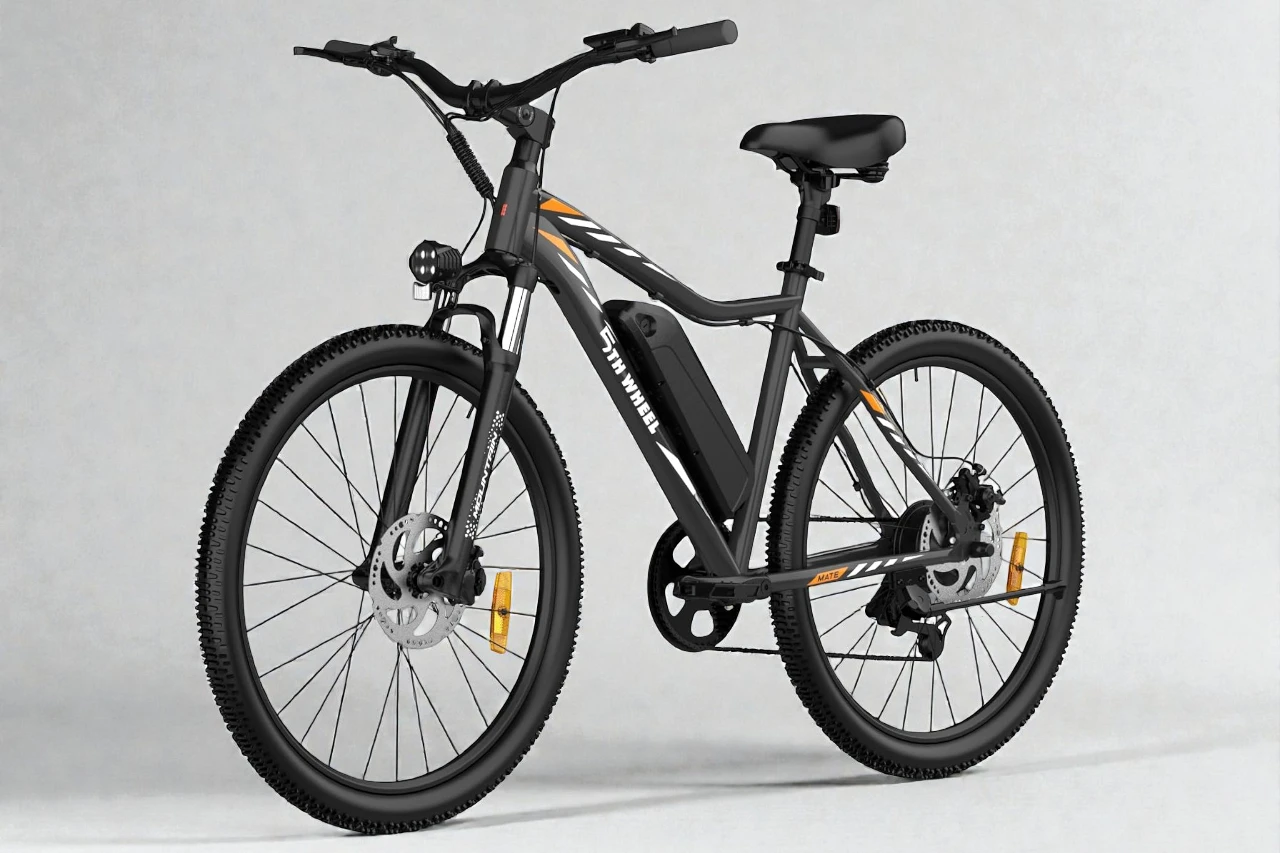
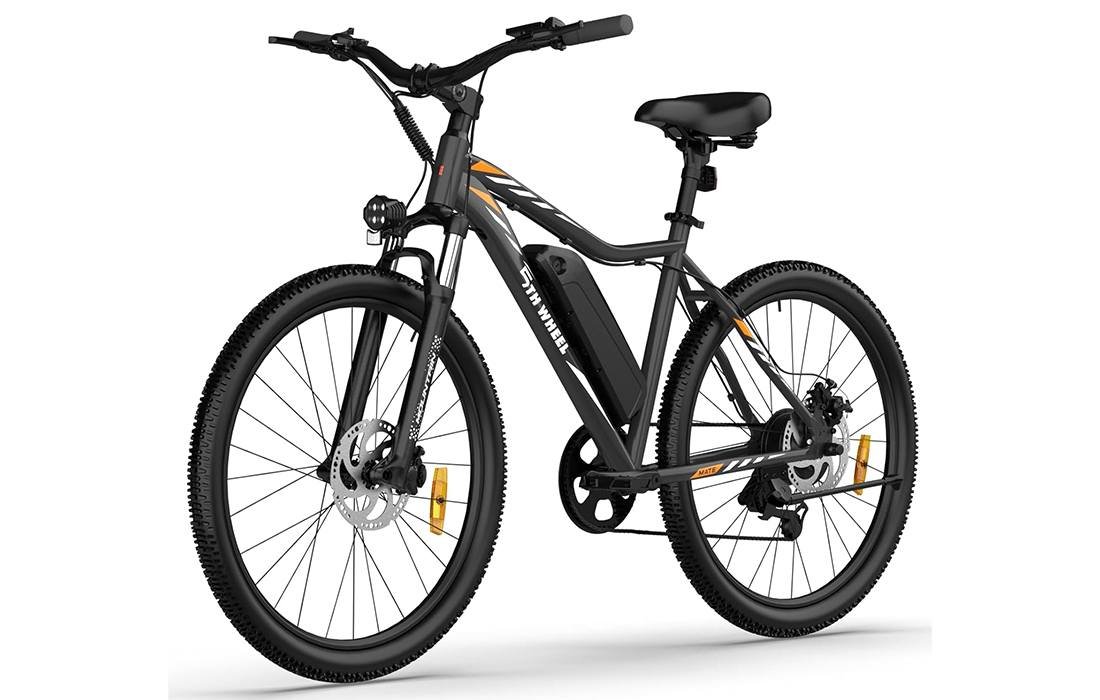
A lively, bike-like commuter e-bike with punchy pedal assist, a removable 468Wh battery, and an adjustable stem—great value if you’re comfortable doing a careful initial setup.
Motor
500W rear hub (1000W peak claim)
Battery
468Wh removable (36V 13Ah class)
Speed
Up to 23 mph (Class 2-style use)
Claimed vs realistic range
45 mi PAS / 25 mi throttle → ~18–38 mi typical
The 5TH WHEEL Mate is a budget-priced commuter-style e-bike that aims to balance everyday practicality with a “bike-like” ride feel. On paper, it lands in a sweet spot for many first-time e-bike buyers: a 500W rated (1000W peak) rear hub motor, a removable 468Wh battery, 26-inch tires, a 7-speed drivetrain, dual disc brakes, a suspension fork, and a color LCD.
In real-world use, the Mate’s biggest strengths are its strong assist for the price, manageable weight compared with many fat-tire e-bikes, and a generally clean, solid build. The biggest watch-outs are quality-control variability, assembly/setup friction for beginners, and brakes that may need extra tuning to feel their best.
| Spec | Detail |
|---|---|
| Motor | 500W brushless (1000W peak) |
| Top speed | up to 23 mph |
| Battery | 468Wh removable lithium-ion (36V 13Ah) |
| Claimed range | up to ~25 miles throttle / ~45 miles pedal assist (PAS) |
| Drivetrain | 7-speed (Shimano-branded shifter) |
| Brakes | dual disc brakes |
| Suspension | front suspension fork |
| Tires/Wheels | 26-inch, typically as 26×1.95″ |
| Weight / capacity | about 50.7 lb bike weight; 330 lb max load |
| Fit range | recommended rider height 5’3″–6’1″ |
| Geometry callouts | standover ~27.1″, saddle height ~32″–38″, handlebar height ~37.4″–41.3″ |
| Controls | color LCD + 3 riding modes |
| Extras | headlight + rear reflector; adjustable stem |
The Mate has a clean, commuter-friendly look with a classic diamond frame silhouette and an integrated, downtube-style battery housing. The aluminum alloy frame is a meaningful plus at this price because it keeps weight reasonable while still feeling sturdy and stable.
At roughly 50 lb, it’s not “lightweight” in the acoustic-bike sense, but it is notably easier to maneuver than many budget fat-tire e-bikes that push 65–80 lb. That difference shows up when you’re rolling it through a doorway, lifting the front end over a curb, or turning it around in a tight garage.
The standout impression here is that the assist feels strong for an entry-level commuter. With a 500W rated motor and peak claims up to 1000W, the Mate delivers a punchy, responsive push that makes starts from stop signs and casual cruising feel easy.
The bike’s 7-speed drivetrain matters more than many people think on a hub-motor commuter: gears help keep cadence comfortable and let the rider contribute more efficiently on hills. That combination—assist + gears—tends to feel smoother than relying on motor power alone.
The Mate does well on moderate hills and can handle bigger climbs when the rider helps by downshifting and pedaling. The key expectation to set is that this is not a high-torque mid-drive designed for steep, technical grades. On longer or steeper climbs, it performs best when the rider:
For a typical commuter hill profile, it’s a strong performer for the price.
The Mate uses a 468Wh removable battery, and that “removable” part is a major practical win: it’s convenient for apartment living, office charging, and keeping the bike stored away from outlets.
The listing’s split—up to ~45 miles in PAS and ~25 miles on throttle—is consistent with how a 468Wh battery tends to behave in best-case scenarios. In practice, range depends heavily on:
A helpful way to think about it: the published numbers can be “reasonable best-case targets,” but throttle-heavy riding and hilly routes will reduce them. Keeping tire pressure up and using gears wisely can preserve range.
For a budget commuter, comfort feedback is mostly positive. The bike combines:
The adjustable stem is a standout feature in this segment. It makes it easier to dial in reach and handlebar height, which helps different riders find a comfortable posture—especially useful if you’re between sizes or prefer a more upright stance for commuting.
The bike is positioned for riders roughly 5’3″ to 6’1″, and it shows a usable saddle/handlebar height range that should accommodate many riders in that window.
Dual disc brakes are the right choice on a 23 mph commuter e-bike, but the real-world feel often depends on setup quality. With bikes in this price range, it’s common to need:
Once dialed in, braking performance can be confidence-inspiring for commuting. Out of the box, some riders should expect a short tuning period to reach peak feel.
With 26-inch wheels, moderate-width tires, and a weight around ~50 lb, the Mate tends to feel easier to steer and more “normal bicycle” than chunky fat-tire e-bikes. That’s a big part of why it works well for:
It is not designed for aggressive mountain riding. The fork and tires are better suited to smoothing bumps than handling repeated hard hits, roots, or fast descents.
The included color LCD adds real daily value: speed, battery status, and trip information are the basics most commuters want. The listing also notes three riding modes, which is enough for most riders to choose between:
The bike also includes a headlight and rear reflector, which helps visibility for early morning or evening rides. Even so, riders who commute in traffic regularly may still want additional lighting for better side visibility.
Assembly is typically straightforward for a pre-assembled e-bike in this category: attach the front wheel, handlebars, pedals, and seat, then do a full safety check.
On roads and light trails, I found the ride comfortable and stable, and the bike felt well-suited to daily rides and exercise. Pedal assist worked smoothly, and the battery was easy to remove and charge, which made the bike feel practical for routine use. Brakes and suspension performed well overall, with the expectation that careful setup (especially brake alignment) helps the bike feel its best. The biggest positive surprise was the value-for-money ride feel—the assist felt strong, and the overall package made sense as an affordable commuter.
This is a strong match if you want:
Consider other options if:
The 5TH WHEEL Mate is one of those budget e-bikes that gets the fundamentals right: strong assist, practical removable battery, commuter-friendly handling, and a comfortable ride character for roads and light trails. It’s not perfect—and it shouldn’t be judged like a premium e-bike—but when assembled carefully and given a basic brake tune, it offers excellent value for daily commuting, casual fitness riding, and weekend path exploration.
If you want an affordable, straightforward e-bike that feels lively and usable without the bulk of many budget fat-tire models, the Mate is easy to recommend—with the clear caveat that you should be ready to do (or pay for) a careful initial setup and QC check.
| Preview | Product | Price | |
|---|---|---|---|

|
5TH WHEEL Mate Electric Bike for Adults – 1000W Peak Motor, 23MPH Top Speed, 468WH Removable… | $599 | View on Amazon |