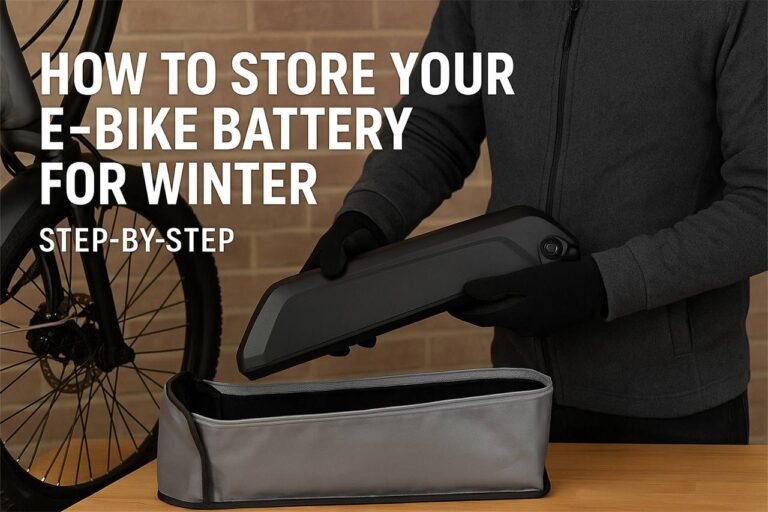
Real rides. Real notes. No hype.

E-bike range often drops faster in cold weather. Learn how temperature, riding habits, and terrain affect battery life — and how to fix it.

I hear this question all the time because e-bike range matters when you rely on electric bicycles for daily rides or longer trips. You charge the battery, head out, and still watch the range drop faster than expected. That gap between what you expect and what actually happens can feel confusing and frustrating.
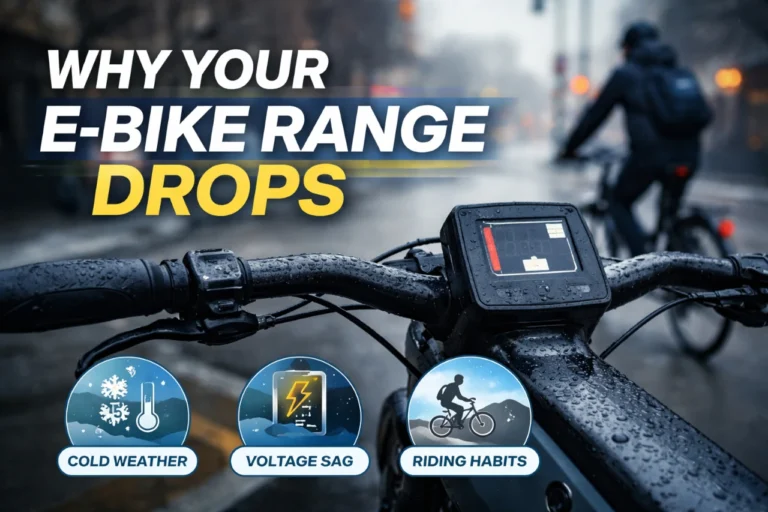
Your e-bike range drops because the battery delivers less usable energy under certain conditions, while the motor and components demand more power at the same time. Cold weather, riding habits, terrain, and battery design all play a role in how far e-bikes can go on a single charge.
I break this down by explaining how battery science works in cold weather, which factors drain range the fastest, and how battery parts affect performance. I also cover riding habits, winter strategies, and long-term care so you can protect range and keep electric bicycles running strong over time.

Cold air changes how a lithium-ion battery works at a chemical level. Lower temperatures raise internal resistance, limit power delivery, and reduce usable range without changing the battery’s rated capacity.
I see cold weather affect every e-bike battery in the same basic way. A lithium-ion battery works best near room temperature. When air and cell temperatures drop, the battery chemistry slows down.
The lithium ions move less freely through the electrolyte. That limits how fast energy can leave the battery. The result feels like weaker assist, slower acceleration, and fewer miles per charge.
Real-world tests show clear losses. At freezing, many riders see a 10–20% range drop, and deeper cold can push losses higher, as shown in this analysis of e-bike power loss at 32°F vs 15°F.
Cold does not empty the battery. It restricts how much of the stored energy you can use during the ride.
Internal resistance rises as temperatures fall. This resistance acts like friction inside the li-ion cells and blocks current flow.
Higher resistance causes voltage sag under load. When you accelerate or climb a hill, the voltage drops faster than expected. The bike’s controller reads that drop and cuts power early to protect battery health.
Key effects include:
This process explains why range loss feels sudden. The battery still holds energy, but resistance keeps that energy locked away until the cells warm up. A detailed breakdown of this process appears in this guide to cold weather e-bike battery performance.
Most cold-related range loss stays temporary. Once the battery warms, normal performance returns.
Permanent damage happens only under specific conditions. Charging a frozen battery can cause lithium plating, which permanently reduces capacity and harms long-term battery health. Riding in the cold alone does not cause this damage.
The difference matters:
| Condition | Impact |
|---|---|
| Cold riding | Temporary range loss |
| Cold charging | Permanent capacity loss |
Manufacturers warn against charging below freezing because of this risk. This winter safety guidance explains why in detail for e-bike batteries in cold temperatures.
I focus on temperature control because it protects both range today and battery life long term.

Several specific issues reduce battery range faster than riders expect. Temperature, terrain, rider load, and the gap between advertised range and real-world range explain most sudden drops in distance per charge.
Cold weather cuts battery range more than most riders realize. Lithium-ion batteries lose efficiency as temperatures drop, which lowers available power and increases power consumption.
In winter, I often see range fall by 20–40% even with the same riding habits. The motor works harder, and the battery delivers energy slower. This effect grows stronger below freezing.
Heat also hurts long-term range. High temperatures speed up battery wear, which reduces total capacity over time. Detailed testing on winter e-bike battery range loss shows why cold rides drain energy faster than warm ones.
Terrain acts as one of the biggest range killers. Flat pavement uses steady power. Hills, gravel, and rough roads force constant changes in output.
Climbing increases power consumption fast. Even small hills can cut range by 10–30% compared to flat routes. Loose surfaces add rolling resistance, which pulls more energy from the battery.
I plan routes carefully because terrain stacks losses quickly. Data on how terrain affects e-bike range shows why mixed or hilly paths rarely match city estimates:
| Terrain Type | Typical Range Impact |
|---|---|
| Flat pavement | Baseline |
| Rolling hills | −10% to −20% |
| Steep or rough | −25% to −30% |
Weight directly changes how hard the motor works. Heavier riders and added cargo raise energy demand at all speeds.
Every extra pound increases strain during starts and climbs. I notice faster drain when carrying bags or riding with child seats. The motor draws higher current, which shortens battery range.
Tire pressure and balance matter too. Poor setup wastes energy through friction. Testing on rider weight and cargo impact on e-bike range confirms this effect across many bike types:
Key load-related range killers
Advertised range comes from a controlled environment. Tests use light riders, flat roads, warm weather, and low assist levels.
Real-world range reflects daily riding. Wind, stops, hills, and rider behavior all cut distance. I treat advertised range as a best-case ceiling, not a promise.
Many riders report drops once batteries age or riding habits change. Clear breakdowns of why e-bike range drops over time show how real use differs from lab testing:
Advertised vs real-world range
I see range drop most often when riders overlook how battery size, control systems, and wear affect real power delivery. Small limits inside the ebike battery add up fast, especially under load, hills, or high assist.
Watt-hours (Wh) tell me how much total energy the battery can store. That number matters more than voltage or ampere-hours (Ah) alone. A higher Wh rating usually means longer range, even if the bike feels the same at first.
Voltage affects how hard the motor can push. Higher voltage supports stronger output but can drain energy faster under heavy use. Ampere-hours show how long the battery can deliver current, not how far you will ride.
I use Wh to compare batteries because it combines voltage and Ah into one clear value. Guides on e-bike battery range and watt-hours explain why this matters in real riding, not lab tests.
| Spec | What It Impacts |
|---|---|
| Wh | Total riding distance |
| Voltage | Power delivery |
| Ah | Duration at steady load |
The battery management system, or BMS, controls how energy flows from the cells to the motor. It protects the battery, but it also limits output when heat, load, or voltage drops too far.
When the BMS steps in, I often feel sudden power loss. This happens even when the display shows charge left. Dirty battery terminals or weak cell balance can trigger early cutoffs.
A well-designed BMS improves usable range by keeping cells balanced and preventing waste. Detailed breakdowns of how systems affect range appear in this analysis of e-bike battery and control systems.
Each charge cycle slowly reduces battery capacity. After hundreds of cycles, the same Wh rating no longer delivers the same distance. I see this as one of the most common causes of range drop.
Deep discharge makes this worse. Running the battery close to empty stresses cells and speeds up wear. Over time, voltage sag increases and the BMS limits output sooner.
Real-world tests show range often drops well below claims due to aging and use patterns. Reviews of real-world e-bike battery range tests show why older batteries fall 20–40% short of new performance.

I see range drop fastest when riders push power settings, ride aggressively, or ignore how winter conditions change efficiency. Small choices in assist modes, speed control, and tire setup can add or cut miles from a single charge.
Pedal assist settings have a direct and measurable effect on range. Higher PAS levels pull more current from the battery, which drains it faster, especially in cold weather.
I recommend using eco mode or low assist on flat ground. Save higher assist for short climbs or traffic starts. This approach limits voltage sag and keeps power delivery stable, which helps in winter. Real-world testing shows that winter range loss grows when riders rely heavily on high assist levels, as explained in this guide on electric bike range in cold weather.
Key habits that protect range:
Speed and acceleration matter more than many riders expect. Fast starts and hard acceleration demand peak power, which shortens range and stresses the battery in cold air.
I advise smooth acceleration and steady cruising speeds. Shifting to the right gear before you speed up reduces motor strain and improves efficiency. Poor gear selection forces the motor to work harder than necessary.
Cold weather increases energy use even more due to dense air and bulky clothing. According to data summarized in this article on why winter riding reduces e-bike range, aggressive riding habits amplify winter losses.
Best practices:
Rolling resistance quietly eats away at range, and winter makes it worse. Cold temperatures lower tire pressure, which increases drag and power use.
I check tire pressure weekly during winter. Even a small drop can cost noticeable range. Fat tire e-bikes lose more range because wider tires create more rolling resistance, especially on snow or slush.
This winter maintenance guide explains how pressure and setup affect efficiency on cold rides: winter e-bike maintenance tips.
What helps most:
These adjustments reduce wasted energy and help the battery deliver consistent performance.
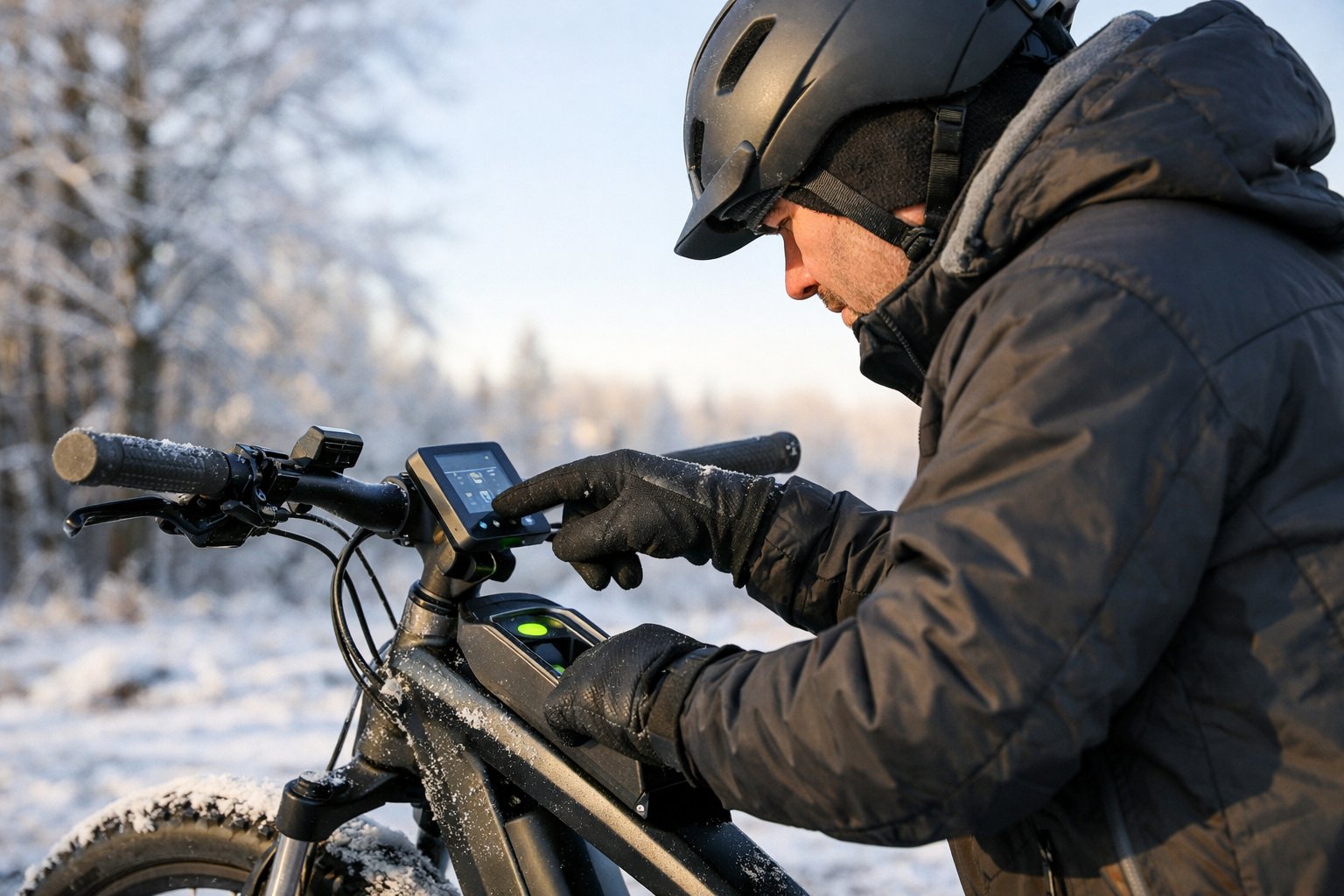
I focus on battery care, insulation, and heat control to reduce winter range loss. These steps protect battery chemistry, limit voltage drop, and help the motor deliver steady power in cold rides.
I store my e-bike battery indoors at room temperature whenever possible. Cold storage slows battery chemistry and reduces available power before the ride even starts. Indoor storage keeps the battery closer to its ideal operating range, which limits early voltage sag.
I also follow smart charging habits. I avoid charging a frozen battery because that can cause long-term damage. Many experts explain that cold-related range loss is temporary, but charging while frozen is risky, as noted in this guide on cold weather e-bike battery performance.
Key habits I follow:
These steps support basic battery maintenance and protect long-term capacity.
I use a battery cover when riding in freezing weather. A battery insulation cover helps trap heat generated during discharge, which improves short-term power output. This does not increase capacity, but it slows heat loss during the ride.
Battery insulation works best on longer trips where the battery stays active. Thin neoprene covers often provide enough insulation without blocking airflow or controls. Riders who skip insulation often see faster range loss in deep cold.
According to winter riding advice from Favorite Bikes, insulation can help stabilize battery temperature and delay cutoffs.
What I look for in a cover:
I remove the cover indoors to prevent moisture buildup.
I manage battery temperature before and during rides. Pre-warming matters more than most riders think. Starting with a warm battery reduces early power loss and keeps assist levels consistent.
I never use external heaters or unsafe warming methods. Instead, I rely on passive thermal management. Keeping the battery inside my jacket for short walks to the bike can help in extreme cold.
Real-world testing shows that cold can cut range by 20% to 40%, depending on temperature, as explained in this analysis of e-bike range loss in winter.
My simple pre-warming routine:
This approach supports stable output without stressing the battery.
I see range drop most often when riders stress the battery over time. Cold exposure, charging mistakes, and rough handling speed up battery degradation and shorten battery lifespan.
Cold weather slows the chemical reaction inside lithium-ion cells. That slowdown cuts power output and lowers range during the ride. Repeated cold exposure also harms long-term battery health, not just short-term performance.
I advise riders to avoid charging a cold battery. Let it warm to room temperature first. Many manufacturers warn that cold charging causes permanent capacity loss, which shows up later as reduced battery life and uneven power delivery.
To limit damage, I follow these habits:
Overcharging stresses battery cells and speeds up degradation. I avoid charging to 100% unless I need full range for a long ride. Daily charging works best when I stop around 80%, which many experts recommend for extending battery lifespan, including this guidance on proper e-bike charging habits.
Physical damage also lowers battery health fast. Drops, vibration, and water intrusion harm internal connections.
| Risk | Why It Matters |
|---|---|
| Overcharging | Increases heat and cell stress |
| Drops or impacts | Damages internal wiring |
| High heat storage | Permanently reduces capacity |
I always secure the battery and avoid pressure washing near electrical parts.
How I ride affects battery life more than most people expect. High assist modes, heavy loads, and fast starts drain power and increase wear. Gentle use preserves range and slows battery degradation.
I keep tire pressure within the recommended range. Soft tires force the motor to work harder and pull more current. I also pedal consistently instead of relying only on the motor.
For long storage, I leave the battery at about half charge in a cool, dry space. Clear storage and use rules like these appear in many battery care guides, including this overview on e-bike battery maintenance best practices.
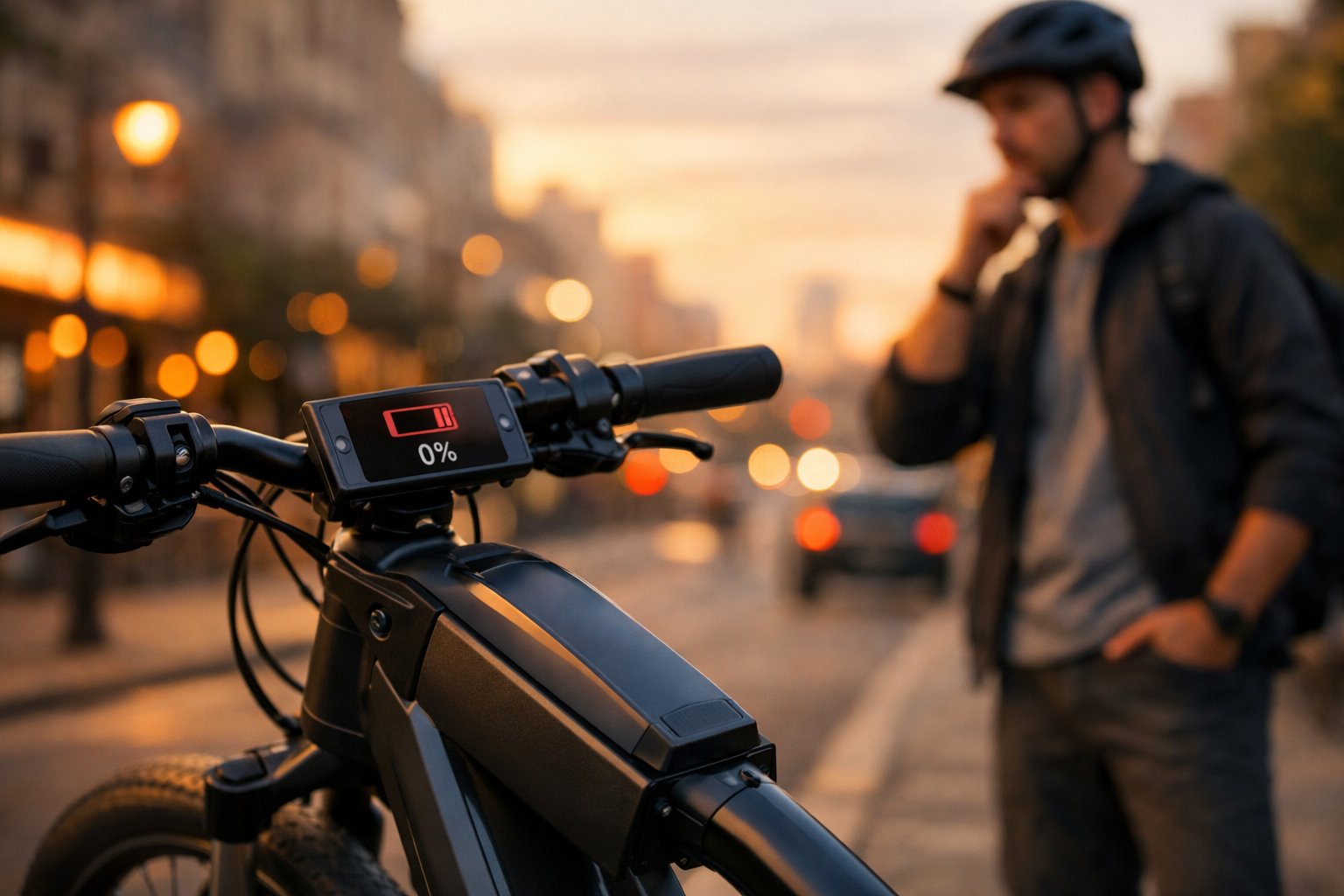
I see e-bike range drops as a mix of battery limits, riding habits, and conditions you can often predict. Cold weather alone can cut range by 10–40%, as shown in real-world testing of e-bike power loss in winter temperatures. Terrain, speed, and load then stack on top of that loss.
What matters most is understanding which factors you can control. I focus on choices that reduce strain on the battery and motor, especially on longer rides. Small changes often add up to real miles.
What I keep in mind when range drops:
I also trust data from long-term testing that shows lab estimates often miss real conditions. Independent analysis of real-world e-bike range vs lab results confirms that a 20–40% drop is common even without extreme weather.
When riders understand why e-bike range drops, planning becomes easier and stress goes down. I rely on realistic expectations, basic maintenance, and smarter riding decisions to get consistent results from my e-bike.