Real rides. Real notes. No hype.

My hands-on take on the WERHY H6: a light, foldable 19 mph scooter with app control and solid tires—great for smooth streets, less for rough roads.
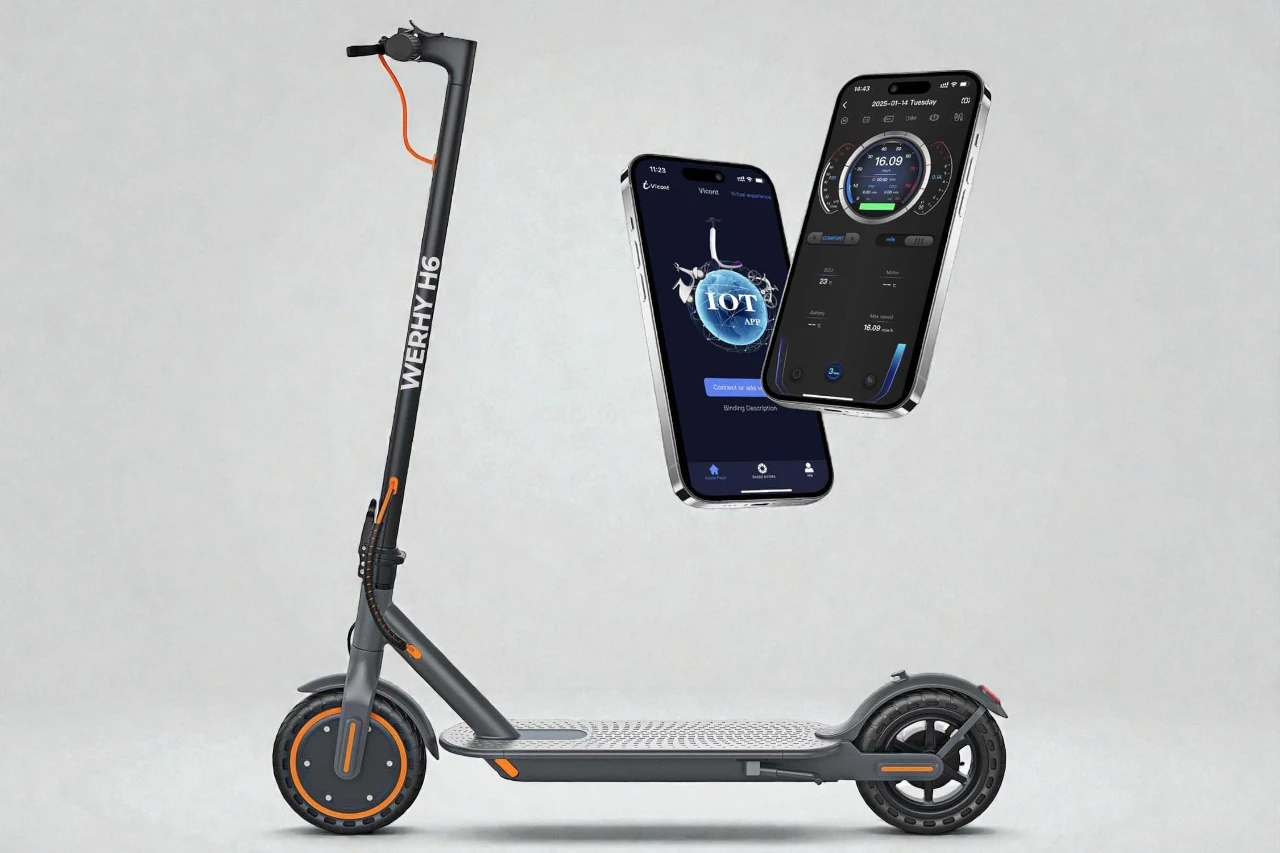
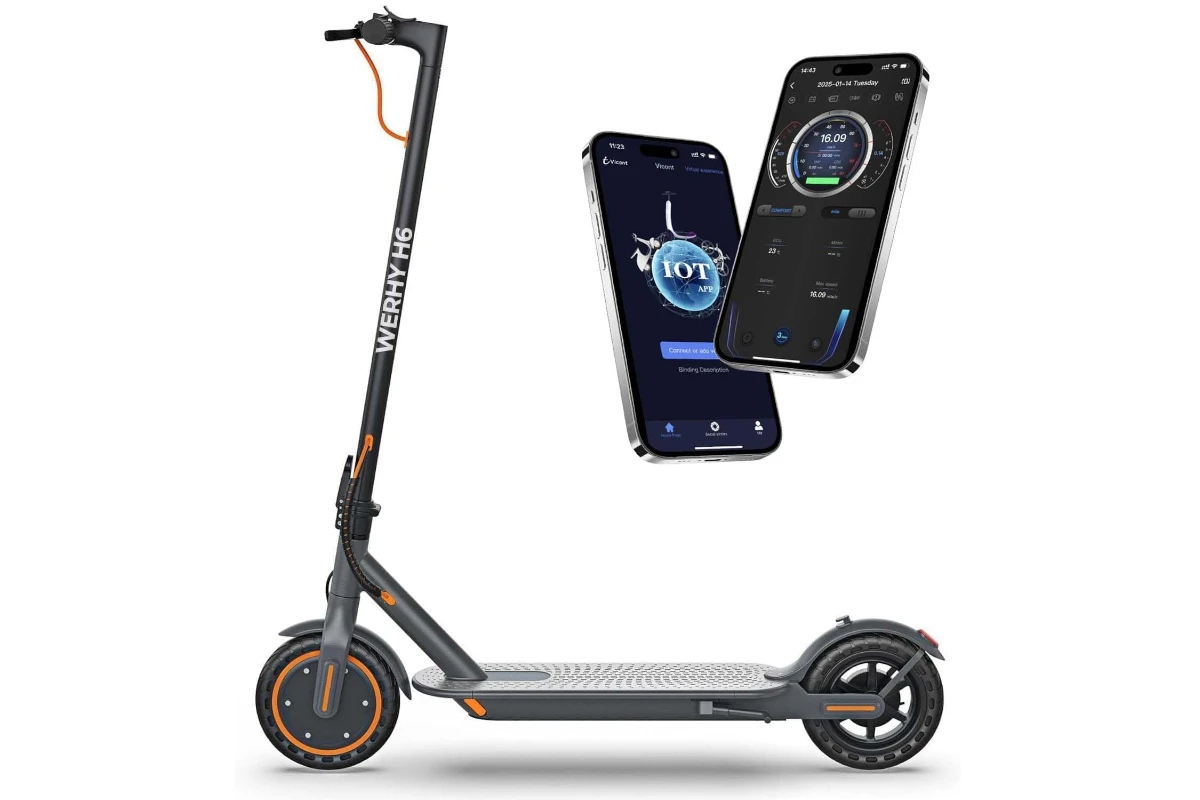
Fast and simple up to 19 mph with easy folding and app control, but solid tires can feel harsh on cracked pavement.
Tested: multiple city rides (start/stop + cruising). Rider: 5′10″ / ~180 lb. Best fit for: short commutes & campus trips.
The WERHY H6 is a simple, commuter-style electric scooter built for short trips: getting to work, campus runs, quick errands, and “just cruise around” rides when the weather’s good.
What it’s really aiming for is convenience—fast folding, a manageable carry weight, app features (lock, modes, cruise), and solid honeycomb tires so you’re not dealing with flats.
I’m 5′10″ and about 180 lb, and I approached this scooter the same way most buyers will use it: lots of start/stop riding, some mixed pavement quality, and real city-style handling at sensible speeds.
One-sentence verdict: The WERHY H6 is a strong choice for short, smooth-road commutes and casual cruising, but it’s not ideal if your daily route is rough, wet, or steep.
Best for:
Not ideal for:
Biggest strength: Easy, confidence-inspiring “grab-and-go” scooter that feels quick and straightforward.
Biggest trade-off: Comfort takes a hit on broken pavement because there’s no suspension and the tires are solid.
(I’m not claiming lab-style range testing here—my range guidance is a realistic estimate based on battery size and common riding factors.)
This is a practical, entry-level commuter scooter that prioritizes convenience over luxury. The headline ideas are:
It’s not trying to be a high-power hill climber or a suspension cruiser. Think of it as a reliable daily tool for smooth streets—especially if you’ve had enough of tire punctures.
| Spec | What it means in real life |
|---|---|
| Motor | 350W brushless – good for basic commuting speed, not a monster climber |
| Battery | ~281Wh – adequate for short commutes; range depends heavily on speed |
| Top speed | Up to 19 mph – quick enough to keep city trips efficient |
| Range (claimed) | ~19–21 miles – realistic range is usually lower at higher speeds |
| Tires | 8.5″ solid honeycomb – no flats, but harsher ride on rough pavement |
| Brakes | Drum + EABS regen – stable braking feel, not “sport bike” sharp |
| Weight | ~33 lb – carryable for short distances, still noticeable on stairs |
| Payload | ~264–265 lb – fine for most adult riders, but heavier loads reduce performance |
| Features | Cruise control, lights, display, app lock/modes |
If your route is mostly smooth pavement—bike lanes, campus paths, decent asphalt—and you want something light enough to fold and stash, the H6 makes a lot of sense. It feels quick, it’s simple to operate, and the no-flat tires remove one of the most annoying parts of scooter ownership.
It’s also a good fit if you want a “set it and forget it” scooter: hop on, pick a speed mode, cruise, fold, store.
The H6 feels immediately approachable. Throttle response is easy to understand, and getting rolling from a stop doesn’t feel scary or jerky if you’re smooth with the lever. At city speeds it feels “clean” and predictable.
My first trade-off showed up fast: on imperfect pavement, you feel the road more than you would on an air-tire scooter. It’s not dangerous, but it is tiring over time if your city streets are rough.
Starts (stop-and-go commuting):
Hills (short climbs vs sustained grades):
Cruising (where it feels happiest):
Beyond assist / power off (real-life “what if”):
The speed modes are genuinely helpful in crowded areas. I like being able to cap the scooter at a lower speed when pedestrians and tight turns are involved. (Some materials mention “3 riding modes,” while some show 4 speed steps—so expect the exact mode structure to depend on firmware/app. That inconsistency is worth noting.)
Stability is best when you’re not trying to max it out everywhere. Around typical commute speeds, it feels planted enough for normal turns and lane changes, as long as you ride attentively and avoid surprise bumps.
The battery is about 281Wh, which usually translates to “solid short-trip range,” not marathon distance—especially if you ride fast and do lots of stop-and-go.
My realistic estimate (not a lab test):
Top 3 range killers on this scooter: higher speed, frequent stops/starts, headwinds/hills.
Translate to life: If your round trip is ~3 miles, that’s often several commute days per charge in typical use.
No suspension + solid tires means comfort is very route-dependent. On smooth asphalt it’s pleasant. On cracked pavement, you’ll feel more vibration through your feet and hands, and that can wear on you during longer rides.
If you’re sensitive to road buzz, this is the #1 reason to consider a pneumatic tire scooter instead.
The drum brake + EABS regen approach feels stable and beginner-friendly. The scooter slows in a controlled way, and the system helps reduce sketchy lock-up behavior.
That said, it doesn’t feel like a high-performance braking setup. If you’re a heavier rider, ride fast often, or deal with downhill braking daily, you may want a scooter with stronger braking authority (and ideally larger wheels).
Safety note: At 19 mph on 8.5″ wheels, a helmet isn’t optional in my book. Also, avoid wet leaves/painted lines—traction can drop quickly.
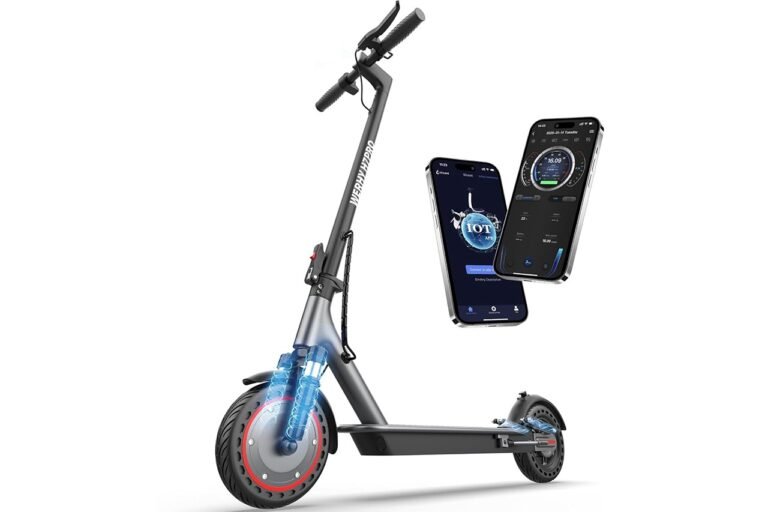
The display is easy to glance at for speed and mode, and the app features are practical rather than gimmicky: lock/unlock, light control, cruise control, and mode management.
The biggest “real life” value of the app is convenience—especially the lock function for quick stops. I still wouldn’t rely on app lock as a theft-proof system; it’s more like a deterrent and a helpful control layer.
At 5′10″, the handlebar height and stance feel natural, and the deck space is sufficient for normal commuting posture. For shorter riders, the main consideration is whether you can comfortably control the bars and step on/off confidently—especially during sudden stops.
For heavier riders approaching the stated limit, expect:
Practical tuning tip: if the ride feels too harsh, you can’t “soften” solid tires much—so the best comfort strategy is simply slowing down on rough sections and choosing smoother routes.
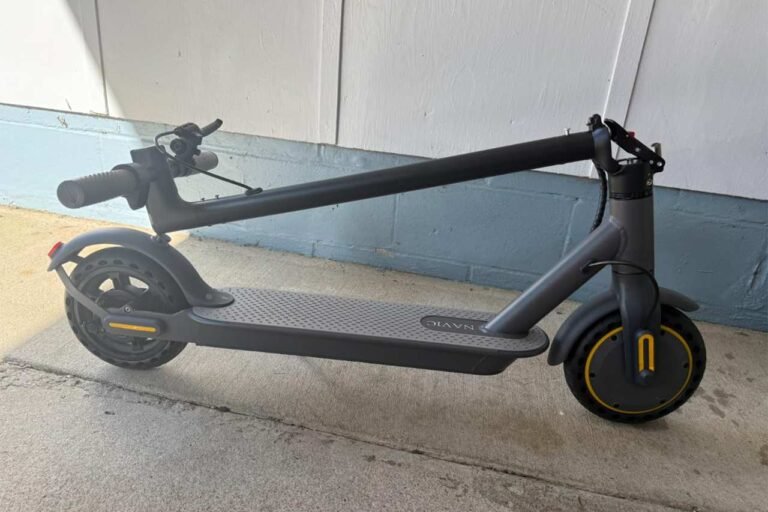
Folding & carrying: The one-step fold is legitimately useful. For trunk storage, office corners, or under-desk parking, this is one of the scooter’s best traits. At ~33 lb, it’s carryable for short distances—but stairs are still stairs.
First-week checklist (after a few rides):
Service reality: Solid tire scooters avoid flats, but if you ever do need tire service, it can be more labor-intensive than swapping a tube. That’s the trade: fewer puncture headaches, potentially harder tire work later.
Based on typical packaging for this category, expect:
(Exact contents can vary by listing, so check your box contents against the manual.)
Compared to pneumatic-tire 8.5″ commuter scooters: the H6 wins on puncture resistance and low-maintenance ownership, but loses on comfort and “float” over rough pavement.
Compared to higher-power 500W-class commuters: the H6 is lighter and simpler, but it won’t match hill speed consistency or hard-acceleration confidence.
Is the WERHY H6 good for hills?
For mild hills, yes. For frequent steep climbs, expect slower speed and faster battery drain.
How comfortable is it without suspension?
On smooth roads it’s fine. On cracked pavement, comfort is the main compromise.
Are solid honeycomb tires worth it?
If you hate flats, absolutely. If comfort is your top priority, pneumatic tires usually ride better.
How long does charging take?
The listing suggests roughly 4 hours; real times can vary with charger output and battery level.
Does the app actually matter?
Yes for convenience (lock, modes, cruise, light control). No, it doesn’t replace a real physical lock.
Is 19 mph “too fast” for a beginner?
It can be if you jump straight to max mode. Start in a lower mode and build confidence gradually.
Buy it if: you want a simple, fun, low-maintenance scooter for short city trips on mostly smooth pavement.
Skip it if: your daily route is rough, wet, or steep—or you demand a plush, suspension-like ride.
Best use case: short commutes, campus travel, errands, and casual cruising where folding and storage matter.
Main compromise: comfort on broken pavement—solid tires are practical, but they don’t “forgive” bad roads.
Personal judgment: For the right route (smooth streets), I’d be happy owning this as a daily grab-and-go commuter. If my city had rough pavement everywhere, I’d choose an air-tire scooter instead.
| Preview | Product | Price | |
|---|---|---|---|

|
Electric Scooter for Adults, 350W Powerful Motor, 8.5″ Tires, Up to 19 MPH, 21 Miles Long Range… | View on Amazon |



Please what’s type of charger does it take
Hi Mike, thanks for your question! The WERHY H6 uses a standard 36V charger with a DC barrel plug, specifically designed for its 36V 7.8Ah lithium battery. The original charger is included in the package to ensure safe and optimal charging.