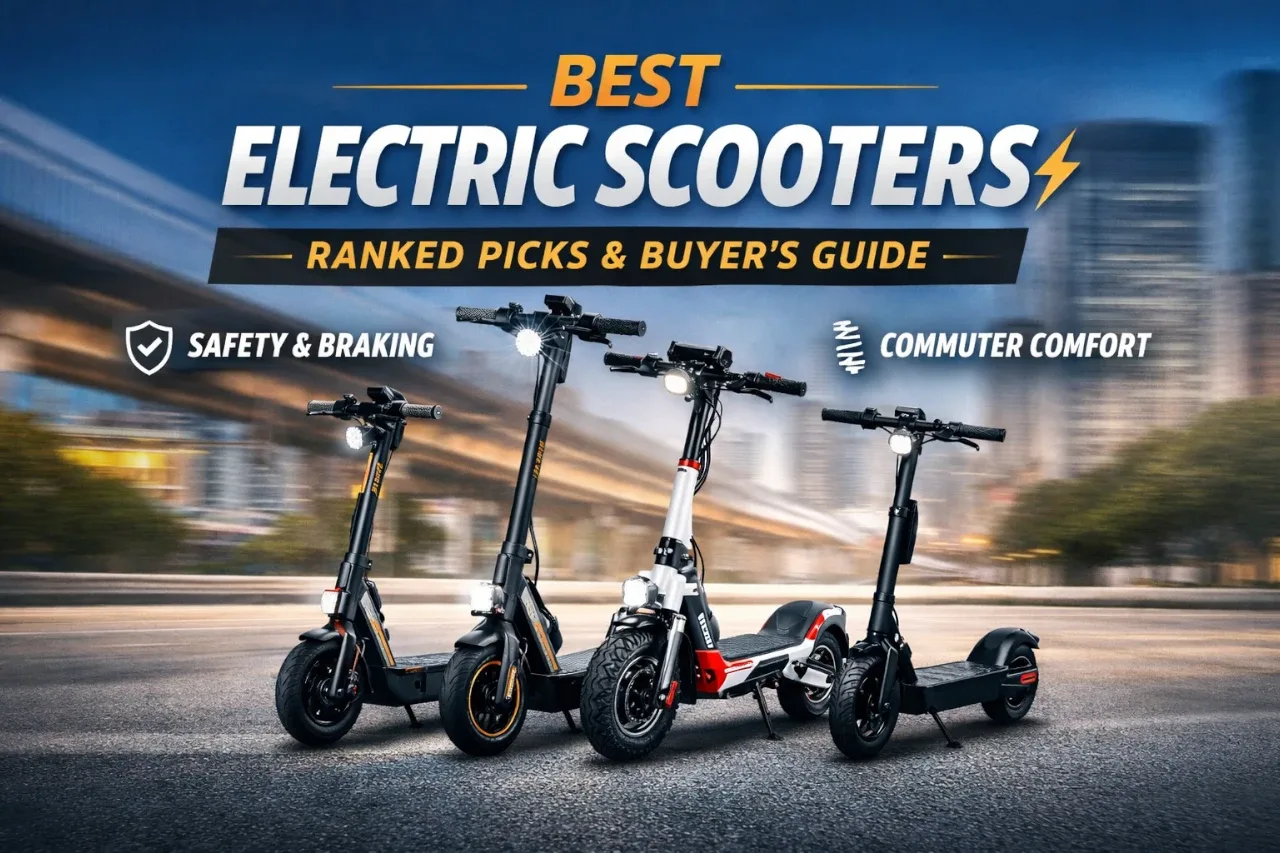
Choosing the right electric scooter comes down to matching motor power, battery range, tires, and weight to how you actually plan to ride. Commuters crossing several miles of city streets need different specs than someone folding a scooter into a car trunk for weekend errands. For riders who want one scooter that handles daily commuting, moderate hills, and occasional rough pavement, the Segway ZT3 Pro stands out as the strongest all-around choice, thanks to its rated 650W motor, 43.5-mile manufacturer-claimed range, and dual suspension.
This guide compares eight adult stand-up electric scooters built for commuting, value, long range, hill climbing, comfort, and portability. Some fold down under 40 pounds for easy carrying, while others use dual motors and larger batteries for speed and distance. Our picks are based on documented manufacturer specifications, safety certification records, warranty terms, and customer feedback, not hands-on testing. Below is a quick summary of our top picks, followed by detailed breakdowns of what each scooter does well, where it comes up short, and who it fits best.
Best for budget-friendly commuting: Segway Ninebot E2 Plus II/E2 Pro/E3 Pro
Best for daily commuting on a budget: Hiboy S2 Pro
Best for ultra-portable short trips: Hiboy S2
Best for long-range commuting: Segway Ninebot MAX G3
Best for hills and off-road versatility: Segway ZT3 Pro
Best for comfort on rough roads: NAVEE GT3
Best for hills and heavy riders: CUNFON RZ1000 Dual Motor
Best for speed and performance: Segway SuperScooter GT3 Pro
1. Segway Ninebot E2 Plus II/E2 Pro/E3 Pro Electric Scooter: Best Value for Budget-Friendly Commuting


This foldable Segway delivers a manufacturer-claimed 34-mile range and 20 mph top speed at a lower price than most premium commuter scooters. Best for: short-to-medium commutes and casual around-town riding.
| Spec | Detail |
|---|---|
| Motor | 800W rated |
| Top Speed | 20 mph (Sport mode) |
| Range | Up to 34 miles (Eco mode) |
| Weight | 40.1 lbs, foldable |
| Load Capacity | 265 lbs |
| Suspension | Front/rear elastomer (E3 Pro) |
| Certification | UL 2272 & UL 2271 |
| Charge Time | About 7 hours |
What We Like
- Documented UL 2272 (electrical) and UL 2271 (battery) certification
- Turn signals and brake light improve road visibility
- Under 41 lbs, easy to carry and store
What Could Be Better
- 265-lb load limit is lower than premium models
- Elastomer suspension, not hydraulic
- Sport mode range drops well below the 34-mile Eco figure
Who Should Buy It: New commuters wanting a certified, foldable scooter without a high price tag.
Who Should Skip It: Heavier riders or anyone needing hydraulic suspension for rough streets.
2. Hiboy S2 Pro Electric Scooter: Best Budget Commuter Scooter

A rated 500W motor and claimed 25.6-mile range cover typical commuting distances at a competitive price. Best for: daily commuters who want dependable range without a high cost.
| Spec | Detail |
|---|---|
| Motor | 500W rated brushless hub |
| Top Speed | 19 mph |
| Range | Up to 25.6 miles (claimed, varies by rider weight and terrain) |
| Weight | 35.9 lbs |
| Load Capacity | 220 lbs |
| Tires | 10″ solid, rear dual shock absorbers |
| Certification | UL 2272 tested (UL lab) |
| Charge Time | 8 hours |
What We Like
- Certification testing performed by a UL laboratory, per the listing
- App connects for locking and ride data
- Dual shock absorbers help offset the firmness of solid tires
What Could Be Better
- Solid tires transmit more road vibration than pneumatic tires
- Some owners report reliability issues after about a year of use
- 220-lb load limit excludes heavier riders
Who Should Buy It: Commuters wanting a well-rounded scooter with app-based features.
Who Should Skip It: Riders over 220 lbs or those on rough, unpaved routes.
3. Hiboy S2 Electric Scooter: Best Ultra-Portable Scooter for Short Trips

This smaller-wheeled Hiboy trades range for a lighter, more compact package suited to quick errands. Best for: riders who value portability over long-distance range.
| Spec | Detail |
|---|---|
| Motor | 350W rated brushless hub |
| Top Speed | Up to 19 mph (claimed) |
| Range | Up to 17 miles (claimed) |
| Weight | 35.5 lbs |
| Load Capacity | 220 lbs |
| Tires | 8.5″ solid |
| Certification | UL 2272 tested (SGS lab) |
| Charge Time | 5 hours |
What We Like
- Fast 5-hour charge time
- Lightest scooter in this lineup
- Lower price fits tighter budgets
What Could Be Better
- Shortest range of the eight scooters compared here
- Testing lab listed as SGS rather than UL, worth confirming certification paperwork before buying
- Smaller 8.5″ tires feel rougher on cracked pavement
Who Should Buy It: Riders with short daily commutes who prioritize light weight.
Who Should Skip It: Anyone needing more than about 15 miles of round-trip range.
4. Segway Ninebot MAX Series Electric Scooter (G3): Best Long-Range Commuter

A 597Wh battery and manufacturer-claimed 50-mile range make this Segway suited to riders covering longer daily distances. Best for: long commutes and less frequent charging.
| Spec | Detail |
|---|---|
| Top Speed | Up to 22-28 mph depending on mode (claimed) |
| Range | Up to 50 miles (claimed) |
| Weight | 54.2 lbs |
| Load Capacity | 286 lbs |
| Tires | 11″ self-sealing tubeless |
| Suspension | Dual hydraulic, front and rear |
| Certification | UL 2272, tested by TÜV Rheinland |
| Charge Time | 3.5 hours (2.5 with optional DC charger) |
What We Like
- Self-sealing tires can handle small punctures up to 4mm
- Highest load capacity among the Segway models here
- Hydraulic suspension improves comfort on rough streets
What Could Be Better
- At 54.2 lbs, less portable than folding commuter models
- Sport mode noticeably reduces the claimed 50-mile range
- Listing does not specify a rated motor wattage
Who Should Buy It: Commuters with long routes who want range and ride comfort.
Who Should Skip It: Riders needing a lightweight scooter to carry on stairs or transit.
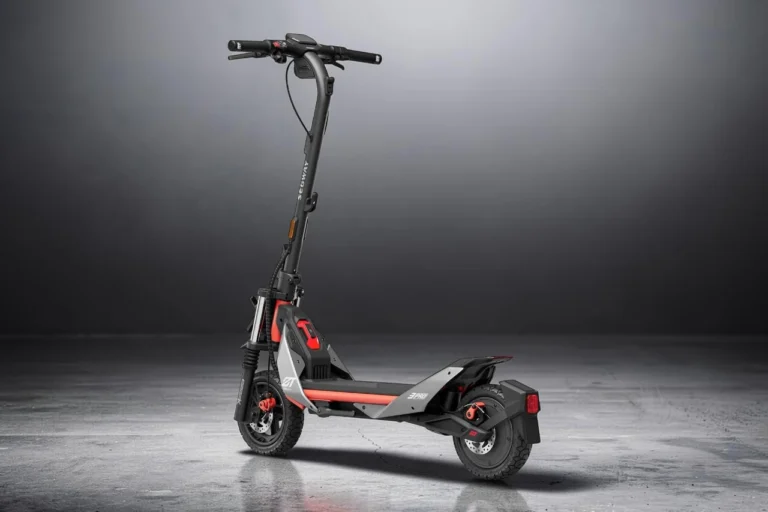
5. Segway ZT3 Pro Electric Scooter: Best All-Around Scooter for Hills and Commuting

A 650W rated motor, 43.5-mile claimed range, and dual suspension make this a versatile choice for mixed city and light off-road riding. Best for: riders wanting one scooter for pavement, hills, and trails.
| Spec | Detail |
|---|---|
| Motor | 650W rated, 1600W peak |
| Top Speed | 24.9 mph (claimed) |
| Range | Up to 43.5 miles Eco / 18.6 miles Sport (claimed) |
| Weight | 65.5 lbs |
| Load Capacity | 265 lbs |
| Tires | 11″ off-road tubeless |
| Suspension | Front telescopic + rear spring |
| Certification | UL 2272, tested by TÜV Rheinland |
| Charge Time | About 4 hours |
What We Like
- Listing clearly separates rated (650W) from peak (1600W) motor output
- Traction control and hill-hold assist help on inclines
- Dual disc brakes plus an electronic brake add stopping power
What Could Be Better
- At 65.5 lbs, folding and carrying takes real effort
- Sport mode range drops to under 19 miles
- Larger footprint than commuter-focused folding scooters
Who Should Buy It: Riders tackling hills, uneven pavement, or light trails.
Who Should Skip It: Anyone needing a scooter light enough for daily stair-carrying.
6. NAVEE GT3 Electric Scooter: Best for Comfort on Rough Roads

A four-point damping arm suspension design helps this scooter absorb bumps that jolt riders on simpler single-suspension models. Best for: commuters on cracked pavement or uneven bike paths.
| Spec | Detail |
|---|---|
| Motor | 700W rated |
| Top Speed | 19 mph (claimed) |
| Range | Up to 31 miles (claimed, 357Wh battery) |
| Weight | 46 lbs |
| Load Capacity | 265 lbs (per feature bullets) |
| Tires | 10″ tubeless |
| Suspension | Quadruple polymer damping arms |
| Certification | UL 2272 |
| Charge Time | 6-8 hours |
What We Like
- Multi-point suspension smooths rough terrain
- Three ride modes cover walking, commuting, and sport riding
- App includes Apple Find My integration
What Could Be Better
- Fewer verified owner ratings than more established competitors
- Weight capacity figures vary across the listing’s spec fields, worth confirming before buying
- Some owners describe acceleration as abrupt
Who Should Buy It: Riders on rough city streets who want extra shock absorption.
Who Should Skip It: Buyers who prefer a brand with a longer review history.
7. CUNFON RZ1000 Dual Motor Electric Scooter: Best for Hills and Heavy Riders

Dual motors and a claimed 440-lb load rating suit heavier riders and steep inclines that single-motor scooters struggle with. Best for: bigger riders or frequent hill climbing.
| Spec | Detail |
|---|---|
| Motor | Dual 1600W (3200W combined peak, claimed) |
| Top Speed | 31 mph (claimed) |
| Range | 40-50 miles (claimed, 1152Wh battery) |
| Weight | About 64 lbs |
| Load Capacity | 440 lbs (claimed) |
| Tires | 10.5″ pneumatic, self-sealing, off-road |
| Suspension | Dual air-hydraulic damping |
| Certification | UL 2272 |
| Charge Time | 8-10 hours standard, 2.5 hours with optional fast charger |
What We Like
- High claimed load capacity fits heavier riders and cargo
- Dual motor setup provides strong hill-climbing power
- Self-sealing pneumatic tires resist flats
What Could Be Better
- Heavy build limits portability
- Standard charger takes up to 10 hours for a full charge
- High top speed calls for more riding experience
Who Should Buy It: Riders over 220 lbs or those facing steep daily hills.
Who Should Skip It: Beginners wanting a lighter, easier-to-handle scooter.
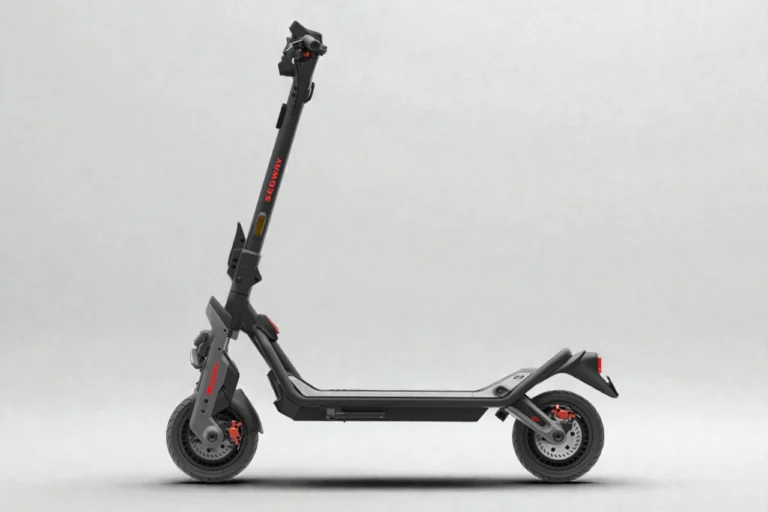
8. Segway SuperScooter GT3 Pro Electric Scooter: Best for Speed and Performance

Dual 3500W motors and a claimed 50 mph top speed put this scooter in a different performance class than typical commuter models. Best for: experienced riders wanting speed and long range together.
| Spec | Detail |
|---|---|
| Motor | Dual 3500W (7000W combined peak, claimed) |
| Top Speed | 50 mph (claimed) |
| Range | Up to 86 miles (claimed, 2160Wh battery) |
| Weight | 117.1 lbs |
| Load Capacity | 330 lbs |
| Tires | 11″ self-sealing tubeless |
| Suspension | Dual hydraulic, 15-level adjustable front |
| Certification | UL 2272, tested by TÜV Rheinland |
| Charge Time | About 8 hours |
What We Like
- Long claimed range reduces how often you need to charge
- Anti-lock braking adds control at higher speeds
- Auto-adjusting headlight improves nighttime visibility
What Could Be Better
- At over 117 lbs, it is not portable or easily foldable for carrying
- Very few verified customer ratings are available so far
- Top speed exceeds most local scooter speed limits
Who Should Buy It: Experienced riders wanting a high-power scooter for open roads.
Who Should Skip It: Commuters needing a lightweight or foldable scooter, or anyone new to powered two-wheelers.
Buying Guide
Motor power: Look for the rated (continuous) wattage rather than the peak figure. Peak power numbers look impressive but only reflect short bursts; rated power tells you what the motor sustains during normal riding.
Battery range: Manufacturer-claimed range assumes ideal conditions, flat ground, a lighter rider, and Eco mode. Expect real-world range to run lower, especially in Sport mode or cold weather.
Certification: UL 2272 covers the electrical drive system, while UL 2271 covers the battery itself. Check which certification (or both) a listing references, and confirm the testing lab named, since not all labs carry equal recognition.
Tires: Solid tires need no maintenance but ride rougher. Pneumatic and self-sealing tubeless tires absorb bumps better but require occasional air checks.
Suspension: Elastomer dampers work for smooth pavement. Hydraulic or multi-point suspension systems handle cracked streets and light trails with less jolt to the rider.
Weight and portability: Scooters under 40 lbs fold easily for stairs, trunks, and transit. Heavier models over 55 lbs suit garage storage or car-only transport.
Load capacity: Match your body weight plus gear to the manufacturer’s listed maximum, and leave some margin rather than riding at the limit.
Local laws: Speed limits, sidewalk rules, and helmet requirements for electric scooters vary by city and state. Check local regulations before buying a scooter capable of 25 mph or higher.
Frequently Asked Questions
What factors should I consider when choosing an electric scooter for adults?
Focus on rated motor power, real-world range, tire type, suspension, and weight limit relative to your body weight. Also check UL 2272 and UL 2271 certification status and confirm the scooter’s weight matches how often you’ll need to carry or fold it.
Which electric scooters offer the best range for commuting?
The Segway SuperScooter GT3 Pro has the highest manufacturer-claimed range in this guide at up to 86 miles, but its 117.1-pound weight makes it impractical for many commuters. The Segway Ninebot MAX G3 is a more practical long-range commuter, with a claimed range of up to 50 miles, dual suspension, and self-sealing tires.
Actual range will usually be lower than the advertised maximum. Rider weight, speed, hills, temperature, tire pressure, and riding mode all affect battery use.
Which electric scooter is best for hills?
The Segway ZT3 Pro is the strongest all-around option for moderate hills and mixed commuting. It combines a 650W rated motor, 1600W peak output, traction control, hill-hold assistance, and dual suspension.
Heavier riders or those facing steeper inclines may prefer the CUNFON RZ1000 because of its dual motors and higher claimed load capacity. However, it is heavier and less portable than a typical commuter scooter.
What is the difference between UL 2272 and UL 2271 certification?
UL 2272 covers the electrical system of a personal e-mobility device, including components such as the motor controller, wiring, charger, and battery integration. UL 2271 applies specifically to batteries used in light electric vehicles.
A scooter may reference one standard without having certification under the other. Buyers should verify the exact model, certification standard, and testing organization instead of relying only on wording in an Amazon listing.
How much motor power does an adult electric scooter need?
A scooter with approximately 350W to 500W of rated power can be suitable for lighter riders, flatter routes, and short urban trips. Riders dealing with frequent hills, higher body weight, or faster acceleration may benefit from 600W or more of rated power.
Peak wattage reflects short bursts of output and should not be treated as continuous motor power. Rated power provides a more useful comparison for everyday riding.
Are solid or pneumatic tires better on an electric scooter?
Solid tires cannot go flat and require less maintenance, but they usually transmit more vibration on cracked or uneven pavement. Pneumatic tires provide better cushioning and traction but require regular pressure checks and can be punctured.
Self-sealing tubeless tires provide a useful middle ground. They generally offer a smoother ride than solid tires while helping seal some small punctures.
How much electric scooter range do I need for commuting?
Choose a scooter with a claimed range comfortably above your total daily distance. A rider with a 10-mile round trip should not assume that a scooter advertised for exactly 10 miles will complete the route under all conditions.
Cold weather, hills, higher speeds, frequent acceleration, heavier loads, and low tire pressure can reduce range. Leaving a reasonable battery reserve also helps account for changing conditions and normal battery aging.
Are high-speed electric scooters legal on public roads?
Electric scooter laws vary by state, city, and riding location. Local rules may restrict top speed, sidewalk use, bike-lane access, helmet requirements, rider age, or where higher-powered scooters can operate.
A scooter capable of 30 or 50 mph may exceed local micromobility limits even when lower riding modes are available. Check current state and local regulations before purchasing or riding a high-performance model.
GoEBikeLife publishes independent e-bike reviews, comparisons, and practical buying guides. Some links on this page are affiliate links. If you make a purchase through an eligible link, we may earn a commission at no additional cost to you.