A good ride can change your day.

VEEFA M2 Electric Bike Review: a sleek 27.5” commuter with removable internal 499Wh battery, 1000W peak power, up to 24 mph, and UL 2849.
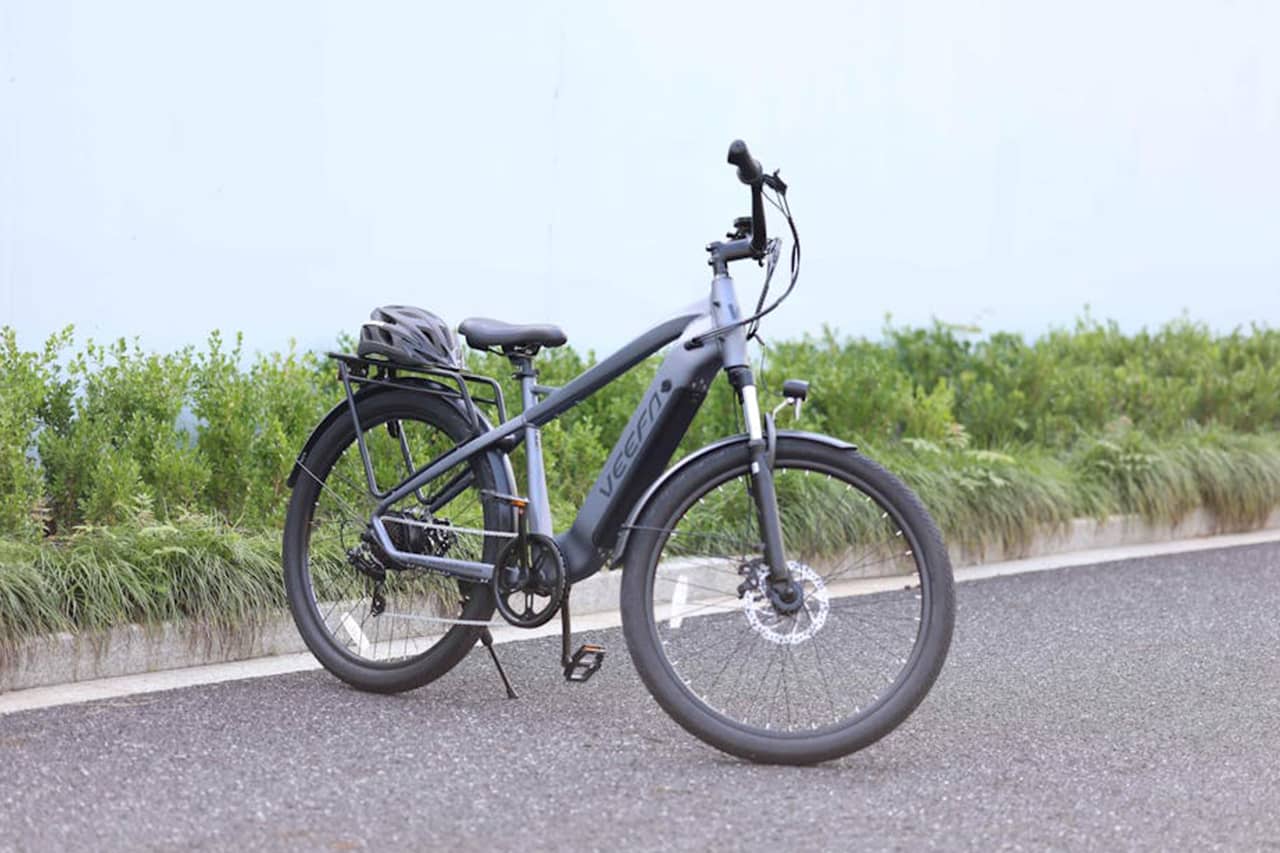
If you’ve been shopping for an e-bike in the under-$1,000 range, you’ve probably noticed a pattern: a lot of models look bulky, wear their battery like a brick on the downtube, and cut corners on commuter essentials (fenders, racks, lights) that actually matter once you start riding daily.
The VEEFA M2 aims for a different vibe. It’s a 27.5″ commuter-style e-bike built around a sleek aluminum frame, a built-in (but removable) 48V battery, and a practical “ready-to-ride” setup that includes a rear rack, fenders, and a headlight. It’s also UL 2849 certified, which is becoming a big deal for buyers who want extra peace of mind.
At $799 (as listed), the big question is simple: is the M2 a smart value commuter, or is it one of those bikes that looks great on paper but compromises in the places you’ll feel on day one? Let’s break it down.
Quick Verdict
The VEEFA M2 is best for riders who want a commuter-friendly, clean-looking 27.5″ e-bike with a hidden removable battery, sensible top speed (up to ~24 mph), and a practical accessory bundle (rack + fenders + headlight) at a budget-friendly price. The biggest trade-offs are what you’d expect at $799: the suspension is more “comfort helper” than true trail equipment, and the braking/drivetrain experience is likely “good enough” rather than premium.
If your priorities are everyday riding, errands, and weekend paths—and you like the idea of a battery that doesn’t make the bike look industrial—the M2 is a strong shortlist candidate.
At a Glance
The VEEFA M2 is a 27.5-inch, step-over commuter-style electric bike designed to cover the “real life” use cases: getting to work, riding around campus, running errands, cruising bike paths, and handling typical city/suburban roads with imperfect pavement.
Its standout design choice is the internal battery. Instead of a big external pack, VEEFA integrates a 48V 499Wh battery inside the frame—but still markets it as removable, which is important if you live in an apartment or prefer charging indoors.
On paper, the M2’s positioning is pretty clear:
At $799, it’s trying to be the bike you buy when you want one purchase that works for most of your week, not a toy for occasional weekend rides.
| Spec | Detail |
|---|---|
| Motor | Rear hub motor, 500W nominal / 1000W peak |
| Battery | 48V 499Wh internal battery, removable |
| Range | 30–40 miles (throttle) / 40–90 miles (PAS 1–5) |
| Real-World Range (Expected) | Roughly 20–45 miles for many riders depending on speed, hills, wind, rider weight, tire pressure, and assist level |
| Top Speed | 20–24 mph |
| Bike Class | Likely “Class 2-ish / low-Class 3-ish” depending on settings; always confirm local rules |
| Weight / Payload | ~59.5 lb bike; 300 lb max payload |
| Frame & Size | Aluminum step-over frame; commuter geometry |
| Rider Height Range | 5’7″–6’8″ |
| Brakes | Front & rear disc brakes (type not specified) |
| Drivetrain | 7-speed (Shimano-branded in listing images) |
| Suspension | Front suspension fork (spring style; described as “faux hydraulic spring”) |
| Tires | 27.5″ x 2.25″ puncture-resistant tires |
| Display & Controls | LCD display, 5 PAS levels, thumb throttle |
| Lights & Accessories | Headlight, reflector(s), fenders, rear rack, kickstand, bell |
At $799, the M2 sits firmly in the budget commuter category. That typically means you get strong “core” value—motor + battery + basic components—while higher-end refinements (torque sensor, hydraulic brakes, higher-end fork damping, brand-name contact points) are where you’ll see compromises.
The value question here is whether VEEFA’s choices (integrated removable battery + commuter accessories + UL 2849) are the right upgrades compared to competitors that might offer a bigger battery or nicer brakes at a higher price.
The M2’s biggest design win is the integrated battery aesthetic. In the real world, this matters more than people expect—especially if you park the bike in public, store it inside your home, or simply want something that feels like a bicycle first.
The frame is aluminum, which is a meaningful upgrade over the cheapest steel frames in this price tier. Aluminum doesn’t automatically mean “better,” but it usually helps with:
A lot of budget e-bikes hit a low sticker price and then quietly require another $80–$200 in accessories to feel complete. The M2 includes several commuter staples out of the box:
These aren’t just “nice extras”—they change whether the bike feels ready for real life.
Without hands-on inspection, I can’t tell you whether the cable routing is “premium tidy” or “fine but visible.” That said, the M2’s styling suggests VEEFA cares about clean presentation. What I would check on arrival (and what you should too):
Small details like this separate “looks good in photos” from “still looks good after 1,000 miles.”
VEEFA advertises a 500W motor with 1000W peak and a top speed of 20–24 mph. In practical terms, that suggests a bike tuned for:
With a hub motor in this power range, acceleration usually feels best when:
If VEEFA’s throttle is tuned smoothly (not all are), the M2 should feel beginner-friendly—quick enough to be fun, but not so punchy that it surprises you in tight spaces.
A 20–24 mph cap is honestly a sensible match for many riders:
In other words: this is a speed range that tends to feel safe, useful, and efficient.
Peak watts help you on hills, but your results will vary with:
For best hill performance on bikes like this, the winning habit is: downshift early, keep cadence steady, and let the motor spin. Hub motors typically prefer spinning over being lugged at low RPM.
If I were evaluating the M2 for a commuter buyer, I’d look at two practical scenarios:
The takeaway: for typical suburban hills, the M2 should be capable. For consistently steep terrain, you’ll care more about gearing, brake confidence, and heat management.
The M2 uses a 48V 499Wh internal battery and claims up to 90 miles (PAS) and 30–40 miles (pure electric). Those are optimistic best-case numbers—common in e-bike marketing—but the battery size is still respectable for the price.
A simple way to think about it: watt-hours are your fuel tank. Many commuters consume roughly:
With a 499Wh battery, that translates to a realistic range spread of about:
That aligns with the M2’s throttle range claim and makes the “up to 90 miles” PAS claim something you’d only see with a very light rider, low speed, flat terrain, and conservative assist.
This is a key feature, so it’s worth being honest about the trade-offs:
Pros
Cons
VEEFA claims 5–6 hours for a full charge. That’s a comfortable “overnight or workday” charging pattern:
If you want the battery to feel good after a year (not just a month), these habits help:
And yes—UL 2849 certification is reassuring here, especially for buyers concerned about charging safety.
The M2 is built around a comfortable commuter recipe:
The fork is described as a “faux hydraulic spring” setup. Translation: expect it to help with vibration and small bumps, but don’t expect it to feel like a high-end mountain bike fork with refined damping. For commuting, that’s usually fine—and sometimes even preferable (less maintenance, less fiddling).
For comfort tuning, tire pressure is your best friend. Many riders overinflate. Slightly lower pressure (within safe limits printed on the tire) can dramatically improve ride feel.
At commuter speeds, stability matters more than agility. The M2’s ingredients point to a stable ride:
Where you may feel the weight is in:
If your riding is mostly city streets and paths, this “stable over twitchy” handling is a good thing.
VEEFA says the M2 includes front and rear disc brakes, along with a headlight, rear reflector, and bell, plus UL 2849 certification.
Disc brakes are the right choice for e-bikes, but the type matters:
Since the brake type isn’t clearly specified, I’d assume they are likely mechanical disc brakes in this price tier. That’s not a dealbreaker—just be prepared to:
A headlight is excellent for being seen and for basic night riding, but I’d still recommend adding:
Reflectors help, but active lighting is what drivers notice first.
UL 2849 relates to the electrical system safety of an e-bike. In a market filled with unknown battery quality, any credible safety certification is a positive. It doesn’t mean “nothing can ever go wrong,” but it does signal more rigorous testing than the bottom-of-the-barrel options.
The M2 includes an LCD display, 5 pedal assist levels, and a thumb throttle.
On a commuter e-bike, the display should be simple:
If the M2’s display is readable in sunlight (not always guaranteed), it’ll feel “set and forget,” which is exactly what commuters want.
With 5 PAS levels, the best setups usually feel like:
If the bike is tuned too aggressively in low PAS, it can feel jumpy. If it’s tuned too weak, riders crank PAS to max and drain the battery faster. Ideally, the M2 lands in the middle: predictable and easy to modulate.
Throttle logic varies a lot by brand. What you want:
If the throttle is linked to PAS levels (common), it may deliver more power in higher PAS, which can be useful once you understand it.
VEEFA lists a recommended height range of 5’7″ to 6’8″, and the sizing graphic shows:
The M2 also has an adjustable seat and commuter-style cockpit. If you want a more upright posture, raising the seat properly (for leg extension) and fine-tuning handlebar angle can make a big difference.
VEEFA says the M2 ships 85% pre-assembled and includes tools and instructions.
Realistically, most buyers should expect:
Typical assembly tasks include:
My practical advice: after assembly, do a short test ride and re-check:
In the box (expected):
For a $799 commuter, this is a generous setup because it avoids the “hidden accessory tax.” You can realistically buy this bike and start using it for commuting without immediately shopping for another pile of add-ons. The one thing I’d still budget for is a quality rear light (and possibly a better saddle if your body is picky).
| Pros | Cons |
|---|---|
| Sleek integrated look with internal removable battery | Internal battery removal may be less convenient than external packs |
| Strong “commuter bundle” (rack + fenders + headlight) | Likely not premium suspension damping (more comfort than trail-capable) |
| 500W / 1000W peak is plenty for everyday riding | ~59.5 lb can feel heavy for stairs or lifting onto racks |
| 27.5″ x 2.25″ tires balance comfort + efficiency | |
| UL 2849 certified electrical system | |
| 300 lb payload supports heavier riders and cargo |
Q: Is the VEEFA M2 legal to ride in my city?
A: It’s listed at 20–24 mph, which may fall into different e-bike classes depending on how throttle and assist are configured. Always check your local and state rules—especially for throttle use and speed caps.
Q: How far can it really go on one charge?
A: With a 499Wh battery, many riders can expect roughly 20–45 miles in real conditions. Throttle-heavy riding and hills reduce range; lighter assist and flatter routes increase it.
Q: Can I ride it in the rain?
A: The listing mentions weather resistance (and imagery suggests an IP-rated approach for the battery area). You can ride in light rain, but don’t submerge components, avoid high-pressure spraying, and dry/clean the bike afterward.
Q: Is it suitable for heavier riders?
A: The bike is rated for up to 300 lb payload, which is a strong number for this category. Just remember: heavier loads reduce range and increase braking demand.
Q: Is the battery really removable if it’s internal?
A: That’s what VEEFA claims—internal but removable. Practically, removal usually requires a key/lock step and sliding the pack out. It’s convenient for indoor charging, but may not be as quick as external batteries.
Q: What upgrades should I consider first?
A: A bright rear light, a helmet-mounted light for night commuting, and possibly a comfort-focused saddle. If you carry cargo, a pannier bag setup can transform daily usability.
Score: 8.2 / 10
The VEEFA M2 makes a strong case as a budget commuter e-bike that looks cleaner than most and arrives with the practical extras that commuters actually need. The 499Wh internal removable battery is a smart middle ground: large enough for real commuting while keeping the bike’s styling sleek. The claimed 20–24 mph speed and 500W/1000W peak motor are well-matched for everyday riding, errands, and moderate hills—especially if you ride with sensible gearing and assist levels.
The compromises are reasonable for the price: don’t expect high-end suspension performance, and be prepared to fine-tune braking and setup like you would with most budget e-bikes. Also, plan to add a proper rear light if you’ll ride in traffic or at night.
If you’re looking for a practical, commuter-ready 27.5″ e-bike with a modern integrated look, the VEEFA M2 is absolutely worth shortlisting.
| Preview | Product | Price | |
|---|---|---|---|

| VEEFA Electric Bike for Adults 500W Peak 1000W Motor Ebike 27.5” E-Bike Up to 20Mph… | View on Amazon |