Real rides. Real notes. No hype.

Tire Pressure Guide for E-Bikes: Use the PSI range on the sidewall, then adjust for weight, cargo, and terrain to improve grip, comfort, and range.
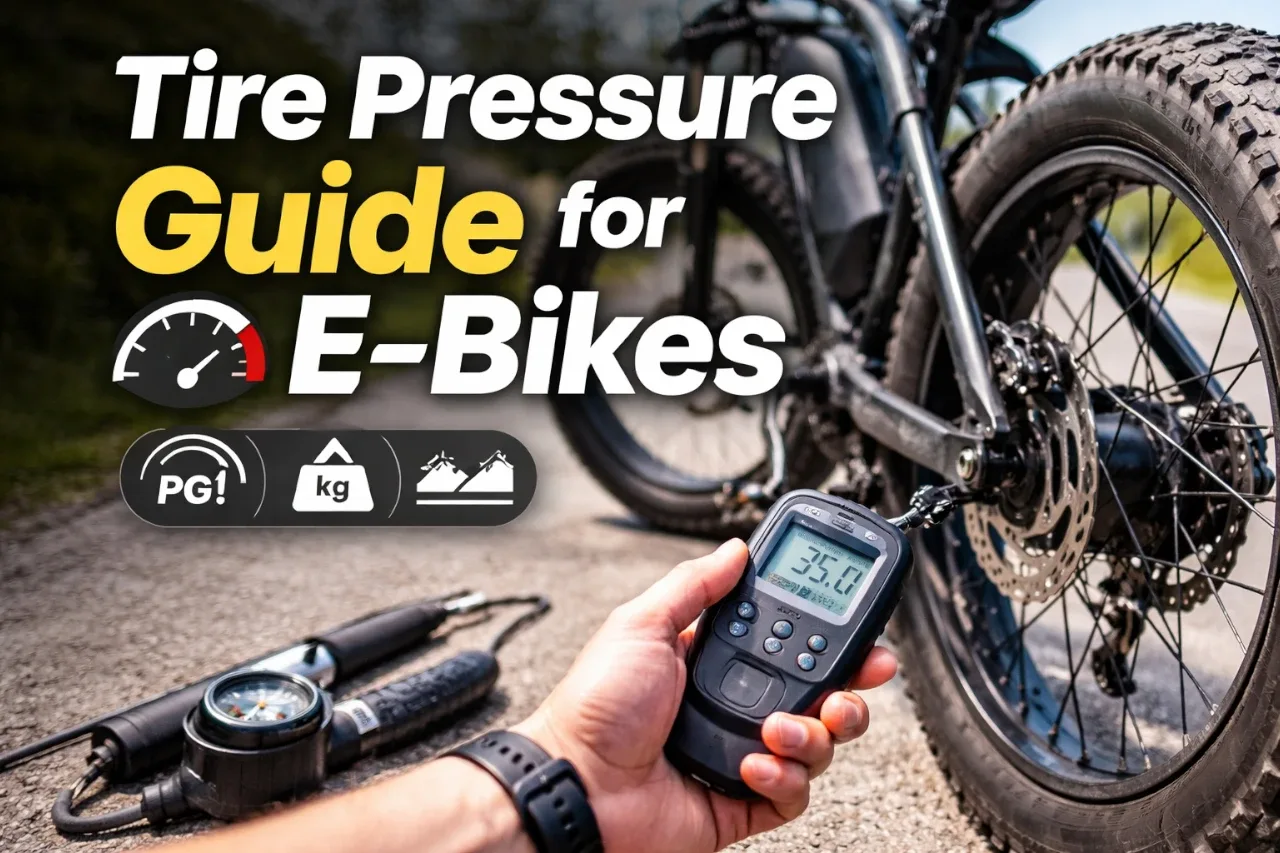
E-bike tire pressure matters more than you think. Your bike weighs more, you ride farther, and small pressure changes affect comfort, grip, and flats. Get it wrong, and every ride feels slower and rougher than it should.
Use the PSI range printed on your tire sidewall, and aim higher in the range when you carry more weight or ride on smooth roads.
Stay within that range at all times to protect handling and safety.
You’ll learn how PSI works, how terrain and load change your needs, and how to check pressure fast before a ride. You’ll also see why e-bikes need closer attention, based on guidance from an e-bike tire pressure and maintenance guide written for real-world riding.
Key Takeaways
Your e-bike tire pressure affects how safely you steer, how far your battery takes you, and how long your tires last. Because e-bikes weigh more and travel faster, small pressure mistakes cause bigger problems than on regular bikes.
Correct tire pressure keeps your bike stable when you turn, brake, and ride over bumps. Low pressure makes the tire flex too much. That slows steering and raises the risk of rim strikes on potholes. High pressure reduces the tire’s contact with the road, which can cut grip, especially on wet pavement.
E-bikes add weight from the motor and battery. That weight pushes the tire harder during cornering and braking. You need pressure that supports that load without bouncing.
Many riders follow the range printed on the tire sidewall and then fine-tune. This approach aligns with common tire pressure recommendations explained in this e-bike tire pressure basics guide.
Rolling resistance is how much energy the tire uses as it rolls. Low pressure increases resistance, so your motor works harder. That drains the battery faster, especially on long rides.
Higher pressure reduces rolling resistance on smooth roads. You gain speed and range, but only up to a point. Too much pressure wastes energy through vibration and reduces control.
How pressure affects range
| Pressure choice | Result |
|---|---|
| Too low | Shorter range, sluggish feel |
| Correct range | Best balance of range and control |
| Too high | Harsh ride, less grip |
Tests on bike efficiency show that tire setup directly affects energy use, a key factor for e-bikes carrying extra mass.
Low pressure is the main cause of pinch flats. When the tire compresses fully, the rim pinches the tube. You can prevent pinch flats by keeping pressure high enough for your weight and cargo.
High pressure creates other problems. It speeds up center tire wear and increases cuts from sharp debris. The tire cannot flex to absorb impacts.
Check pressure weekly with a gauge. Focus on the rear tire first since it carries more load. This simple habit extends tire life and keeps your tire pressure guide working for you.
You control ride comfort, grip, and tire life by setting the right pressure. PSI units, label limits, and tire size work together to guide your electric bike tire pressure and help you avoid common mistakes.
PSI (pounds per square inch) and bar measure the same thing in different units. Most bike pumps in the U.S. show PSI, while many tire sidewalls also list bar. You can use either as long as you match the unit to your gauge.
| Unit | What you’ll see | Quick reference |
|---|---|---|
| PSI | Common on pumps and gauges | Higher number, finer control |
| Bar | Common on tire labels | 1 bar ≈ 14.5 PSI |
You don’t need perfect math. Set pressure by PSI if your pump shows PSI. Focus on staying inside the recommended PSI range on the tire. That range already accounts for safe limits for the casing.
The tire sidewall gives the most important pressure recommendations. Look for “MAX PSI” or a PSI range. Never exceed the max. Riding below the minimum risks pinch flats and poor handling.
Labels don’t adjust for you, your cargo, or the road. Use them as guardrails, then fine‑tune. Heavier riders and loaded racks need pressure near the top of the range. Wet roads or dirt feel better near the lower end. Many e‑bike makers stress checking pressure often because weight and speed raise heat and wear; see practical guidance in this e‑bike tire pressure guide.
Tire size changes the optimal tire pressure. Wider tires hold more air, so they need less PSI for the same support. Narrow tires need more PSI to avoid squirm and rim strikes.
Use this rule of thumb, then adjust within the label range:
Check front and rear separately. The rear usually carries more weight, so it often needs a few extra PSI. Recheck with a gauge; guessing leads to uneven wear and unstable handling.
Your optimal tire pressure depends on tire width, riding surface, and load. E-bikes add weight and speed, so small pressure changes matter. Use the ranges below as tire pressure recommendations, then fine-tune for comfort and control.
Road and city e-bike tire types run higher pressure to stay fast and stable on pavement. Narrow tires roll best when firm, but too much pressure cuts grip and comfort.
Recommended PSI
Start near the lower end if you ride rough streets or carry cargo. Increase pressure for smooth roads and higher speeds. Check sidewall limits before inflating.
Higher pressure reduces pinch flats but raises impact stress on rims. Many riders settle mid-range for daily commuting. For long urban rides, test small changes of 3–5 psi and note braking feel and corner grip.
Trail riding needs lower pressure for traction and control. Wider tires and knobby tread work best when they can flex over roots and rocks.
Recommended PSI
Heavier e-bikes often need 2–4 psi more than acoustic bikes. Run slightly higher pressure in the rear due to motor and rider weight. Tubeless setups allow lower pressure with fewer pinch flats.
If you ride aggressive terrain, focus on grip over speed. Many trail riders adjust pressure by feel, then lock it in for similar rides. Models highlighted in electric mountain bikes often list tire sizes that guide safe pressure ranges.
Fat tires use very low pressure to float on sand, snow, and loose dirt. Small changes make a big difference.
Recommended PSI
Lower pressure boosts traction and comfort but increases rolling resistance. Avoid riding pavement at very low pressure, as it can damage sidewalls. Check pressure often, since temperature changes affect low-psi tires more.
Use a gauge made for low pressure. Many riders carry a mini pump to adjust on the trail. Bike examples with these setups appear among fat tire electric bikes, which often specify safe ranges for heavier frames.
Your body weight and what you carry change how tires flex and grip the road. Dialing in ebike tire pressure helps you avoid pinch flats, poor handling, and early tire wear while keeping the ride steady.
Your weight sets the baseline for ideal e-bike tire pressure. Lighter riders need less air to keep traction. Heavier riders need more air to stop the tire from folding in turns.
Use the tire sidewall range as your limit, as explained in this ebike tire guide. Stay within that range and adjust in small steps.
Starting points for pavement:
| Rider weight | Front PSI | Rear PSI |
|---|---|---|
| Under 150 lb | 35–45 | 40–50 |
| 150–220 lb | 45–55 | 50–60 |
| Over 220 lb | 55–65 | 60–70 |
If you ride near weight limits, look for frames built for load, like options discussed for heavy riders. Recheck pressure weekly since electric bike tire pressure drops over time.
Cargo and passengers add force to the rear tire first. Increase rear bike tire pressure before changing the front. This keeps steering stable and reduces rim strikes.
Simple adjustment rules:
Purpose-built haulers spread weight better, as seen in cargo e-bikes. Even so, check pressure before every loaded ride. Small changes make a big difference in control and braking.
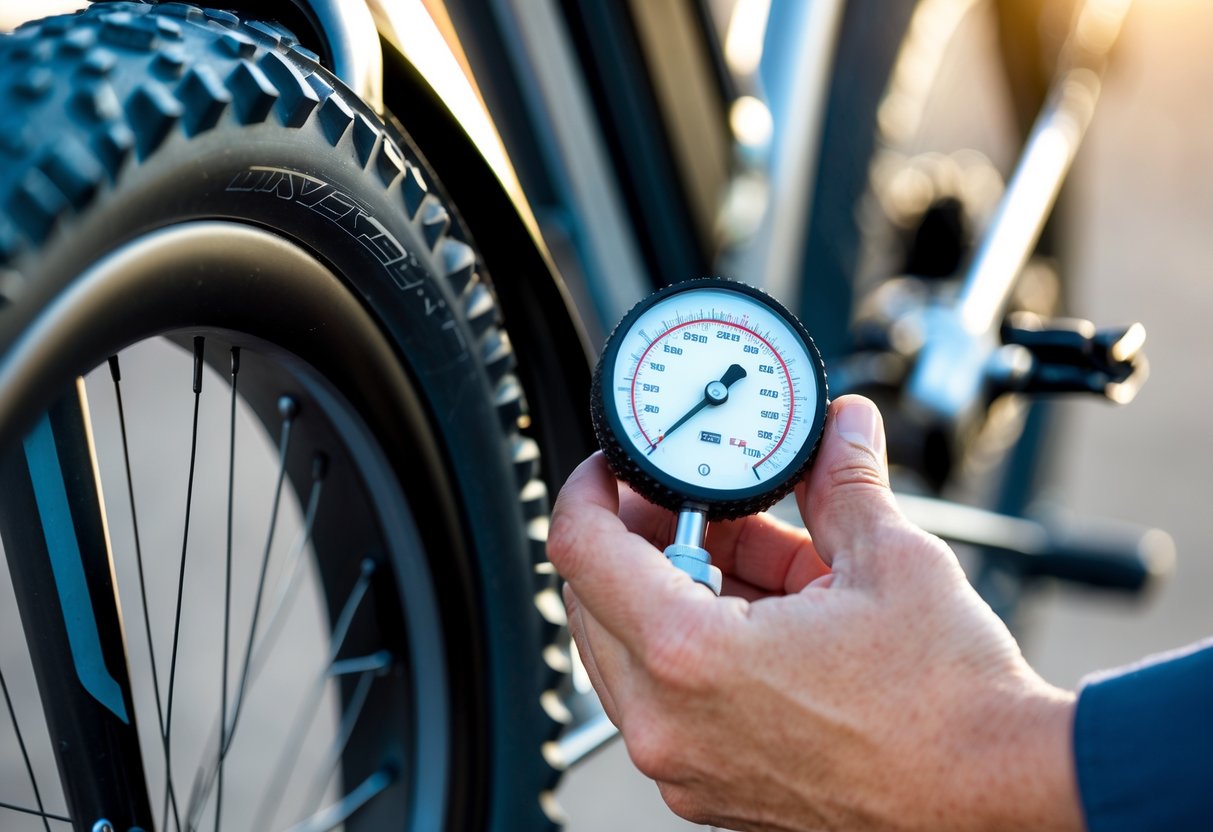
You get better range, grip, and tire life when you check tire pressure often and adjust it with care. Use a reliable pressure gauge, match the steps to your valve type, and inflate or deflate in small changes.
Use a tire pressure gauge made for bikes, not cars. Bike gauges read low pressures more accurately, which matters for e-bikes with wider tires. Check tire pressure when the tires are cool for a true reading.
Follow pressure recommendations from the tire sidewall first, then adjust for rider weight, load, and terrain. Many e-bike tires run between 20–50 PSI, but the correct number depends on tire width and use. Park Tool explains why accurate gauges matter for bike tires and shows proper use.
Tips that prevent errors
Know your valve before you start. Most e-bikes use either a presta valve or a schrader valve, and each needs a slightly different approach.
| Valve type | What to do before checking | Common mistake |
|---|---|---|
| Presta valve | Unscrew the small tip, then press to release air | Forgetting to close it after |
| Schrader valve | Press gauge or pump straight on | Tilting the head and leaking air |
Presta valves need a firm, straight seal. Close the tip after you adjust tire pressure or you will lose air. Schrader valves match car pumps, but bike pumps give better control. Sheldon Brown’s valve guide covers the basics clearly.
Add air in short bursts and recheck often. Small changes make a big difference, especially on wider e-bike tires. Overinflation reduces grip and comfort; underinflation raises pinch-flat risk.
To deflate, press the valve core gently and stop early. Fine control matters more than speed. Silca notes that riders often run too much pressure and lose traction.
Safe inflation techniques
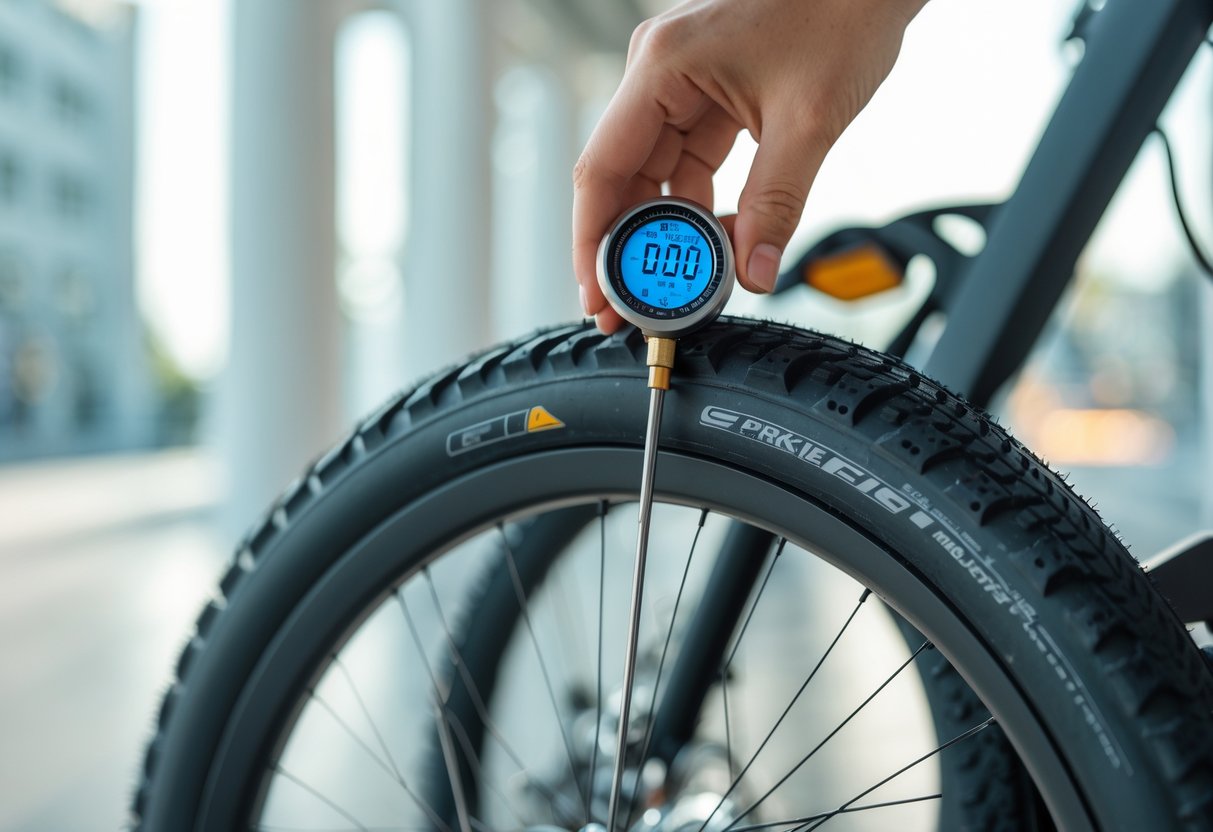
Correct tire pressure lets you ride smoothly while lowering the risk of flats. Small pressure changes affect grip, ride comfort, and how well your tires resist damage.
Lower pressure improves ride comfort by letting the tire absorb bumps instead of passing them to your hands and back. This matters more on e-bikes because the extra weight increases impact on rough roads.
Most riders do best by starting within the tire maker’s range, then adjusting in small steps. Use your weight, cargo, and tire width to guide changes. Wider tires need less pressure.
Typical starting points for e-bikes:
| Tire width | Rider + cargo | Front | Rear |
|---|---|---|---|
| 2.0–2.2 in | 180–220 lb | 28–32 psi | 32–38 psi |
| 2.4–2.6 in | 180–220 lb | 22–26 psi | 26–30 psi |
Silca explains how lower pressure can improve comfort and control without slowing you down when set correctly.
Proper pressure helps puncture resistance by keeping the tire from folding or pinching on sharp edges. Too little air raises the risk of pinch flats, where the tube gets trapped between the rim and tire.
You reduce flats by staying above the minimum pressure listed on the tire sidewall. Check pressure weekly, since e-bike tires lose air faster under load. Rear tires often need 3–6 psi more because they carry the motor and battery weight.
Other steps that help:
Schwalbe notes that correct pressure is one of the main ways to prevent pinch flats and casing damage.
Good tire pressure maintenance protects your rims, improves battery range, and keeps handling predictable. Regular checks and early tire wear detection help you avoid flats and unsafe rides.
Check your e-bike tire pressure before every ride or at least once a week if you ride often. E-bike tires lose air faster because of higher loads and speeds, even without punctures. Temperature changes also affect pressure, especially in winter.
Use a gauge, not a thumb squeeze. Aim for the pressure range printed on the tire sidewall, then adjust for your weight and riding surface. Many riders run slightly lower pressure for comfort on rough paths and higher pressure for pavement.
Quick schedule
Park Tool explains why frequent checks matter and how to do them right.
Inspect your tires every few weeks as part of e-bike maintenance. Look for flat spots, cracks, cuts, or threads showing. These signs mean the tire no longer holds pressure well or grips the road safely.
Pay close attention to the rear tire. It wears faster due to motor power and rider weight. Many tires include wear indicators or a center tread that turns smooth when worn.
What to do
Schwalbe details common tire wear signs and replacement timing.
REI also covers tire wear checks during routine bike care.
This tire pressure guide for e-bikes helps you make small adjustments that change how your bike feels and performs. You learned how rider weight, tire width, terrain, and load all affect pressure. You also saw why e-bikes need careful pressure because of higher weight and speed.
Use this short checklist before rides to avoid common mistakes:
Manufacturers agree on these basics. Schwalbe shows how wider tires run safely at lower pressure without losing control. Park Tool explains why cold checks give accurate readings. Bosch notes that e-bike weight makes correct pressure more important for handling.
Keep your setup simple and consistent. Check pressure weekly, adjust for conditions, and trust how the bike feels. Small, careful changes help you ride smoother, safer, and with fewer flats.