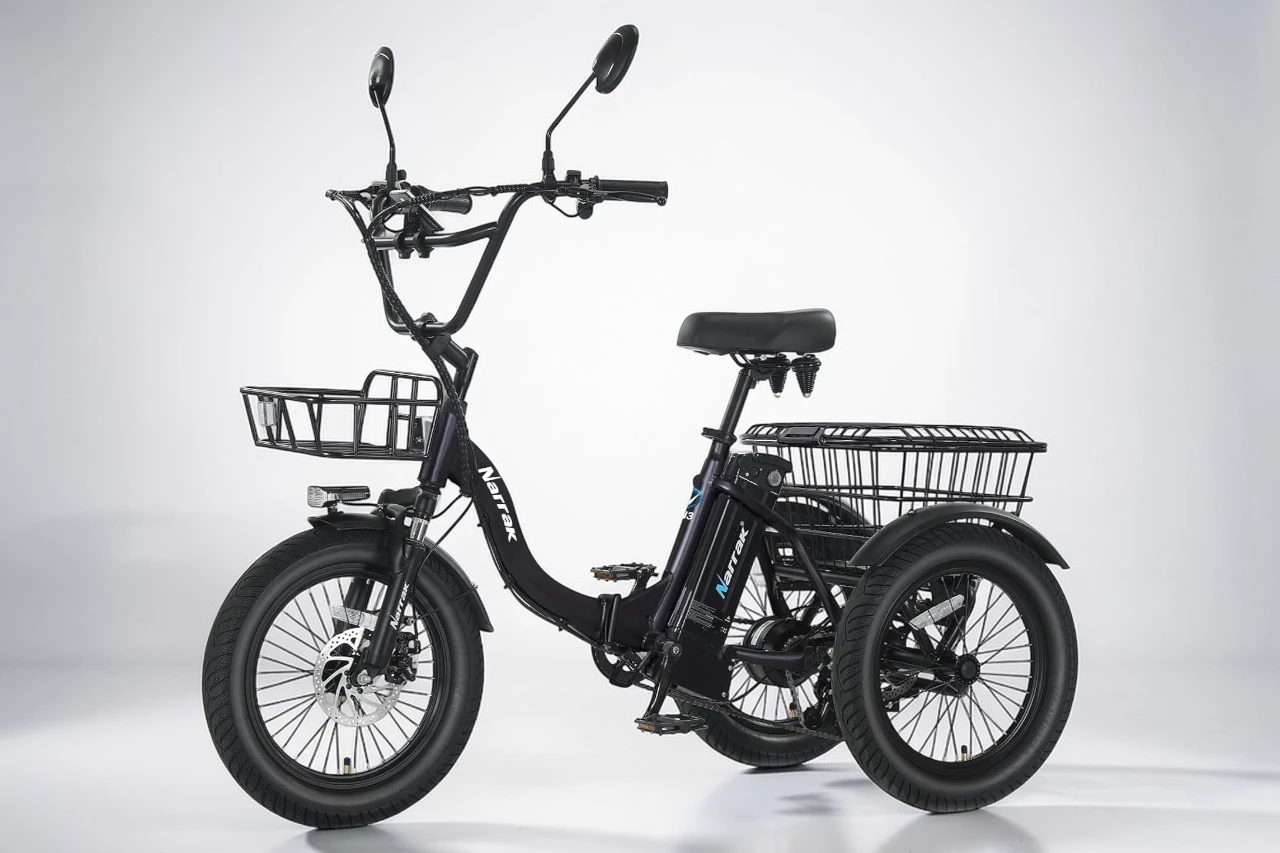
One-sentence verdict: The NARRAK N3 is a great choice for steady, low-stress errands and riders who want three-wheel confidence, but it’s not ideal if you need higher speed, easy lifting, or a fit beyond its stated height range.
Best for
Short, relaxed neighborhood rides and errands where stability matters more than speed
Riders who want big cargo capacity (front + rear baskets) right out of the box
People who prefer an upright, easy step-through mount and a calm 10–14 mph cruise
Not ideal for
Anyone who needs reverse for tight parking spots (it doesn’t have it)
Apartment/stairs living or frequent loading into a car (it’s ~74 lb and bulky)
Riders outside the stated 4’8″–5’8″ fit range (verify before buying)
Biggest strength: It feels errand-ready and stable—baskets, step-through, and predictable low-speed handling. Biggest trade-off: It’s a utility trike, not a fast e-bike—16 mph cap and noticeable weight/bulk.
Water rating: IPX5 (light rain OK; I still avoid heavy downpours)
Test Conditions
Rider: 5’10”, ~180 lb
Terrain: Neighborhood streets, paved multi-use paths, and hard-packed park trails
Riding style: I avoid fast cornering and stay cautious on steep camber/uneven shoulders (normal trike behavior)
Typical speed + assist: I cruise 10–14 mph in lower PAS; I top out near 16 mph when I let it run
Weather: Light rain is fine (IPX5), but I avoid heavy downpours; headwinds noticeably reduce speed and range
Duration: First shake-down ride ~10 miles, then another 30–50 miles of errands over a week to confirm braking, shifting, and range consistency
Evidence Snapshot
Assembly time: ~40–60 minutes total; unpacking and removing protective foam took a surprising chunk of that
First-ride setup issues: Brakes felt “slow” at first and improved after a bed-in period
Power feel: Steady and utility-focused, not fast—best for smooth starts and cruising
Hill performance: Helps on moderate grades, but I still pedal and downshift on steeper climbs
Range reality: 468Wh points to “30+ miles” being reasonable for many riders; 40 miles is best-case PAS on flatter routes
Handling: Differential makes turns feel more predictable, but I still take corners slow
Noise/rattles: Normal drivetrain/motor noise; any clanking made me re-check derailleur indexing
Biggest surprise: How complete it feels for errands (baskets + stability)
Biggest disappointment: No reverse, and the weight/bulk is real
What Is the NARRAK N3
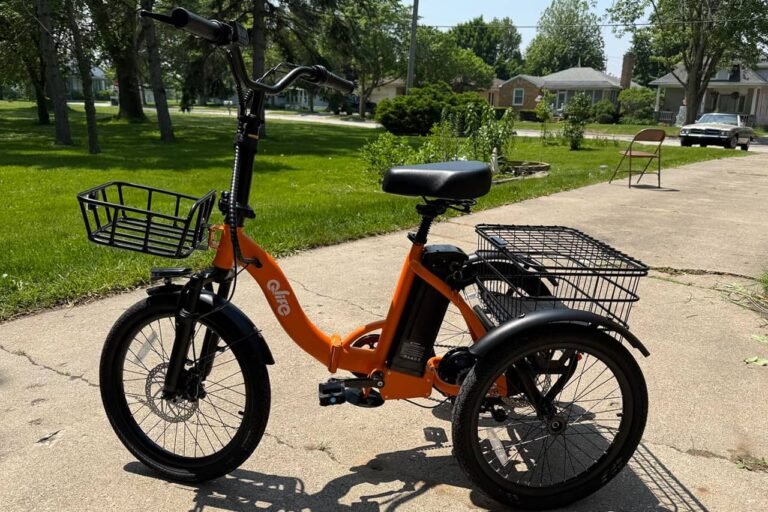
The NARRAK N3 is an adult-oriented electric tricycle built around one main promise: stable, low-stress transportation with built-in cargo. It’s not trying to compete with fast commuter e-bikes. Instead, it’s a step-through trike that leans into practical details—upright cruiser bar, a front basket, a big rear basket, and a drivetrain that’s meant to feel predictable at neighborhood speeds.
The “folding” label matters, but in practice, it’s best read as “easier to store than a full-size trike” rather than “easy to lift and toss in a trunk.” Even folded, a three-wheel frame plus baskets is still a lot of volume.
Key Specs
Spec
NARRAK N3
Motor
350W rear hub, 700W peak
Battery
36V 13Ah (468Wh) removable
Top speed
16 mph max
Range
30+ miles typical claim; up to 40 miles (PAS best case)
Drivetrain
Shimano 7-speed
Brakes
Dual disc brakes
Tires / wheels
18″ x 3.0
Suspension
Front fork + seat/post suspension (comfort-oriented)
Weight
~74 lb
Rider limit
298 lb
Fit range
4’8″–5’8″ stated
Cargo
Front basket + large rear basket
Water rating
IPX5
Who This Trike Is For
If your priority is stability, comfort, and hauling stuff at moderate speed, this is the kind of trike that makes sense.
Errand riders: Grocery runs, park rides, trips to the post office—this is the N3’s natural habitat.
Comfort-first riders: The upright bar + suspension elements help reduce fatigue on rough pavement.
Confidence seekers: If two wheels feel twitchy or intimidating, three wheels can lower the stress level—especially at low speed.
Who Should Skip This Trike
This is the buyer-protection part—where I’d rather lose a sale than have you hate the purchase.
If you need speed or traffic-flow riding: A 16 mph cap is calm and safe, but it can feel limiting if you’re used to 20+ mph commuting.
If you have stairs, tight storage, or lift limitations: At ~74 lb and bulky, this is not fun to move around solo.
If you’re taller than the stated fit range: The listing says 4’8″–5’8″. At 5’10”, I can ride it, but I treat fit as a risk factor you should verify before spending.
If you expect “bike-like” cornering: Trikes don’t like aggressive turns. Stability is real, but physics is still physics.
Real Drawbacks
Drawback #1: No reverse gear
Who it affects: Anyone parking in tight spaces, backing out of narrow gates/garages, or maneuvering on slopes
When it shows up: The first time you nose into a corner or stop in a cramped spot with the front wheel turned
Why it matters: A heavy trike is awkward to “shuffle backward” by foot, especially with cargo loaded
Workaround: Plan your stops so you can roll forward out; leave extra turning room; dismount and push carefully if needed (no true substitute for reverse)
Drawback #2: Heavy and bulky for real-world storage
Who it affects: Apartment dwellers, anyone with stairs, and people who load bikes into vehicles
When it shows up: Every time you try to reposition it indoors, lift the rear, or fit it through narrow doors
Why it matters: Weight + three wheels equals more friction and more awkward angles—this can turn “quick errands” into a hassle
Workaround: Store it on ground level if possible; remove baskets for storage; use a ramp rather than lifting; keep a clear roll-in/roll-out path
Drawback #3: Fit range looks restrictive (and it matters for safe control)
Who it affects: Riders above 5’8″ (and possibly some at the upper end depending on inseam), plus riders who need more leg extension
When it shows up: Longer rides, hill starts, and any moment you need strong pedaling leverage
Why it matters: Poor fit can reduce pedaling efficiency and knee comfort—and on a trike, confident control is tied to comfortable posture
Workaround: Max out seat height safely; fine-tune saddle fore-aft (if adjustable); consider a different model if you cannot get near-full leg extension without rocking hips
Drawback #4: Brakes may feel underwhelming until bedded in
Who it affects: Anyone expecting sharp braking right out of the box, and heavier riders or fully loaded cargo runs
When it shows up: First few rides, especially on descents or quick stops
Why it matters: Trikes carry more mass and can encourage late braking because they feel stable—so predictable braking matters
Workaround: Do a proper bed-in (multiple controlled stops); re-check caliper alignment; confirm rotor true; adjust cable/hydraulic feel as needed
Drawback #5: Confusing speed messaging in marketing
Who it affects: Buyers shopping by top speed or expecting “moped-like” performance
When it shows up: Before purchase (expectations), and then on the first ride when it tops out near 16 mph
Why it matters: Mismatched expectations create returns and disappointment
Workaround: I assume 16 mph is the real limit because it matches the detailed listing specs and the utility positioning; buy it for stability/errands, not speed
Real-World Performance
Motor & Power Feel
The assist feels steady and practical, not punchy. Starts from a stop are easier than a non-electric trike (which can feel sluggish), but the N3 doesn’t give me that “snap” I associate with higher-powered e-bikes. For the way I used it—errands, paths, and cruising—it’s a good match because the power delivery feels predictable.
What I appreciate is that it doesn’t feel like it wants to surprise me. On a trike, that matters. Sudden surges mid-turn are not what I want. The N3’s assist feels tuned for calm control.
Hill Performance
On moderate grades, I can feel the motor doing its job, but I still ride it like a trike: I downshift early and keep my cadence comfortable. On steeper climbs, the weight shows up—especially if I’m carrying cargo. I don’t treat this as a “climb anything without pedaling” machine. It’s more like “makes climbs less annoying as long as you help it.”
The listing emphasizes a transmission system that boosts motor output. Whether or not the percentage claim is accurate, my real takeaway is simpler: it climbs fine when I use gears and don’t expect miracles.
Speed & Control
In normal use, I settle into 10–14 mph because that’s where it feels relaxed and stable. When I let it run, it tops out close to 16 mph, and that aligns with what the detailed specs say. For neighborhood streets and multi-use paths, that speed range is honestly appropriate—and it helps keep trike handling predictable.
I also like that the speed limit reduces the temptation to corner too fast. Three wheels can lull riders into thinking they can turn like a bike. You can’t. The safest “feature” here is that the trike encourages a slower, more controlled riding style.
Range Reality
With a 468Wh battery, I treat “30+ miles” as realistic for many riders if they’re riding at moderate speeds and using assist sensibly. “Up to ~40 miles” is possible, but it’s a best-case scenario: flatter terrain, lighter load, gentle assist, and limited stop-and-go.
What reduces range fastest in my riding:
Headwinds (noticeable drop in speed and efficiency)
Hills + cargo (weight matters more on trikes)
Riding near top speed for long stretches
For errands, the practical translation is: I can do multiple short trips over a week without anxiety, but I’m not treating it like a long-distance touring machine.
The upright posture with cruiser bars is genuinely comfortable for easy riding. I’m not hunched over, and my wrists don’t feel loaded the way they can on more aggressive bikes. The suspension elements (front fork + seat/post suspension) don’t turn potholes into nothing, but they do take the edge off cracks, rough pavement seams, and small bumps.
The saddle style is more “comfort” than “sport,” which fits the mission. If you’re doing short errands, that’s exactly what you want.
Handling & Stability
The differential helps the trike feel more natural in turns, and overall it tracks predictably at low and moderate speeds. That said, I still treat it with respect:
I slow down early before turns
I avoid sharp steering inputs at speed
I stay cautious on uneven shoulders and steep camber
The best compliment I can give is that it feels confidence-building—as long as you ride it like a trike, not like a bike.
Brakes & Safety
Once the brakes bed in, stopping feels more confident. Early on, I noticed the bite was softer, and that improved with use. With trikes, I’m extra attentive to braking consistency because the extra mass and cargo capability can encourage heavier loads.
In wet conditions, I still brake earlier and smoother—IPX5 doesn’t mean “storm riding,” and traction is always the limiting factor, not the motor.
Cargo & Errand Use
This is where the N3 shines. The front basket and big rear basket make it feel like a purpose-built errand tool. I can carry real stuff without improvising straps and bags. For the kind of rider shopping a trike, that’s not a bonus feature—that’s the point.
Controls, Display & Riding Modes
The practical value here is simple: I can change assist levels easily and pair electric help with Shimano 7-speed gearing. For errands, that means I can keep my effort comfortable while still pedaling naturally.
I treat the three modes (e-trike / assisted / normal) as options for different days:
Electric help when I’m carrying cargo or dealing with wind
Lower assist when I want a bit more exercise
Pedal-only when I’m just rolling short distances and conserving battery
Fit, Sizing & Adjustability
This is the biggest “read carefully” part of this review.
The stated fit range is 4’8″–5’8″, and I’m 5’10”. I can ride the N3, but I don’t love recommending a trike when the published sizing says you’re outside the window.
My experience at 5’10”:
I can pedal and control it, but leg extension feels closer to “compromised” than “ideal.”
For longer rides or hills, proper fit matters because you need stable posture and efficient pedaling.
Notes for shorter riders (good news):
Step-through design is friendly.
Upright bars reduce reach stress.
This is the kind of trike that can feel approachable for smaller riders.
Notes for taller/heavier riders:
Weight capacity (298 lb) is fine on paper, but fit is still critical.
If you’re tall, verify seat height and leg extension before buying.
If you’re near the upper weight limit, expect more braking distance and less range—plan accordingly.
Ownership Notes
Assembly difficulty
My build time was roughly 40–60 minutes, but a big chunk of that was simply unpacking and cleaning up packaging. The actual assembly felt straightforward.
Derailleur indexing and chain noise (especially if you hear clanking)
Tire pressure consistency (a big factor in comfort and handling)
Parts and service realities
This trike uses common-sense wear items (tires, tubes, brake pads), but trikes also add a few ownership realities:
More hardware to keep tight (baskets, racks, fenders)
More bulk when transporting for service
Setup accuracy matters (brakes and shifting feel “off” if alignment isn’t right)
Narrak advertises US-based support. I treat that as a positive sign, but I still recommend documenting any shipping dings and keeping your packaging until you’re sure everything is dialed.
What’s Included in the Box
Trike, battery, charger
Tool kit and documentation
Baskets (front + rear) and required mounting hardware
Stable, confidence-building ride at neighborhood speeds
Errand-ready: baskets included and genuinely useful
Step-through frame is easy to mount/dismount
Upright comfort is real; suspension helps on rough pavement
Assist feels predictable—good for cautious riders
7-speed gearing helps you manage hills and starts
Cons:
No reverse, which matters on a heavy trike
Heavy and bulky (~74 lb) for storage and transport
Stated fit range (4’8″–5’8″) may exclude taller riders
Brakes may need a bed-in period to feel confident
Speed cap (~16 mph) limits commuting “traffic flow” usefulness
Comparisons
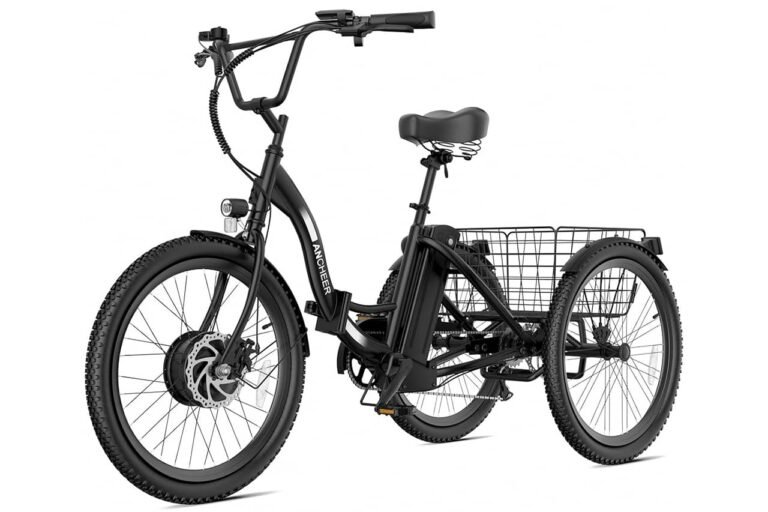
NARRAK N3 vs a typical 2-wheel folding e-bike
Where the N3 wins: Low-speed stability, cargo carry, confidence for cautious riders
Where it loses: Storage convenience, lifting/transport, and cornering behavior If your main problem is balance and stability, the N3 makes sense. If your main problem is “I need something compact and easy to carry,” a two-wheel folder is usually the better answer.
NARRAK N3 vs higher-speed/higher-power e-trikes
Where the N3 wins: Calm, utility-first tuning; often a more approachable feel for new trike riders
Where it loses: Speed headroom and sometimes hill authority If you live in a very hilly area or need to keep up with faster bike traffic, you may prefer a trike with more speed margin—assuming it still handles predictably for you.
FAQ
Is the NARRAK N3 good for hills?
It’s capable on moderate hills with assist, but I still downshift and pedal on steeper grades. Weight and cargo make a difference quickly.
What’s a realistic range for most riders?
With a 468Wh battery, I’d expect ~20–30 miles for many riders. Up to ~40 is possible with gentle assist on flatter routes.
Does it feel stable in turns?
It feels predictable, especially with the differential, but I still take corners slow. Trikes can tip if you corner aggressively.
Can I ride it in the rain?
Light rain is fine (IPX5), but I avoid heavy downpours and I brake earlier in wet conditions.
Is it hard to assemble?
No—my setup took about 40–60 minutes, and most of that was unpacking. Expect a short brake bed-in period.
Is it good for taller riders?
That’s the biggest caution. The stated range is 4’8″–5’8″. I can ride it at 5’10”, but I recommend verifying fit carefully before buying.
What maintenance should I expect?
Basic bike upkeep (tires, chain, brake pads) plus extra bolt checks because baskets and racks can loosen with vibration.
Final Verdict: Should You Buy the NARRAK N3?
If you want a stable, comfortable errand trike that cruises calmly around 10–14 mph and carries real cargo without DIY add-ons, the NARRAK N3 does its job. The motor feels steady, the gearing helps, and the differential makes turning feel more natural—when I respect trike handling limits.
But it’s not a “fast e-bike substitute.” The 16 mph cap, no reverse, and 74 lb bulk are real compromises. Fit is also a major buyer-protection point: the stated height range suggests many taller riders should confirm sizing before committing.
Buy it if
You value stability and cargo utility more than speed
You want an upright, low-stress ride for errands and paths
You’re within (or confidently close to) the stated fit range
Skip it if
You need reverse, easy lifting, or frequent car transport
You want higher speed commuting capability
You’re taller than the listed fit range and can’t confirm proper leg extension
My personal money test: I would spend my own money on it only if my main goal were stable errands at moderate speed and I could confirm fit. If I needed portability, higher speed, or stair storage, I’d spend my money in a different category.
If you enjoyed this article or found it helpful, using the links in this article is a simple way to support GoEBikeLife.
It doesn’t cost you anything extra.
Disclosure: As an Amazon Associate I earn from qualifying purchases.
Michael Thompson puts every e-bike through its paces so our readers don’t have to guess. With over 15 years of riding experience and a deep interest in e-bike technology, he focuses on real-world testing—range, comfort, hill-climbing, braking, and long-term reliability. Michael explains the pros, cons, and best use cases of each model in clear, honest language, helping riders find the right e-bike for their daily commute, weekend adventures, or anything in between.