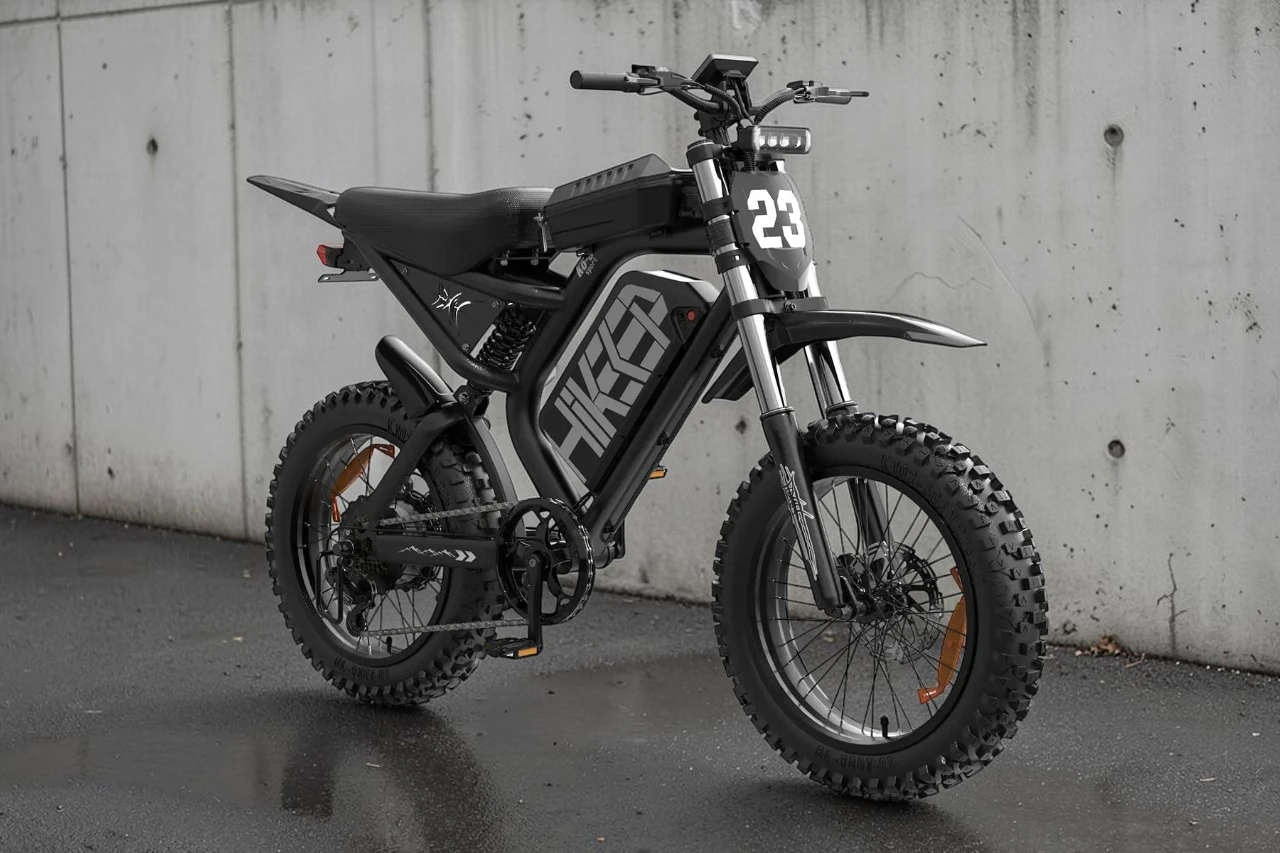
The Hikeep K6-S Max made its strongest impression on the hills. I’m 5′11″ tall and weigh 200 lb, and the bike pulled me up demanding climbs on throttle power. I found it comfortable over ordinary bumps and briefly reached approximately 35 mph during an early speed run. Its comfortable seat and smooth hydraulic brakes also made my ride more enjoyable.
The limitations became clearer as the miles added up. Pedal assist contributed relatively little during my initial checks, the rear suspension bottomed out on a couple of larger bumps, and a later speed run returned about 32–32.4 mph. The advertised 110-mile range also needs careful context: my ride covered approximately 20 miles, with the app reporting 51% battery remaining at the final checkpoint.
My assessment is that the Hikeep K6-S Max suits adults who want throttle-led recreation, useful hill-climbing power, and comfortable riding over pavement and mild off-road terrain where its use is permitted. Its weight, pedaling characteristics, and suspension limits deserve just as much attention as its headline motor specifications.
Take On Hills With the Hikeep K6-S Max
Bring strong climbing power and comfortable cruising to your next adventure. The Hikeep K6-S Max combines a 52V 40Ah battery, full suspension, and hydraulic disc brakes.
My Verdict at a Glance
| What matters | My assessment |
|---|---|
| Best use | Recreational riding on permitted routes, including hills and light off-road sections |
| Strongest qualities | Hill climbing, seat comfort, front suspension, and hydraulic brake feel |
| Main compromises | Heavy construction, modest pedal-assist contribution, and limited rear suspension support on larger impacts |
| Observed speed | Briefly about 35 mph early in the ride; roughly 32–32.4 mph during a later run |
| Range evidence | About 20 miles ridden; the app showed 51% remaining. Full-charge range was not established |
| Buying priority | Confirm the exact model, rider fit, permitted riding locations, and battery warranty before ordering |
The Model and Test Conditions
This review covers the 52V 40Ah Hikeep K6-S Max with a rear hub motor rated at 1500W continuous and advertised at 3000W peak. Hikeep also uses K6-S and K6 Max naming across its materials. Check the selected configuration carefully, because the Mini, Plus, and Ultra versions have different specifications.
At 5′11″ and 200 lb, I also carried camera equipment and supplies during this ride. My route included paved riding, repeated hills, and a short off-road section. I used the throttle for most faster riding and added pedal input on some climbs.
The speed observations came from the unlocked performance configuration shown in the test. I checked ride information using the bike’s instruments, Hikeep’s app, and a phone speedometer app. Their distance readings differed slightly, so the figures below should be read as approximate field observations.
This was a single-ride assessment. It does not establish long-term reliability, a full-discharge range result, measured stopping distances, or independently verified motor output.
Hikeep K6-S Max Specifications

- 3000W Peak Power — Experience Motorcycle-Level Performance: 750W Brushless Hub Motor with Hall Sensor delivers powerful…
- 52V40Ah Long Range Battery — Ride Farther With Confidence: Equipped with a high-capacity 52V40Ah removable lithium…
- 20×4.0 Fat Tires & Full Suspension — Built for All Terrain Comfort: 20×4.0 inch mountain fat tires provide excellent…
- Smart Riding Experience — APP Control, NFC Unlock & LCD Display: Connect your smartphone through the APP to monitor…
- Hydraulic Brakes & 90% Pre-Assembled Design — Safe and Easy Setup: Front and rear hydraulic disc brakes provide…
| Specification | Details |
|---|---|
| Motor | Rear hub brushless motor; 1500W rated, 3000W peak claimed |
| Torque | 190 N·m claimed; not independently measured |
| Advertised maximum speed | Up to 35 mph |
| Battery | 52V 40Ah lithium-ion |
| Nominal battery energy | 2,080Wh, calculated from 52V × 40Ah |
| Advertised maximum range | Up to 110 miles; supplied specifications identify this as a pedal-assist claim |
| Tires | 20 × 4.0-inch knobby fat tires |
| Suspension | Front and rear suspension, marketed as a 3-point system |
| Brakes on the test bike | Logan hydraulic disc brakes with 180mm rotors front and rear |
| Drivetrain | Shimano 7-speed |
| Pedal assistance | Cadence sensing, with three assistance levels on the test bike |
| Throttle | Full-twist throttle |
| Display | 4-inch NFC LCD display |
| Connectivity | Bluetooth app with electronic lock/unlock and ride functions |
| Listed bike weight | Approximately 95.2 lb |
| Claimed payload | 330 lb, including rider and cargo |
| Claimed water resistance | IPX5 |
Manufacturer specifications are listed values, not measurements from this ride. The official listing provides the core equipment and configuration information.
Motor Performance: The Hills Were the Highlight
I found that the K6-S Max’s rear hub motor provided useful pulling power on the hills. On the first steep hill, I used the throttle and the bike carried me up without needing an immediate push from the pedals.
On another demanding climb, it slowed to approximately 10.1–10.5 mph before picking up speed again. It completed that section on throttle power. Adding a steady pedal stroke on subsequent hills helped maintain progress without requiring an exhausting effort.
That experience gives me more useful information than the 190 N·m torque claim alone. I did not measure torque or electrical output, but the bike demonstrated that it could handle the hills on my route while carrying me and my equipment.
The opening hill was described in the ride record as approximately 28.6% grade. That is a reported slope, not an independently surveyed measurement. A 28.6% grade corresponds to roughly 16 degrees, so it should not be confused with Hikeep’s advertised maximum climbing angle.
I would base expectations on the observed climbs. The ride does not verify a 40-degree climbing capability, and surface grip, slope length, rider weight, and battery condition all affect the result.
Top Speed: About 35 MPH Early in the Ride
During the early speed runs, I briefly saw approximately 35 mph, with the bike holding around 34 mph for part of the run. That supports the advertised speed as an achievable observation in these conditions.
The later result was more revealing for everyday expectations. After approximately 10 miles, another run produced around 32–32.4 mph. Farther into the ride, the bike was still traveling around 30 mph on some sections.
| Point in the ride | Approximate observed speed | Context |
|---|---|---|
| Early speed run | 35 mph briefly | Peak observed during the run |
| Another early stretch | Around 34 mph | Held for part of the stretch |
| Follow-up after about 10 miles | 32–32.4 mph | Different point in the ride; conditions were not controlled |
| Later riding | Around 30 mph on some sections | Continued useful performance after more hills and mileage |
These were not identical, repeated runs on a controlled course. Battery state may have contributed to the change, but the observations do not isolate it from terrain and other conditions.
For a buyer, the sensible expectation is that 35 mph is a possible peak, with actual speed varying during a ride. I would not plan around maintaining that figure continuously.
Battery and Range: What the Ride Actually Established
The specified 52V 40Ah battery works out to 2,080Wh of nominal energy. That is a substantial capacity on paper, although this review does not include an independent capacity measurement.
Hikeep advertises up to 110 miles. My test did not establish that distance, and it was not a low-speed endurance attempt. At 200 lb, with additional equipment aboard, I put the bike through repeated climbs and frequent throttle use.
These were the useful battery checkpoints:
| Approximate distance | App-reported battery level | Observation |
|---|---|---|
| About 5 miles | 89–90% | Different apps reported slightly different distances |
| About 10 miles | 75–76% | The percentage rose slightly after a stop |
| About 20 miles | 51% | Final documented checkpoint |
The small rebound after stopping is one reason I would avoid turning those readings into a precise full-charge range estimate. Battery percentage is an estimate, and this ride did not continue to the battery’s cutoff.
The result supports a narrower conclusion: the bike completed approximately 20 miles of demanding mixed riding and still displayed 51% remaining in the app. It does not establish a 110-mile range or a verified throttle-only range.
If distance is your main reason for buying, ask Hikeep for the rider weight, average speed, assistance setting, terrain, and test method behind its maximum-range figure. Plan your own routes with a reserve until you know how the bike behaves under your conditions.
Pedal Assist and Gearing: Most Useful at Modest Speeds
The K6-S Max has functional pedals and a Shimano 7-speed drivetrain, but my riding experience depended heavily on the throttle.
During the initial pedal-assist checks, assistance engaged gently through the cadence sensor. PAS 1 took me to roughly 12.5 mph, and PAS 2 reached around 13.8 mph. Moving to PAS 3 did not produce a dramatic increase in that particular check.
Those observations are not universal speed caps for each setting. They describe how the test bike behaved on that section of the route. They did make clear that the throttle delivered much more of the performance I wanted.
The pedals became more useful on hills. At lower climbing speeds, a steady cadence added meaningful help. At faster road speeds, pedaling contributed much less to forward progress.
I could also ride at approximately 7–8 mph during a slower section. Gentle throttle input allowed slow travel too, although I felt a little motor vibration while trying to hold a low speed.
If your ideal ride involves frequent pedaling, exercise, and a responsive relationship between leg effort and assistance, these characteristics deserve careful consideration. The K6-S Max makes more sense for someone who expects to use its throttle often.
Suspension and Off-Road Comfort
The front suspension was one of my favorite parts of the bike. The inverted fork felt comfortable through the rough sections I rode, and I did not experience front-end bottoming during the test.
The rear suspension initially felt supportive under my 200-pound weight. Over ordinary bumps, I found that the suspension and padded seat worked well together, making the bike pleasant to sit on.
Larger impacts exposed the limit. The rear suspension bottomed out a couple of times. That matters for heavier riders and anyone considering rougher trails.
The short off-road section felt manageable, but my overall impression favored paved riding and mild off-road use. This test does not establish suitability for jumps, repeated hard landings, or technical trail riding.
Before considering a suspension change, I would have Hikeep or a qualified mechanic confirm the correct setup and compatible parts. A stronger spring alone does not establish that the frame and complete bike are suitable for more aggressive use.

Fat Tires and Handling
The 20 × 4.0-inch tires have prominent knobs and gave the bike a planted feel on the surfaces I tried. They were also quieter on pavement than their appearance led me to expect.
Combined with the comfortable seat and front suspension, they contributed to a reassuring ride over ordinary uneven surfaces. I felt comfortable standing slightly on the pedals during the short off-road section.
I did not test deep sand, snow, or mud, so I cannot extend those impressions to every surface mentioned in the marketing. Loose gravel also called for slower, more deliberate riding during this outing.
Hydraulic Brakes: A Strong Part of the Package
The test bike used Logan hydraulic disc brakes with 180mm rotors at both ends. Lever feel was smooth, and I was pleased with their response throughout the ride.
Braking comfort matters on a bike with this weight and speed capability. I appreciated having brakes that felt easy to control while moving between faster sections, corners, and descents.
There was no measured stopping-distance test or repeated brake-fade protocol, so I would not attach a numerical performance claim to them. My positive assessment concerns their feel and response during the documented ride.
Seat Comfort, Rider Fit, and Weight
I found the long padded seat comfortable throughout my roughly 20-mile outing. At 5′11″, I felt natural in the seating position, and my knees did not feel excessively cramped.
That fit worked for me. Hikeep’s published height recommendations vary between sections of its listing, so I would confirm seat height, reach, and ground clearance for your inseam before ordering. The current listing also gives overall dimensions of approximately 64.17 × 28.74 × 41.73 inches, which differ from the supplied geometry chart. Treat exact storage fit as something to verify with the seller.
The listed 95.2-pound weight also changes the ownership experience. Consider how you will get the bike through a doorway, store it, or transport it before focusing on performance. I would be reluctant to choose it for a home that requires regular stair carrying.
The claimed 330-pound payload includes rider and cargo. It does not mean the suspension will handle large impacts comfortably at that load. The rear suspension bottoming I experienced is a practical reason to consider payload capacity and suspension comfort separately.
Display, NFC Access, and the Hikeep App
The 4-inch display was clear in bright daylight once I was riding, including while wearing my riding glasses. The large speed readout and visible battery bars were easy to check.
NFC access was convenient, and the Bluetooth app also allowed electronic locking and unlocking. I initially tried connecting before turning the bike on; once it had power, the app connection worked.
The app provided battery percentage, ride-related functions, settings, and support access. My most frequent use was checking the battery level.
My main complaint is that the display showed battery bars without the percentage or voltage readout I wanted on the main screen. Having to reach for the phone to see a more detailed estimate was unnecessary friction.
The electronic lock is useful for access control, but it does not physically secure the bike to anything. I would still use an appropriate physical lock when parking.
Practical Details and Setup Issues
The bag supplied with the test bike was useful. It held water, tools, camera equipment, and other small items without feeling like an afterthought. The additional battery straps were another welcome detail around the large battery pack.
The headlight appeared bright during the daytime checks, and its angle could be adjusted. The horn sounded fairly mild. This ride did not include a nighttime beam assessment.
There was also noticeable rattling. I traced it to the rear plastic section contacting my camera and a front fender that needed further tightening. Those were mounting and setup issues identified during the ride, rather than evidence of an internal motor fault.
I did not have the correct wrench with me. The practical lesson is to check the fender fasteners and accessory clearances before heading out, and carry tools that fit the hardware actually installed on the bike. Secure loose parts before continuing.
Hikeep lists IPX5 water resistance. I did not test water ingress, and I would not treat that claim as permission to submerge the bike or pressure-wash it.
Where Can You Ride the K6-S Max?
Its rated motor power makes legal access a material buying consideration. Under the U.S. federal bicycle regulation, the electric-bicycle definition includes a motor below 750W and a motor-only speed below 20 mph under specified test conditions. The K6-S Max’s advertised 1500W continuous rating exceeds that power threshold. 16 CFR § 1512.2
That federal product definition does not itself grant road or trail access. Confirm the vehicle classification and permitted locations with the relevant state and local authorities or land manager. Pedals and a selectable lower speed do not, by themselves, establish permission to use a bicycle path.
I would resolve this before buying the bike for a particular commute or trail network.
Price, Warranty, and Ownership Considerations
The appeal of the K6-S Max is the combination of a large specified battery, useful hill performance, comfortable seating, and hydraulic brakes. Its value depends on whether those are the features you will use—and whether its weight and riding restrictions fit your situation.
Check the current price for the exact 52V 40Ah configuration. Different K6 versions and accessory bundles can make a headline price misleading.
The warranty deserves close reading. Hikeep promotes two-year coverage, but the detailed policy reviewed for this article separately lists one year for the e-bike, three months for battery manufacturing defects, and a two-year limited frame warranty with conditions. I would request written confirmation of the battery coverage and any extension included with the order.
Returns can also be expensive. For non-quality returns, the reviewed policy lists a $280 return-shipping charge per bike, with additional restocking charges depending on timing and whether the bike has been used. These official-store terms should be checked before purchase, especially if you are uncertain about fit.
Product listings and policy details were checked on September 20, 2026. Confirm the terms attached to your purchase.
What I Liked—and What I Would Change
| Strengths | Drawbacks |
|---|---|
| Pulled me up demanding hills at my 200 lb body weight | Rear suspension bottomed out on larger bumps |
| Comfortable seat and front suspension | Listed weight of about 95.2 lb complicates carrying and transport |
| Smooth hydraulic brake feel | Initial pedal-assist checks showed modest contribution |
| Briefly reached approximately 35 mph | Later speed run returned about 32–32.4 mph |
| Readable display and convenient NFC access | Battery percentage required the app |
| Useful bag and battery straps on the test bike |
Who Should Consider It?
I would consider the K6-S Max for an adult who has an appropriate place to ride, expects to use the throttle frequently, and values seated comfort and climbing ability. It is especially worth considering when the intended routes mix pavement with mild unpaved sections.
I would choose a different style of bike for frequent stair carrying, fitness-oriented pedaling, or technical off-road riding. A heavier rider should pay particular attention to rear suspension setup. Anyone shopping primarily for a guaranteed long-distance range should seek a complete range test under comparable conditions.
Final Verdict: Enjoyable Performance With Clear Limits
I enjoyed the Hikeep K6-S Max most when climbing hills and covering mixed surfaces at a comfortable pace. The seat, front suspension, and Logan brakes contributed as much to that experience as the motor did.
The trade-offs are clear enough to guide a purchase. The rear shock has limits on larger impacts, pedal assist is secondary to the throttle in this riding experience, and the 110-mile claim remains unverified. Its weight, legal access, and battery warranty also need to fit your plans.
I would put the K6-S Max on the shortlist for throttle-led recreational riding on permitted routes, provided the buyer is comfortable with those compromises. That is the use case this ride supports most strongly.
| Preview | Product | Price | |
|---|---|---|---|
|
| Electric Dirt Bike for Adults, 40Ah Fat Tire E-Bike with 20×4.0 Tires | $1,044.99 $939.99 | View on Amazon |
Frequently Asked Questions
How fast does the Hikeep K6-S Max go?
The advertised maximum is 35 mph. During this ride, I briefly observed approximately 35 mph early on, with a later run returning around 32–32.4 mph after about 10 miles. Speed varies with conditions and configuration.
Did the K6-S Max achieve 110 miles of range?
That distance was not tested. The documented ride covered approximately 20 miles, and the app showed 51% battery remaining at the final checkpoint. A full-charge range result cannot be established from that partial ride.
Can you pedal the Hikeep K6-S Max?
Yes. It has a Shimano 7-speed drivetrain and cadence-based pedal assistance. I found pedaling most useful at lower speeds and while helping the motor on hills. Faster riding relied primarily on the throttle.
Is the K6-S Max suitable for heavier riders?
I’m 5′11″ tall and weigh 200 lb, and I found that the bike climbed well and felt comfortable on ordinary surfaces. However, I experienced rear suspension bottoming on larger bumps. The claimed 330-pound payload includes cargo and does not guarantee suspension comfort at that load.
Is it suitable for serious dirt-bike riding?
My recommendation is limited to the pavement and mild off-road use represented in this test, wherever permitted. The suspension observations do not support a recommendation for jumps, hard landings, or demanding technical trails.
GoEBikeLife publishes independent e-bike reviews, comparisons, and practical buying guides. Some links on this page are affiliate links. If you make a purchase through an eligible link, we may earn a commission at no additional cost to you.