A good ride can change your day.

After real commuting miles, the Funhang EB-C2 feels smooth and steady with strong starts and useful extras—just be ready for the weight.
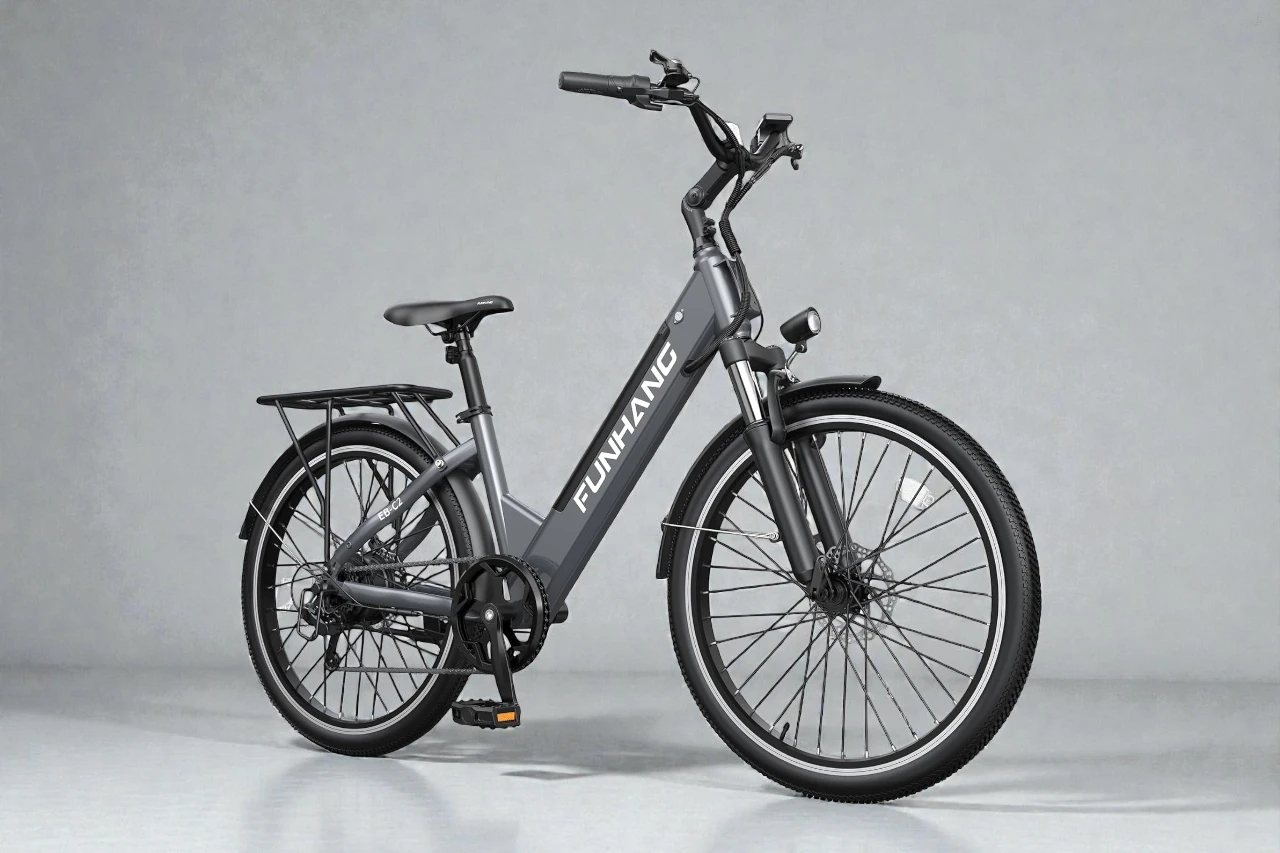
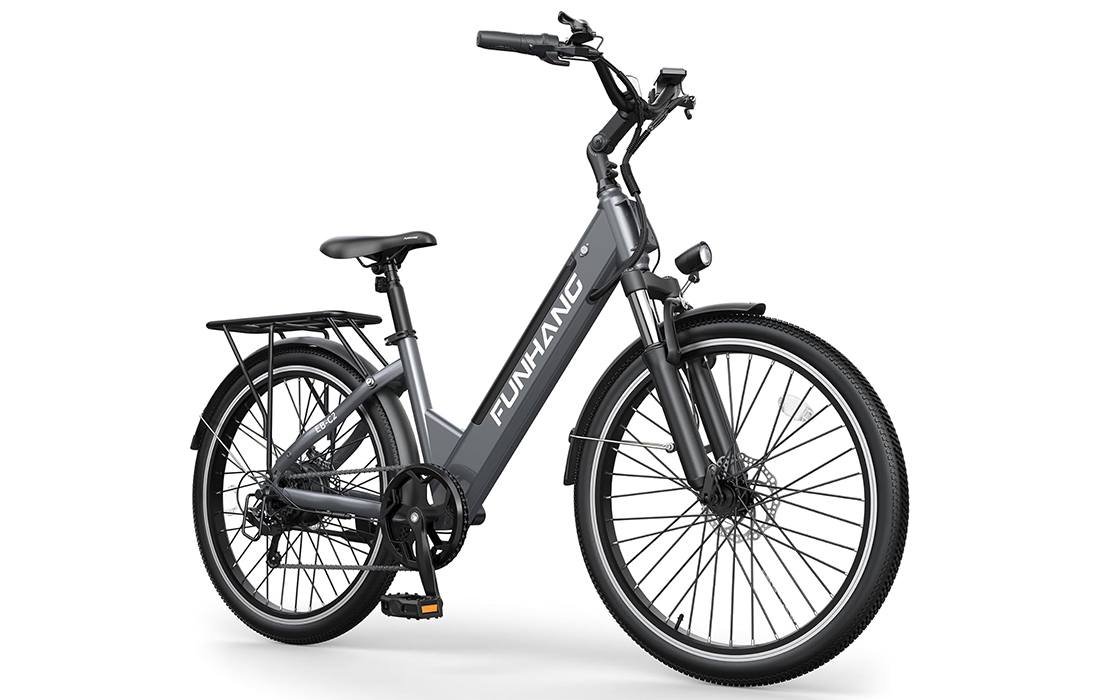
One-liner: Smooth and steady at commuter speeds with strong starts and real fit adjustability, but the 62.8 lb weight and basic brake feel are the trade-offs.
I tested the Funhang EB-C2 as a practical, daily commuter e-bike—short errands, bike-lane cruising, and repeat stoplights—and it genuinely delivers a smooth, confidence-building ride for the money.
Best for:
Skip if:
Biggest strength: It feels steady and “sorted” at normal city speeds, with strong starts that make traffic riding less stressful.
Biggest trade-off: You get comfort + utility, but you give up portability (and some refinement in the brake/suspension department).
I’m 5’10” and ~180 lb, and I put this bike into the kind of routine that reveals the truth quickly: repeated stop-and-go, rough city pavement, curb cuts, and a daily commute pattern that can hit up to ~8 miles each way when I’m using it regularly.
Most of my riding was:
I also paid attention to the long-haul stuff—because this is where budget commuters usually fall apart. After ~10 months of daily use and around 1,000 miles, the bike kept showing up and doing the job, with only a couple minor issues along the way (and notably helpful customer support).
The Funhang EB-C2 is a comfort-first commuter cruiser that’s trying to make daily riding easy: step-through frame, upright posture, usable rack/fenders, and a fit range that can accommodate a lot of different riders.
In plain terms, it’s built for:
It’s not trying to be:
If your riding life is mostly pavement and you want something that feels solid and straightforward—this bike fits that profile.
This is where the EB-C2 surprised me the most—in a good way.
I expected “budget commuter” starts to feel sluggish or jerky, but in real riding the bike steps off the line with strong acceleration that makes city traffic less annoying. When the light turns green and a car is creeping into your lane, the EB-C2 has enough punch to get you moving confidently instead of wobbling through that awkward first few seconds.
A small detail that matters: the bike doesn’t feel flimsy when you’re doing low-speed balancing moves—like rolling slowly behind pedestrians, threading between parked cars, or easing through a crowded path. The frame and overall build feel sturdy, which helps you relax.
Boundary sentence: It feels great in stop-and-go… until you remember you might have to lift it.
Funhang markets this bike as having enough torque to handle inclines, and my experience matched the spirit of that claim: for typical city hills and short climbs, it holds momentum well.
On punchy hills—like a bridge ramp or a steep block—you can keep progress steady as long as you’re using appropriate assist and not expecting it to rocket uphill like a high-end mid-drive. It’s more of a “keeps you moving smoothly” hill climber than a “launch you to the top” climber.
Where it works best:
Where you’ll notice limits:
The EB-C2’s happy place is steady cruising at normal city speeds, where it feels smooth and stable—especially with the upright posture dialed in. The top speed is listed around 21.7 mph, and honestly, that’s enough to feel “fast” on a bike in real life—especially in bike lanes.
I found the best overall experience when I treated it like a commuter cruiser:
If you ride like that, the bike feels cooperative and easy—more “daily tool” than “toy,” in a good way.
With a 48V 374Wh-ish battery class, the key is setting expectations. You can get respectable range on a commuter e-bike like this—but the difference between “easy cruising” and “fast, throttle-heavy riding” is huge.
Here’s what felt realistic for me at ~180 lb:
Conservative (fast + lots of throttle): ~18–25 miles
Typical (PAS 2–4, mixed riding): ~25–35 miles
Best-case (slower steady pace, light wind, smoother roads): ~35–45 miles
Could someone hit the brand’s higher claims? Yes—if they’re lighter, ride slower, and keep assist modest. But if you ride it like a quick commuter (which most people do), typical range is the honest planning number.
Top range killers I noticed:
Comfort is one of the reasons this bike works so well as a commuter.
The step-through frame makes mounting easy—especially if you’re in everyday clothes or carrying a backpack. But the bigger win is the adjustable stem. This isn’t a gimmick: being able to change the bar position helps you find an upright posture that reduces wrist pressure and makes longer rides feel more relaxed.
On 30–60 minute rides, I noticed:
That said, comfort isn’t perfect:
Who will love the fit: riders who want upright comfort and flexibility in handlebar positioning.
Who may not: riders who want a sportier, efficient pedaling posture or a lightweight, nimble feel.
At low speeds, the EB-C2 feels stable and easy to control. That matters when you’re creeping through intersections, turning tightly around parked cars, or navigating busy paths.
At higher speeds (upper teens into low 20s), it still feels composed—but it doesn’t give that razor-sharp “performance bike” steering. It’s more relaxed and predictable, which is what most commuters actually want.
The dual disc brakes do the job, and I had reliable stopping in normal riding. Modulation is decent once you get used to the lever feel.
But here’s the honest take: this is not a premium braking experience. If you’re used to hydraulic brakes, these will feel more basic, and you may need occasional adjustment as things bed in—especially after the first few weeks of riding.
This will annoy you if you: demand one-finger braking power or ride steep hills daily and want a more “high-end” brake feel.
The EB-C2 is built around everyday convenience:
I also like the “commuter practical” touches:
A couple real-world quirks:
One small but important operational note: the key is for securing the battery, not turning the whole bike on/off. Day-to-day, that’s normal—just don’t expect “key ignition” behavior.
My assembly experience was refreshingly simple. The bike felt like it went from box to ride-ready in under 15 minutes, which matches the “mostly pre-assembled” intent.
What I always do on commuter e-bikes like this:
Over longer ownership, I had two minor issues after months of daily commuting. What stood out: customer service was responsive and helpful, which matters a lot with budget brands. After ~1,000 miles, the bike was still running strong, which is exactly what you want from a commuter tool.
Here are the points that would make me tell a friend to skip it—depending on their lifestyle.
Who should skip, clearly:
Aventon Soltera.2 (lighter, more refined feel—usually costs more)
If you want a cleaner, more “bike-like” ride with less bulk, a lighter commuter platform can feel nicer day-to-day. You may give up some of the out-of-box utility, but you gain easier handling off the bike.
Lectric XP Lite (portable value, different mission)
If portability matters—small storage, car trunks, occasional carrying—a lightweight folding-style option makes life easier. You give up the full-size cruiser vibe, but you gain real convenience.
The EB-C2 wins if your priority is upright comfort + practical commuting kit + solid power feel at a budget-friendly price.
Q: Is the Funhang EB-C2 good for commuting?
Yes—its smooth ride, stable handling, and practical rack/fenders make it commuter-friendly.
Q: How fast does it feel in real riding?
Fast enough for bike lanes and city streets; it tops out around the low-20 mph range.
Q: What range should I realistically plan for?
Most riders should plan ~25–35 miles in mixed PAS riding, less with heavy throttle use.
Q: Is it comfortable for longer rides?
Generally yes—upright posture and stem adjustment help, but the saddle is “fine,” not luxury.
Q: Can it handle hills?
Typical city hills, yes. Long steep climbs at high speed, not its specialty.
Q: Is assembly difficult?
No—my build was quick (under 15 minutes) with basic checks afterward.
Q: Is the battery removable?
Yes, it’s integrated but removable for charging, with a security key.
Q: What’s the rider fit range?
It’s aimed at a broad height range (roughly 5’3″ to 6’1″) with a 300 lb max load.
Buy it if: you want a sturdy, comfortable commuter e-bike that feels smooth in city riding and comes ready for errands.
Skip it if: you need a lightweight carry bike, want higher top speed, or demand premium brake refinement.
One-line summary: The Funhang EB-C2 is a genuinely practical, smooth-riding budget commuter with strong starts and real comfort adjustability—just be ready for the weight and a more basic component feel.





I recently bought one of these and it’s surprisingly good. To read this review after the fact reinforces my initial impressions of the bike and I agree with the everything the reviewer says here. This is my first e-bike and I wanted to wade in not dive in and I was very pleasantly surprised by this bike. The fact that the reviewer road it for 1000 miles give me a little piece of mind. I’ve but around 75 miles on it in a little over two weeks. I use it for errands and recreational rides with a partner without a e-bike so I’m mostly riding without pedal assist or at level one pedal assist to help with hills and the bike rides well. I can attest as a person slightly larger than the reviewer that the bike still has plenty of spunk when needed and I road it up a very steep hill near my home and it worked well with me pedaling along with the pedal assist. I don’t think it would have made it with throttle alone. Anyway, know what you’re buying, have realistic expectations and this bike will suit you fine.
Thanks for sharing your experience, Mark. It’s great to hear the EB-C2 has been working well for you, especially as a first e-bike. I also agree that realistic expectations matter a lot with this model. It can handle daily errands, casual rides, and hills better when you use pedal assist properly, but throttle-only climbing is not really its strongest use case.
Your 75-mile real-world feedback is very helpful for other readers who are considering this bike. Enjoy the rides, and thanks again for adding your experience here.