Real rides. Real notes. No hype.

The Funhang EB-M1 is a budget full-size commuter e-bike that reaches about 21–22 mph, but range can drop to 20–30 miles with high assist.

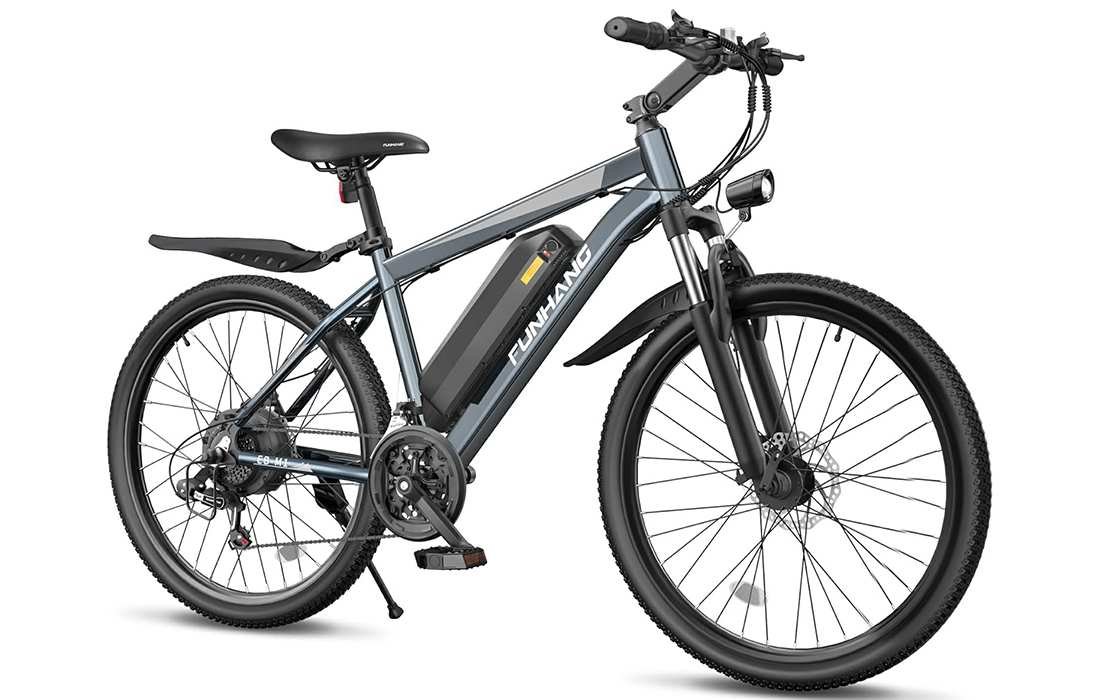
A capable budget commuter with stable 21–22 mph behavior, but aggressive riding can pull range down near 20–30 miles.
Bottom line: The Funhang EB-M1 is a strong budget-friendly commuter/light-trail e-bike that feels surprisingly capable, but its real-world range can land much closer to ~20–30 miles if you ride fast or use higher assist.
Best for: Riders who want a full-size 26″ e-bike for short-to-medium commutes and casual exploring, and who don’t mind doing basic tune-ups.
3-line decision summary:
A quick reality-check based on provided specs + long-term rider impressions (500+ miles).
| Field | Value / Notes |
|---|---|
| Motor | 500W rated, 1000W peak |
| Battery | 48V 374.4Wh removable, IPX5 |
| Claimed range | 25–30 mi throttle / 40–50 mi PAS |
| Realistic range (most buyers) | Aggressive: ~20–30 mi • Typical: ~25–40 mi • Conservative: ~40–50 mi (low PAS, flat routes) |
| Top speed (real use) | ~21–22 mph (GPS-based per notes; aligns with listing claim of 21.7 mph) |
| Bike weight | ~49.6 lb (from sizing graphic) |
| Payload capacity | Up to 300 lb |
| Brakes | Mechanical dual disc, 160mm rotors |
| Tires | 26″ all-terrain style (width not confirmed) |
| Suspension | Front suspension fork (basic comfort-focused) |
| Gearing | 21-speed drivetrain |
| Certifications | UL 2849 (e-bike) + UL 2271 (battery) via SGS |
| Typical price (at time provided) | ~$359.99 |
Score snapshot:
This is a practical short-to-medium trip e-bike that shines when you treat it like a simple, garage-friendly commuter.
Below are buyer-relevant downsides in a consistent format (limitation → who it affects → when it shows up → workaround).
In stop-and-go riding, the EB-M1 feels strong for a budget commuter. The motor’s pickup is enough to get moving confidently, especially when using PAS plus a little pedaling. It doesn’t feel like a high-end mid-drive, but it also doesn’t feel underpowered in typical city riding.
Trade-off: The assist response can feel less refined than premium systems, especially if you’re trying to creep along slowly in traffic.
I consistently think of this bike as a ~21–22 mph machine in stock form. It gets up to speed without excessive drama, then settles into a predictable cruising zone.
Trade-off: Once you’re riding near the top end of its assist behavior, battery draw climbs quickly. That’s where the “50 miles” marketing can stop matching real life.
On normal city hills, the EB-M1 is capable when you use PAS and keep the drivetrain working. With reasonable gearing and steady pedaling, it climbs confidently for this category.
Trade-off: If you rely on throttle-only on longer/steeper grades, expect speed drop and faster battery drain. That’s normal for a hub-motor commuter with a modest battery.
For a full-size 26″ bike, it feels stable and straightforward. The front suspension and all-terrain tires add confidence over rough pavement and occasional dirt paths.
Trade-off: The weight shows up when you’re maneuvering at very low speed, lifting, or storing the bike in tight places.
This bike’s range story is simple: it depends heavily on how you ride, and the battery capacity (374.4Wh) puts a ceiling on what’s realistic.
Based on the provided impressions and typical energy use patterns for this battery size:
Top 3 range killers on this bike: higher speed, long hills/headwind, and low tire pressure.
Real-life translation: If your round-trip commute is ~8 miles, many riders will get 2–4 commute days per charge depending on assist level and speed.
I like the ownership practicality here: the battery is removable and lockable, so you can charge indoors. The claimed charge time of 4–5 hours matches what you’d expect for this class.
Trade-off: With a smaller battery, you’ll charge more often. If you forget to top off, the bike can feel “short range” quickly.
If you ride around 180 lb and use higher assist often, you should plan around ~20–30 miles, not the headline “50 miles.”
The claimed rider fit range is about 5’3″ to 6’1″, and the adjustable stem helps make that believable. The ability to change bar height/angle makes it easier to avoid feeling too stretched out.
Buyer caution: Fit range is not the same as “perfect fit.” Shorter riders should still confirm they can safely stand over the bike and reach the bars comfortably.
Comfort is generally solid for typical commuting-length rides once you set the cockpit up. The stock saddle is functional, but it’s not the kind of saddle most riders love for long rides.
Practical advice: If you do 60+ minute rides regularly, a saddle upgrade is one of the first changes that can materially improve satisfaction.
The front fork helps reduce sharp impacts on potholes and rough pavement.
Trade-off: It is comfort-oriented, not performance suspension. For real trail riding, the limitation becomes control and precision rather than just “softness.”
Mechanical dual disc brakes can stop reliably when properly adjusted and bedded in. In normal commuting, they deliver predictable stopping power.
The real ownership issue is wear and tuning: brake pads can go fast for some riders, especially with heavier loads, frequent stops, or downhill use. Minor rotor rub/ticking can also show up and typically needs a quick alignment and bolt check.
The EB-M1 includes basics that matter for commuting: an LED headlight, reflectors, and an electric horn (as listed).
Trade-off: These stock systems are good “to start,” but riders who commute at night often still upgrade lights for stronger visibility.
The LCD display provides the information riders actually use: battery, speed, mileage, and PAS level. The simplicity works in its favor.
Trade-off: Don’t expect app-level features or premium security features at this price point.
The overall build is consistent with a budget full-size e-bike: a sturdy frame, straightforward cable routing, and practical accessories like fenders.
Where budget shows up: contact points (saddle), braking wear rate, and a general need to re-check bolts after early miles. None of that is unusual in this price tier, but it is part of the ownership reality.
I was riding in about 30 minutes, but that speed comes from having assembled similar e-bikes before. The bike ships around 85% assembled.
For a first-time builder, under an hour is a realistic expectation if you go slowly and do safety checks carefully.
This is not a “carry-upstairs” e-bike for most riders. It’s best treated as a garage-friendly bike or ground-floor stored commuter.
Most common “high value” upgrades:
Better for: Simple, lighter-duty commuting priorities and riders who want a more basic setup.
Why it may win: Often a straightforward “starter e-bike” feel with less complexity.
Why you might still pick the EB-M1: More gearing (21-speed) and a more “full-size mountain-style” setup for mixed surfaces.
Better for: Riders who want significantly more battery capacity and higher-speed potential.
Why it may win: Bigger battery class and more headroom for longer rides.
Why you might still pick the EB-M1: Price and simplicity—EB-M1 is the budget play if your rides are shorter and you value low buy-in cost.
This bike makes the most sense when you buy it for what it is: a budget full-size commuter with a modest battery.
Is the Funhang EB-M1 fast enough for commuting?
Yes. In real use it behaves like a ~21–22 mph commuter, which is enough for most bike-lane and neighborhood riding.
Is the “50 miles” range realistic?
It can be, but usually only with low assist, flatter routes, and efficient pacing. If you ride fast or use high PAS, expect much closer to ~20–30 miles.
Can it handle hills?
Normal city hills, yes—especially if you use PAS and keep pedaling in the right gear. Throttle-only on long steep climbs will slow down and drain the battery faster.
Is it comfortable for longer rides?
Comfort is good once fit is dialed in, but the stock saddle is commonly the weak point for 60+ minute rides.
Are the mechanical disc brakes “good enough”?
They can be, but they may require more tuning and pad checks than hydraulic brakes. Frequent downhill riders should watch pad wear closely.
Is it easy to assemble?
It ships mostly assembled. Expect ~30 minutes if you’ve built e-bikes before, and under an hour for most first-timers if you follow the steps and do safety checks.
Does it work in wet conditions?
The battery is claimed as water-resistant (IPX5), and wet riding is generally fine for commuting, but it’s still smart to avoid deep water, dry the bike after rides, and keep brakes adjusted.
My final take: The Funhang EB-M1 is a strong budget commuter e-bike that feels more capable than its price suggests, but range reality depends heavily on how you ride.
Best for: Short-to-medium commutes and casual mixed-surface rides for value-focused buyers.
Biggest downside: Aggressive riding can pull range down near ~20–30 miles, and the bike’s weight and mechanical brakes add ownership friction.
Smart buy if price is: Around $400 or less, especially if you’re willing to do basic brake and bolt checks.
| Preview | Product | Price | |
|---|---|---|---|

|
Funhang Electric Bike for Adults, 1000W Peak Ebike, 50Miles 21.7MPH Electric Mountain Bike… | $289 | View on Amazon |