Real rides. Real notes. No hype.

Touring e-bikes need more than speed. This guide compares range, comfort, battery size, motor support, cargo features, and ride stability for adults.
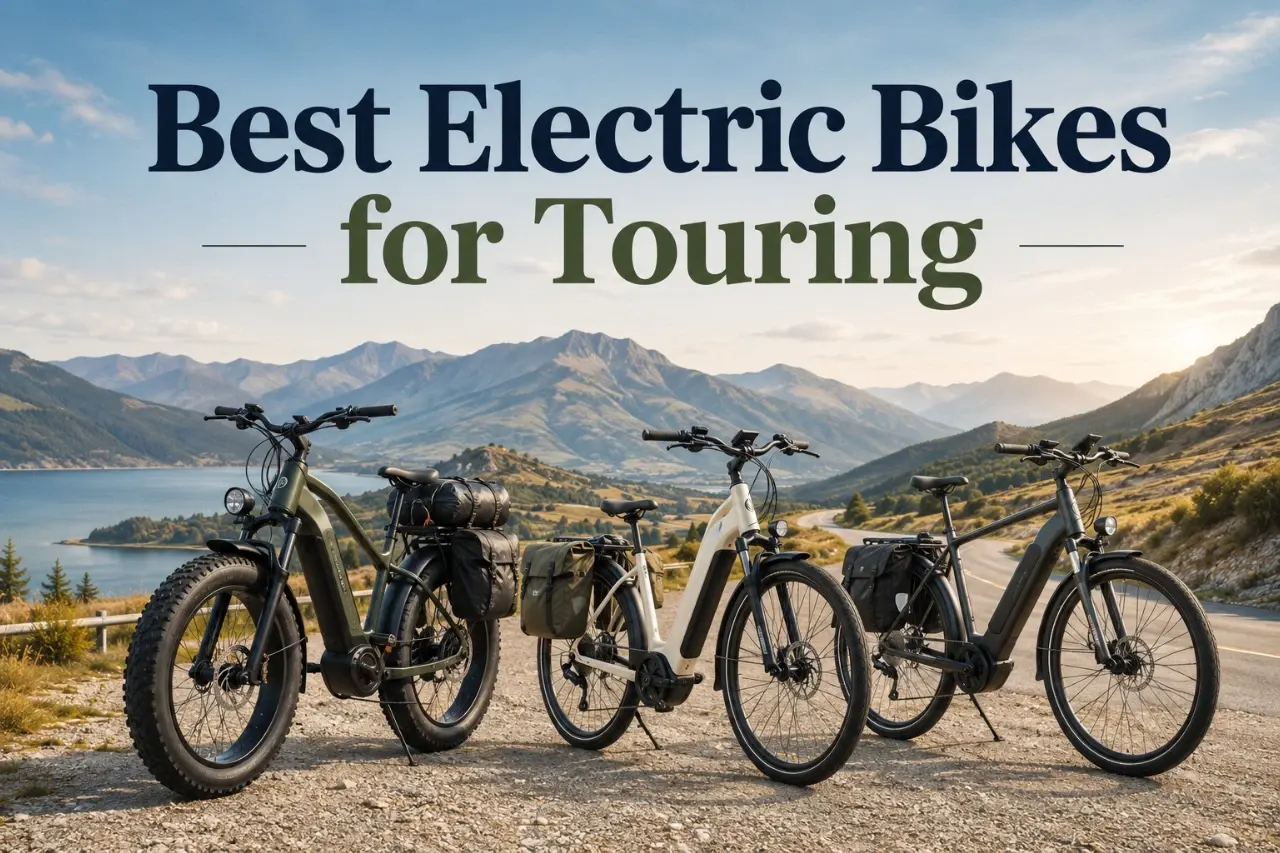
Touring on an e-bike demands more than raw speed. Riders covering 30, 50, or even 100+ miles need a machine that balances real-world range, genuine riding comfort, stable handling on mixed surfaces, and enough cargo capacity for gear. A bike that looks impressive on a spec sheet can still disappoint on a loaded gravel climb or a four-hour saddle session.
This guide from GoEBikeLife compares five e-bikes suited for touring based on listed specifications, comfort-oriented features, battery capacity, and practical value. For each model, we translate the numbers into what they actually mean on the road: how far a given watt-hour rating gets you at a realistic 15 to 20 mph touring pace, how motor torque affects climbing with a loaded rack, and whether the frame geometry and tires support extended ride comfort.
The single most important insight for touring riders: battery capacity (rated in watt-hours) and motor torque together determine whether a bike can realistically handle multi-hour rides with gear, not peak wattage alone.
Below is a quick-start summary of our picks by use case.
Best for maximum touring range: FREESKY 2026 Alaska Pro Dual Battery 48V 45AH
Best for accessible step-through touring: FREESKY Wildcat Ultra 3000W Step-Thru
Best budget entry for light touring: Hoverfly Electric Bike for Adults 26″
Best mid-range all-terrain tourer: EOEOTWO 1500W Fat Tire Electric Bike
Best for high-speed off-road touring: E·Bycco 6000W Dual Motor Electric Bike
Best for: Maximum touring range on a single charge
Verdict: The Alaska Pro is designed for riders who prioritize range above all else. Its dual-battery system, full suspension, and hydraulic braking make it a capable touring platform based on listed specifications, though the high peak-power claims deserve cautious interpretation.
| Spec | Detail |
|---|---|
| Battery | 48V 45Ah dual (2,000Wh total) |
| Motor | 4,000W peak brushless hub |
| Claimed Range | 120 to 200+ miles |
| Top Speed | Up to 40 mph (throttle-limited at 20 mph stock) |
| Tires | 26″ fat tires |
| Suspension | Full dual suspension |
| Brakes | 4-piston hydraulic disc |
| Frame | 6061 aluminum |
Touring relevance: A 2,000Wh battery is one of the largest in this price class. At a realistic touring pace of 15 to 18 mph in PAS mode with rider and gear, riders can reasonably expect 80 to 120 miles per charge, well below the 200-mile marketing figure but still strong for multi-day routes. The 160Nm torque rating means loaded climbs should feel manageable.
Comfort and cargo: Full hydraulic suspension and 26″ fat tires absorb road vibration on mixed pavement and gravel. The bike ships with a rear rack, fenders, and a seat bag, which reduces the need for add-on touring accessories. Note that the throttle is factory-limited to 20 mph; a controller upgrade is required to access full speed.
Pros:
Cons:
Who should buy it: Riders planning long weekend tours or point-to-point routes who need maximum range and don’t want to worry about charging stops mid-day.
Best for: Riders who need easy mounting and dismounting on longer rides
Verdict: The Wildcat Ultra combines a step-through frame with a 25Ah Samsung-cell battery and full suspension, making it a strong candidate for touring riders who prioritize accessibility and comfort alongside range.
| Spec | Detail |
|---|---|
| Battery | 48V 25Ah (approx. 1,200Wh) |
| Motor | 3,000W peak hub |
| Claimed Range | Up to 105 miles |
| Top Speed | 37 mph (PAS mode) |
| Tires | 26″ fat tires |
| Suspension | Full dual suspension |
| Brakes | Hydraulic disc |
| Frame | Aluminum step-through |
Touring relevance: At 1,200Wh, the Wildcat Ultra’s battery is meaningful for touring. At a steady 15 mph touring pace in moderate PAS, a realistic estimate is 60 to 85 miles per charge. The step-through geometry suits riders with limited mobility or those making frequent stops, which is common on scenic touring routes.
Comfort and cargo: Full suspension with hydraulic shocks is designed to absorb 85% of trail vibration, per listed specs. The NFC smart key and USB-C charging port add practical touring convenience. No rear rack is listed in included components, so touring riders should budget for one separately.
| Feature | Touring Benefit |
|---|---|
| Step-through frame | Easy on/off with panniers or fatigue |
| Full suspension | Comfort on gravel and uneven pavement |
| 105-mile claimed range | Fewer planned charging stops |
| NFC smart key | Security at trailheads and overnight stops |
Pros:
Cons:
Who should buy it: Touring riders who want accessible geometry, genuine range, and full suspension without stepping up to a dual-battery system.
Best for: Budget-conscious riders starting with light touring or mixed commuting
Verdict: The Hoverfly OUREA is a sensible entry point for riders new to e-bike touring. Based on listed specs, its 374.4Wh battery limits it to shorter day tours, but its value, UL2849 certification, and solid build quality make it a credible starter option.
| Spec | Detail |
|---|---|
| Battery | 48V (374.4Wh) |
| Motor | 750W peak hub |
| Claimed Range | 20 to 40 miles |
| Top Speed | 20 mph |
| Tires | 26″ x 1.95″ |
| Suspension | Front only |
| Brakes | Disc |
| Frame | Iron |
Touring relevance: At 374.4Wh, this bike is better suited for day rides of 20 to 35 miles rather than multi-day touring. Riders on flat, paved routes will see the higher end of the range estimate. The 750W motor handles moderate hills, but loaded climbing will reduce range noticeably.
Comfort and cargo: Front suspension handles light trail use and typical road chatter. The narrower 1.95″ tires roll efficiently on pavement but offer less cushion on gravel compared to fat-tire models. A frame bag is included.
Pros:
Cons:
Who should buy it: New e-bike riders who want an affordable, reliable option for short day tours, rail trails, and light recreational rides before committing to a higher-capacity model.
Best for: Mid-range all-terrain touring with a focus on cargo capacity
Verdict: The EOEOTWO E01 sits in a practical middle ground: its 720Wh battery supports genuine day tours, the fat tires add versatility on mixed surfaces, and a 330 lb. weight capacity means touring with loaded panniers is feasible based on listed specs.
| Spec | Detail |
|---|---|
| Battery | 48V 15Ah (720Wh) |
| Motor | 1,500W peak hub |
| Claimed Range | 55 to 60 miles (PAS), 18 to 25 miles (full electric) |
| Top Speed | 28+ mph |
| Tires | 26″ x 4.0″ fat |
| Suspension | Front only |
| Brakes | Dual disc |
| Frame | Aluminum |
Touring relevance: At 720Wh, touring range is estimated at 40 to 55 miles at a moderate pace with gear. The 26″ x 4.0″ fat tires handle gravel, packed dirt, and light off-road comfortably, which suits riders who want to explore beyond paved routes. The rear rack supports loaded gear; the frame holds up to 330 lbs.
Comfort and cargo: Front suspension handles pavement and light trail riding reasonably. Riders in reviews noted speeds above 35 mph in full-power mode, though real touring use at PAS levels will extend range considerably. Some buyers reported early mechanical concerns, so inspecting the bike on arrival is advisable.
Pros:
Cons:
Who should buy it: Recreational tourers who want fat-tire versatility, cargo capacity, and a reasonable range for full-day rides without paying for a premium dual-battery system.
Best for: High-speed off-road touring and riders who want dual-motor power
Verdict: The E·Bycco EB7Pro is a high-performance option designed for off-road and demanding terrain. Based on listed specifications, its dual-motor system and 1,664Wh battery offer genuine capability, though one verified buyer noted the real-world power felt closer to 1,500W than the claimed 6,000W peak.
| Spec | Detail |
|---|---|
| Battery | 52V 32Ah (1,664Wh) IPX65 waterproof |
| Motor | Dual 3,000W peak (6,000W combined) |
| Claimed Range | 60 to 100 miles (PAS) |
| Top Speed | 45 to 47 mph |
| Tires | 24″ x 4.0″ fat |
| Suspension | Full dual suspension |
| Brakes | Hydraulic disc front and rear |
| Frame | Aluminum |
Touring relevance: The 1,664Wh battery is substantial. At touring speeds of 15 to 20 mph in PAS mode, a realistic range estimate is 60 to 80 miles. The dual-motor system adds climbing power for mountainous routes. Top-speed claims should be treated with caution; one buyer review flagged a discrepancy between advertised and actual peak power output.
Comfort and cargo: Full suspension with a lockable hydraulic front fork is well-suited to rough terrain touring. The 24″ wheel size (smaller than most bikes in this roundup) affects stability at touring speeds compared to 26″ alternatives. A phone holder with 5V charging is included, which is a practical touring addition.
Pros:
Cons:
Who should buy it: Adventurous touring riders tackling steep, off-road routes who want a dual-motor, full-suspension platform and are comfortable handling initial setup or minor troubleshooting.
Choosing an e-bike for touring comes down to five practical factors: battery capacity, motor torque, comfort geometry, tire choice, and cargo readiness. Here is how to evaluate each one for real touring use.
Ignore claimed range figures at the top end. Marketing ranges assume light riders, flat roads, and low-speed PAS. For loaded touring at 15 to 18 mph, a rough planning rule is 10 to 15 miles per 100Wh in PAS mode. That means a 720Wh battery is realistically good for 40 to 55 miles; a 2,000Wh battery may deliver 100 to 130 miles.
| Battery Size | Realistic Touring Range |
|---|---|
| Under 500Wh | 20 to 35 miles; best for day loops |
| 500 to 900Wh | 40 to 65 miles; solid day tourer |
| 1,000 to 1,500Wh | 65 to 100 miles; multi-segment touring |
| 1,500Wh+ | 100+ miles; best for multi-day routes |
Peak wattage is often inflated in product listings. Torque (measured in Newton-meters) is more meaningful for touring. A motor with 80 to 120Nm handles loaded grades well; 160Nm and above is designed for steep mountain climbs with gear.
Step-through frames reduce fatigue on rides with frequent stops. Upright handlebars ease back strain on long days. Look for adjustable saddle posts and ergonomic grips if you plan multi-hour sessions.
Fat tires (3.5″ to 4.0″) absorb more vibration and grip loose surfaces, but they add rolling resistance on pavement, which reduces range. Standard 1.95″ to 2.4″ tires roll faster on paved routes but provide less cushion off-road.
A rear rack, fender mounts, and integrated lighting are not luxuries for touring; they are practical necessities. Check whether these are included or require separate purchase before comparing prices.
GoEBikeLife Checklist: Match Bike to Tour Type
What range do you need for multi-day e-bike touring without frequent charging?
For multi-day touring without daily charging anxiety, look for a battery rated at 1,200Wh or more.
At a realistic touring pace with gear, that translates to 70 to 90 miles per charge on moderate terrain, enough to cover a solid day’s riding between overnight stops.
Which motor type and torque level are best suited for loaded touring on hills?
Hub motors are most common in this price range and work well for road and gravel touring.
For loaded hill climbing, prioritize torque ratings of 80Nm or higher; bikes rated at 120 to 160Nm are better suited for steep grades with panniers or a rear rack loaded with camping gear.
How do you choose the right battery capacity and plan charging stops on tour?
Use the planning estimate of 10 to 15 miles per 100Wh at a moderate PAS level as a starting point, then reduce that estimate by 15 to 20 percent for headwinds, heavy loads, or hilly terrain.
Map your route against that adjusted figure and identify charging locations (hotels, cafes, campgrounds with power) every 50 to 80 miles depending on your battery size.
What features matter most for comfort and reliability on long-distance rides?
Full suspension, an ergonomic saddle, and upright handlebar geometry reduce fatigue on rides lasting three or more hours.
Hydraulic disc brakes improve safety and reduce hand strain compared to mechanical alternatives.
Built-in lighting and fenders reduce the need for add-on accessories that can shift or fail during long days.
Which e-bikes handle panniers and heavy cargo best for touring setups?
Look for bikes with an integrated rear rack, a stated weight capacity of 300 lbs. or more, and a low center of gravity.
Fat-tire models with aluminum frames and full suspension generally handle loaded touring better than lightweight commuter designs, as they absorb road vibration more effectively when the bike is weighted down with gear.