A good ride can change your day.

Hunting e-bikes help riders reach blinds, carry gear, and cross rough trails with less noise. Compare range, torque, tires, payload, and safety specs.
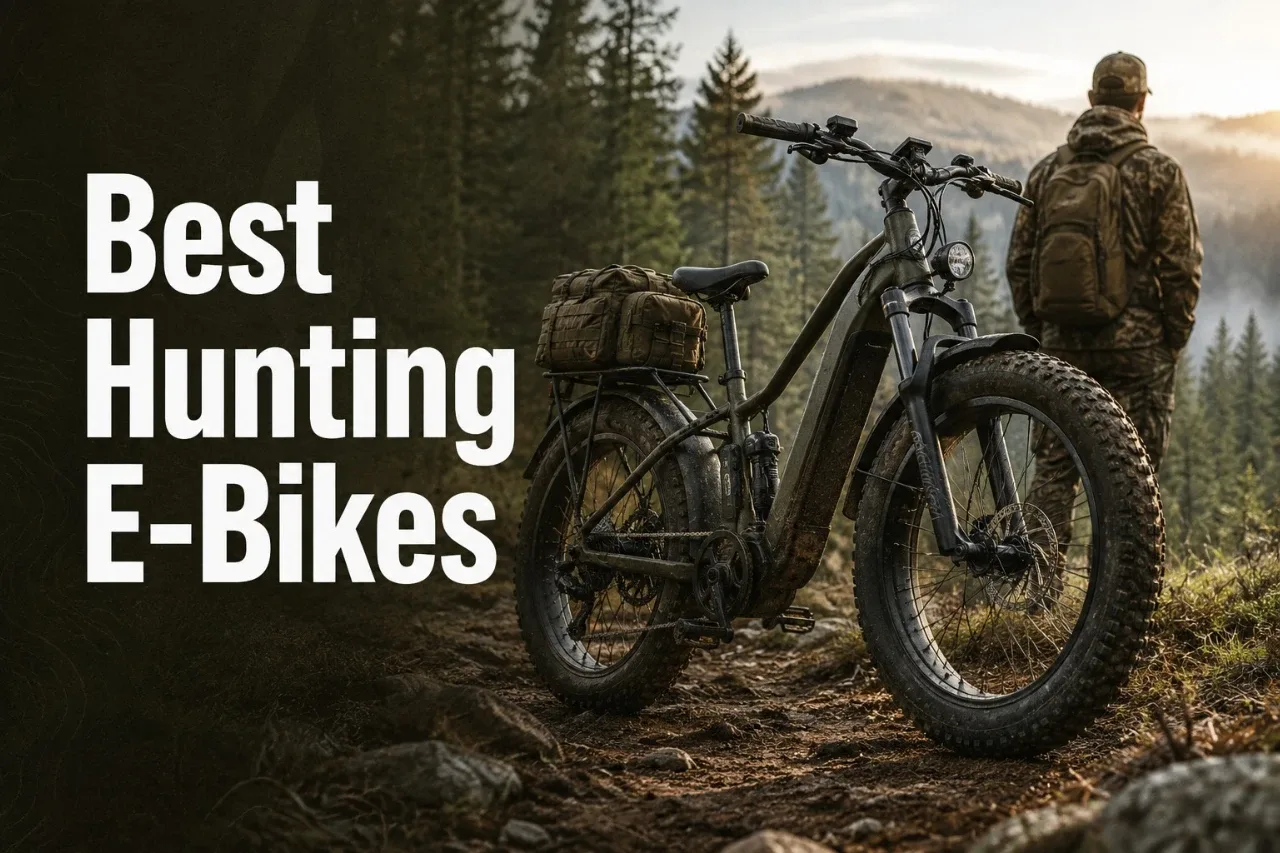
Hunting on foot covers ground slowly, limits how much gear you can carry, and can alert game long before you reach your blind or stand. Electric bikes address all three problems at once: they extend your range, handle cargo loads, and run quietly enough for use on private land and rural trails. For hunters, the key specs are motor torque (measured in Newton-meters, or Nm), battery capacity in watt-hours (Wh), tire width for traction in mud and snow, payload rating, and whether the frame supports racks or trailer hitches.
Choosing the right hunting e-bike means matching motor power and battery range to your specific terrain, load, and noise requirements before you buy. Fat tires (4 inches wide or wider on a 26-inch wheel) provide the grip needed on wet leaves, loose dirt, and snow. Dual hydraulic disc brakes matter on steep descents with a loaded rack. UL 2849 certification covers the entire electrical system and signals a meaningful safety standard, not just a marketing badge. Payload ratings, which determine how much combined rider and gear weight the bike can handle safely, vary widely and deserve a close look before purchase.
The models below were selected across a range of budgets and use cases, from heavy-duty dual-motor rigs to compact folding bikes for truck-bed transport. Use the comparison table and “best for” labels to narrow your choice, then verify current payload ratings, pricing, and certification details directly on the Amazon listing.
Best for long-range dual-battery hunting: FREESKY 2026 Alaska Pro Dual Battery
Best for Bafang motor performance: FREESKY Swift Horse Ultra 3500W
Best folding hunting e-bike: Jasion X Hunter PRO
Best budget full-suspension option: PUCKIPUPPY Boxer
Best entry-level camouflage bike: PUCKIPUPPY Beagle
Best compact commuter/hunting hybrid: Qlife Hunter Foldable
Best heavy-load dual-motor rig: PUJH 6000W Dual Motor
| Model | Motor (Peak) | Battery | Est. Range | Tire Size | Payload | Best Use Case |
|---|---|---|---|---|---|---|
| FREESKY Alaska Pro | 4000W | 48V 45Ah (2000Wh) | 120-200 mi | 26″ x 4″ | 400 lbs | Long-range backcountry |
| FREESKY Swift Horse Ultra | 3500W | 48V 35Ah (1440Wh) | 85-140 mi | 26″ x 4″ | 300 lbs | All-terrain / mountain |
| Jasion X Hunter PRO | 1800W | 48V 16Ah (720Wh) | Up to 80 mi | 20″ x 4″ | 330 lbs | Folding / truck transport |
| PUCKIPUPPY Boxer | 960W | 48V 20Ah (960Wh) | 40-80 mi | 26″ x 4″ | 400 lbs | Budget full-suspension |
| PUCKIPUPPY Beagle | 960W | 48V 15Ah (720Wh) | Up to 60 mi | 26″ x 4″ | 400 lbs | Entry-level camouflage |
| Qlife Hunter | 1200W | 48V 13.5Ah (648Wh) | Up to 65 mi | 20″ x 3″ | 400 lbs | Commuting / light trail |
| PUJH 6000W Dual Motor | 6000W | 60V 20Ah (1200Wh) | 35-110 mi | 26″ x 4″ | 330 lbs | Heavy-load / dual-motor |
The Alaska Pro is FREESKY’s flagship long-range model, built around a 48V 45Ah dual-battery system rated at 2000Wh total. Based on listed specs, the 4000W peak motor produces 160Nm of torque, which should handle steep trail approaches to stands or blinds. The full dual hydraulic suspension and 26-inch fat tires are well suited to uneven woodland terrain.
Key Specs:
Pros:
Cons:
Best for: Hunters covering long distances on rugged private land who prioritize range above all else and do not want to recharge mid-trip.
Before you buy: Confirm current ship date, verify payload rating, and check whether the controller upgrade is included or costs extra.
The Swift Horse Ultra runs a genuine Bafang motor at 3500W peak with 140Nm of torque, making it a strong choice for riders who need to climb 40-degree slopes while loaded with gear. The 48V 35Ah Samsung-cell battery is UL 2271 certified by TÜV SÜD, which is a meaningful safety standard for a battery in this watt-hour class. The bike is well-rated by a solid number of buyers.
Key Specs:
Pros:
Cons:
Best for: Mountain or hill terrain hunters who want a proven branded motor, solid battery certification, and dependable climbing torque on steep woodland trails.
Before you buy: Confirm the listed 300-lb weight limit covers your combined rider-plus-gear load, and check whether the rear basket fits your cargo carrier or trail camera gear.
The Jasion X Hunter PRO is the most practical choice in this roundup for hunters who transport bikes in a truck cab or SUV. Its foldable frame collapses for compact storage, and the 720Wh removable battery delivers up to 80 miles of claimed range. The bike connects to the Jasion app for remote lock/unlock and riding mode control.
Key Specs:
Pros:
Cons:
Best for: Hunters who drive to their access point and need a bike that folds into a vehicle without a truck-bed rack.
Before you buy: Check the battery latch mechanism and confirm the folded dimensions fit your specific vehicle cargo area.
The Boxer is PUCKIPUPPY’s camouflage-finish model aimed at hunters who want a capable, full-suspension fat tire bike at a competitive price. The listed 400-lb payload is among the highest in this group, which makes it a reasonable option for heavier riders or those carrying significant gear weight. The 960W peak motor is more modest than the FREESKY bikes, but adequate for moderate terrain.
Key Specs:
Pros:
Cons:
Best for: Budget-minded hunters who need a high payload rating and camouflage aesthetics without paying for top-tier motor specs.
Before you buy: Verify the suspension type meets your trail demands and confirm the rear rack is rated for the weight of your game bags or gear.
The Beagle is PUCKIPUPPY’s entry-level hunting-camouflage model, best suited for riders new to e-bikes who want a straightforward, lighter-duty option for farm access, food plot checks, or shorter trail rides. The 48V 15Ah battery is smaller than the Boxer’s, but the 400-lb payload rating holds steady. Front fork suspension (not full dual suspension) is worth noting for rougher terrain.
Key Specs:
Pros:
Cons:
Best for: First-time e-bike buyers who want camouflage styling and a high payload rating for light trail use, food plot access, or farm roads.
Before you buy: Confirm brake type (hydraulic vs. mechanical) on the current listing, and assess whether front-only suspension is adequate for your specific trail conditions.
The Qlife Hunter is a compact, folding fat-tire bike designed primarily for commuting and light outdoor use. Its 500W motor (1200W peak) and 48V 13.5Ah battery put it at the lower end of the power spectrum in this roundup. The heavy-duty rear rack and 400-lb payload rating make it more capable than its modest motor suggests for carrying day-hunt gear loads.
Key Specs:
Pros:
Cons:
Best for: Hunters who prioritize easy vehicle transport and use the bike for light trail access or farm road scouting rather than heavy off-road riding.
Before you buy: Weigh the bike fully assembled before buying a rack, and check whether the 3.0-inch tire width suits your terrain (snow and deep mud may require wider).
The PUJH dual-motor bike is the most powerful model in this roundup by a wide margin. Based on listed specs, the 6000W combined peak output and 200Nm torque are built for situations where single-motor bikes struggle: deep mud, heavy gear loads, and steep grades at speed. The 60V 20Ah battery (1200Wh) and selectable single- or dual-motor throttle modes give riders real control over power use and range trade-offs.
Key Specs:
Pros:
Cons:
Best for: Serious off-road hunters and heavy-load riders who need maximum torque for deep-terrain access where lighter bikes would stall or bog down.
Before you buy: Confirm local e-bike regulations regarding dual-motor wattage and speed limits, and verify you have a means to load an 85-lb bike safely.
Hunting e-bikes are not standard commuter bikes with fat tires. The demands are specific: quiet approach, dependable torque on grades, enough payload for a rider plus gear, and weather-resistant components. Use the criteria below to match a bike to your actual use case.
Torque (Nm) determines how well a bike climbs under load. A 500W motor with 80Nm may outperform a 1000W motor with 60Nm on a steep, loaded grade. For hilly terrain with 30+ pounds of gear, look for at least 80-90Nm of torque. For 40-degree or steeper grades, models rated at 140Nm or higher (based on listed specs) are more appropriate.
Battery capacity is measured in watt-hours (Wh). A 1000Wh battery offers roughly twice the range of a 500Wh battery under similar conditions. Claimed ranges from manufacturers are typically measured under ideal conditions (light rider, flat terrain, pedal assist). In the field with gear and rough terrain, expect real-world range to be 40-60% of the maximum listed figure.
| Feature | What to Check |
|---|---|
| Payload rating | Includes rider + all gear; verify on current listing |
| Rear rack | Weight rating separate from total payload; confirm it handles your pack weight |
| Trailer compatibility | Most bikes lack a factory hitch; verify frame geometry and add-on options |
| Frame type | Aluminum is lighter; carbon steel is heavier but may be more affordable |
For hunting, 4-inch-wide fat tires on 26-inch wheels provide the best combination of flotation (on soft ground), grip (on wet leaves or snow), and rollover ability (on roots and rocks). Narrower 3-inch tires work on packed trails and gravel but struggle in mud or soft soil. Full dual suspension is worth the weight penalty on technical terrain; front-only suspension is adequate for smoother farm roads and maintained trails.
UL 2849 covers the entire e-bike electrical system. UL 2271 applies specifically to the battery pack. Both certifications, when issued by an accredited lab such as TÜV SÜD, indicate third-party safety testing, not just self-certification. Confirm which certifications apply to any model you consider purchasing.
Hub motors are generally quieter than mid-drive motors in operation. Sine wave (FOC) controllers reduce motor whine compared to square-wave controllers. Fat tires on soft ground produce less noise than hard-compound tires on pavement. None of these factors guarantee silent operation, but they reduce the acoustic footprint compared to a gas-powered alternative.
What features matter most when choosing an electric bike for hunting in rugged terrain?
Torque (Nm), fat tire width, full suspension, and payload capacity are the four most critical specs for rugged terrain.
A bike with at least 80Nm of torque, 26-inch 4-inch-wide tires, and full dual suspension will handle most woodland and mountain hunting access scenarios.
Payload rating must cover the combined weight of rider, clothing, pack, and any game or gear being transported.
How quiet are electric bikes in the field, and what design factors reduce motor and tire noise?
Hub motors with sine wave (FOC) controllers are the quietest commonly available configuration, producing a low hum rather than a mechanical whine.
Fat tires on soft soil absorb trail noise and reduce rolling sound compared to narrow tires on hard surfaces.
No e-bike is fully silent, but at low-speed PAS settings on a packed trail, most hub-motor models are considerably quieter than any gas-powered ATV.
What motor power, torque, and battery range are needed for hauling gear and climbing steep trails?
For loaded climbing on 30-40 degree grades, look for 120Nm or more of peak torque based on listed specs, paired with a battery of at least 1000Wh to maintain range under the added load.
Models with 1440-2000Wh batteries (like the FREESKY models in this roundup) provide the most margin for range loss caused by carrying weight on steep terrain.
A larger battery also allows you to run lower PAS levels, which reduces motor noise and extends trip length.
Which electric bike setups work best for towing a game or gear trailer, and what towing limits should you check?
Most e-bikes in this category do not include a factory trailer hitch, so towing typically requires an aftermarket attachment compatible with the specific frame and rear dropout.
Before purchasing for towing use, confirm the bike’s rear axle style, frame dropout width, and whether add-on hitches are available for that model.
Towing adds significant load stress; verify that the combined trailer weight plus bike payload does not exceed the frame’s rated limit, and check that the motor torque is sufficient to pull the added weight on your intended terrain.
How do popular hunting-focused models compare for reliability, maintenance, and real-world user feedback?
The FREESKY Swift Horse Ultra and Alaska Pro have accumulated the most reviews in this roundup and show consistently positive feedback on build quality, customer support, and real-world range.
The PUCKIPUPPY Boxer and Beagle have a smaller but generally favorable review base, with some buyers noting positive experiences with customer service response for warranty issues.
The PUJH dual-motor model is newer to market with fewer reviews; its long-term reliability data is limited compared to the FREESKY lineup, so monitoring customer feedback on the listing before purchasing is a reasonable step.