A little joy belongs in every day.

The Freego X2 Pro impressed me with strong climbing and a comfortable ride, but its brakes raised concerns and I did not verify its maximum range.
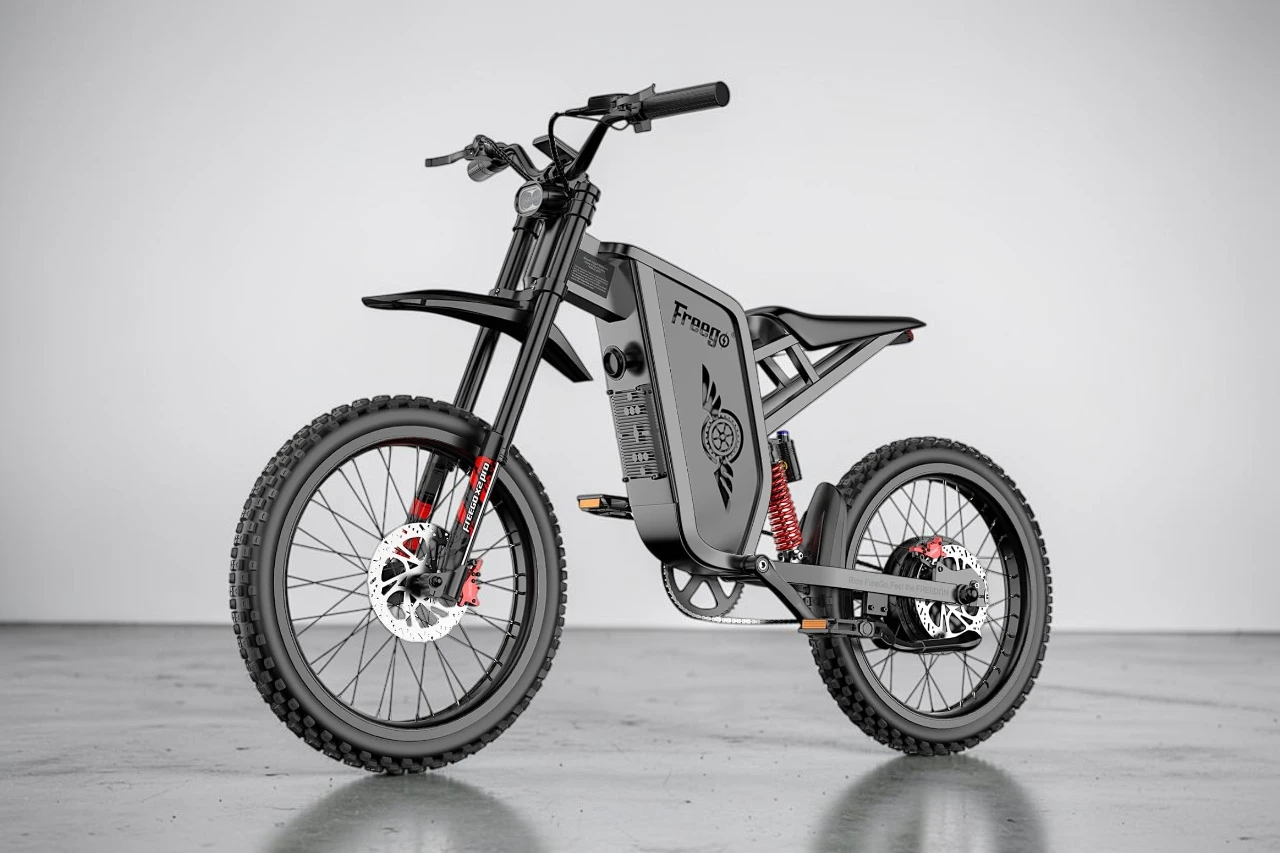
The Freego X2 Pro impressed me most on the climbs. It pulled me up demanding hills with strong acceleration and little need for pedaling effort. The comfortable seat, quiet motor, and easy-to-read display made the ride more enjoyable, too.
The brakes were my biggest concern. They repeatedly squealed during the ride, and I did not feel as confident in the stopping performance as I did in the bike’s ability to accelerate. That matters on a machine advertised to reach 50 mph.
After testing it, I can see the appeal for experienced adults who want powerful recreational riding and have somewhere appropriate to use it. Its weight, limited pedaling versatility, and unresolved braking concerns deserve just as much attention as its 6,000W peak-power headline.
My verdict: I liked the X2 Pro’s hill-climbing strength, comfortable riding position, and controllable low-speed throttle. I would consider it for recreational use where permitted, with the brakes checked and any performance issues resolved before fast riding. Its weight and single-speed drivetrain would steer me toward a different type of bike for everyday bicycle-path commuting or exercise-focused pedaling.
The Freego X2 Pro combines strong hill-climbing performance, full suspension, and a removable 60V 30Ah battery. Check the current Amazon price and see what’s included with your bike.
I’m 5′11″ tall and weigh 200 lb. I tested the Freego X2 Pro on paved stretches, repeated hills, and a short section of uneven ground with frequent bumps. I paid particular attention to climbing power, throttle control, pedaling comfort, suspension, and braking.
This review covers my initial riding experience. I have not put enough miles on the bike to judge long-term durability, and I separate what I experienced from the performance figures advertised by the seller.
I read the riding speeds from the bike’s display and did not verify them independently with GPS. I also did not time acceleration, measure stopping distances, time a complete charging session, or ride the battery to its cutoff for a maximum-range test.
| Test area | What I found | How to interpret it |
|---|---|---|
| Speed | Approximately 52 mph indicated during a ridden run | A display reading, not a verified GPS top speed |
| Hill climbing | About 26.9 mph indicated on one substantial throttle-only climb | Strong performance on that particular hill; its gradient was not independently measured |
| Low-speed throttle | Approximately 3–3.5 mph with a careful throttle input | Useful control despite the bike’s strong acceleration |
| Rough-surface comfort | Suspension absorbed repeated bumps well | Evidence from moderate uneven terrain, with no jump or motocross testing |
| Braking | Recurring squeal and mixed confidence during the ride | Requires attention; no stopping-distance result is available |
| Battery at the end | Approximately 57.5V and three display bars after resting | Charge remained, but this does not establish remaining mileage or percentage |

These are the main specifications relevant to my review. Power, torque, and advertised range are seller claims; they are not measurements from my ride.
| Specification | Details |
|---|---|
| Bike type | Electric dirt bike with functional pedals and pedal assistance |
| Motor | Direct-drive rear hub motor |
| Rated power | 3,000W nominal; 6,000W peak |
| Claimed torque | 200 Nm; not independently measured |
| Advertised off-road speed | Up to 50 mph |
| Battery | Removable 60V 30Ah lithium battery |
| Nominal battery energy | 1,800Wh, calculated from 60V × 30Ah |
| Seller’s advertised range | Approximately 60–60+ miles; throttle/PAS labeling is inconsistent |
| Drivetrain | Single-speed |
| Pedal assistance | Magnetic cadence sensor; three assist levels observed |
| Suspension | Inverted front suspension fork and rear coil shock on my test bike |
| Brakes | Front and rear four-piston hydraulic discs with 203mm rotors |
| Display | Digital LCD; listed as M5 in the seller’s specifications |
| Lighting and signals observed | Headlight, rear running/brake lighting, turn signals, and horn |
| Maximum advertised load | 264 lb / approximately 120 kg |
| Bike weight | Approximately 117 lb quoted for my test bike; I did not independently weigh it |
| Advertised overall dimensions | 72.8 inches long × 28.7 inches wide × 42.5 inches high |
| Advertised seat dimensions | 33.8-inch seat height; 18-inch seat length |
| Accessories listed by the seller | Charger, accessory kit, and tool kit |
I found several differences between the seller’s product information, the bike I tested, and Freego’s current product page. These could reflect revisions or inconsistent listings, so I would confirm the exact equipment included with an Amazon order.
| Item | Seller’s information or my test bike | Current manufacturer listing |
|---|---|---|
| Throttle | Half-twist advertised; full-twist on my bike | Full-twist |
| Tires | 19 × 2.0 inches advertised; approximately 2.75-inch width identified on my bike | 70/100–19, also written as 2.75 × 19 inches |
| Weight | Approximately 117 lb quoted for my bike; not weighed | 123 lb |
| Charger and charging time | 2A graphic; 5–10 hours advertised | 67.2V, 5A; 4–6 hours advertised |
| Range | Approximately 60–60+ miles advertised | 37–56 miles advertised |
| Frame | Steel description, with mixed aluminum/steel summary fields | Steel |
The manufacturer column reflects Freego’s X2 Pro product specifications, checked September 13, 2026. It describes the listed configuration and should not be read as equipment I tested separately.
The X2 Pro has a substantial rear hub motor, and its strength became obvious when I started climbing. The bike continued building speed as it carried me uphill, making climbing performance one of the clearest reasons I would consider this model.
On one substantial hill, I used the throttle without pedaling and saw approximately 26.9 mph on the display. What impressed me was how readily it carried my 200 lb weight uphill without asking me to help with a hard pedaling effort.
Later in the ride, I saw indicated speeds in the mid-30s on another climb. These were different hills, so the numbers are not a controlled comparison. What stood out was how consistently the bike pulled strongly across several climbing sections.
I did not independently measure the gradients on those hills. The climbs were demanding, but my ride does not verify Freego’s separate claim that the bike can tackle 45-degree slopes.
I also liked how quiet the motor sounded from the seat. At a relaxed pace, I could enjoy the ride without an intrusive motor whine, then call on much stronger acceleration with a larger throttle input.
I did not measure Freego’s claimed 200 Nm of torque or verify the advertised 0–30 mph time of 2.6 seconds. What I can say from this ride is that acceleration felt strong and climbing required remarkably little effort from me.
During my speed run, I saw approximately 52 mph on the display. That made it clear to me that the X2 Pro demands considerably more attention than a typical recreational bicycle.
I did not verify that reading with GPS. My route included changes in gradient, and I did not control for wind or independently check the display’s calibration. I would therefore describe the result as approximately 52 mph indicated, without promising the same speed to every rider.
After about 12 miles of riding, I again saw the display approach the low-50s on a section that included a slight descent. The bike still felt energetic, although that run does not establish a sustained level-ground speed at a known battery percentage.
The acceleration requires respect. I felt a pronounced increase in power in the strongest setting, and abrupt inputs could make the front end feel light. I would spend time learning the response at low speed before using the highest output.
I appreciated that the pedals actually activate motor assistance. I like moving my legs during a ride, and the cadence sensor let me do that while still benefiting from the motor.
My bike had three assistance levels. Level 1 gave me relatively gentle help, Level 2 brought a more noticeable increase, and Level 3 delivered a much stronger response.
| Assist level | What I experienced |
|---|---|
| Level 1 | Around 12.7 mph while pedaling; roughly 15 mph using the throttle |
| Level 2 | Around 20 mph with a comfortable pedaling motion |
| Level 3 | Access to substantially stronger assistance and higher indicated speeds |
These are the approximate speeds I observed with my bike’s settings on this route. They are not guaranteed limits for every unit, and the three assistance levels should not be confused with the seller’s separate dual-mode marketing.
The single-speed drivetrain was the main compromise for me. Starting with pedal power alone felt demanding because the gearing was relatively tall. Once I was moving, pedaling became more manageable, but I had no lower gear to select for a slow start or a climb.
For someone who wants occasional pedaling during mostly throttle-based rides, that is workable. For someone who wants varied cadence, sustained exercise, or easy unassisted riding, the drivetrain and bike weight are significant limitations.
The throttle surprised me with its control at the lower end of the speed range. With a careful input, I could hold approximately 3–3.5 mph. That made the bike manageable at a slow pace, although a stronger twist still brought power quickly.
The seat and riding position were among my favorite everyday qualities. The broad seat stayed comfortable during my ride, the grips felt pleasant in my hands, and the motorcycle-style handlebar gave the cockpit a substantial feel.
I’m 5′11″ tall and weigh 200 lb, and I could pedal the X2 Pro comfortably once it was moving. Getting started on pedal power alone took more effort because of the single-speed gearing. If you are taller than me and plan to pedal frequently, check the available legroom carefully; feeling comfortable on the seat does not necessarily mean the pedaling position will suit you.
The seller’s dimension graphic lists a 33.8-inch seat height. I would use inseam, seat width, and the ability to place a foot securely on the ground to assess fit, because the rider-height range in that graphic is ambiguously written.
The bike’s weight needs a clarification. I quoted approximately 117 lb during my test, but I did not put the bike on a scale; Freego currently lists 123 lb. Either figure makes this a substantial machine to maneuver through a narrow doorway, lift onto a carrier, or move up steps. I would work out storage and transport before ordering.
At my 200 lb body weight, there is approximately 64 lb of margin under the advertised 264 lb load limit before accounting for riding gear and additional load. That limit still applies even if the bike feels strong enough to carry more. Changing the rear shock does not increase the manufacturer’s rated payload.
The long seat also should not be treated as proof that the bike is approved for a passenger. Confirm that separately if carrying another person is part of your plan.
The full suspension worked well on the short rough section I rode. The bike absorbed repeated bumps comfortably, which gave me a positive impression of its potential for moderate recreational riding on uneven ground.
I stood slightly on the pedals through some of those bumps. The front and rear suspension helped the bike feel composed, and I did not notice unwanted shaking on the paved stretches I assessed.
I had the rear shock set toward the firm end of its adjustment for this ride. It supported me well in those conditions, although I would want more time on rough terrain before judging its performance over repeated impacts. I did not measure suspension travel or test the bike on jumps, and my shock setting should not be treated as a recommendation for every rider.
The knobby tires sounded relatively quiet on pavement and worked well on the surfaces I covered. I did not ride through deep sand, snow, or mud, and I did not test wet-weather grip. The seller’s broad terrain graphics therefore go beyond what I can confirm from this ride.
Before ordering replacement tires or tubes, I would check the actual sidewall marking. The advertised 19 × 2.0-inch description differs from the approximately 2.75-inch width I identified on my bike, so the product graphic alone is not a reliable basis for ordering a replacement.
My bike had DY Island hydraulic brakes with four-piston calipers and 203mm rotors. I liked the adjustable brake levers, but my experience with the braking itself was mixed.
Early in the ride, I thought the squealing might improve as the brakes bedded in. They did bring the bike to a stop, but the noise continued, and I became less satisfied with the stopping feel as the ride went on. My concern was not limited to the sound.
Toward the end of the ride, I noticed dark marks on the rotors. I could not determine from those marks alone whether the cause was pad transfer, contamination, alignment, or something else. I do not have a completed repair and follow-up braking test to report here.
That leaves me with an unresolved concern on a bike with this much speed available. I would have the brake system inspected, any faults corrected, and stopping performance verified before further fast riding or demanding descents. I would not assume that bedding-in alone will resolve it.
I did not measure stopping distances or carry out a repeated-stop fade test. I therefore cannot support a claim that these brakes stop the bike a particular percentage faster than mechanical brakes. The marketing graphic’s undefined “50%” comparison is not a usable test result.
The climbing performance earned my enthusiasm, but I would need a satisfactory braking follow-up before giving the whole package an unqualified recommendation.
The stated 60V 30Ah battery works out to 1,800Wh of nominal energy. The pack is removable and supports charging either on or off the bike. I did not measure its usable capacity or time a complete charge.
I liked having a voltage view on the display because it gave me more detail than the battery bars alone. During harder riding, I saw the voltage fall under load and recover after stopping. That behavior is consistent with voltage sag and recovery; it does not mean the battery regained the energy already used.
After a rest near the end of my ride, the display showed approximately 57.5V and three bars. I still had charge remaining, but those readings do not tell me an accurate remaining percentage or how many more miles I could have traveled.
I did not complete a maximum-range test. I finished the ride before reaching the battery’s cutoff, so I cannot give a verified full-charge distance from this outing.
The seller advertises approximately 60 miles, with one headline saying 60+ miles, but the graphics label the claim inconsistently as throttle-only and pedal-assist range. That makes it difficult to know which riding conditions the figure represents. I would not plan a long trip around it, especially with repeated hills and strong acceleration.
For my demanding recreational ride, the battery retained some charge at the finish. To establish a dependable commuting range, I would need a separate full-charge test with a defined speed, load, route, and assistance setting.
I also found a discrepancy in the charging information. One seller graphic shows a 2A charger while advertising a 5–10-hour charging time for the 30Ah battery.
As a simple capacity calculation, 30Ah divided by 2A is about 15 hours before allowing for the charging taper and other real-world factors. It is not consistent with a full 0–100% charge in 5–10 hours if the charger actually delivers only 2A throughout the main charging stage.
Freego’s current specification table lists a different charger. Before ordering, I would ask the seller to confirm the charger’s output label and compatibility with the exact battery being shipped. Use the charger approved for that pack rather than choosing a faster replacement based on an assumption.
The display was one of my favorite parts of the cockpit. I could read its large speed and assistance-level numbers in bright sunlight, and the three-button controller made it easy to move between screens.
I could cycle through odometer, trip distance, voltage, current, and time readouts. Voltage was especially useful during the harder sections. The current display added information about electrical demand, although I did not use it to validate the motor’s claimed peak power.
My bike had a bright-looking headlight, rear brake lighting, turn signals, and a loud horn. I checked those features during the day and found them working, but I did not test the headlight’s reach or coverage at night.
My bike also came with a cable-cover plate and a thin rear mud flap. I fitted the cover because I preferred the tidier appearance with the wiring concealed. The flap was basic plastic, so I would expect modest coverage rather than substantial protection from mud.
The mirror, phone mount, and equipment bag I used were my added accessories. Check the actual package contents before ordering; those additions should not be assumed to come with the bike.
With an advertised 3,000W nominal motor and 50 mph capability, I would check vehicle classification carefully before deciding where to use the X2 Pro. Functional pedals alone do not establish that it qualifies for ordinary bicycle access.
The federal low-speed electric-bicycle definition includes a motor below 750W and a motor-only speed below 20 mph under specified conditions. The X2 Pro’s advertised configuration falls outside that definition. This is a product-regulation distinction; permission to ride on a particular road or trail is a separate question. CPSC’s explanation of the federal definition.
Before relying on it for public-road transport, buyers should verify classification, registration eligibility, licensing requirements, and access rules with the relevant authority. A low-speed setting, lights, or turn signals do not by themselves prove permission to use bicycle lanes or shared paths. GoEBikeLife’s guide to checking local e-bike rules explains how to check the road and trail rules that apply to your route.
The seller’s listing also claims UL 2849 certification. I have not independently matched that claim to a certification record for the exact configuration I reviewed. If certification is part of your purchase decision, request the applicable documentation rather than relying solely on the listing title.
I would put the X2 Pro on the shortlist for an experienced adult who values strong throttle performance, regularly encounters hills, has appropriate motorized riding access, and can accommodate a heavy bike. Occasional pedaling is a useful extra for that rider.
I would be less inclined to recommend it as a first bike for a teenager, for someone carrying it up stairs, or for a buyer seeking a fitness-oriented bicycle or unrestricted bicycle-path access. If my purchase depended on a verified 60-mile range or documented, satisfactory braking performance, I would want more evidence before choosing it.
| What I liked | What needs attention |
|---|---|
| Strong climbing at my 200 lb weight | Brake squeal and unresolved performance concerns |
| Comfortable seat and supportive ride over moderate bumps | Heavy to move and transport |
| Quiet motor and readable display | Single-speed gearing limits pedaling versatility |
| Gentle low-speed throttle control was possible | Exact delivered components need confirmation |
| Functional pedal assist and useful lighting | Maximum range and long-term durability remain untested |
The X2 Pro gave me plenty to like: strong hill-climbing power, quick acceleration, a comfortable seat, and a motor that remained pleasantly quiet. Those qualities made my ride enjoyable and explain why I see it as a serious option for an experienced recreational rider.
Freego’s own store displayed a price of $2,299 on September 13, 2026. That provides a reference point; Amazon pricing, seller terms, and included equipment may differ.
My purchase decision would come down to the whole package. I would weigh the delivered price against brake inspection or repair costs, transport requirements, and permission to use the routes I have in mind. At this spending level, I would want those questions answered before ordering.
I would shortlist the Freego X2 Pro for powerful recreational riding where permitted, provided the braking concerns are resolved. Its climbing performance won me over, but its weight, modest pedaling flexibility, and unverified maximum range make it a specialized purchase.
| Preview | Product | Price | |
|---|---|---|---|

| Freego X2Pro Electric Motorcycle for Adults/Teens,Electric Dirt Bike Teens 6000W(Peak… | $2,299.99 | View on Amazon |
How fast did the Freego X2 Pro go in this test?
I saw approximately 52 mph on the bike’s display during my speed run. I did not verify that reading with GPS or control all route conditions. Freego advertises up to 50 mph in off-road mode.
Can you pedal the Freego X2 Pro?
Yes. I used the pedals with the bike’s cadence sensor and three assistance levels. Once moving, I could pedal comfortably, but pedal-only starts took more effort because of the single-speed gearing. I would describe it as suitable for occasional pedaling rather than sustained cycling.
Is it suitable for heavier riders?
I’m 5′11″ tall and weigh 200 lb, and the bike supported me well while delivering strong hill-climbing performance. My experience does not establish how it will perform for every heavier rider. Stay within the advertised 264 lb maximum load, including the applicable additional load; a suspension change does not raise that rating.
Does it really travel 60 miles on one charge?
I cannot confirm that from this test. I finished with charge remaining and did not complete a battery-depletion run. The seller’s inconsistent throttle/PAS labels also leave the advertised test conditions unclear.
Is the X2 Pro waterproof?
The seller advertises IPX6 without clearly defining which components are covered. I did not test water resistance, so I would not treat that label as approval for immersion, pressure washing, or unrestricted wet-weather use.