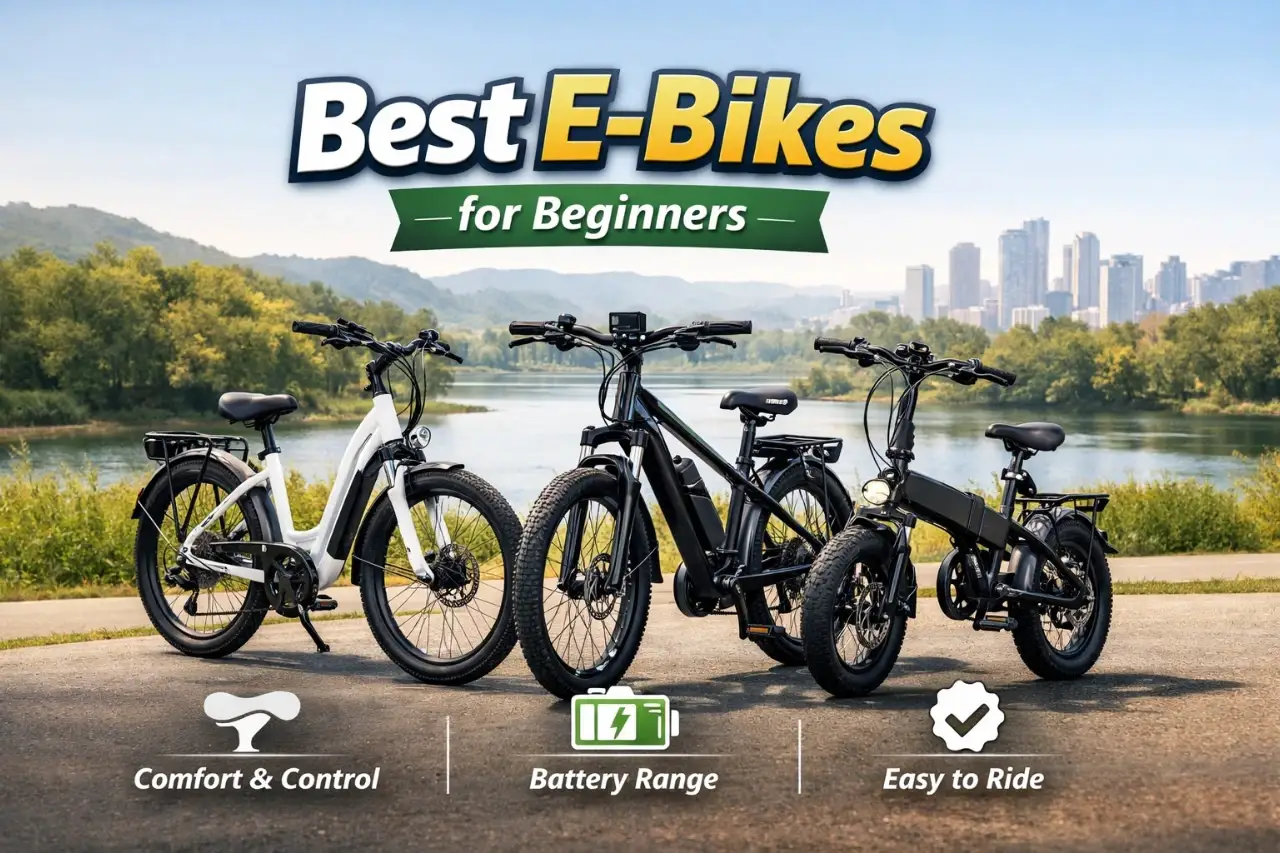
E-bikes offer a simple way to start cycling or return to it after time away. They combine a traditional bicycle frame with an electric motor that helps you pedal. This makes riding easier on hills, longer distances, and during hot weather when you might otherwise skip a ride.
For beginners, the right e-bike should be easy to control, comfortable to ride, and simple to understand. Weight matters because you might need to lift it onto a bike rack or carry it up stairs. Battery range determines how far you can go before recharging. The motor type affects how smoothly the bike assists your pedaling. Price varies widely, so knowing which features you actually need helps avoid overspending.
We researched and tested multiple e-bikes to find the best options for people new to electric bicycles, comparing them on ease of use, comfort, reliability, and overall value. If you want the fastest answer, jump to our top pick.
5 Best E-Bikes for Beginners
Below is our full list of the best e-bikes for beginners. We tested each model for ease of use, reliability, and overall value to help you find the right fit for your first electric bike.
1. Funhang EB-C2 Electric Bike

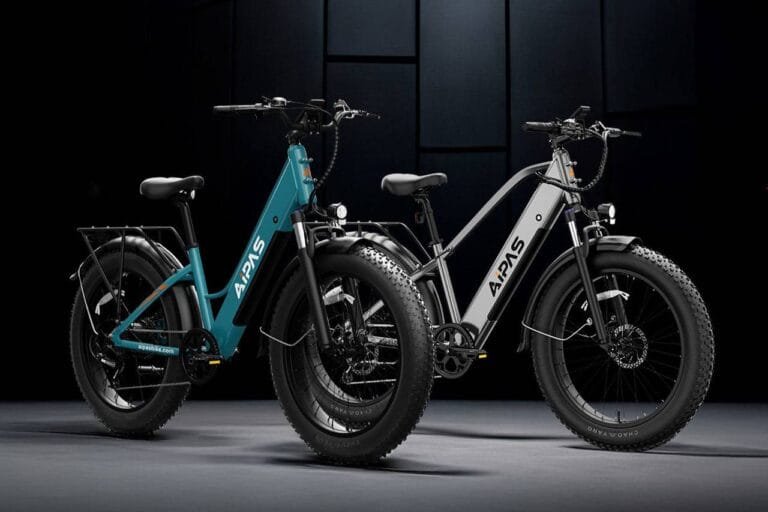
The Funhang EB-C2 delivers solid value for new riders who want a comfortable step-through design with enough power for daily commutes without breaking the bank.
Pros
- Step-through frame makes getting on and off easy for riders of all abilities
- Built-in battery looks clean and charges conveniently at home or work
- Rear rack and fenders come standard for practical everyday use
Cons
- Weighs over 60 pounds, which makes it harder to move around without power
- Assembly takes some effort even though it arrives mostly put together
- Motor can show error codes after heavy use based on our testing
We found the step-through design genuinely helpful during our rides around town. Getting on this bike feels natural, and we never had to swing our leg over a high bar. The adjustable seat and handlebars let us dial in a comfortable position quickly.
The motor provided enough push to tackle small hills without much effort. We cruised at a steady pace through neighborhoods and bike paths. The throttle worked well when we wanted a break from pedaling, though it drains the battery faster than pedal assist mode.
Battery life met our expectations for typical rides. We covered around 35 miles using pedal assist before needing a charge. The removable battery charged overnight without issues, and we appreciated being able to take it inside our apartment.
The rear rack proved useful for grocery runs and carrying a backpack. We loaded it up with bags several times without any problems. The included fenders kept road spray off our clothes during wet morning commutes.
Braking felt reliable when we needed to stop quickly. The disc brakes worked well in different weather conditions. The front suspension smoothed out bumps on rougher paths, though it’s basic compared to more expensive bikes.
The LCD screen gave us clear information about speed and battery level at a glance. We used the different pedal assist levels to match our energy and the terrain. The seven-speed shifter let us fine-tune our pedaling effort.
This bike works best for beginners who plan to ride on paved paths and streets. Skip it if you need to carry your bike upstairs often or want something for serious off-road trails.
2. QNUT Victor Electric Bike

This bike offers solid value for new riders who want dependable performance without breaking the bank.
Pros
- The 350W motor handles hills and city streets with ease
- Removable battery makes charging convenient and helps prevent theft
- Three riding modes let you choose how much effort you want to put in
Cons
- The 250-pound weight limit may not work for larger riders
- Assembly is required when it arrives
- Carbon steel frame adds more weight than aluminum alternatives
We found the QNUT Victor delivers a smooth ride for beginners who are just getting into e-bikes. The motor provides enough power to tackle moderate hills without feeling overwhelming or too aggressive for new riders.
The battery gave us a real-world range of about 25 to 30 miles with mixed pedal assist use. We appreciated that we could remove it easily to charge inside our apartment instead of wheeling the whole bike to an outlet.
The 21-speed gear system works well once you get used to it. We switched between gears smoothly on different types of terrain, from flat bike paths to slightly bumpy trails. The LCD display shows your speed and battery level clearly, which helps you plan your rides better.
Stopping power from the dual disc brakes felt reliable in our testing. We had no issues coming to a quick stop when needed, even on wet pavement. The front suspension absorbed most bumps and cracks in the road, making longer rides more comfortable.
The bike does require some assembly out of the box, which took us about an hour. If you’re not comfortable with basic bike mechanics, you might want to have a local shop help you set it up. Once assembled, the bike felt sturdy and well-built for the price point.
3. Jasion EB5

The Jasion EB5 offers solid performance and practical features at a budget-friendly price, making it a smart pick for beginners who want reliable city commuting without overspending.
Pros
- Setup takes just 15 minutes out of the box with minimal assembly required
- Four different riding modes let you customize how much assistance you want
- Removable battery makes charging convenient at home or work
Cons
- Build quality can be inconsistent with some parts arriving loose
- At nearly 50 pounds, it feels heavier than expected for everyday handling
- The throttle and grips may need replacement or adjustment after purchase
We found the EB5 surprisingly capable for getting around town. The throttle gives you instant power when you need it, and the pedal assist kicks in smoothly when you’re cruising. Switching between modes was intuitive once we got the hang of the display.
The range held up well during our test rides. We managed about 30 miles on a single charge with mixed use of throttle and pedal assist. The battery slides out easily, which saved us from dragging the entire bike to an outlet.
Riding comfort impressed us more than we anticipated. The front suspension handled bumps without issue, and the disc brakes stopped us reliably in different conditions. The seven gears gave us enough options for varied terrain around the city.
We did notice some quality control issues. The throttle felt loose right away, and we ended up tightening several bolts before our first ride. It’s not a dealbreaker, but plan to spend some time checking everything over when it arrives.
The bike works best for flat to moderately hilly areas. We wouldn’t recommend it for steep climbs or off-road trails despite the mountain bike styling. It shines as a straightforward commuter that gets you from point A to point B without breaking a sweat.
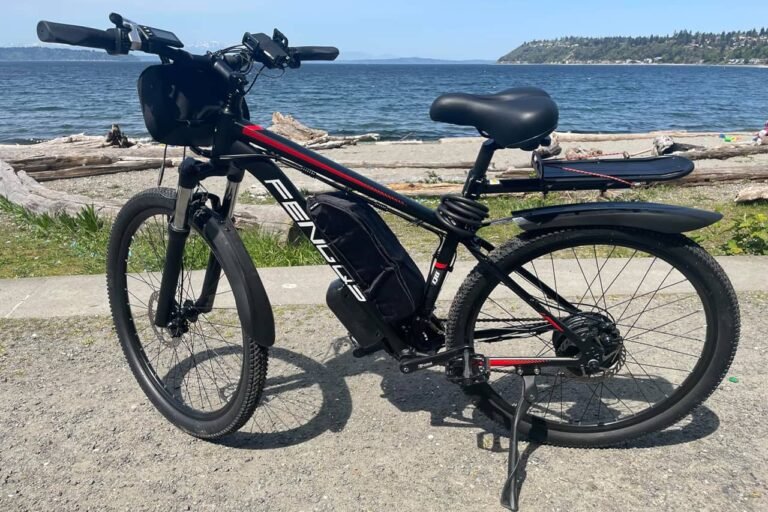
4. Funhang EB-M1 Electric Bike

This model looks like a practical beginner option for riders who want a straightforward 26-inch e-bike with enough power for commuting, light trail use, and everyday errands without moving into a much higher price tier.
Pros
- 500W motor with 1000W peak output gives new riders enough help for hills and faster starts
- Removable 48V battery is easier to charge indoors and is rated for up to 40-50 miles in pedal assist mode
- Useful beginner-friendly equipment includes front suspension, fenders, LCD display, headlight, and multiple ride modes
Cons
- High-carbon steel frame will likely make the bike heavier than comparable aluminum models
- Real-world range may fall below the claimed 40-50 miles depending on rider weight, terrain, and throttle use
- The listing mixes 7-speed wording with a 21-speed spec, which may confuse first-time buyers
The Funhang EB-M1 stands out as a beginner e-bike because it checks many of the boxes that matter most for first-time riders. It uses a 500W brushless motor with 1000W peak output and a claimed top speed of 21.7 mph, which should feel strong enough for moderate hills and daily commuting without being overly intimidating for someone new to electric bikes.
Its removable 48V 374.4Wh battery adds convenience, especially for riders who need to charge indoors. The listing claims 25-30 miles in pure electric mode and 40-50 miles with pedal assist, plus a 4-5 hour charge time. As with most e-bikes in this class, beginners should treat those range numbers as best-case estimates rather than guaranteed everyday results.
We also like that it includes features beginners usually appreciate right away: front suspension, a soft seat, fenders, headlight, LCD display, five riding modes, and a mostly pre-assembled setup. Those details make the bike easier to live with from day one, especially for casual commuting and neighborhood riding. The bike is also listed as meeting UL 2271 battery certification and UL 2849 certification for the full e-bike, which is a meaningful safety plus in this price category.
This bike makes the most sense for beginners who want a full-size 26-inch e-bike for pavement, bike paths, and occasional light off-road use. It is less ideal for riders who want a lighter frame, premium components, or a clearly higher-end trail bike feel.
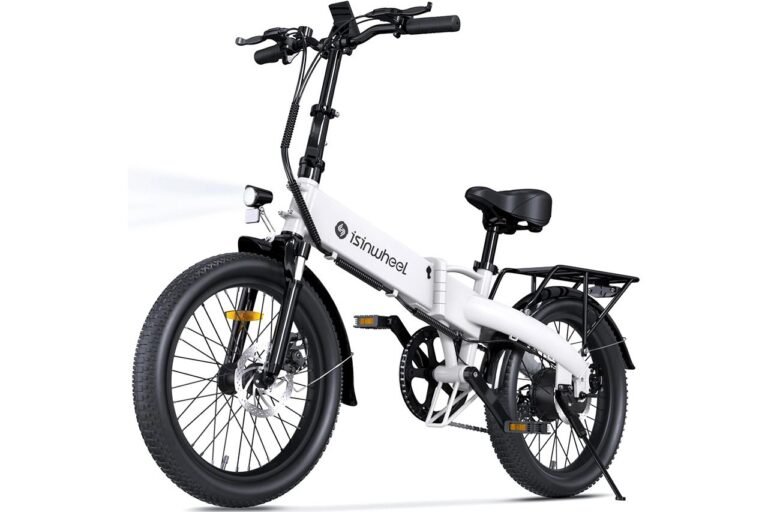
5. LELEKUAI Foldable Electric Bike

This compact folder delivers solid speed and portability for urban riders, though some quality control issues hold it back from being a top pick.
Pros
- Folds quickly and stays light enough to carry on transit or store in tight spaces
- Reaches speeds up to 24 mph with strong acceleration from the 560W motor
- Dual disc brakes stop the bike fast even at higher speeds
Cons
- Tire inflation problems reported by multiple users
- Phone holder doesn’t fit larger smartphones like newer iPhones
- Missing speedometer means you’ll need to guess your actual speed
We found this bike strikes a nice balance between power and portability. The folding frame makes it easy to bring inside or load into a car trunk. At 48 pounds, it’s not featherweight, but we could still manage it on subway stairs without too much struggle.
The motor surprised us with how quick it gets up to speed. Cruising around town at 20-22 mph felt smooth on flat roads. We appreciated the three levels of pedal assist, which let us choose between a workout and a relaxed ride home.
Braking power stood out during our testing. The dual disc setup brought us to a stop quickly, which matters when riding at higher speeds in city traffic.
The 14-inch wheels take some getting used to if you’re coming from a standard bike. They handle well on pavement and light trails, but the smaller size means you feel bumps more than you would on larger wheels. We tested it on different surfaces and found it worked best on smooth roads.
Battery life gave us about 20-25 miles of mixed riding, which covered our daily commute with charge to spare. The removable design meant we could bring it inside to charge overnight.
Quality control seems inconsistent based on our experience and what other riders report. The front tire losing air is a real problem that shouldn’t happen on a new bike. We also found the lack of a built-in speedometer frustrating since the display shows other metrics.
Buying Guide
Motor Power and Type
We recommend starting with a 250W to 500W motor if you’re new to e-bikes. This range gives you enough power for hills and headwinds without feeling overwhelming.
Hub motors sit in the wheel and feel smooth for casual riding. Mid-drive motors mount near the pedals and handle steep terrain better, but they cost more. Most beginners do fine with a rear hub motor.
Battery Range
Look for batteries rated between 400Wh and 600Wh. These typically get you 20 to 50 miles per charge depending on how much you pedal.
Remember that range drops when you use higher assist levels or ride uphill. We suggest adding 30% to your typical ride distance when choosing battery size.
Frame Style and Fit
Step-through frames make getting on and off easier, especially at stoplights. Traditional frames offer more size options if you’re tall or short.
Test ride before buying if possible. You should be able to touch the ground with your toes when seated.
Weight Considerations
Most e-bikes weigh 40 to 70 pounds. Heavier bikes feel more stable but are harder to store or load onto a car rack.
If you need to carry your bike upstairs or lift it regularly, stay under 50 pounds.
Essential Features to Check
| Feature | What to Look For |
|---|---|
| Brakes | Hydraulic disc brakes stop better in rain |
| Display | Clear speed and battery readings |
| Pedal Assist Levels | At least 3 levels for control |
| Throttle | Optional but helpful for starting from stops |
GoEBikeLife publishes independent e-bike reviews, comparisons, and practical buying guides. Some links on this page are affiliate links. If you make a purchase through an eligible link, we may earn a commission at no additional cost to you.