A little joy belongs in every day.

My Tamobyke T63 review covers real ride feel, comfort, control, and ownership realities—plus honest drawbacks like the single-speed drivetrain.
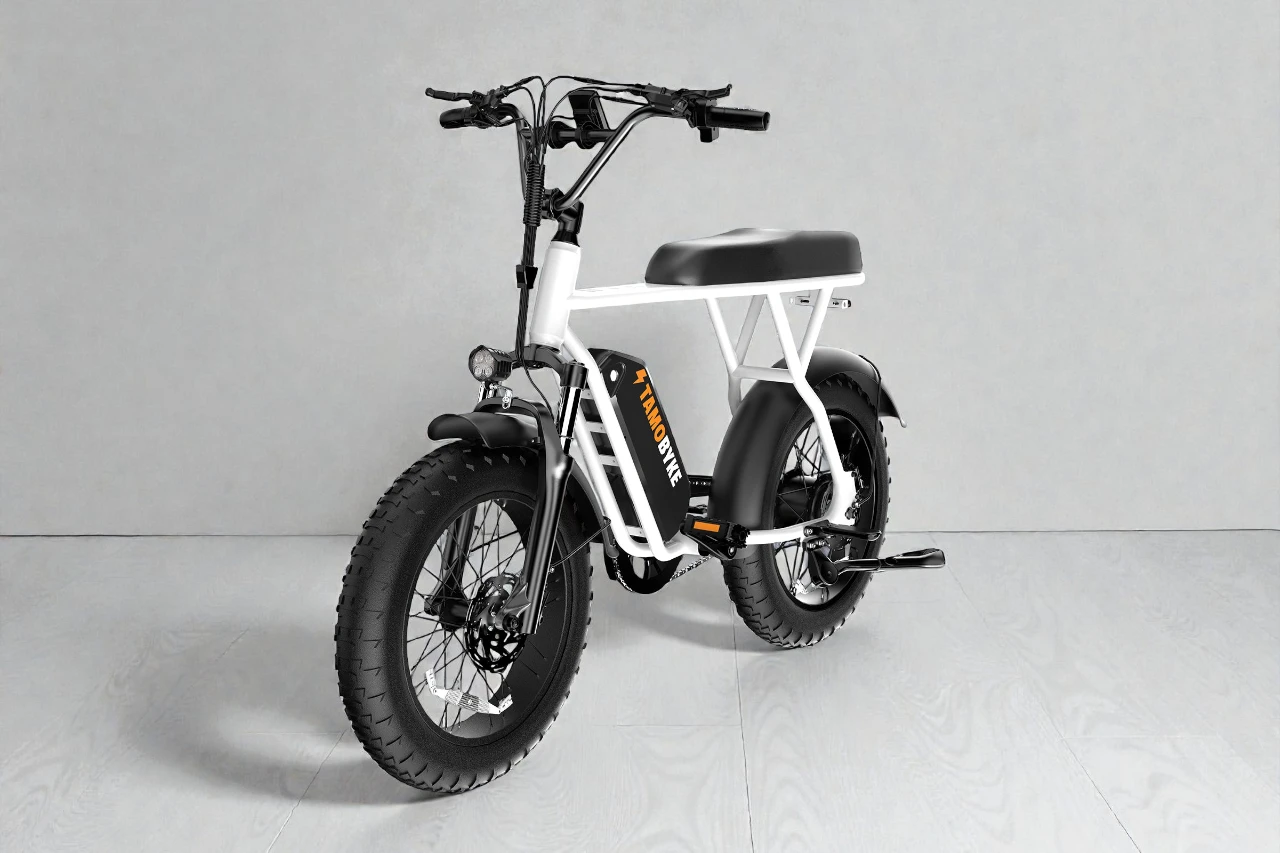
The Tamobyke T63 is a straightforward, budget-focused 20″ fat-tire e-bike built around one idea: keep it simple, keep it comfortable, and keep it capped at Class 2 speeds (20 mph). After getting it unboxed and riding it as a ~180 lb, 5’10” rider, my main takeaway is that it’s genuinely fun—and it feels designed for easy neighborhood rides, casual commutes, and places where faster Class 3 e-bikes are restricted.
It also does a few “owner experience” things surprisingly well for the money. Mine arrived very well packaged and protected, which matters a lot with value e-bikes because shipping damage is one of the most common headaches.
That said, the T63 makes some real compromises to hit this price point—most notably the single-speed drivetrain. If you’re the kind of rider who wants to pedal efficiently when the battery is low, or you live somewhere with frequent hills, this is the part you’ll notice first.
One-sentence verdict: The Tamobyke T63 is a great choice for budget-minded riders who want a comfortable, Class 2 (20 mph) fat-tire e-bike for short trips and casual cruising, but it’s not ideal if you need a real gear range for pedaling or you want a lighter bike to carry and store.
Best for:
Not ideal for:
Biggest strength: Comfortable, stable, confidence-friendly Class 2 ride with fat tires and a long seat.
Biggest trade-off: The single-speed drivetrain limits pedaling flexibility—especially on hills or when riding unassisted.
Category: Compact fat-tire cruiser / simple commuter
Motor: 750W rated (1000W peak claimed)
Battery & Range (claimed vs expected real-world): 36V 13Ah (468Wh) removable; range claims vary by mode and conditions
Top Speed / Class: Class 2, 20 mph max (as positioned)
Weight & Payload: ~64 lb bike weight; 330 lb max load
Best for: Easy cruising, short commutes, casual “restricted-speed” riding
Test conditions (what I focused on):
The T63 is a budget, minimalist e-bike built around a 20″ x 4″ fat-tire platform, a front suspension fork, and a long bench-style seat that encourages relaxed riding. In plain terms: it’s not trying to be a lightweight commuter bike or a technical trail bike. It’s trying to be an approachable “jump on and go” e-bike that feels stable at lower speeds.
Brand positioning is clearly value-first: fewer complex parts, a simple drivetrain, and a feature set that reads like a practical checklist—fat tires, front suspension, disc brakes, lights, display, and a few included accessories.
One detail I actually appreciate for real-world ownership: this bike is marketed and presented as a Class 2 e-bike, and my unit had clear Class 2 labeling on the rear fender, which can be helpful in areas where speed class is enforced.
| Spec | What’s listed / shown |
|---|---|
| Motor | 750W rated / 1000W peak |
| Torque | 75 N·m max |
| Battery | 36V 13Ah (468Wh) removable |
| Range | Up to ~40 miles throttle / ~50 miles PAS |
| Top speed | 20 mph (Class 2 positioning) |
| Tires | 20″ x 4.0″ fat tires |
| Suspension | Front suspension, lockable |
| Brakes | Dual disc brakes |
| Drivetrain | Single-speed |
| Frame | Carbon steel |
| Water rating | IP54 (listed) |
| Certification | UL 2849 |
| Weight / payload | ~64 lb; 330 lb max load |
If you want an affordable fat-tire Class 2 e-bike that’s simple to ride and feels stable, the T63 fits that lane well. The fat tires add confidence on imperfect pavement, packed dirt, grass, and the kind of “messy edge-of-road” surfaces you get in real commutes. The long seat also makes it feel less cramped than some small 20″ bikes, especially for taller riders.
Fit-wise, at 5’10” I felt very comfortable, and the overall proportions felt right for riders roughly in the mid-range of the claimed height window. My personal impression is that it lands best for roughly average-height riders—tall enough to feel roomy, but not so tall that the compact 20″ format feels undersized.
This is where being honest saves people money.
Skip the T63 if:
What to consider instead (directionally):
In everyday riding, the T63’s personality is “easy power at low stress.” It’s happiest doing stop-and-go neighborhood riding, rolling along bike paths, and handling short rises without forcing you to work too hard.
Because the bike is positioned as a Class 2, I treated it like one: throttle for quick starts and controlled cruising, pedal assist when I wanted to contribute a bit. For newer riders, that simplicity is a feature—there’s less to think about, and the 20 mph ceiling keeps the bike in a more manageable speed envelope.
One thing I liked: the overall ride felt stable and predictable at typical Class 2 speeds, which matters more than raw power for a lot of buyers in this category.
At 20 mph, a compact 20″ fat-tire bike can either feel sketchy or planted depending on geometry and tire volume. The T63 leans planted—fat tires help here, and the long seat layout contributes to a relaxed posture.
Where you’ll feel the “budget e-bike” reality is not in straight-line cruising, but in fine control: transitions between power levels can feel more “step-like” than silky, and the bike encourages you to ride smoothly rather than aggressively.
The claimed ranges can be achievable under ideal conditions (lighter rider, lower speeds, flatter terrain, conservative assist). But with fat tires and a 36V 13Ah battery, I’d treat the numbers as upper bounds, not guarantees.
What will reduce range fastest on this bike:
The practical way I’d frame it: if your typical use is short commutes, school runs, errands, and casual rides, the battery setup makes sense. If you’re planning long weekend rides at higher assist, you’ll want to manage expectations.
Comfort is one of the T63’s best arguments. The long seat is genuinely nice for relaxed riding, and it makes the bike feel less cramped than many small 20″ platforms. I also like the idea behind the passenger-friendly setup (seat length + footrests), but I’d still treat “two-up” riding cautiously: payload limits and balance matter, and not all passenger use is appropriate everywhere.
Front suspension helps take the sting out of cracks and rough patches. I also appreciate that the fork is listed as lockable—on smoother pavement, locking a fork can make the bike feel more efficient.
Low-speed handling is friendly. The bike feels easy to balance and steer in parking lots and neighborhood turns, which is exactly where many riders will spend most of their time.
The trade-off is that fat tires add drag and a “heavier” steering feel compared to a normal commuter tire. That’s not a flaw—it’s just the reality of the fat-tire category.
Dual disc brakes are the right call for a heavier, fat-tire e-bike. Stopping performance is always a combination of brake quality, setup, and tire grip, but at a basic level the platform choice makes sense.
From a safety/ownership standpoint, a few things stand out positively:
Lighting is also part of the value story here (headlight, tail light, and the listing mentions turn signals). My general advice: regardless of what comes stock, if you ride near cars, add visibility (reflective gear and/or a secondary light) because visibility beats brightness alone.
The bike is presented as having multiple riding modes (including cruise and pedal assist), and it uses a simple display for basic information (speed, battery level, PAS level, and mileage tracking).
This is another “set expectations” area: the display and controls usually do the job, but they won’t feel premium. The win is usability—most riders will learn it fast and stop thinking about it after the first few rides.
As a 5’10” rider, I felt like the bike fit naturally without awkward reach or cramped leg positioning. In my view, the T63 makes the most sense for riders in the broad middle of its stated range.
Notes by rider type:
My honest fit summary: if you’re around 5’6″ to 6’2″, this design style often works well in practice—though you should always prioritize safe stop-and-go confidence over “paper specs.”
My bike arrived very well packaged, and that reduced stress immediately. Assembly is positioned as about 90% done out of the box, and the remaining steps are the usual: front wheel, handlebar alignment, pedals, headlight/fender, and tire inflation.
Two quick setup tips I recommend on every budget e-bike:
A single-speed drivetrain is mechanically simple, which is good. The main wear items you’ll deal with are:
Support-wise, the listing mentions 1-year customer support and lifetime service. I’d still recommend saving your order info and documenting any issues early, because support experiences vary widely in this budget category.
Based on the provided product information, you can expect:
(As always, confirm the exact contents from your seller’s package list since inclusions can vary by listing.)
Where the T63 wins:
Where it loses:
If your area is flat and you want easy cruising, the T63’s simplicity is a feature. If your area is mixed or hilly, a 7-speed option is usually the smarter long-term buy.
Is the Tamobyke T63 good for hills?
It can handle mild hills with motor help, but the single-speed setup makes hill pedaling less comfortable than a geared bike.
Is it comfortable for longer rides?
For a compact 20″ platform, yes—comfort is one of its strongest traits thanks to the long seat and fat tires.
Can shorter riders fit it?
Many shorter riders do well on 20″ platforms, but confidence at stops matters most—make sure you can safely reach the ground and control the bike.
Is the battery removable?
Yes, it’s listed as removable, which is useful for apartment charging and storage.
How long does it take to charge?
Charging time depends on the charger output and battery state. As a general habit, plan on charging when you get home rather than waiting for empty.
What maintenance should I expect?
Basic checks: tire pressure, brake adjustment, bolt re-tightening after early rides, and replacing brake pads/tires as they wear.
If you’re shopping for an affordable fat-tire Class 2 e-bike that’s comfortable, stable, and easy to live with, the Tamobyke T63 makes a lot of sense—especially for casual riders and families who want a manageable 20 mph cap.
But I wouldn’t recommend it blindly. The single-speed drivetrain is a real limitation, and the weight/storage reality is something you should be honest about before buying.
My call: Buy it if your rides are short, your terrain is mostly flat-to-mild, and you want simple Class 2 fun. Skip it if you expect to pedal a lot on hills or you need something lighter and more “bicycle-like.”
| Preview | Product | Price | |
|---|---|---|---|

| Tamobyke T63 Fat Tire Electric Bike, 500W Entry Level for Adults Teens (WH) | $379.00 $309.00 | View on Amazon |
GoEBikeLife is reader-supported. We test and review e-bikes, create detailed comparisons, and publish practical buying guides for riders. Some links on this page are affiliate links, which means we may earn a commission at no extra cost to you.