A little joy belongs in every day.

The TST R002 reached about 28 mph in my test, climbed steep hills with pedal input, and handled soft dirt well, though its suspension felt firm.
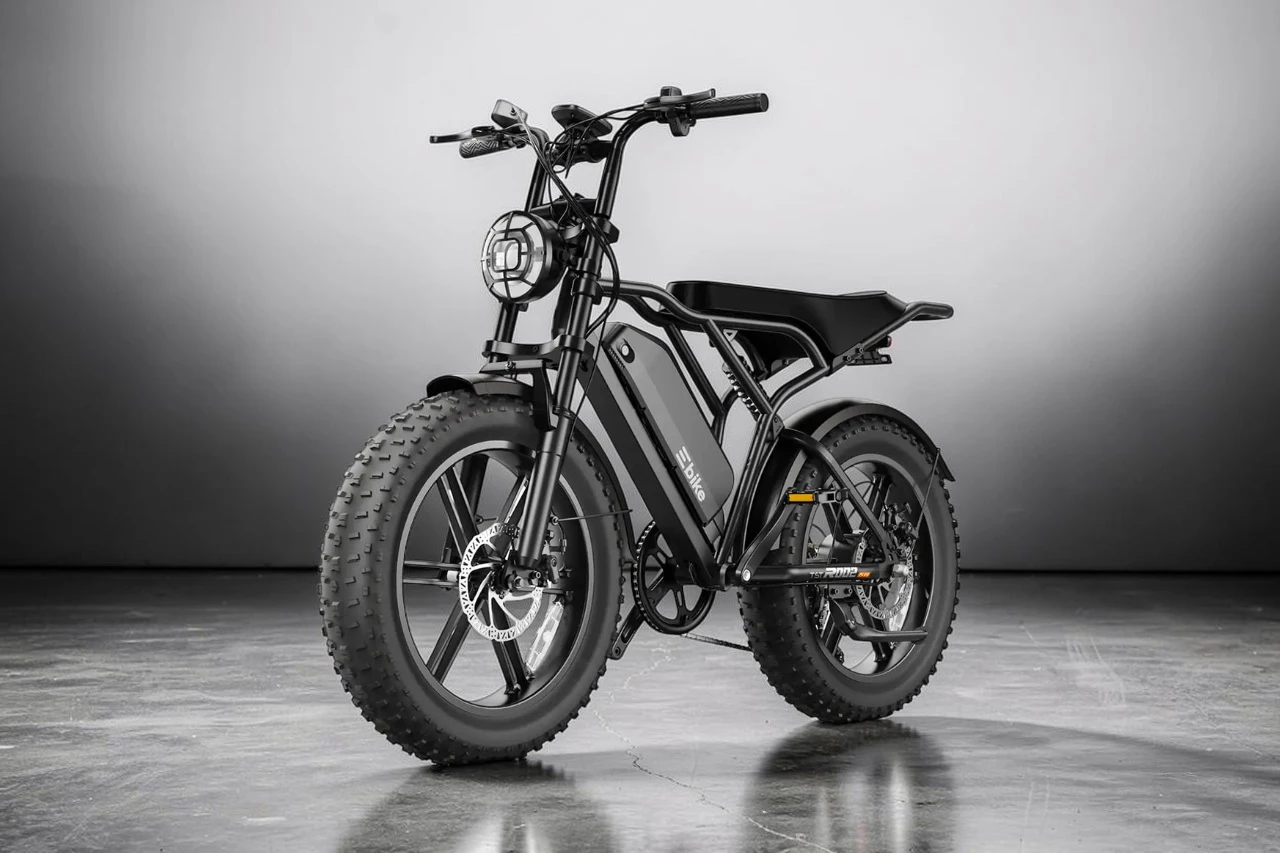
The TST R002 promises much of the performance that makes moped-style e-bikes fun—strong acceleration, a long bench seat, fat tires, and full suspension—without abandoning pedals, gears, lights, or everyday utility.
After riding it on pavement, loose dirt, rough trails, and steep hills, I found a capable all-rounder with plenty of power and a notably stable feel.
It is not perfect, though: my test bike topped out below the advertised maximum, the suspension felt firm on sharper impacts, and its mechanical brakes require more attention than hydraulic brakes would on a bike this heavy and fast.
Check the latest price, compare the 15Ah and 25Ah battery options, and see available colors and customer reviews on Amazon.
The TST R002 is a good choice for riders who want a high-capacity, moped-style electric bike for commuting, recreational rides, and occasional light trail use. Its 750W rated rear-hub motor delivered enough assistance for steep climbs, while the 20 × 4-inch tires felt planted on pavement and soft dirt. The 48V 25Ah Adventure battery is the version I would choose because its 1,200Wh capacity gives the bike far more useful range potential than the smaller 15Ah option.
The biggest compromises are weight, firm suspension over hard hits, mechanical rather than hydraulic disc brakes, and a tested top speed of about 28 mph instead of the claimed 32 mph. I would not buy it as a serious mountain bike or assume it will achieve 100 miles in normal use. However, as a comfortable, powerful cruiser with a rear rack, fenders, integrated lighting, turn signals, and a high claimed payload, the R002 offers an appealing package.
Best for: Commuting, recreational riding, longer paved trips, gravel, and mild trails
Consider another bike if: You need a lightweight e-bike, hydraulic brakes, highly adjustable pedaling ergonomics, or suspension for aggressive trail riding
Tested top speed: Approximately 28 mph on the bike’s display
Manufacturer-claimed top speed: Up to 32 mph
Overall recommendation: Recommended, with realistic expectations about speed, range, and suspension performance
| Specification | Details |
|---|---|
| Bike style | Moped-style fat-tire electric bike |
| Motor | 750W rated brushless geared rear-hub motor |
| Peak motor output | Up to 1,500W |
| Claimed torque | 90 Nm |
| Claimed top speed | Up to 32 mph |
| Tested top speed | Approximately 28 mph |
| Battery options | 48V 15Ah or 48V 25Ah removable battery |
| Battery capacity | 720Wh or 1,200Wh |
| Claimed range | Up to 65 miles with 15Ah battery; up to 100 miles with 25Ah battery under ideal pedal-assist conditions |
| Charger | 54.6V, 3A |
| Pedal assist | Five levels |
| Throttle | Thumb throttle |
| Drivetrain | Shimano 7-speed |
| Tires | 20 × 4-inch puncture-resistant fat tires |
| Suspension | Front and rear suspension; listed rebound adjustment and lockout |
| Brakes | Front and rear mechanical disc brakes |
| Display | Multifunction LCD |
| Lighting | Headlight, rear light, brake light, and turn signals |
| Included accessories | Rear rack, front and rear fenders, kickstand, charger, keys, and assembly tools |
| Maximum payload | 450 lb, manufacturer claimed |
| Listed bike weight | 71.87 lb |
| Recommended rider height | 5 feet 2 inches to 6 feet 4 inches |
| Colors | Black, white, and orange |
| Certification | UL 2849 certification listed by TST |
| Warranty | Two-year limited warranty through TST |
Specifications and performance claims can vary by configuration and may be updated by the manufacturer. Confirm the battery version and included equipment on the exact listing before ordering.
My first impression was positive before the bike was even out of the box. The smaller components were grouped neatly in protective foam instead of being left loose in the carton. The package included the user manual, charger, battery keys, metal pedals, kickstand, tools, spare hardware, and a metal derailleur guard.
The bike arrived approximately 90% assembled, but that does not mean the remaining work is effortless. At nearly 72 pounds before adding accessories or cargo, the R002 is awkward to lift and position alone. I used a bike stand and found a second person helpful while getting it situated.
Anyone comfortable installing a front wheel, handlebar, pedals, light, fenders, and rear rack should be able to finish the job. Take extra care with pedal threads, handlebar alignment, brake rotor clearance, tire pressure, and every critical fastener. I also recommend checking the brakes and derailleur before the first ride rather than assuming factory adjustments survived shipping.
Once assembled, the R002 makes a strong visual impression. My black test bike had an almost completely blacked-out finish, including the frame, fork, wheels, saddle, and most components. The few bright reflectors and small markings did not distract from the clean look.
The long saddle uses a textured, grippy cover that kept me from sliding around during acceleration or rougher sections. Its moped-style shape is comfortable for relaxed cruising and gives the bike a more substantial appearance than a conventional step-over commuter.
There is a tradeoff, however. A bench-style seat offers less precise height and fore-aft adjustment than a standard bicycle saddle. Riders who plan to pedal for long periods may not achieve the same efficient leg extension they could on a conventional e-bike. The R002’s wide tires, long seat, and substantial frame also make it feel more like a compact electric moped than a nimble bicycle.
The cast-style wheels reinforce that solid appearance and eliminate conventional spokes that might need periodic tension checks. Overall, the bike felt sturdy during my test, with no immediate looseness or distracting rattles.
The cockpit is straightforward. The R002 uses a thumb throttle, which I found easy to modulate after a short adjustment period. Five pedal-assist levels let me choose how much support I wanted, while the Shimano 7-speed drivetrain gave me mechanical gearing for starts, hills, and pedal-only riding.
The LCD is clear and useful. It shows speed, battery percentage, the selected assist level, and trip information. Additional ride data can be accessed through the display controls. I especially appreciate a numeric battery percentage because it is more informative than a simple bar-style gauge, although any e-bike battery reading can fluctuate temporarily under heavy motor load.
TST also lists mobile-app connectivity. The built-in display provided the information I needed during this ride, so app support was not a deciding factor in my verdict.
The rear hub motor is rated at 750W and advertised to reach 1,500W at peak output, with up to 90 Nm of torque. On the road, the R002 felt lively enough to be entertaining without behaving like a full electric dirt bike.
Throttle response gave me useful acceleration from a stop, and the motor had enough reserve for ordinary urban riding and moderate inclines. Its power delivery also suited the bike’s personality: this is a relaxed, stable cruiser rather than a lightweight machine that darts through every turn.
The bike’s weight and long layout keep the front end planted. That makes it less eager to lift under hard acceleration, but I consider the stable front end an advantage for normal road use. The R002 is designed for transportation and recreation, not stunts.
TST advertises a top speed of up to 32 mph. During my test, the display reached approximately 28 mph. That is still quick for a fat-tire e-bike, but it is important to separate the number I observed from the maximum shown in the product listing.
Several variables can affect maximum speed, including battery charge, controller settings, rider weight, wind, tire pressure, surface, incline, and whether the display is calibrated correctly for the wheel size. A lighter rider on a fully charged battery and ideal road may see a different result. Based on my experience, however, I would buy the R002 expecting high-20s performance and treat 32 mph as a best-case claim rather than a guaranteed cruising speed.
The R002 handled a short, sharp hill without much drama. On the steepest climb of the ride, however, the motor began to work harder and lost some momentum. Shifting into a lower mechanical gear and adding pedal effort helped it continue to the top.
That result is useful because it shows both the motor’s strength and its limit. The bike can tackle meaningful grades, but the advertised 30-degree climbing capability should not be interpreted as effortless throttle-only performance on every slope. Rider weight, entry speed, battery state, surface grip, and the length of the hill all matter.
For steep climbs, I would select a lower gear before cadence drops, add moderate pedal input, and avoid holding the motor at very low speed under maximum load for too long. That technique is easier on the motor and controller while giving the rider better control.
On pavement and rolling terrain, the R002 was comfortable. The fat tires took the edge off small imperfections, and the suspension reduced much of the vibration that would otherwise reach the saddle and handlebar. The bike felt composed at speed rather than nervous.
The trail portion revealed more nuance. It handled repeated bumps better than I expected, and I could move through a rough middle section without the bike feeling unsettled. On a sharper landing, though, the rear suspension felt firm—closer to a stiff setup than a plush mountain-bike shock. I could feel the bike move vertically over bigger hits even though it remained controllable.
My conclusion is that the suspension works well for broken pavement, gravel, dirt paths, curb transitions, and mild recreational trails. It is not a substitute for the longer-travel, well-damped suspension found on a purpose-built mountain bike or electric dirt bike. Riders who prioritize softness should experiment cautiously with the available suspension adjustment and tire pressure while staying within the manufacturer’s recommended limits.
The listed 450-pound payload may partly explain the firm setup: suspension intended to support a wide range of loads can feel stiff under a lighter rider. Payload capacity does not automatically mean every rack or seating position is approved for a passenger, so I would follow TST’s instructions before carrying another person.
The 20 × 4-inch tires were a good match for the R002. Their wide footprint gave the bike a planted feel on pavement and helped it track confidently through soft dirt. The bike did not feel excessively twitchy when the surface became loose, which is valuable on a heavy moped-style model.
Fat tires are not magic, though. Sand, snow, mud, wet leaves, and loose gravel can still overwhelm available grip. They also create more rolling resistance than narrow commuter tires and can reduce range if pressure is too low. I would use the pressure range printed on the tire sidewall as the boundary, then make small adjustments based on rider load and surface.
The R002 is best viewed as an all-terrain cruiser: capable on mixed surfaces, but not built for aggressive jumps, high-speed technical descents, or deep off-road conditions.
TST equips the R002 with mechanical disc brakes at both wheels. They performed without an obvious issue during my mixed-surface ride, but this is one area where I would have preferred hydraulic brakes. A bike weighing about 72 pounds and capable of reaching the high 20s places meaningful demands on its braking system, especially with a heavier rider or cargo.
Mechanical brakes can work reliably when properly adjusted, and their cable actuation is relatively simple to service. The tradeoff is that they generally require more hand force and more frequent cable and pad adjustment than a well-set-up hydraulic system.
Before riding, check that both wheels spin freely, the rotors are not rubbing excessively, the levers do not pull to the grips, and both brakes stop the bike progressively. Pad wear and cable tension deserve regular attention.
TST offers two battery configurations:
The test bike was described as having the 25Ah battery. Its large capacity is a major advantage because it provides more flexibility for longer rides and reduces the need to charge after every short trip. The pack is removable and lockable, so it can be charged on or off the bike.
I did not perform a controlled full-battery depletion test, so I cannot independently confirm either maximum range figure. Claims such as 65 or 100 miles are normally achieved under favorable pedal-assist conditions, not while riding near top speed or relying heavily on the throttle.
Real range will depend on assist level, speed, throttle use, rider and cargo weight, hills, stops, tire pressure, wind, temperature, and surface. The fairest way to judge this bike is by its battery capacity: 1,200Wh is substantial for an e-bike, but no battery can remove the large energy penalty of sustained high-speed riding.
For the first few rides, I recommend tracking distance and remaining battery percentage on familiar routes. That will provide a far more useful personal range estimate than any laboratory maximum.
The R002 is better equipped than a bare recreational e-bike. It includes a large headlight, rear light, brake-light function, and turn signals. The display and lighting controls were easy to reach, and the signaling equipment adds useful visibility when communicating with other road users. I would still use hand signals when safe because small bike-mounted indicators can be difficult for drivers to notice in bright daylight.
Full-length fenders help control spray and debris, while the included rear rack makes the bike more practical for a bag, lock, or small load. Verify the rack’s own weight rating instead of assuming it matches the bike’s 450-pound total payload claim.
The removable battery is convenient for indoor charging, but its size and weight should be considered if it must be carried upstairs. The complete bike is also too heavy for many standard vehicle racks. Any transport rack must be rated for the bike’s actual weight after the battery and accessories are accounted for.
The R002 makes the most sense for a rider who wants one bike to cover several roles. It can handle a commute, casual neighborhood rides, trips to local recreation areas, gravel connectors, and mild dirt trails. The larger battery version is especially attractive for someone who values capacity more than low weight.
It is also a reasonable fit for heavier riders who need a generously rated frame, although comfort and braking performance should be assessed carefully for the rider’s actual load. The recommended height range is broad, but shorter riders should confirm they are comfortable with the listed 30.6-inch standover height and the size of the frame.
I would look elsewhere if you need to carry the bike up stairs regularly, want a natural bicycle-like pedaling position, or expect premium hydraulic braking. Serious trail riders should choose a purpose-built electric mountain bike with more sophisticated suspension, while riders who need a proven 100-mile range should wait for an independent controlled range test rather than relying on the maximum claim.
The R002 can also reach speeds that may be restricted on public roads or paths. Pedals alone do not determine where a high-speed e-bike may be operated. Check the rules that apply where you ride, use an approved helmet, and configure the bike accordingly.
Compared with a traditional step-through commuter, the R002 offers a more powerful feel, wider tires, a larger saddle, and better tolerance for rough surfaces. It also looks more distinctive and includes much of the equipment a daily rider needs.
The conventional commuter usually wins on weight, pedaling efficiency, portability, and precise fit adjustment. The better choice depends on whether you value motorcycle-inspired comfort and presence or a lighter, more bicycle-like experience. The R002 clearly favors the former.
Yes—the TST R002 is worth considering if you want a powerful, feature-rich moped-style e-bike and understand its compromises. It felt solid, stable, and enjoyable throughout my test. The motor handled normal riding confidently, the bike climbed a very steep hill with the right gear and some rider input, and the fat tires worked well on soft dirt. The large battery option, integrated lighting, turn signals, fenders, and rear rack make it more practical than its aggressive appearance might suggest.
I would not purchase it solely for the advertised 32 mph top speed or 100-mile maximum range. My bike reached about 28 mph, the range claim was not independently tested, and the suspension became firm over larger impacts. I would also budget time for routine mechanical-brake adjustment.
Those limitations do not erase the R002’s strengths. For commuting, casual exploration, and mixed-surface recreation, it delivers a convincing combination of performance, comfort, capacity, and equipment. Of the two versions, the 48V 25Ah Adventure model is my preferred configuration for its much larger energy reserve.
| Preview | Product | Price | |
|---|---|---|---|

| TST Electric Bike for Adults, 48V 15/25 Ah Battery, 2000W Peak Motor, 28MPH | $599.99 $569.99 | View on Amazon |
How fast is the TST R002?
TST claims a top speed of up to 32 mph. During my test, the display reached approximately 28 mph. Actual speed varies with settings, battery charge, rider weight, terrain, wind, and tire pressure.
What is the range of the TST R002?
The manufacturer claims up to 65 miles for the 48V 15Ah version and up to 100 miles for the 48V 25Ah version under favorable conditions. I did not conduct a full depletion test, so those figures were not independently verified. High speed and frequent throttle use will reduce range substantially.
Does the battery come out for charging?
Yes. Both battery options are removable and lockable, allowing the pack to be charged either on or off the bike.
Can the TST R002 climb steep hills?
It performed well on a short, sharp incline and completed a much steeper climb after I shifted to a lower gear and added pedal effort. Do not assume the claimed 30-degree capability means every hill can be climbed easily on throttle alone.
Is the TST R002 good for off-road riding?
It is suitable for gravel, dirt paths, soft ground, and mild trails. The fat tires felt stable, and the suspension handled routine bumps well. It is not designed to replace a true electric mountain bike or dirt bike on jumps and technical terrain.
Does the TST R002 have hydraulic brakes?
No. It uses front and rear mechanical disc brakes. They are serviceable, but they require periodic cable, pad, and rotor checks.
Is the TST R002 UL certified?
TST lists the R002 as UL 2849 certified. Buyers who require certification for a building, insurer, or local rule should verify the current documentation for the exact model and battery configuration before purchasing.
Is the TST R002 difficult to assemble?
It arrives mostly assembled and includes tools, hardware, and instructions. The remaining work is manageable for someone familiar with basic bicycle assembly, but the bike’s weight makes a stand or a second person helpful. A professional safety check is worthwhile if you are unsure about brake, wheel, or handlebar setup.