Real rides. Real notes. No hype.

The Wildeway FW11 packs a 750W motor, 48V 32Ah battery, hydraulic brakes and folding 20×3.0" frame into a long-range e-bike built for commuting and cargo.
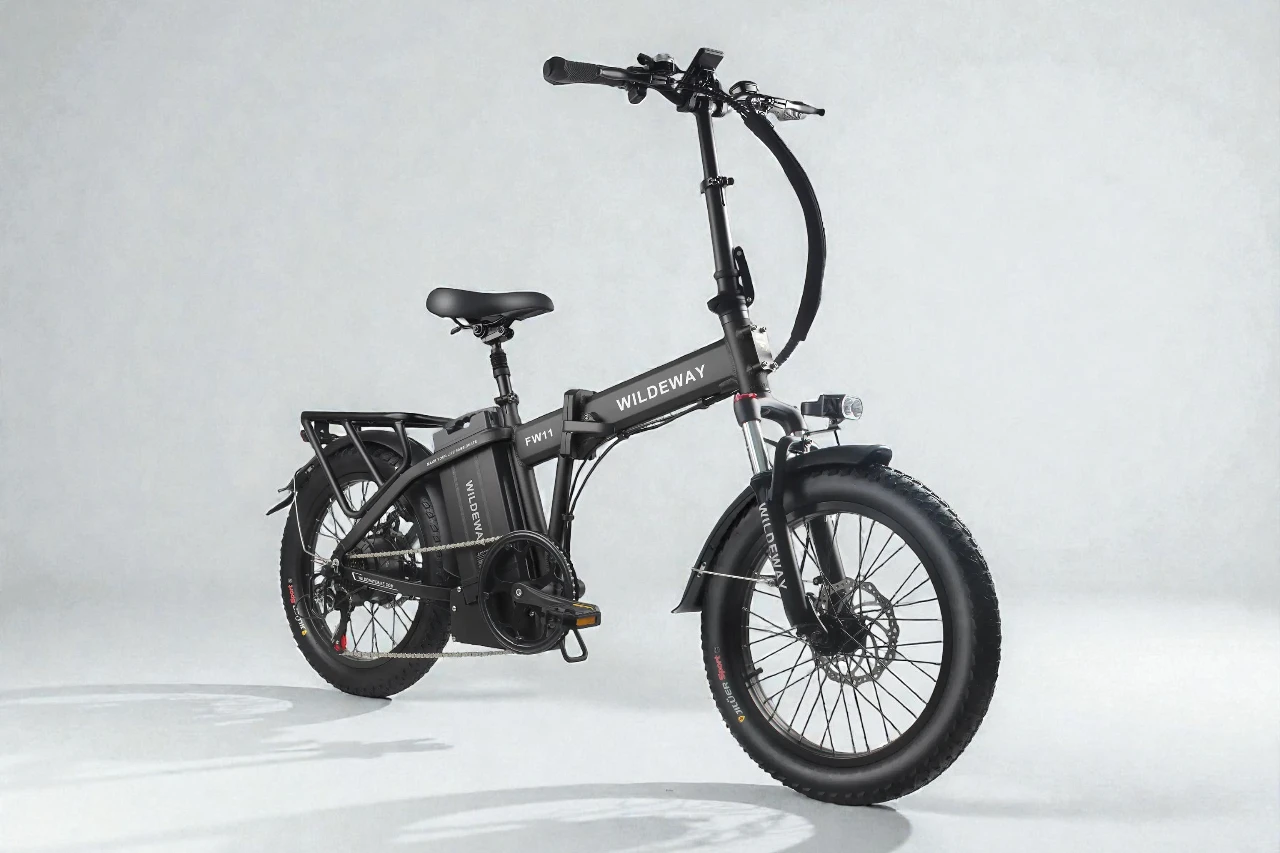
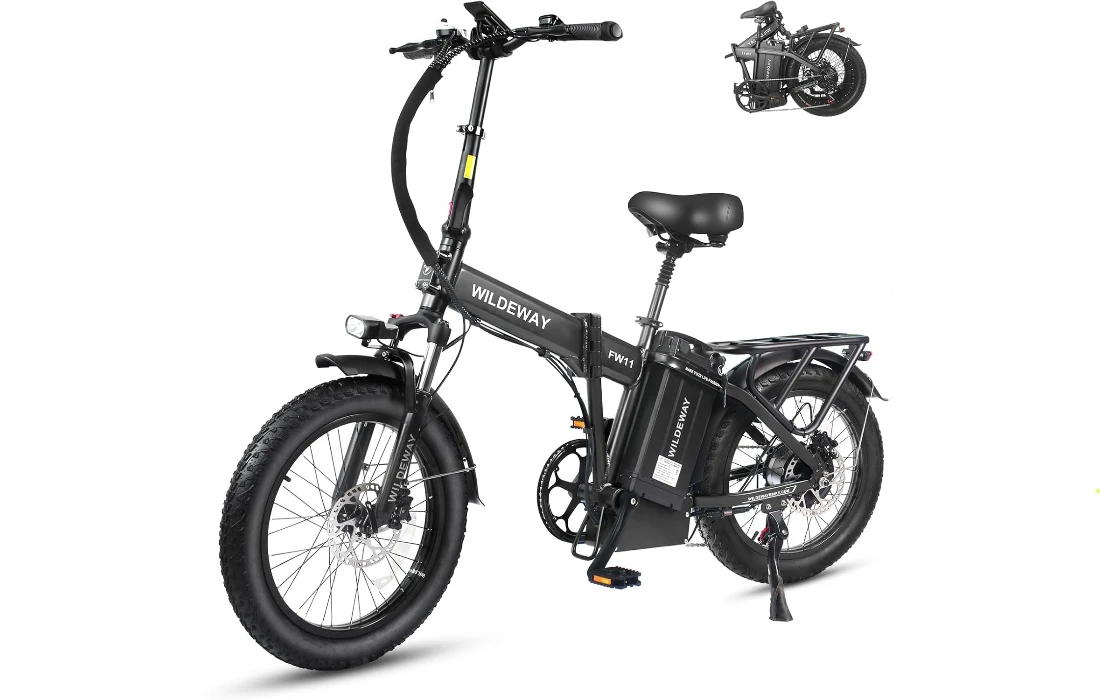
Our verdict: a powerful 750W folder with a huge 32Ah battery, hydraulic brakes and real 40–60+ mile range for commuters and delivery riders.
If you’ve been hunting for a folding e-bike that doesn’t give up on power or range, the Wildeway FW11 is probably already on your radar. On paper, a 750W motor, a massive 48V 32Ah battery, 20×3.0" fat tires, and hydraulic disc brakes for well under a thousand dollars sound almost too good to be true.
This review takes a deep, practical look at the Wildeway FW11 (step-over, 32Ah, hydraulic brake version). We’ll walk through who it suits, how it rides, what you gain from that giant battery pack, and where the compromises really are so you can decide whether this long-range folder deserves a spot in your garage.
Quick Verdict
The Wildeway FW11 is a high-value, long-range folding e-bike built for riders who care more about power, range, and utility than shaving off a few pounds. With its 48V 32Ah battery (around 1,536Wh), 750W rear hub motor, hydraulic disc brakes, and full-size rear rack, it’s an extremely capable city commuter and light-duty cargo or delivery bike at a budget-friendly price.
You’ll need to live with a fairly heavy frame, a long charging time, and a high step-over height, but if you want a compact e-bike that can easily cover 40–60+ miles in mixed riding and still climb serious hills, the FW11 delivers a lot of bike for the money.
At a glance
The Wildeway FW11 is a compact, 20-inch folding electric bike with fat 3.0" tires and a focus on long-range practicality. It sits in the “do-everything commuter” category: big battery, powerful motor, full fenders, sturdy rear rack, and a geometry that favors upright comfort over aggressive, sporty handling.
Wildeway as a brand positions itself in the value segment of the e-bike market: mid-range components with above-average motors and batteries for the price. The FW11 3.0 step-over model you’re looking at is one of their flagship long-range folders, paired with a huge 48V 32Ah battery and choice of mechanical or hydraulic brakes.
The version in this review is the 32Ah Step-Over with hydraulic disc brakes. That means:
Overall, the FW11 aims to be a compact SUV-style e-bike: something you can fold to stash in a car trunk or small apartment, but still use for serious daily commuting, weekend rides, or even delivery work.
| Feature | Wildeway FW11 3.0 (32Ah Step-Over, Hydraulic) |
|---|---|
| Motor | 750W brushless rear hub (up to ~1,000W peak) |
| Battery | 48V 32Ah (1,536Wh) removable lithium pack |
| Claimed Range | Up to ~60 mi electric / ~90 mi PAS (ideal conditions) |
| Charger | 48V 3A charger (roughly 8–11 hours from low to full) |
| Top Speed | Up to 28 mph (speed-limit adjustable via display) |
| Frame | 6061 aluminum folding frame, step-over |
| Tires | 20" × 3.0" fat tires |
| Drivetrain | Shimano 7-speed derailleur |
| Brakes | Front & rear hydraulic disc brakes |
| Suspension | Front suspension fork + suspension seatpost |
| Display | Full-color LCD, PAS levels, speed, trip, USB port |
| Weight | ~73.2 lb (bike) |
| Max Load | 330 lb rider + cargo (rear rack rated ~90 lb) |
| Folded Size | ~37 × 19.3 × 29.5 in (L×W×H) |
| Certification | UL 2849 e-bike safety compliance (electric system) |
The FW11 usually lands in the upper-budget to mid-range price band for folding e-bikes. While many popular folders like the Lectric XP 3.0 or Heybike Mars 2.0 sit around the $900–1,000 mark with 10–13Ah batteries, the Wildeway FW11 often undercuts them or matches their price while giving you more than double the battery capacity.
You’re not paying for a big “household name” brand, but if you value watt-hours per dollar and sheer practicality, the FW11 offers exceptional value on paper.
The FW11’s design is very much “function first”: matte black paint, boxy battery, full metal rear rack, and a classic folding hinge in the center of the frame. It doesn’t scream high-end boutique bike, but it looks purposeful and solid.
The frame is made from 6061 aluminum alloy, with a reinforced folding hinge and a secondary latch mechanism for safety. Welds are typical of this price range—neither ultra-polished nor sloppy. The finishing details like the integrated cable routing along the frame and fork are reasonably neat, and most cables are tucked inboard to avoid snagging when folding.
With 20" wheels and a relatively compact wheelbase (about 44.9"), the FW11 stays shorter than a full-size bike even when unfolded, which helps in tight urban spaces and crowded bike racks. The geometry puts the rider in a fairly upright position, with a tall, adjustable stem that you can raise or lower for comfort.
The rear rack is welded and braced into the frame, rather than being a cheap bolt-on afterthought. Rated around 90 lb, it’s more than capable of carrying panniers, grocery loads, or a properly-mounted passenger seat (again, check local regulations and use proper accessories).
You also get:
Overall, build quality is in line with other mid-range direct-to-consumer e-bikes: not luxury-level finishing, but sturdy, practical, and surprisingly refined for the price.
At the heart of the FW11 is a 750W brushless rear hub motor with peak output around 1,000W and about 60 N·m of torque. On a 20" wheel, that torque translates into very respectable real-world grunt.
From a stop, the motor provides strong but manageable acceleration. With PAS set around level 3 or 4, you can get up to 20 mph quickly on flat ground without feeling like the bike is trying to jump out from under you. Thumb throttle engagement is immediate, and for city traffic starts or short sprints away from lights, it feels confident.
On hills, the FW11’s motor and smaller wheel diameter give it an edge over many 500W folding bikes. Expect to tackle typical neighborhood hills (6–10% grades) without drama, especially if you’re willing to downshift and contribute some pedaling. Very steep, extended climbs will still slow the bike down, but that’s true of almost all hub-driven folders.
The FW11 ships with a top speed of around 20 mph in Class 2 configuration, but the display allows you to unlock up to about 28 mph in pedal assist mode, depending on your local regulations.
In practical terms:
Throttle-only speeds are typically a bit lower than assisted top speeds, especially for heavier riders, but still plenty quick for urban use.
As with most budget-mid hub motors, there’s a gentle electric whir under load but nothing obnoxious. Motor engagement via cadence sensor is predictable—there’s a brief moment as the system detects pedaling, then power comes on smoothly rather than in a harsh burst.
If you’ve only ridden lower-powered 250–500W folders before, the FW11 will feel like a noticeable step up in punch and hill-climbing ability.
This is where the FW11 really separates itself from most of the competition.
The 48V 32Ah battery gives you an enormous 1,536Wh of capacity—more than double what you’ll find on many 10–14Ah folding e-bikes. Wildeway claims up to 60 miles in electric (throttle) mode and up to 90 miles in pedal-assist under ideal conditions.
Real-world range is always lower than marketing numbers, but that’s still a huge reservoir of energy to work with.
In realistic mixed riding, you can roughly expect:
Even if you cut the marketing numbers in half, you’re still left with range that beats many competitors.
The battery is a removable, lockable pack mounted behind the seat tube. You unlock it with a key and lift it out by the integrated handle. At roughly 18 lb, it’s not light, but it’s manageable to carry into your home or office for charging.
Mounting and removing the battery is straightforward once you’ve done it a couple of times, and the position keeps the weight centralized and low, which helps stability.
With the included 48V 3A charger, you’re looking at roughly 8–11 hours to go from low battery back to full.
That’s the trade-off for having such a large pack: you don’t have to charge as often, but when you do, it’s an overnight job. For many commuters, this is actually convenient—you can charge at home every few days and forget about mid-day top-ups.
Because the FW11 operates at moderate power levels for such a big battery, each cell is under less stress than on a small-battery, high-power bike. Treated well (avoiding deep discharges, storing at moderate temperatures), you can reasonably expect several years of regular use before capacity noticeably declines.
Despite its compact size, the FW11 aims to ride more like a small utility bike than a twitchy folder.
The bike combines:
Together, these do a solid job of taking the sting out of potholes, speed bumps, and rough pavement. You’ll still feel big hits—this isn’t a full-suspension mountain bike—but for city streets, light gravel, and patched-up suburban roads, comfort is more than adequate.
The riding posture is upright, with a relatively short reach and tall handlebar. This reduces strain on the wrists and lower back during longer rides and gives you good visibility in traffic.
The 20" wheels make low-speed maneuvering easy. U-turns in tight alleys or dodging obstacles on a bike path feel natural once you’re used to the bike’s weight.
At higher speeds (20–28 mph), the FW11 feels planted rather than nervous. The heavy battery and rear rack give it a stable, slightly “grounded” feel. You’ll notice the weight in quick direction changes, but straight-line tracking is confidence-inspiring.
On loose surfaces like packed dirt or gravel, the 3.0" tires provide decent float and grip, though not as much as true 4.0" fat tires. For a bike that will spend most of its life on pavement with occasional off-pavement detours, this is a reasonable compromise between rolling efficiency and off-road capability.
One of the standout upgrades on this latest FW11 configuration is the move to hydraulic disc brakes (front and rear), replacing the older mechanical setup.
Hydraulic brakes offer:
For a 70+ lb e-bike that can cruise near 28 mph, this upgrade is a big win. Stopping distances are shorter and more predictable, especially on steep descents or in emergency braking situations.
The 20×3.0" tires strike a balance between rolling speed and grip. On dry pavement, they offer plenty of contact patch. In wet conditions, you still need to ride sensibly, but wide tires, disc brakes, and a relatively low center of gravity all contribute to stability.
The FW11 includes:
These are powered by the main battery, controlled from the handlebar. Brightness is adequate for being seen and for moderate-speed riding on lit streets. For long, unlit paths, adding an extra handlebar light would still be smart.
The electrical system is rated to around IPX65 water resistance, meaning it’s built to handle splashes and light rain, though you should still avoid deep water and storing the bike outdoors uncovered. Combined with UL 2849 certification for the electrical system, this gives added peace of mind around safety and reliability.
The cockpit of the FW11 is surprisingly modern for a value-focused bike.
Front and center is a full-color LCD that shows:
The screen is bright enough to read in sunlight and has a backlight for night riding. On the side of the display housing, you’ll find a USB charging port useful for topping up a phone or GPS while you ride.
On the left side of the handlebar sits the control pad for powering the bike on/off, adjusting PAS level, and operating the lights. Buttons are big enough to operate with gloves and have a clear, tactile click.
On the right side, you get a thumb throttle alongside the Shimano 7-speed shifter. Throttle response is immediate but progressive—you can gently roll on power or punch it harder if needed.
The FW11 typically offers:
Many configurations also include a walk assist mode and sometimes cruise control (maintaining speed without constant throttle pressure), configurable in the display settings.
Overall, the control layout is logical and beginner-friendly. New riders usually adapt quickly after a short parking-lot practice session.
The step-over FW11 is designed for riders roughly 5'4" to 6'4" tall.
Because the wheels are only 20", the bike feels compact underneath you, which can be reassuring in urban environments. Longer-legged riders may need to fine-tune seat height and handlebar reach for best comfort on multi-hour rides.
If you have limited hip mobility, ride in restrictive clothing, or frequently mount/dismount in traffic, you may want to look at the FW11S step-thru sibling instead. Specs are broadly similar, but the step-thru frame makes getting on and off much easier, particularly for shorter riders or those carrying cargo.
Like most direct-to-consumer e-bikes, the FW11 ships partially assembled in a cardboard box.
You can typically expect to:
Wildeway includes a basic toolkit and printed manual. Riders with moderate DIY skills should be able to complete assembly in around 45–60 minutes. If you’re new to bikes, it’s worth having a local shop give it a quick safety check—especially for brake alignment, derailleur indexing, and correct torque on the folding hinges.
Packaging is usually generous with foam and zip ties to prevent shipping damage, but as with any shipped bike, inspect everything carefully before your first ride.
You can generally expect the following items in the FW11 package:
In the box:
Wildeway does a good job of including the “real-world” accessories you actually need: fenders, rack, lights, and a charger that isn’t painfully slow. There’s no need to immediately spend extra on racks or lighting just to commute.
The only common upgrades most riders consider early on are a more cushioned saddle and perhaps better-grip pedals, especially if you ride in the rain.
The Lectric XP 3.0 is one of the most popular folding e-bikes on the market. It offers a 500W hub motor (1,000W peak), 48V 10.4Ah battery (or optional 14Ah), hydraulic brakes, and a similar 20×3" tire setup. Range is typically quoted up to around 45 miles with the standard battery.
Why pick the FW11 over the XP 3.0?
Why pick the XP 3.0?
The Mars 2.0 is another 20" fat-tire folder with a 750W motor (1,000W peak), 600Wh battery (~48V 12.5–13Ah), and a more aggressive styling. It’s known for strong performance and a 30+ mph top speed, but its claimed range tops out around 45 miles.
Why pick the FW11?
Why pick the Mars 2.0?
The FW11S 15Ah version is essentially the FW11 platform with a smaller 48V 15Ah battery and true step-thru frame. It still uses a powerful motor but cuts battery capacity roughly in half, which reduces weight and price.
Why pick the FW11 (32Ah step-over)?
Why pick the FW11S 15Ah?
In short, the Wildeway FW11 trades brand prestige and some weight savings for brute-force practicality. If you want the longest possible range in a folding format without jumping to very expensive dual-battery systems, it competes extremely well against more famous names.
Q: Is the Wildeway FW11 legal to ride in my city?
A: The FW11 is typically configured as a Class 2 e-bike out of the box (throttle + PAS up to 20 mph) with the option to unlock Class 3-style speeds (up to 28 mph) via the display settings. Regulations vary widely by city and country, so always check your local rules regarding allowed classes, speed limits, and where throttles are permitted.
Q: How far can it really go on a single charge?
A: Manufacturer claims go up to about 60 miles on throttle and 90 miles on PAS under ideal conditions. In realistic mixed riding—moderate PAS, some hills, occasional throttle—most riders should plan around 40–60 miles per charge. Heavier riders, steep terrain, high speeds, and cold weather will reduce range; lighter riders using low PAS levels on flat routes can exceed those numbers.
Q: Can I ride it in the rain?
A: The electrical system is rated around IPX65, which means it’s built to handle light to moderate rain and road spray. That said, no e-bike loves being pressure-washed or submerged. Ride in wet conditions with care, avoid deep puddles, dry the bike off after rides, and store it indoors whenever possible.
Q: Is it suitable for heavier riders?
A: Yes. With a 330 lb max payload and a robust frame/rear rack, the FW11 is well-suited to heavier riders or those carrying cargo. Just remember that higher total weight will reduce acceleration and range somewhat.
Q: How does it handle passenger carrying?
A: Many owners use the FW11 platform with rear passenger seats and foot pegs for a second rider, within the 330 lb payload rating and ~90 lb rear rack rating. If you plan to do this, use purpose-built accessories, ensure the passenger has appropriate safety gear, and verify that carrying passengers on an e-bike is allowed where you ride.
Q: How hard is it to fold and transport?
A: Folding the frame and stem is straightforward and can be done in under a minute once you’re familiar with the latches. The real challenge isn’t the folding mechanism but the weight—lifting 73 lb into a car trunk or up steps is not trivial. If you only need to roll it into elevators or through doorways, it’s fine; frequent carrying is another story.
If you want a compact e-bike that can legitimately replace a car for many trips—commuting, errands, light cargo, and weekend rides—the Wildeway FW11 makes a compelling case. The massive 32Ah battery, 750W motor, hydraulic brakes, and solid rack system come together to create a folding bike that doesn’t feel like a compromise once you’re out on the road.
The main trade-offs are clear: it’s heavy, it takes a long time to fully recharge, and the step-over frame won’t be everyone’s favorite style. The brand doesn’t yet have the household recognition of Lectric or Heybike, so you’re relying more on online support and your own mechanical comfort.
Score: 8.6 / 10
For riders who prioritize range, power, and value over brand prestige and ultra-low weight, the Wildeway FW11 is easy to recommend. It’s especially attractive if you:
If you’re looking for a long-range folding e-bike that can realistically handle daily city life, weekend adventures, and even delivery shifts, the Wildeway FW11 deserves a serious spot on your shortlist.
| Preview | Product | Price | |
|---|---|---|---|

|
Wildeway 32Ah 20” x 3.0” FW11 Pro Upgraded Electric Bike Long Range 28MPH Folding Hydraulic... | View on Amazon |