Real rides. Real notes. No hype.

An ebike speed limiter can be removed through sensor, wire, software, or tuning changes, but the process can affect legality, safety, warranty, and range.

E-bikes come with factory speed limiters that cap how fast they can go. Most models stop assisting at 20 mph or 28 mph depending on their class. Many riders want more speed and wonder if they can bypass these limits.
You can remove an e-bike speed limiter by disconnecting the speed sensor, cutting the wire between the sensor and controller, using a tuning device, or reprogramming the controller software. Each method works differently depending on your e-bike’s make and model. Some are simple while others require technical knowledge.
This guide walks you through the different methods to remove your speed limiter. You’ll learn what tools you need, the step-by-step process for each approach, and the legal risks involved. We’ll also cover how removing the limiter affects your bike’s performance and warranty.
Key Takeaways
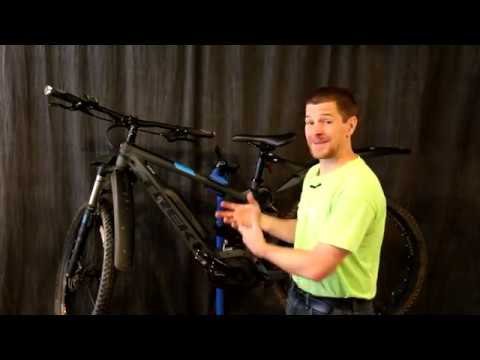
E-bike speed limiters control how fast your bike can go using sensors, controllers, and firmware settings. Different e-bike classes have different legal speed limits, and manufacturers use various systems to enforce these restrictions.
A speed limiter is a built-in system that stops your e-bike motor from providing power once you reach a certain speed. The motor doesn’t physically brake your bike. It just cuts off electrical assistance.
Your e-bike can still go faster than the limit if you pedal hard or go downhill. The limiter only controls when the motor helps you.
Most e-bikes sold in the US come with speed limiters set by the manufacturer to meet legal requirements. These settings determine which class your e-bike falls under and where you can legally ride it.
Your e-bike uses a speed sensor magnet attached to your wheel or motor to track how fast you’re moving. This magnet passes by a sensor with each wheel rotation, sending signals to the motor controller.
The controller calculates your speed based on these signals. When you hit the programmed limit, it reduces or stops power to the motor.
Some systems use GPS or internal motor sensors instead of wheel magnets. The controller contains firmware with the speed limit programmed into it. This firmware tells the motor when to cut power based on the speed data it receives.
Class 1 e-bikes provide pedal assistance only, with no throttle, up to 20 mph. The motor stops helping once you reach this speed.
Class 2 e-bikes include a throttle and pedal assist, both limited to 20 mph. You can use either the throttle or pedal to get motor assistance.
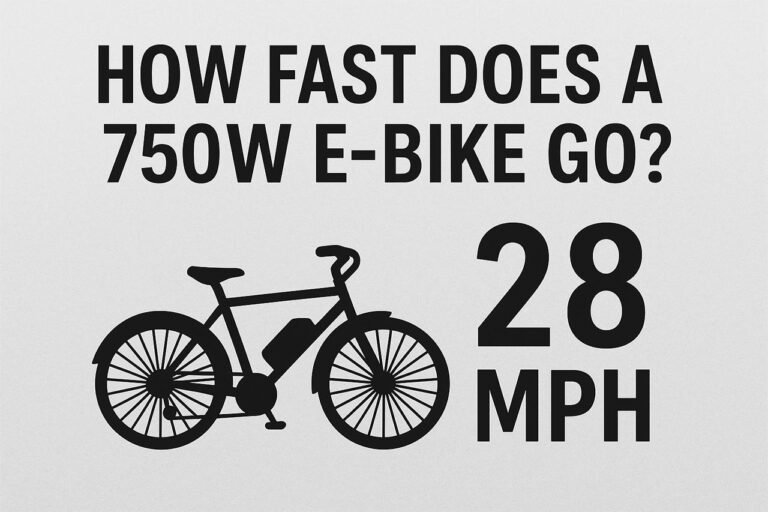
Class 3 e-bikes offer pedal assist up to 28 mph. Most Class 3 bikes don’t have throttles, or the throttle only works up to 20 mph while pedal assist goes to 28 mph.
These classifications affect where you can legally ride. Many bike paths and trails restrict Class 3 e-bikes because of their higher speeds.
Mechanical limiters use physical components like the speed sensor magnet and wire connections. You can sometimes adjust these by moving the magnet position or changing wheel size settings.
Firmware limiters store speed restrictions in the motor controller’s software. These require reprogramming or replacing the controller to change. Many manufacturers lock their firmware to prevent modifications.
Display-based limiters let you adjust some settings through your bike’s screen or app. Some brands offer different modes or regions with varying speed limits built into the display options.
Communication protocol limiters use encrypted signals between the display, controller, and motor. These systems are harder to modify because all components must communicate correctly for the bike to work.
Removing your e-bike’s speed limiter can lead to legal penalties, void your warranty, and create serious safety hazards. Laws vary by location, and faster speeds increase crash risks and component wear.
Most U.S. states follow a three-class system that defines legal e-bike operation. Class 1 e-bikes provide pedal assistance up to 20 mph with no throttle. Class 2 e-bikes include a throttle and max out at 20 mph. Class 3 e-bikes offer pedal assistance up to 28 mph.
Your e-bike must meet these speed limits to remain street-legal. Many states require Class 3 riders to wear helmets and restrict where you can ride.
European Union regulations limit e-bikes to 15.5 mph (25 km/h) with 250-watt motors. Exceeding these limits reclassifies your bike as a motor vehicle requiring registration, insurance, and a license.
Removing your speed limiter can result in fines ranging from $100 to $1,000 depending on your location. In some areas, police can confiscate modified e-bikes.
You may face liability issues if you cause an accident on a modified e-bike. Insurance companies can deny claims when they discover unauthorized modifications. Some jurisdictions classify modified e-bikes as mopeds or motorcycles, requiring proper licensing and registration.
Riding a modified e-bike on bike paths or trails can result in trespassing charges. Many municipalities ban motor vehicles from these areas, and your altered e-bike no longer meets the legal definition of a bicycle.
Speeds above your e-bike’s design limit stress the frame, brakes, and wheels beyond their tested capacity. Your stopping distance increases significantly at higher speeds, and standard e-bike brakes may not provide adequate stopping power.
Modifying your e-bike voids the manufacturer’s warranty. You lose coverage for the motor, battery, frame, and all components. If something breaks, you pay for all repairs.
Battery fires become more likely when you push systems beyond their design parameters. Higher speeds also drain your battery faster and can cause permanent damage to cells, reducing their lifespan by 30-50%.
You need to know your bike’s specific system, gather the right tools, and follow safety steps before you start any modifications.
Your ebike uses one of three main speed limiting methods. Controller-based limits are programmed into the motor controller software. Sensor-based limits rely on wheel speed sensors that cut power at a set speed. Display-based limits are set through the LCD or LED screen settings.
Check your owner’s manual or manufacturer website to identify which system your bike uses. Look at the motor brand (Bafang, Bosch, Shimano) because each uses different limiting methods. Most hub motors use controller or display limits, while mid-drive motors often combine sensor and controller restrictions.
You can identify sensor-based systems by locating a magnet on your wheel spokes and a sensor on the frame. Display-based systems let you access settings through button combinations on your screen. Controller-based systems require opening the controller housing to access internal components.
Basic Tools Needed:
System-Specific Equipment:
| System Type | Required Items |
|---|---|
| Controller-based | Programming cable, computer with software |
| Sensor-based | None (magnet repositioning only) |
| Display-based | Access to display menu |
Keep your bike’s manual handy for wiring diagrams and specifications. Have your phone ready to document wire colors and connections before you make changes. A headlamp or work light helps you see connections clearly.
Removing your speed limiter may void your warranty. Contact your manufacturer to understand warranty terms before proceeding.
Check your local laws about ebike speed limits. Many areas restrict ebikes to 20 mph or 28 mph on public roads and bike paths. Operating above these speeds can reclassify your bike as a motor vehicle requiring registration and insurance.
Pre-Work Checklist:
Wear safety glasses when working near electrical components. Keep metal tools away from battery terminals to prevent shorts.
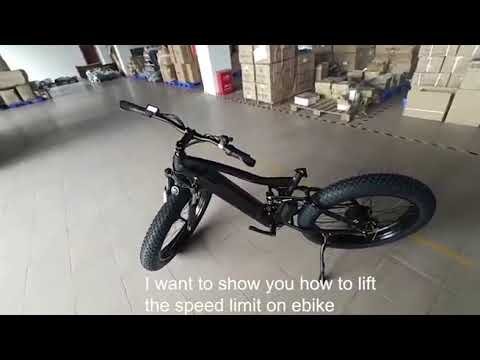
Most e-bikes use software controls, speed sensors, or wiring configurations to enforce speed limits. You can bypass these systems through software adjustments, sensor modification, or wire alterations.
Many modern e-bikes use display units or controllers that store speed limit settings in their firmware. You can access these settings through the bike’s LCD display menu or by connecting the controller to a computer using a programming cable.
Some manufacturers like Bosch, Brose, and Yamaha require specific software tools to adjust parameters. Generic Chinese controllers often allow direct menu access by holding certain button combinations during startup.
Common software modification steps:
This method works because the controller calculates speed based on wheel rotations and the programmed wheel diameter. Changing the diameter from 26 inches to 40 inches will effectively raise the speed cutoff proportionally.
The speed sensor system uses a magnet attached to your wheel spoke and a sensor mounted on the fork or frame. When the magnet passes the sensor, it sends a pulse to the controller to calculate your speed.
You can remove the speed sensor magnet from the spoke entirely. Without magnet passes, the controller receives no speed data and may not enforce the limiter. Some systems will throw an error code or limit power when they detect no sensor input.
A better approach is relocating the magnet further from the sensor. Moving it 2-3 inches away reduces signal strength enough that the controller receives fewer pulses and reads a lower speed than actual.
Sensor modification options:
Speed limiter wiring connects the sensor, controller, and display in a specific circuit. You can interrupt this circuit by disconnecting or cutting the speed sensor wire where it plugs into the main controller.
The speed sensor wire is typically a thin three-wire cable (power, ground, signal) running from the fork or chainstay to the controller housing. Unplugging this connector prevents speed data from reaching the controller.
Some riders cut and cap the signal wire rather than unplugging the entire connector. This maintains the physical connection while breaking the data transmission. You’ll need electrical tape or heat-shrink tubing to insulate any exposed wire ends.
Warning: Modifying wiring can void warranties and may violate local e-bike regulations that classify vehicles by maximum assisted speed. Check your local laws before making permanent changes.
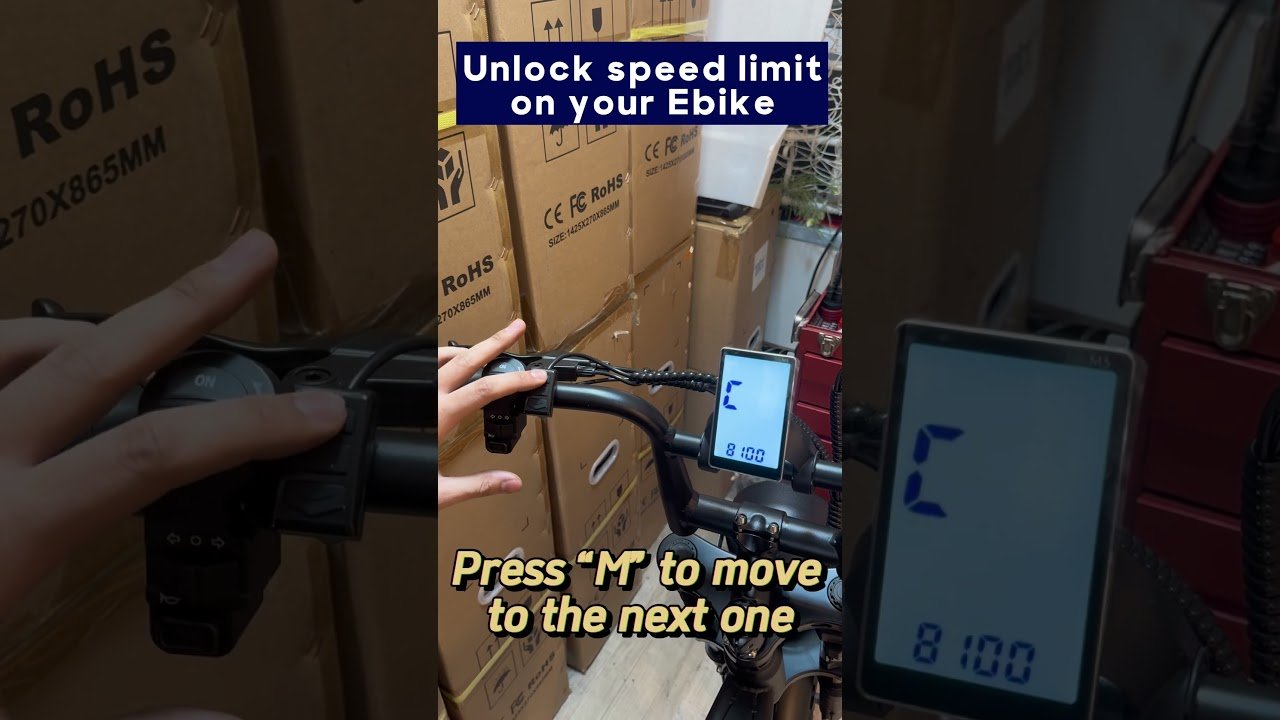
Removing the speed limiter requires you to access your bike’s controller, identify the limiting component, make a physical or software change, and verify the results. The process differs based on whether your bike uses a wired connection, a removable plug, or controller settings.
You must power off your ebike completely before starting any work. Turn the key to the off position and remove the battery to eliminate any risk of electrical shock or accidental motor activation.
Place your bike on a stable work stand or flip it upside down so it rests on the handlebars and seat. This position gives you clear access to the controller area and wiring.
Keep your workspace clean and well-lit. Have a phone or camera ready to photograph wire connections before you disconnect anything. These photos will help you reconnect everything correctly later.
The controller is typically a metal box mounted near the bottom bracket, inside the frame, or attached to the rear rack. Look for a component about the size of a deck of cards with multiple wires running into it.
Once you find the controller, examine the wire harness coming from it. Many ebikes have a white connector with a single wire looping back into itself. This is often the speed sensor wire that limits your top speed.
Some bikes use a color-coded wire system. The limiting wire is frequently white, but it can also be green, yellow, or unmarked. Check your bike’s manual or manufacturer documentation to identify the correct wire.
For plug-style limiters: Simply unplug the white connector loop from the controller harness. Leave both ends unplugged and secure them with electrical tape so they don’t touch metal parts or other wires.
For hardwired systems: You may need to cut a specific wire, but verify which one first through your manufacturer’s documentation or ebike forums specific to your model. Never cut wires unless you’re certain of their function.
Some controllers require entering a settings menu through the display. Access the parameter settings (often by holding both up and down buttons), then change the speed limit value from the default to your desired maximum.
Reinstall your battery and power on the bike. Check that the display functions normally and shows no error codes.
Take your bike to a safe, private area away from traffic. Start pedaling and gradually increase speed while monitoring your display. The bike should now exceed its previous maximum speed.
If the limiter is still active, double-check your connections and ensure you modified the correct component. Some bikes have multiple limiting systems that work together, requiring you to address both software settings and physical connections.
Record your new top speed and monitor your bike’s performance over the next few rides. Watch for any unusual battery drain, motor overheating, or error messages that might indicate a problem with your modification.
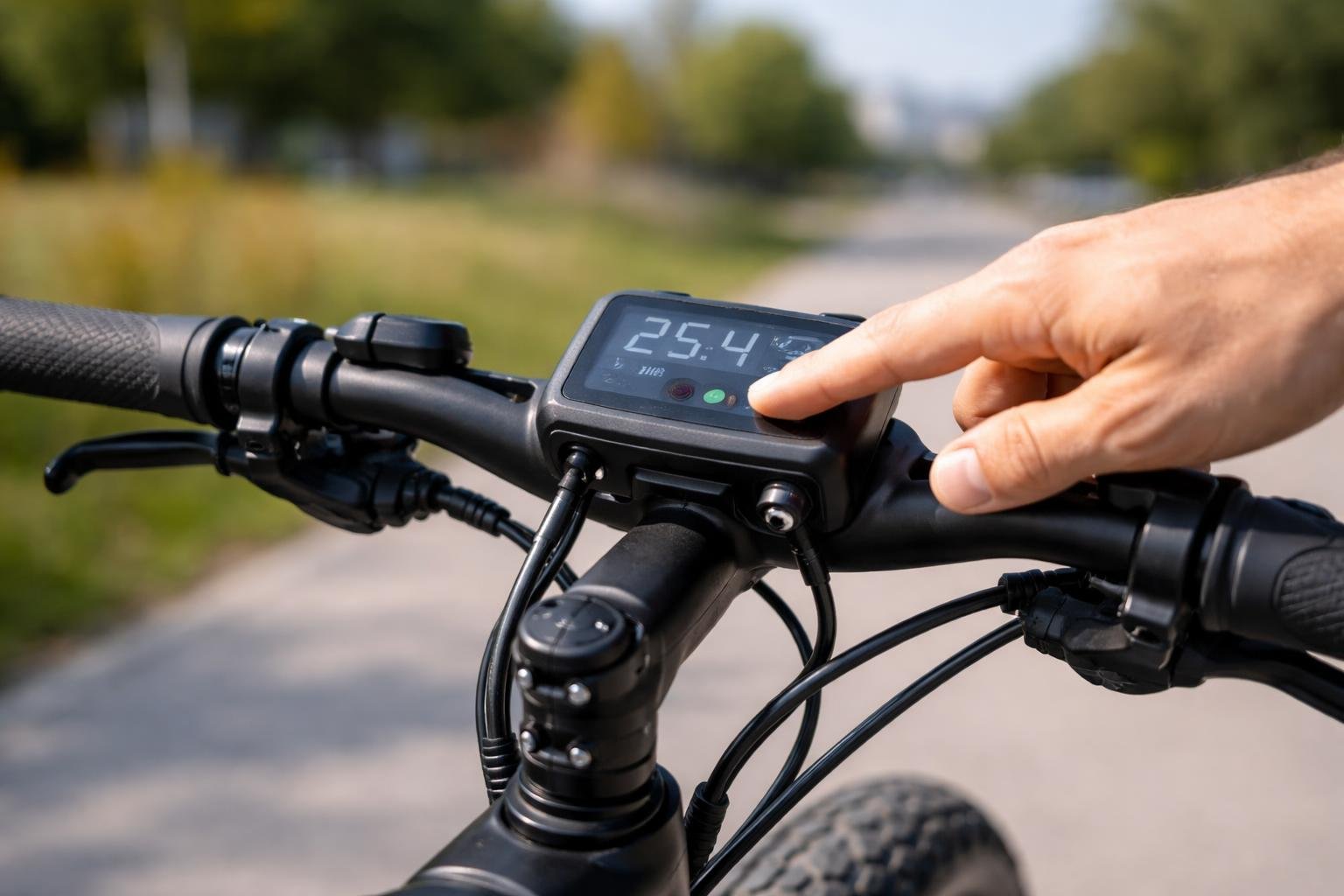
Removing your speed limiter puts extra stress on your motor and battery, voids warranties, and drains power faster than normal riding.
When you increase e-bike speed beyond factory settings, your motor works harder to maintain higher speeds. The motor generates more heat because it’s operating outside its designed parameters.
Most e-bike motors are built to handle specific power loads. Pushing past 20 or 28 mph forces the motor to draw more current from the battery. This extra current creates heat that can damage the motor’s internal components over time.
Your battery faces similar problems. Higher speeds mean higher power consumption, which stresses the battery cells. The increased load can cause cells to degrade faster and may lead to overheating during rides.
Speed limiter removal immediately voids your manufacturer’s warranty. Companies like Bosch, Shimano, and Brose explicitly state that tampering with speed settings cancels warranty coverage.
If your motor fails after you remove the limiter, you’ll pay for repairs out of pocket. Motor replacements typically cost $500 to $1,500 depending on the brand.
Your insurance may not cover accidents that happen while riding an altered e-bike. Some policies require that your bike meets legal speed requirements. If you get into an accident on a modified bike, your claim could be denied.
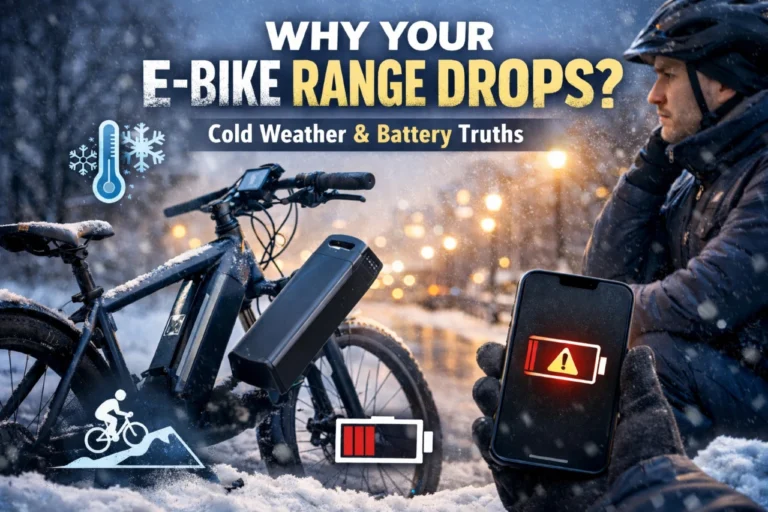
Your battery drains significantly faster at higher speeds. Riding at 28 mph instead of 20 mph can reduce your range by 30-40%.
Speed vs Range Impact:
| Speed | Approximate Range Loss |
|---|---|
| 20 mph | Baseline |
| 25 mph | 20-25% reduction |
| 28+ mph | 30-40% reduction |
Battery cells wear out faster under constant high-draw conditions. A battery that normally lasts 800-1,000 charge cycles might only last 500-600 cycles when regularly used at higher speeds. That means replacing your battery sooner, which costs $400 to $900 depending on capacity and brand.
You can boost your e-bike’s performance without breaking laws or voiding warranties through proper maintenance, upgrading to a faster legal class, or adding approved performance parts.
Your e-bike loses speed when basic components wear down or aren’t properly maintained. A clean drivetrain alone can improve efficiency by 3-5%.
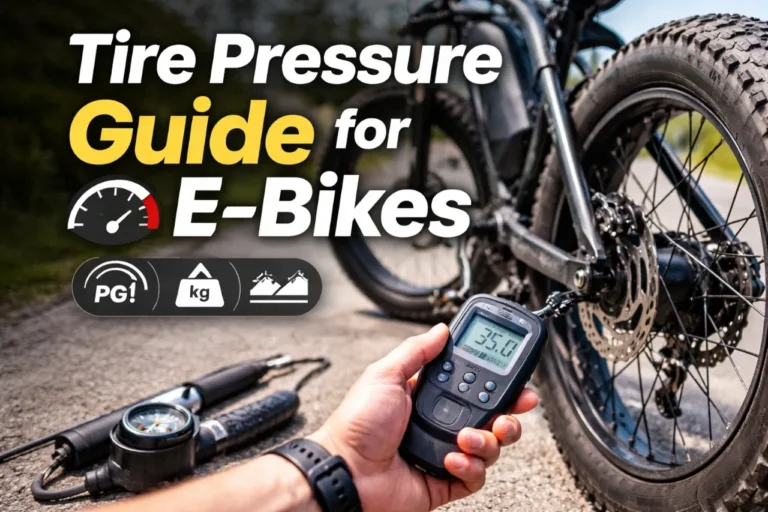
Check your tire pressure weekly. Under-inflated tires create rolling resistance that drains battery power and reduces top speed. Most e-bike tires perform best at 50-65 PSI.
Lubricate your chain every 100-200 miles. A dry or rusty chain wastes energy through friction. Clean off old lubricant first, then apply fresh e-bike specific lube.
Key maintenance tasks:
A Class 3 e-bike legally assists up to 28 mph in most U.S. states, compared to 20 mph for Class 1 and Class 2 models. This upgrade gives you 40% more assisted speed without modifications.
You’ll need to verify your local laws first. Some cities and bike paths restrict Class 3 e-bikes or require helmets and age minimums. California, for example, requires riders to be 16 or older for Class 3 e-bikes.
The cost ranges from $1,500 to $5,000 for quality Class 3 models. Brands like Trek, Specialized, and Gazelle offer models with 28 mph motors that meet federal safety standards.
Your e-bike manufacturer may offer approved upgrades that increase e-bike speed within legal limits. These modifications maintain warranty coverage because they’re designed for your specific model.
Approved upgrades include:
Contact your e-bike manufacturer before buying aftermarket parts. Some companies like Bosch and Shimano provide performance modes through software updates that optimize existing hardware.
Removing an e-bike speed limiter carries legal risks and safety concerns, but understanding when it might make sense and where to find reliable information helps you make informed decisions.
You should only consider removing your e-bike speed limiter in specific situations. If you ride exclusively on private property where traffic laws don’t apply, removal won’t result in legal penalties. Off-road trails and closed courses are the main scenarios where faster speeds are both legal and practical.
Speed limiter removal is not worth the risk if you commute on public roads. You’ll lose insurance coverage, face potential fines, and put yourself at higher legal liability in accidents. Most areas classify modified e-bikes as motor vehicles that require registration and licensing.
The warranty on your e-bike becomes void the moment you tamper with factory settings. Motor damage from sustained high speeds costs $500-$1,500 to repair out of pocket.
The Consumer Product Safety Commission defines e-bike classifications and federal speed limits. Your state’s Department of Motor Vehicles website lists local e-bike regulations and whether modified bikes need registration.
Check PeopleForBikes for updated state-by-state e-bike laws. This database covers where Class 1, 2, and 3 e-bikes can legally ride.
Your e-bike manufacturer’s manual includes technical specifications and warnings about speed limiter removal. The manual explains warranty terms and lists which modifications void coverage. Keep these documents if you ever need to prove your bike’s original configuration.