Real rides. Real notes. No hype.

The Funhang EB-S1 is a stable budget fat-tire e-bike with rack, big fenders, and strong visibility features, but it is heavy and uses mechanical brakes.
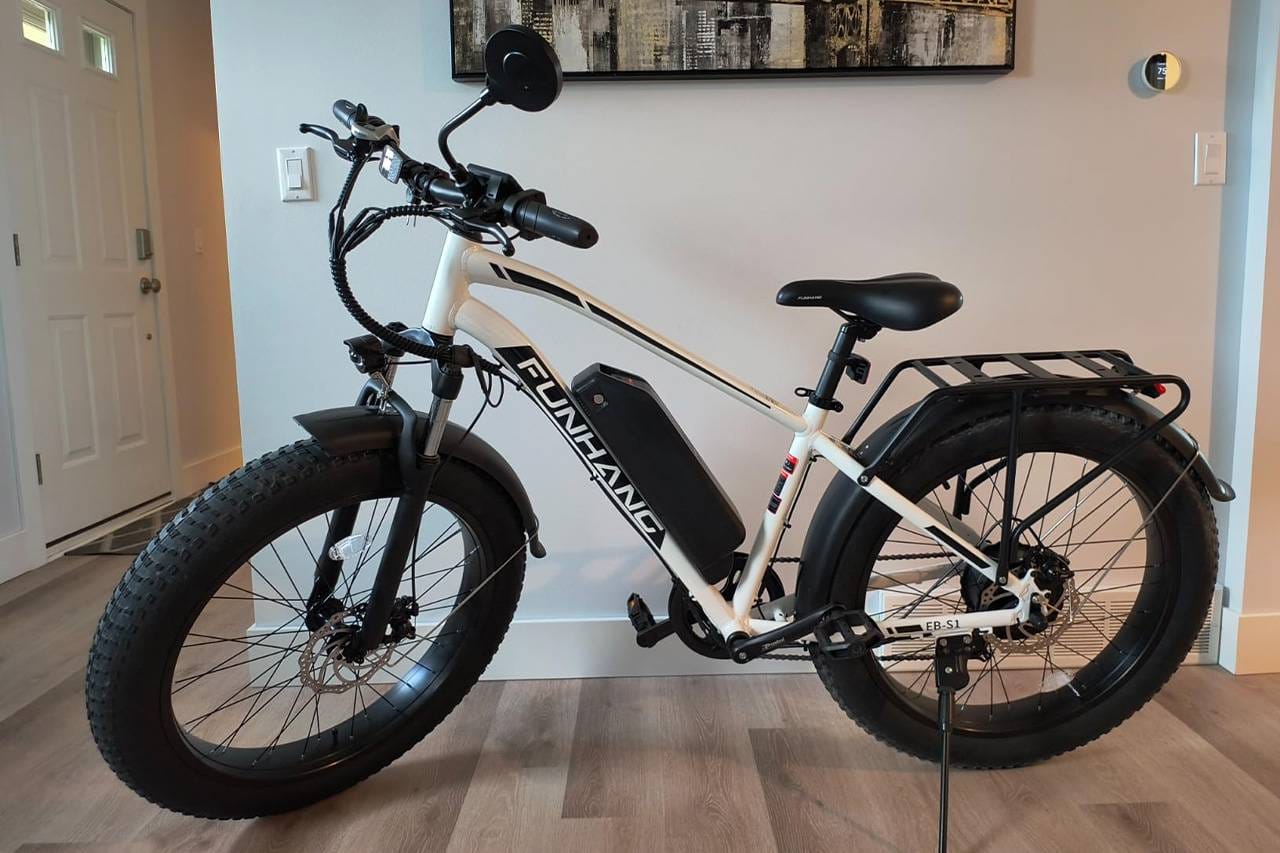
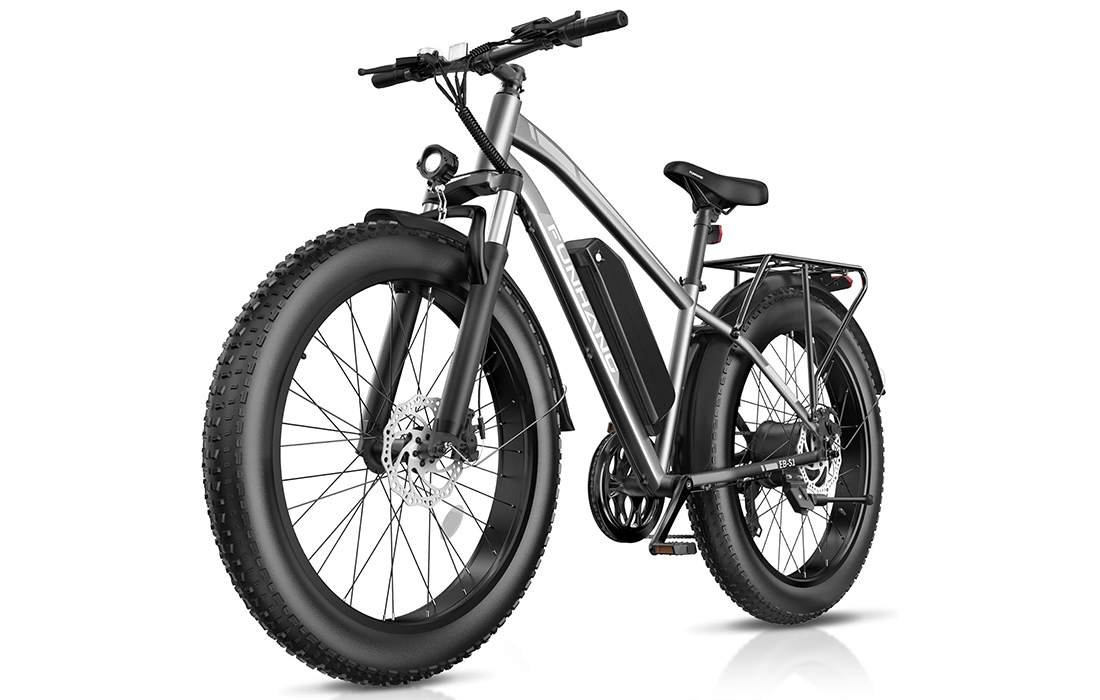
A stable, feature-complete fat-tire e-bike with rack, big fenders, and strong visibility touches, but the weight and mechanical brakes are real trade-offs.
Bottom line: The Funhang EB-S1 is a strong value if you want a stable, fully-equipped fat-tire e-bike for commuting and errands, but its weight and budget-level brakes/suspension make it a poor fit for walk-up apartments or aggressive hill riding.
Best for: Riders who want an “out-of-the-box complete” budget e-bike (rack + big fenders + lights + turn signals) for mixed pavement, rough city streets, and light gravel.
3-line decision summary
Below is what matters for buying decisions, plus what I actually observed vs what’s only claimed.
| Field | Value / Notes |
|---|---|
| Motor | 500W rated hub motor, 1000W peak (claim); torque listed at 66.6 N·m (claim) |
| Battery | 48V 13Ah removable battery (claim) |
| Claimed range | 30–35 mi (throttle) / 55–60 mi (PAS) (claim) |
| Realistic range (my expectation @ ~180 lb) | ~28–30 mi throttle / ~35–45 mi typical mixed / ~55–60 mi PAS on flatter routes (real-world expectation; not a cutoff test) |
| Top speed | Can be ~21–22 mph limited; up to ~25 mph in higher/unlocked settings (claim + my GPS-based peak observation) |
| Bike weight | Listed around ~68–73 lb depending on version; in real use it feels heavy |
| Payload capacity | 330 lb max (claim) |
| Brakes | Dual 180mm mechanical disc brakes (claim; matches feel) |
| Tires | 26” × 4.0” fat tires (claim) |
| Suspension | Basic front suspension fork (claim; matches feel) |
| Key extras | Rear rack, front + rear fenders, headlight, brake taillight + turn signals, display, horn (observed/used) |
| Score (for this price class) | Performance 7/10 • Comfort 7/10 • Build 6.5/10 • Ownership 6.5/10 • Value 8.5/10 |
1) It’s a heavy bike.
2) Mechanical disc brakes are capable, but not “easy” like hydraulics.
3) The front suspension is basic.
4) Cadence-sensor assist feels less natural than torque-sensor bikes.
Measurement notes (limits):
Conclusion: The EB-S1 has strong “budget hub-motor punch” that feels responsive without being wildly jerky.
From a stop, the bike gets moving with a satisfying push, especially when you combine moderate PAS with a touch of throttle. The assist ramps in a predictable way for this class, so it doesn’t feel like it’s trying to yank you forward unexpectedly—an underrated trait for newer riders.
Boundary: It still feels like a cadence-sensor bike, so the assist timing is not as “instant and proportional” as a torque-sensor system.
Conclusion: It cruises comfortably in the low 20s, with enough headroom to touch the mid-20s depending on settings and conditions.
In real use, the bike feels happiest when you’re rolling at commuter speeds where stability matters more than razor-sharp handling. I saw a ~25 mph GPS-based peak during a speed check, but many riders will experience something closer to ~21–22 mph if the bike is configured to a more typical limit.
Boundary: The faster you push a heavy fat-tire e-bike, the more you notice wind drag and rolling resistance.
Conclusion: It handles short-to-moderate hills confidently with PAS 4–5 or throttle support, but it’s not a mid-drive climber.
On normal city slopes and mixed terrain, it has enough pull to avoid that “bog down” feeling that weaker budget bikes get. You can keep momentum without constantly hunting for the perfect gear, and the throttle can fill in the gaps when you need a quick boost.
Boundary: On long, steep climbs, you’ll still feel the limits of a hub motor plus a heavy fat-tire build—especially if you’re asking for high speed uphill.
Conclusion: It feels stable and confidence-inspiring, especially for beginners, but it’s not nimble.
The wide tires and upright posture create a planted ride that feels reassuring over rough pavement. The trade-off is that tight maneuvers and quick line changes feel slower than on a lighter commuter bike.
Boundary: If your priority is agile handling (or carrying it through doors), a lighter tire setup and frame style will suit you better.
Conclusion: The listed range is achievable in the right conditions, but most riders should plan around “typical” numbers, not the headline.
For a 48V 13Ah battery on a 26×4.0 fat-tire bike, here’s what makes sense for real-world planning:
Top range killers on this bike: higher cruising speed, frequent hills/stop-go, and soft fat tires (low pressure increases drag).
Translate to life: If your commute is ~6 miles round trip, “typical” range is roughly 5–7 commute days per charge depending on your speed and assist level.
Conclusion: The removable battery design is practical, and charge time is reasonable for the capacity.
Charging time is around 6.5 hours by the listed information, which feels appropriate for a 13Ah pack. The removable setup is helpful if you store the bike in a garage but charge indoors.
Boundary: Battery longevity and real-world weather sealing depend heavily on how you store it, how often you deep-discharge, and how consistently the pack is protected from extreme cold/heat.
One-line range reality: For a ~180 lb rider on mixed terrain, plan on ~35–45 miles typical and treat 55–60 miles as a flatter-route, moderate-speed PAS scenario.
Conclusion: The fit window is broad for a budget bike, but shorter riders should pay attention to standover and reach.
The recommended height range is roughly 5’3″–6’2″. At 5’10”, the bike fits naturally with an upright posture that works well for commuting and casual rides.
Boundary: If you are near the shorter end, mounting and stopping confidence matters more than “recommended height” on a spec sheet—test your ability to put a foot down comfortably.
Conclusion: Comfort is strong for the price for 30–45 minute rides, but the long-ride weak points are still the usual budget suspects.
The wide tires and upright geometry do a lot of work here. The saddle is serviceable, and the posture is relaxed enough that it doesn’t force you into a strained neck/wrist position.
Boundary: For 60+ minute rides, many riders will still prefer a saddle upgrade or small cockpit tweaks.
Conclusion: The front suspension helps with sharp bumps, but it’s not refined.
It takes the edge off potholes and rough patches, and the fat tires add another layer of comfort.
Boundary: If you ride chunky trails or want true off-road control, this is not a suspension system designed for that job.
Conclusion: For a budget mechanical setup, the brakes can stop hard when needed, but they demand more lever effort and tuning than hydraulics.
From higher speeds (including near 25 mph), the bike can slow down effectively, and the system feels “remarkably effective” when it’s adjusted correctly. That said, the feel is still clearly mechanical: less effortless bite, and less refined modulation.
Boundary: Wet roads and downhill loads are where you’ll most want better modulation and easier power.
Conclusion: The lighting package is unusually “complete” for the price, especially the brake light and turn signals.
In addition to the headlight, the brake taillight is a meaningful safety touch for nighttime riding. Turn signals and horn also add commuter practicality.
Boundary: Budget lights still benefit from good riding habits—slow down on unlit roads and consider supplemental lighting if you ride in very dark areas.
Conclusion: The bike feels predictable, which matters more than fancy features at this price.
PAS levels and throttle response are usable for stop-and-go riding without feeling chaotic.
Boundary: Riders seeking a smoother, more intuitive “pressure-based” assist feel should look for a torque sensor.
Conclusion: The EB-S1 feels solid for a budget utility build, but it still shows “value parts” in the brakes, fork, and assist system.
The bike’s overall structure and practical accessories are the standout: the rear rack, big fenders, and lighting system make it feel more complete than many price-matched competitors. I also did not notice major rattles even with the rack and fenders installed, which is a good sign for basic assembly quality.
Boundary: Long-term durability depends on early maintenance—keeping bolts tight, checking spoke tension, and staying on top of brake adjustment.
Conclusion: Setup is beginner-friendly and realistically takes about half an hour.
The bike arrives mostly assembled. The remaining steps are straightforward with included tools and the typical guided steps.
What took the longest: Aligning/adjusting the controls and doing a careful brake check so the levers feel consistent.
Conclusion: This is a “garage-friendly” utility e-bike, not a carry-and-store bike.
The rack is genuinely useful for a trunk bag and quick grocery trips, but the trade-off is weight and bulk.
Boundary: If you plan to lift it often, you’ll feel that decision every day.
Buy it if you are…
Skip it if you are…
Great fit only if…
Conclusion: Around $400, it’s a smart buy because the accessories and stability are strong for the money, but it stops making sense if the price climbs too close to higher-spec competitors.
EOEOTWO E01 (1500W peak class): Better if you want higher speed headroom and more aggressive performance, but it costs more and may be less “commuter practical” depending on accessory setup.
CTVVXXC EB2 PRO Dual Motor (52V 34Ah): Better if your priority is raw power and long range, but it’s a more extreme build that can be heavier and less beginner-friendly in everyday handling.
Jasion EB5 MAX (1500W peak / larger battery class): Better if you want a stronger performance-per-charge balance, but you’ll likely pay more and still need to evaluate brake quality and total weight.
Is the Funhang EB-S1 good for hills?
It’s good for normal city hills and short-to-moderate climbs, especially in higher assist levels or with throttle support. It is not the best choice for long, steep daily climbs.
Is it comfortable for 60-minute rides?
Comfort is strong for the price thanks to fat tires and upright posture. For frequent 60+ minute rides, most riders benefit from saddle/cockpit tuning.
Does it feel stable above 20 mph?
Yes, stability is one of its strengths. The trade-off is that it feels less nimble than lighter commuter bikes.
Are the brakes “good enough”?
They can stop effectively when adjusted well, but mechanical brakes require more hand effort and more frequent tuning than hydraulics—especially in wet conditions or downhill loads.
Is the battery easy to remove and charge?
The removable design is convenient for indoor charging. The real deciding factor is whether you can store the bike at ground level, because the bike itself is heavy.
What wears out first on bikes like this?
Typically: brake pads (and brake adjustment), chain/drivetrain wear if ridden hard, and tire/tube maintenance. Regular bolt checks matter more on rack + fender builds.
Is the EB-S1 suitable for heavier riders?
The listed capacity is high for the category, but heavier riders benefit from careful brake setup and realistic range expectations—speed and hills will reduce range faster.
My final take: The Funhang EB-S1 is a practical budget fat-tire e-bike that feels stable and feature-complete, but it’s heavy and clearly built to a price.
Best for: Commuters and errand riders who want rack + fenders + lights without spending much.
Biggest downside: The weight and mechanical-brake/suspension “budget feel” show up most in stairs, wet braking, and long downhills.
Smart buy if price is: Strong value around the ~$400 range; less compelling if it approaches mid-tier pricing.
| Preview | Product | Price | |
|---|---|---|---|

|
Funhang Electric Bike for Adults, 1000W Peak Ebike, 25MPH 60Miles Electric Mountain Bike, 26″ Fat… | $429 | View on Amazon |