Real rides. Real notes. No hype.

I tested the ESKUTE V200 on city streets and moderate hills at 180 lb: big 998Wh range, confident 20x4 tires, plus honest drawbacks.
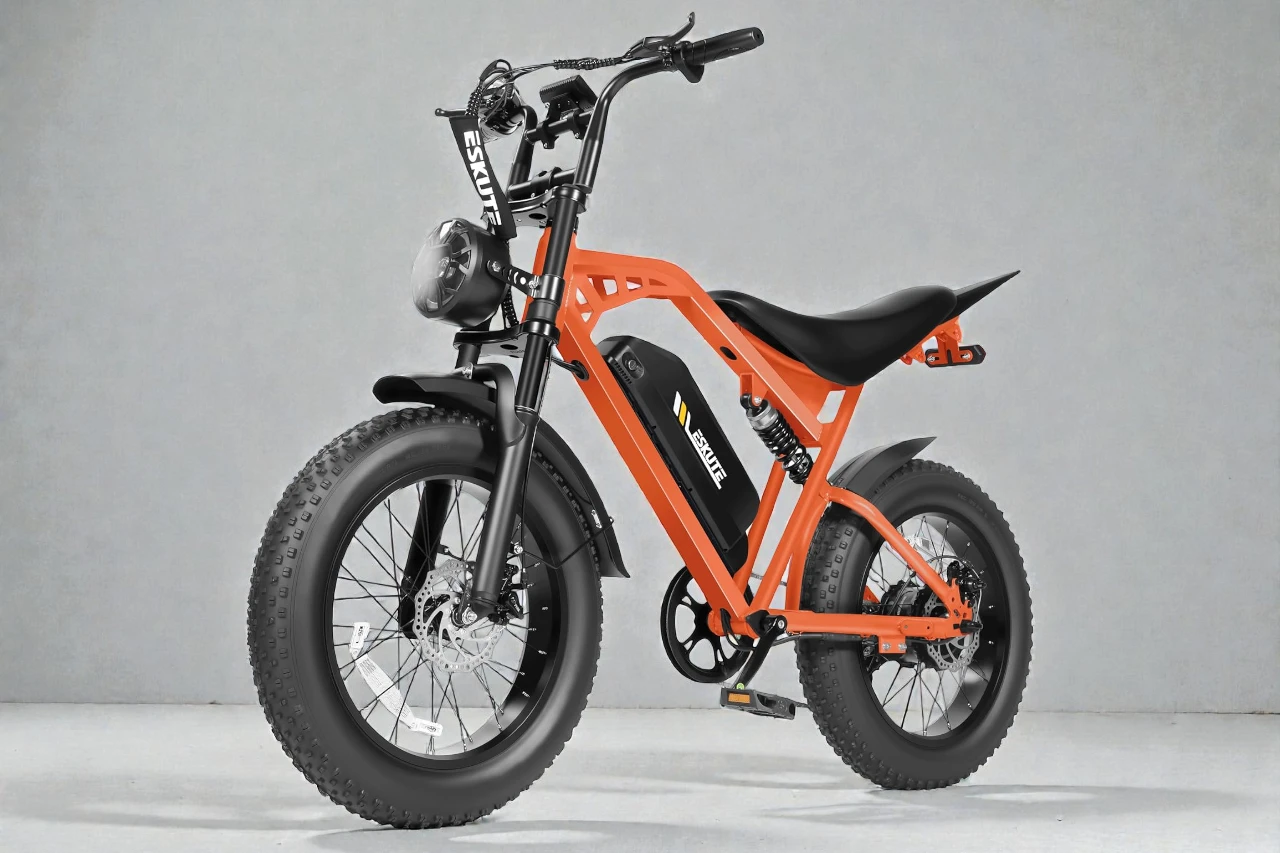
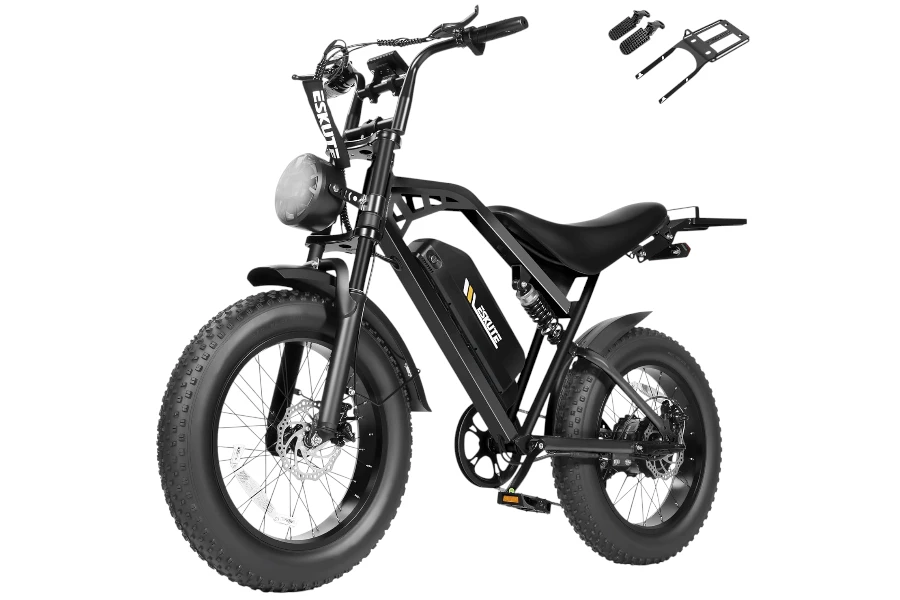
A stable 20×4 fat-tire “mini moto” with a huge 998Wh battery—awesome for mixed commutes and weekend exploring, but heavy and not a premium-brake setup.
The ESKUTE V200 is a compact, moto-styled 20-inch fat tire e-bike built around a huge 48V 20.8Ah battery and a punchy “up to 1300W peak” motor. On paper, it’s aimed at riders who want a tough little all-terrain machine that can commute during the week, then handle dirt, sand, and rough paths on weekends—without constantly thinking about range.
I tested it as a ~180 lb, 5′10″ rider on city streets with moderate hills, mostly using PAS 2–5 for commuting and longer weekend rides. The headline for me: it’s a confidence-inspiring, go-anywhere fat tire ride with genuinely useful battery capacity—but it also comes with some real trade-offs in weight, braking hardware, and efficiency.
Best for: Riders who want a compact, stable fat tire e-bike with long range for mixed commuting + weekend exploring (and don’t mind a “mini moto” pedaling feel).
Why I like it: The battery size changes how you use the bike—long rides feel realistic, not like a gamble.
Watch out for: It’s not a lightweight bicycle experience. The V200 rides like a small, sturdy machine, and the cable-disc braking setup needs attention if you plan to cruise near its top speed often.
Test conditions:
The V200 sits in that “mini moto / compact fat tire” category: 20×4.0 tires, a long bench-style saddle, and a tough-looking frame that leans more rugged than sporty. It’s not trying to be a nimble, lightweight pedal bike. It’s trying to be stable, forgiving on rough surfaces, and easy to live with if your routes include broken pavement, gravel shoulders, sandy paths, or sloppy weather.
The feature set leans practical-with-a-tech-twist: a mid-mounted color display, NFC unlock, dual suspension, and a big battery that’s clearly the center of the whole design.
| Item | What you’re getting |
|---|---|
| Motor | 1300W peak brushless (claimed) |
| Battery | 48V 20.8Ah (~998Wh) |
| Claimed Range | Up to 80 miles |
| Claimed Top Speed | Up to 29 mph |
| Drivetrain | Shimano 7-speed |
| Brakes | Cable disc brakes |
| Tires | 20″ × 4.0″ fat tires |
| Suspension | Dual suspension |
| Frame | High carbon steel |
| Notable features | NFC unlock, color display, headlight + rear light, BMS, IPX5 claim |
In PAS 2–3, the V200 feels like it has plenty in reserve. Pulling away from lights is easy, and it doesn’t require “perfect pedaling” to get moving. It’s the kind of e-bike where I could be lazy for the first few pedal strokes and the motor still helps the bike roll cleanly into traffic gaps.
Cruising in the low-to-mid 20 mph zone felt stable, but not “featherlight.” The bike tracks straight and doesn’t get twitchy, which is exactly what I want from a fat tire platform. The trade-off is that it’s not quick to change direction like a lighter commuter—especially when you’re weaving around street obstacles.
PAS 4–5 is where the V200 starts to feel like a small machine rather than a bicycle. The motor assistance is strong enough that I found myself choosing lanes and braking distances more like a moped rider than a cyclist. The claimed 29 mph is believable on flats with enough runway, but the experience is less about hitting a number and more about how the bike holds speed steadily once it’s there.
Motor noise stayed reasonable—more of a steady electric hum than an angry whine. It’s not silent, but it didn’t draw the kind of attention that some high-output hub motors do when they’re working hard.
On moderate hills, the V200’s big advantage is that it doesn’t collapse into “slow grind mode” immediately. I could stay in PAS 3–5 and keep momentum without feeling like I needed to mash the pedals. For commuting, that matters: it means less sweating, less gear hunting, and fewer awkward slow sections where you’re trying to balance a heavy bike at low speed.
Short hill test (how it felt): On a steady climb where I’d normally drop gears and accept a slower pace, the V200 still felt composed—traction stayed solid, and the bike didn’t get squirrelly even when the surface turned dusty or uneven.
A 48V 20.8Ah battery is simply a lot of energy. In real life, it means you stop riding “defensively.” I wasn’t constantly saving power “just in case.” I rode in the PAS range that felt good for traffic flow, hills, and comfort—because I could.
The listing claims up to 80 miles, and I’ll say this carefully: that number isn’t crazy, but it’s conditional.
Your note that you hit 80 miles on a charge tracks with what a ~998Wh battery can do when conditions are friendly and you keep assistance efficient. The key is being honest about how sensitive range is to speed and PAS level.
With a 54.6V/2A charger and a 20.8Ah battery, you’re looking at a longer charge window—often in the “overnight” category. Practically, I treated it like this: ride it hard today, plug it in after dinner, and it’s ready the next morning.
If you’re the type who forgets to charge and hopes for quick top-ups, the V200 isn’t that. If you’re consistent about charging overnight, it’s easy.
This is not a traditional commuter posture. The long saddle and compact wheel format create a more upright, relaxed stance, and it encourages casual riding rather than performance pedaling. For commuting, I liked that it kept my head up and visibility good in traffic.
The downside is that “serious pedaling” can feel awkward compared to a normal bike saddle setup. On longer rides, I sometimes wished for a more classic bike cockpit feel—especially when I wanted to contribute more leg power at higher speeds.
Your experience matches mine: these 4-inch tires are the confidence button. Sand, snow, loose gravel, rough paths—this bike stays calm where skinny tire bikes get nervous. On rocky or choppy surfaces, the combination of tire volume and dual suspension takes the edge off impacts. That translates to fewer “micro-corrections” and less fatigue.
There are trade-offs, though:
At higher speeds, it holds a line well, which is what I want from a bike that can approach ~29 mph. At low speed (tight turns, parking-lot maneuvering), the bike feels heavier and more deliberate. It’s not hard to control, but it’s not “flickable.”
The V200 uses cable disc brakes, and that’s one of the first places I felt the bike’s budget priorities. They work, but they require more hand effort than hydraulic setups, and they’re more sensitive to adjustment. After a bit of riding, I had to pay attention to cable stretch and pad alignment to keep braking consistent.
At commuter speeds, it’s fine. At the upper end of what this bike can do, I want riders to be realistic: if you regularly ride fast, you need to keep the brakes dialed (and I’d personally consider better pads as a smart upgrade).
Traction is a strong point. Those fat tires give you a planted feel, especially on loose or imperfect surfaces. In wet conditions, the stability is reassuring—but stopping distances still come down to brake setup and tire compound.
You get a headlight and rear light, which is essential for commuting. My advice: treat them as “be seen” lights, not car-replacement floodlights. If you ride unlit roads often, you may still want more lighting.
Assembly was straightforward but not “five-minute easy.” I’d budget 60–90 minutes if you’re careful and you want everything aligned properly.
What I had to do:
The only “setup annoyance” for me was that cable disc brakes often need a second pass after the first few rides. That’s normal—but it’s still time you should expect to spend.
Can it really do 80 miles on a charge?
It can—under the right conditions. If you ride efficiently (lower PAS, moderate speed, smoother terrain), that big battery can stretch far. In mixed city + hills with PAS 2–5, I’d plan around ~55–65 miles and treat anything higher as a bonus.
Does the NFC unlock matter, or is it a gimmick?
It’s convenient when it works consistently, and it feels modern. But it also adds a “tech dependency.” I recommend making sure you’re fully comfortable with it during setup and having a routine so you’re not troubleshooting at the curb.
Is it a good choice for commuting every day?
Yes—if your commute includes rough roads or mixed surfaces and you value comfort + stability. If you need to carry the bike upstairs or store it in a tight apartment, the weight becomes a daily penalty.
What surprised me most?
How much the tire + suspension combo changes your confidence on sketchy surfaces. The bike feels willing to go places I’d avoid on a normal commuter setup—without feeling like it’s constantly trying to slide out.
Score: 8.2 / 10
One-line take: A high-value, big-battery fat tire e-bike that’s genuinely fun and capable—just don’t ignore the weight and the braking/charging realities.
If you want a compact, stable “mini moto” e-bike that can commute comfortably and still handle weekend terrain, the ESKUTE V200 makes a strong case—especially for riders who prioritize range and traction over sporty pedaling and lightweight handling. I’d buy it for mixed surfaces, longer rides, and the freedom of a battery that doesn’t feel fragile. I wouldn’t buy it if I needed a light bike, a premium brake feel out of the box, or a traditional cycling experience.
| Preview | Product | Price | |
|---|---|---|---|

|
Elecby Electric Dirt Bike Adults, 1300W Peak 42V20.8Ah ebike, 32MPH 20″ x4.0 Fat Tire, Streamlined… | View on Amazon |