ESKUTE T300 E-Trike Review: A Stable Errand Trike for Relaxed Neighborhood Rides

This ESKUTE T300 E-Trike review covers real-world comfort, stability, cargo use, and the downsides that matter—especially on hills and gravel.
Disclosure: As an Amazon Associate, we may earn from qualifying purchases at no additional cost to you.
Quick Verdict Disclosure: Purchased Tested: ~35–50 mi • ~6 rides

ESKUTE T300 E-Trike Review — Great for Errands, Not for Rough Gravel

A comfort-first electric trike that feels stable and easy to live with for neighborhood rides—just expect wider turns and more vibration on rough paths.

  • Best for: seniors and comfort riders who want an easy step-through trike for calm rides and grocery runs.
  • Skip if: your routes are mostly gravel/rough pavement, or you need tight, bike-like turning in narrow spaces.
  • Biggest strength: confidence-building stability + genuinely useful front and rear baskets for daily errands.
  • Biggest trade-off: you’ll want to slow down for turns, and rough surfaces can shake accessories loose.
Evidence snapshot: Rider 5′10″ / 180 lb • Terrain ~flat 70% / hills 30% • Surface ~pavement 85% / gravel 15% • Range test: not ridden to cutoff (week-one usage).

If you’re shopping for an electric trike, you’re usually not chasing speed—you’re chasing confidence. You want something that feels stable at low speeds, is easy to get on/off, and can carry real-world stuff (groceries, a bag, maybe even a small pet carrier) without feeling sketchy.

After a week of riding the ESKUTE T300 E-Trike almost every day, my overall takeaway is simple: this is a surprisingly capable “daily-errand” electric trike for calm routes and modest hills—especially for riders who prioritize stability and comfort over sporty handling. It does a lot right for the price, but it also has a few “trike realities” you need to accept before buying.

Quick Verdict

One-sentence verdict: The ESKUTE T300 is a strong value pick for steady, confidence-building errands and neighborhood cruising, but it’s not ideal for rough gravel routes or anyone who needs sharp handling on tight turns.

Best for:

  • Seniors or comfort-focused riders who want easy mounting + stable low-speed control
  • Local errands where you’ll actually use the front + rear baskets
  • Flat-to-moderate routes where 18 mph feels like plenty

Not ideal for:

  • Regular gravel/rough roads (it can shake accessories loose)
  • Tight spaces + frequent lifting (a folding trike is still big and heavy)
  • People who want a nimble “bike-like” ride (three wheels feel different)

Biggest strength: Everyday stability + practicality (step-through, backrest seat, real cargo space).
Biggest trade-off: Turning and rough-surface behavior—like most trikes, it needs slower cornering and calmer terrain.

Disclosure

  • How I got the bike: Purchased
  • Affiliate links in the article: Yes
  • What I did NOT test:
    • Full range test to shutdown (I did not ride it to complete cutoff)
    • Wet-weather braking and traction
    • Steep sustained climbs (mountain-style grades)
    • Long-term durability beyond the first week (spokes, hubs, battery aging)
  • Any version notes visible (firmware/production label/battery label): Not recorded for this review (I did not document production/firmware labels during setup).

Scorecard

  • Ride Feel: 7.8/10
  • Power (Real Use): 7.4/10
  • Range (Real Use): 7.2/10 (not fully stress-tested to cutoff)
  • Comfort: 8.3/10
  • Build & Serviceability: 6.9/10
  • Value: 8.6/10

At a Glance

  • Category: Folding electric trike (step-through, errand/cruiser style)
  • Motor: 500W rated (claimed), 1200W peak (claimed)
  • Battery: 48V 10.4Ah (499Wh), removable
  • Claimed range: Up to 55 miles (claim)
  • Realistic use case: Calm errands + neighborhood loops
  • Top speed: ~18 mph on throttle (my real-world observation)
  • Weight / payload (listing/graphics): Heavy trike; payload up to 400 lb (claimed)
  • Tires: 18” x 3.0” fat tires
  • Standout features: Rear differential, front & rear baskets, backrest seat, step-through frame

Real-World Test Setup

I’m 5′10″ and about 180 lb. This week was mostly about everyday usability: short rides, quick errands, and repeating the same familiar routes to see if the trike felt predictable.

  • Terrain: Mostly flat neighborhood roads with a few mild hills
  • Surfaces: Pavement first, then some gravel/rougher sections to see how it behaved
  • Assist usage: Mostly low-to-mid assist for cruising; higher mode for small hills
  • Throttle: Used for starts and for checking top assisted speed
  • Cargo: Light errand loads (typical “bag in the basket” weight), not maximum payload testing

Evidence Snapshot

Because I did not run a strict GPS “lab-style” log, this snapshot is based on a week of near-daily riding and trip meter estimates, focused on repeatable everyday routes.

  • Total rides: ~6 | Total distance: ~35–50 miles (estimate) | Test period: 7 days
  • Rider: 5′10″, ~180 lb | Cargo load: light errands (not max load tested)
  • Routes: flat ~70% / hills ~30% | pavement ~85% / gravel ~15%
  • Weather range: mild week; no extreme heat/cold testing
  • Tools used: Bike display (trip/speed), basic hand tools for assembly checks
  • What I verified vs claimed: Verified assembly time, real-world throttle speed (~18 mph), stability/handling behavior, and accessory behavior on gravel (mirrors loosening). Motor peak, max range, and certifications were not independently verified.

Measurement Notes

  • Speed: Display-based for most riding, with real-world confirmation via throttle behavior (not a controlled GPS speed run).
  • Range: Not measured to full cutoff; I did not do a “drain-to-zero” test.
  • Hills: Small neighborhood hills only (no repeated max-grade testing).
  • Limitations: My results are influenced by casual riding pace, surface quality, stop-and-go frequency, tire pressure, and cargo weight.

What Is the ESKUTE T300 E-Trike?

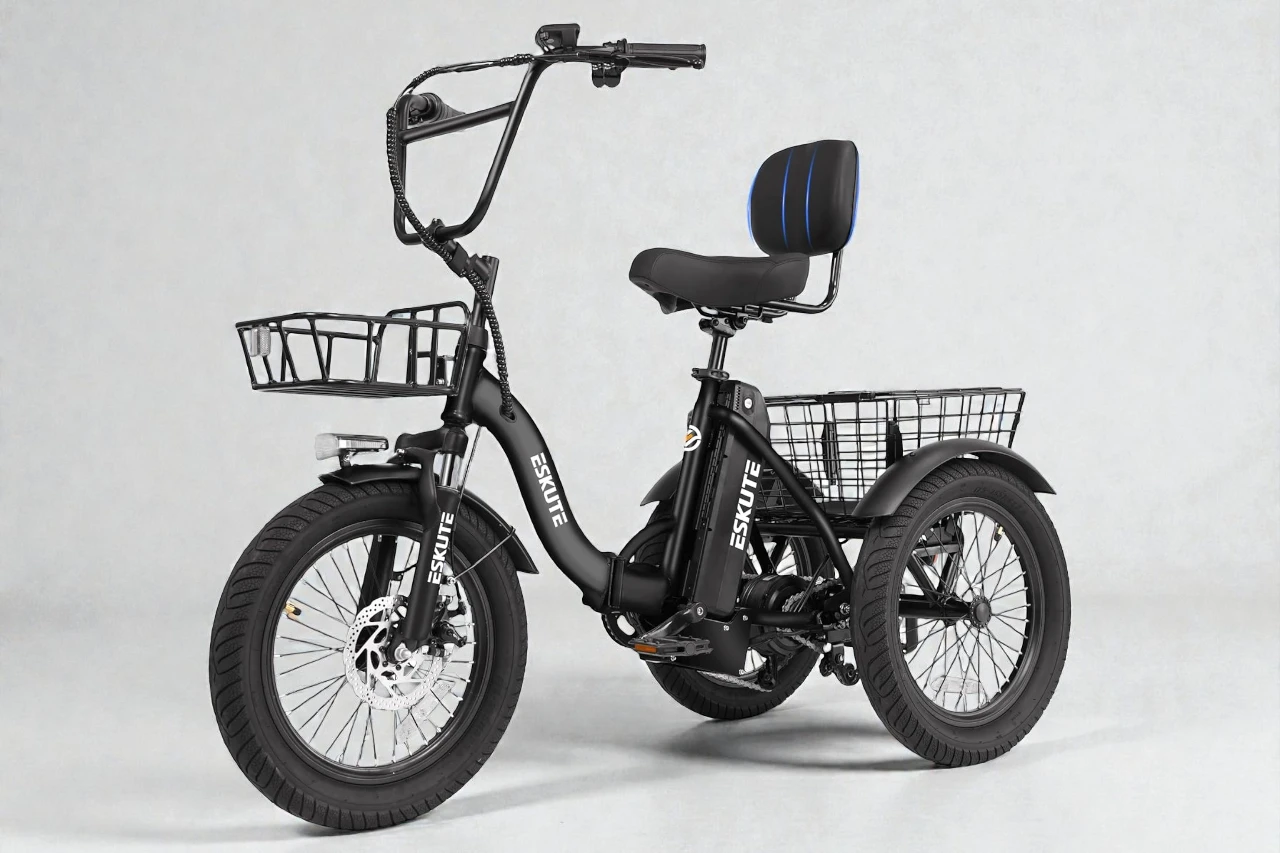
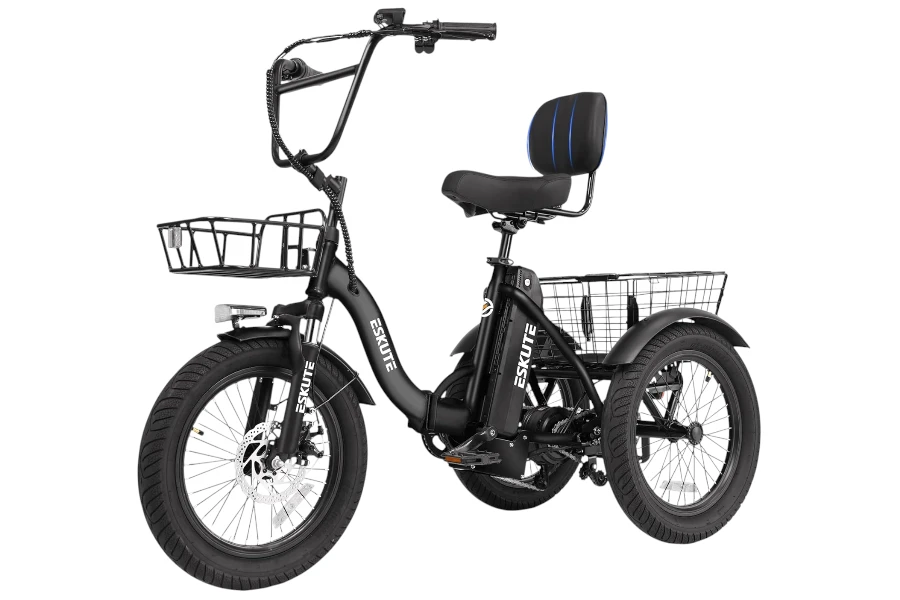
The T300 is designed for riders who want the confidence of three wheels plus the convenience of electric assist. It’s not trying to be a sporty e-bike replacement. It’s trying to be a stable mobility + errands platform:

  • Step-through frame for easy mount/dismount
  • Upright posture and a backrest seat that encourages relaxed riding
  • Two baskets that are actually useful (front for quick items, rear for bulkier loads)
  • A rear differential, which matters on trikes because it helps the rear wheels behave more naturally in turns

Key Specs

ItemWhat you get
Motor500W rated (claimed), 1200W peak (claimed)
Battery48V 10.4Ah (499Wh), removable
RangeUp to 55 miles (claimed); real-world depends heavily on speed + load
Top speed~18 mph+ (claimed); ~18 mph observed on throttle
Tires18” x 3.0” fat tires
Speeds1-speed drivetrain
SuspensionFront suspension
CargoFront basket + rear basket
Rider fit4’8”–6’2” (claimed)
NotesFolding frame; rear differential (important trike feature)

Who This Trike Is For

This trike makes the most sense if you’re buying for comfort and confidence, not athletic riding.

It fits best when:

  • You want a stable, low-stress ride for neighborhood loops, parks, or calm streets
  • You plan to carry real items, not just a tiny pouch
  • You value easy mounting and an upright seating position
  • Your routes are mostly paved or well-maintained paths
  • You want electric help for starts and mild hills, without needing “rocket” acceleration

Who Should Skip This Trike

Skip it if any of these sound like your daily reality:

  • You’ll ride a lot of gravel or broken pavement → accessories can loosen and the ride gets less calm.
  • You need tight, nimble turning (narrow paths, crowded bike lanes, tight storage corridors) → trikes require wider turns and more planning.
  • You live upstairs or must lift/store it often → folding helps storage footprint, but it’s still heavy and awkward.
  • You regularly climb steep hills with cargo → you’ll want stronger hill tuning and/or gearing options.

Real-World Performance

1) First Ride Impressions

The first thing I noticed wasn’t speed—it was confidence. The step-through design makes getting on and off feel easy, and the backrest seat encourages a relaxed, upright posture right away.

Power delivery felt “gentle,” which is exactly what many trike buyers want. It doesn’t feel jumpy or twitchy. The trike wants to move smoothly, not aggressively.

Surprise: For the price, it didn’t feel cheap in the basics—frame feel, controls, and the overall “it works like it should” impression were better than I expected.

2) Power & Ride Feel

Starts (stop-and-go):

  • Good at: Easy rollouts from intersections without needing a hard pedal stomp.
  • Boundary: It’s still a trike—starts feel stable, but you don’t want to mash throttle mid-turn.

Small hills (neighborhood grades):

  • Good at: Using the higher mode made mild hills feel manageable without grinding.
  • Boundary: This isn’t a steep-hill machine. On longer or steeper climbs, expect slower speed and more patience—especially with cargo.

Cruising (where it feels happiest):

  • Good at: Calm cruising in that mid-teens speed range feels natural and predictable.
  • Boundary: Pushing near top speed is doable, but trikes are happiest when you keep things smooth rather than “fast.”

Beyond assist / pedaling feel:

  • Good at: Casual pedaling to contribute a bit and extend battery.
  • Boundary: With a 1-speed setup, pedaling can feel limited once you’re moving quickly. If you care about efficient pedaling at higher speeds, a single-speed trike will always feel like a compromise.

3) Speed & Control

On throttle, I consistently saw around 18 mph at the top end. That’s plenty for the intended buyer—especially because trike stability is more about predictability than chasing speed.

Where you need to be smart is cornering. Trikes don’t lean like bikes. If you take turns too fast, you can feel the weight shift. The practical rule is simple:

Slow down before the turn, turn smoothly, then roll back into speed.

Range You Can Expect

I’m going to be direct here: the “up to 55 miles” claim is possible only under friendly conditions (lighter rider, lower speed, flatter routes, minimal stops, and conservative assist). I did not run a full cutoff range test, so treat these as buyer-expectation bands, not lab results.

  • Conservative: ~18–25 miles (higher speeds, more throttle, hills, or heavier loads)
  • Typical: ~25–35 miles (mixed riding, moderate assist, normal stops)
  • Best-case cruising: ~35–45 miles (lower speeds, flatter routes, light cargo)

Top 3 range killers on this trike:

  • Riding fast near top speed
  • Hills + frequent stopping/starting
  • Carrying heavier cargo (and low tire pressure)

Translate to life: If your round-trip errands are ~5 miles, that’s often several days of riding between charges—depending on how much throttle you use.

Comfort, Handling & Practicality

Comfort

The wide seat and backrest are a big deal for the target rider. For casual rides, it reduces that “constant bracing” some people feel on a standard bike saddle.

The front suspension and 3.0” tires help take the edge off pavement cracks. This is not full-suspension comfort, but it’s noticeably more forgiving than a skinny-tire commuter.

Handling & Stability

At low speed, it feels steady and beginner-friendly. The main handling adjustment is learning that turning is wider and the trike doesn’t “lean with you.”

On uneven ground or gravel, stability is still there, but the vibration and shaking increase, and that’s where I ran into a real ownership detail:

On gravel, it tended to shake the mirrors loose.

That’s not a deal-breaker, but it’s exactly the kind of thing that becomes annoying if your route is rough every day.

Brakes & Safety

Braking felt adequate for calm riding, but I’d still encourage buyers to ride with a “trike mindset”:

  • Give yourself more stopping distance than you would on a light bicycle
  • Slow before corners instead of braking hard mid-turn
  • If you plan to carry heavier loads regularly, do a few practice stops in a safe area

Also, don’t rely on marketing phrases like “your safety is first.” What matters is how you ride it: steady speed, smooth inputs, and conservative cornering.

Controls, Display & Riding Modes

The three assist levels were genuinely useful in daily riding:

  • Mode 1: Great for flat cruising and relaxed paths
  • Mode 2: The one I reached for on mild hills or when carrying a bit of cargo
  • Mode 3: Useful as the “help me out” mode, but not something I needed constantly

Throttle-only speed reached about 18 mph, and the overall control feel was predictable once you ride it like a trike (slow turns, smooth inputs).

Fit, Sizing & Adjustability

The claimed fit range (4’8”–6’2”) makes sense for a comfort trike, and at 5’10” I had no trouble getting comfortable quickly.

What I’d tell buyers to check before buying:

  • Can you place your feet down easily at stops? (important for confidence)
  • Do you prefer a very upright, relaxed reach? (this trike naturally supports that)
  • If you’re shorter, confirm you can comfortably reach controls without feeling stretched.

Ownership Notes

Assembly experience

Assembly was one of the best surprises: under 30 minutes with clear instructions and helpful pictures. That matters because trikes can sometimes be more fiddly than regular e-bikes.

First-week checklist (do this after 10–20 miles)

Based on what I observed (especially on rougher surfaces), I’d check:

  1. Mirror mounts (and add threadlocker if they repeatedly loosen)
  2. Basket bolts and mounting hardware
  3. Fender stays and any rattly brackets
  4. Seatpost clamp tightness
  5. Tire pressure (a big deal for comfort and range)

Service reality

Wear items (tires, tubes, brake parts) are the kinds of things you want to confirm are standard sizes. The trike format also means you’ll want to keep an eye on rear-wheel hardware and cargo mounts over time.

Parts and Serviceability

Because I did not fully tear down or parts-match this trike, consider this a practical checklist rather than a verified spec sheet:

  • Tire size: 18 x 3.0
  • Tube valve: Likely Schrader (common for this style), but confirm when you receive it
  • Common tools needed: 4/5/6 mm hex keys, adjustable wrench, bicycle pump, and ideally a torque wrench
  • Proprietary parts to watch: battery shape/fit, controller/display combo, trike-specific rear drivetrain/differential components

If you’re a buyer who wants easy long-term service, take 2 minutes after unboxing to photograph: battery label, charger label, and any brake markings. That makes replacement parts much easier later.

7-Day / 30-Day Ownership Update

7-day reality (based on my first week):

  • Nothing major failed or felt unsafe.
  • The main “ownership” issue was vibration on gravel loosening accessories (mirrors).
  • Comfort stayed consistent—this is a trike you sit on and relax, not a bike you “attack” hills with.

30-day note: I did not run a full 30-day durability log for this review. If you buy it, your biggest long-term watch items will likely be fasteners, basket mounts, and any rattles that develop with rough surfaces.

What’s Included in the Box

Based on typical setup and what I used during assembly:

  • Trike + battery
  • Charger
  • Assembly tools/hardware
  • Manual/instructions
  • Baskets and basic accessories

(Exact contents can vary by production batch.)

Pros & Cons

  • Very confidence-building for riders who feel unstable on two wheels
  • Step-through frame makes mounting and dismounting easy
  • Backrest seat + upright posture encourage relaxed rides
  • Useful cargo setup (front + rear baskets actually change daily usability)
  • Three assist levels that felt meaningfully different in real riding
  • Solid value feel for the price range
  • Gravel vibration can loosen accessories (mirrors) — annoying if your routes are rough daily
  • Not nimble in tight turns — trike handling requires slower cornering and wider space
  • Single-speed pedaling limitation — once you’re moving fast, pedaling feels less useful
  • Folding doesn’t equal “easy transport” — it helps storage, but the trike is still bulky/heavy

Deal-Breakers & Annoyances

  • For apartment living: If you need to carry it upstairs, this is the wrong category. Folding helps footprint, not lifting.
  • For gravel-route commuters: Regular rough surfaces will likely mean more frequent bolt checks and small annoyances (like mirrors loosening).
  • For faster riders: If you want to cruise fast and pedal efficiently, a 1-speed trike will feel limiting.
  • For tight-path riders: Narrow trails, sharp switchbacks, and crowded bike lanes can feel stressful because turning needs space and patience.

Alternatives and Comparisons

Here’s the fastest way to choose between similar electric trikes without overthinking it:

If you want…Consider…Why
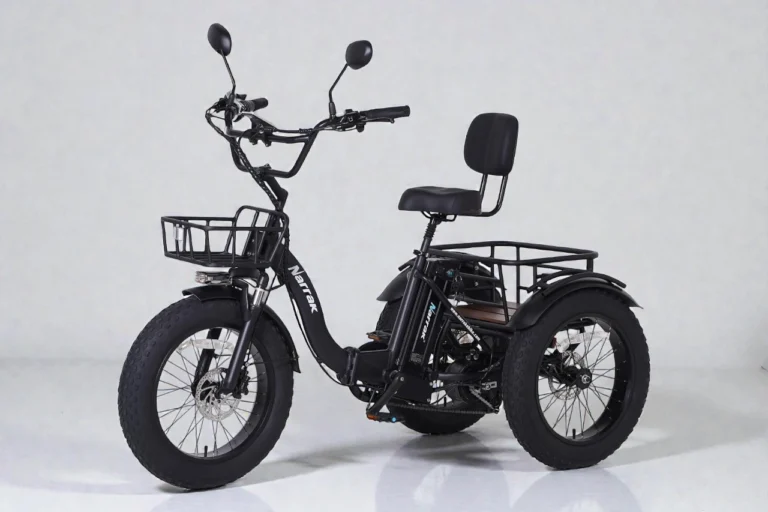
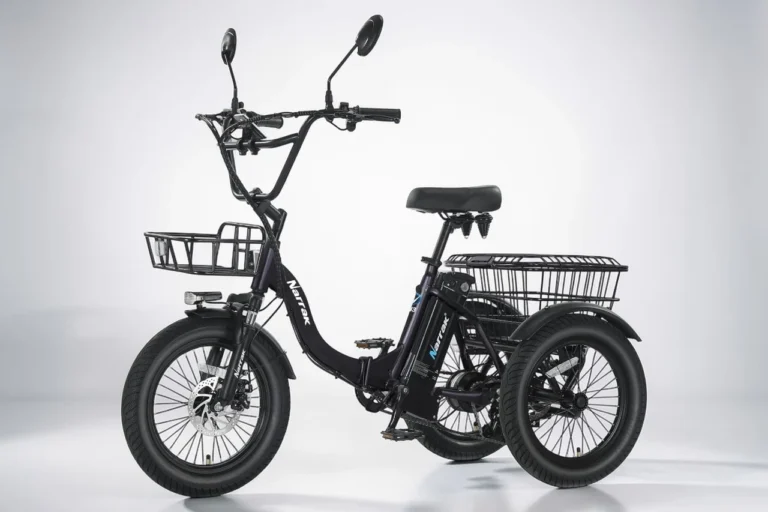
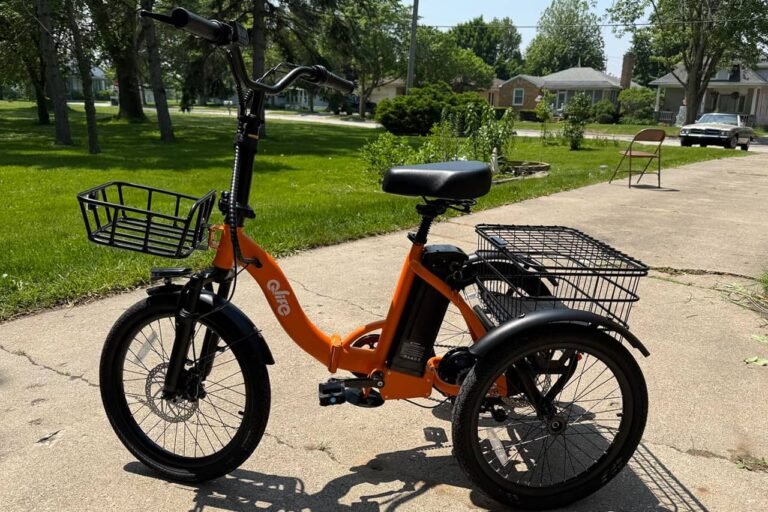
Lighter carry-upstairs / easier movingQlife TrikerSome trikes feel a bit more compact in day-to-day handling; still, none are truly “light,” so prioritize manageable shape and storage fit.
Better hill performanceNARRAK Electric TricycleIf your route has more hills, look for stronger hill tuning and a setup that doesn’t feel strained under load.
More comfort for bad roadsSkeri Electric TrikeIf your roads are rough, prioritize comfort features and anything that reduces vibration and rattles over time.

(These are category-level recommendations based on typical buyer needs. Always confirm current specs and weight before purchase.)

FAQ

Is the ESKUTE T300 good for hills?

It handles small hills well with the higher assist mode, but I wouldn’t buy it as a “steep-hill daily” machine—especially with cargo.

Is it comfortable for longer rides?

Can shorter riders fit it?

Is the battery removable and easy to charge?

What’s the biggest upgrade I’d consider first?

What maintenance should I expect?

Final Verdict – Should You Buy It?

Buy it if: You want a stable, comfortable electric trike for errands and calm neighborhood riding, and you value cargo space and easy mounting more than sporty handling.

Skip it if: You need frequent gravel riding, tight turning, steep-hill performance, or you must lift/store it in difficult spaces.

Best use case: Local errands, park paths, relaxed streets, and confidence-building rides for seniors or comfort-first adults.
Main compromise: Trike handling plus “rough surface realities” (vibration/loosening) and single-speed pedaling limits.

Would I spend my own money on it? If my priority was stability, comfort, and errands—yes, it earns its price. If I needed hills, speed, or bike-like agility—no, I’d choose a different category.

Did this e-bike guide help you?
If you enjoyed this article or found it helpful, using the links in this article is a simple way to support GoEBikeLife. It doesn’t cost you anything extra.
Your support helps us keep testing more e-bikes and publishing honest, real-world reviews.
Michael Thompson - E-Bike Reviewer & Test Rider
Michael Thompson

Michael Thompson puts every e-bike through its paces so our readers don’t have to guess. With over 15 years of riding experience and a deep interest in e-bike technology, he focuses on real-world testing—range, comfort, hill-climbing, braking, and long-term reliability. Michael explains the pros, cons, and best use cases of each model in clear, honest language, helping riders find the right e-bike for their daily commute, weekend adventures, or anything in between.

Leave a Reply

Your email address will not be published. Required fields are marked *