Real rides. Real notes. No hype.

The ESKUTE D200 is a low-cost folding e-bike for short commutes and errands. It offers useful cargo features, but weight and battery size are key trade-offs.
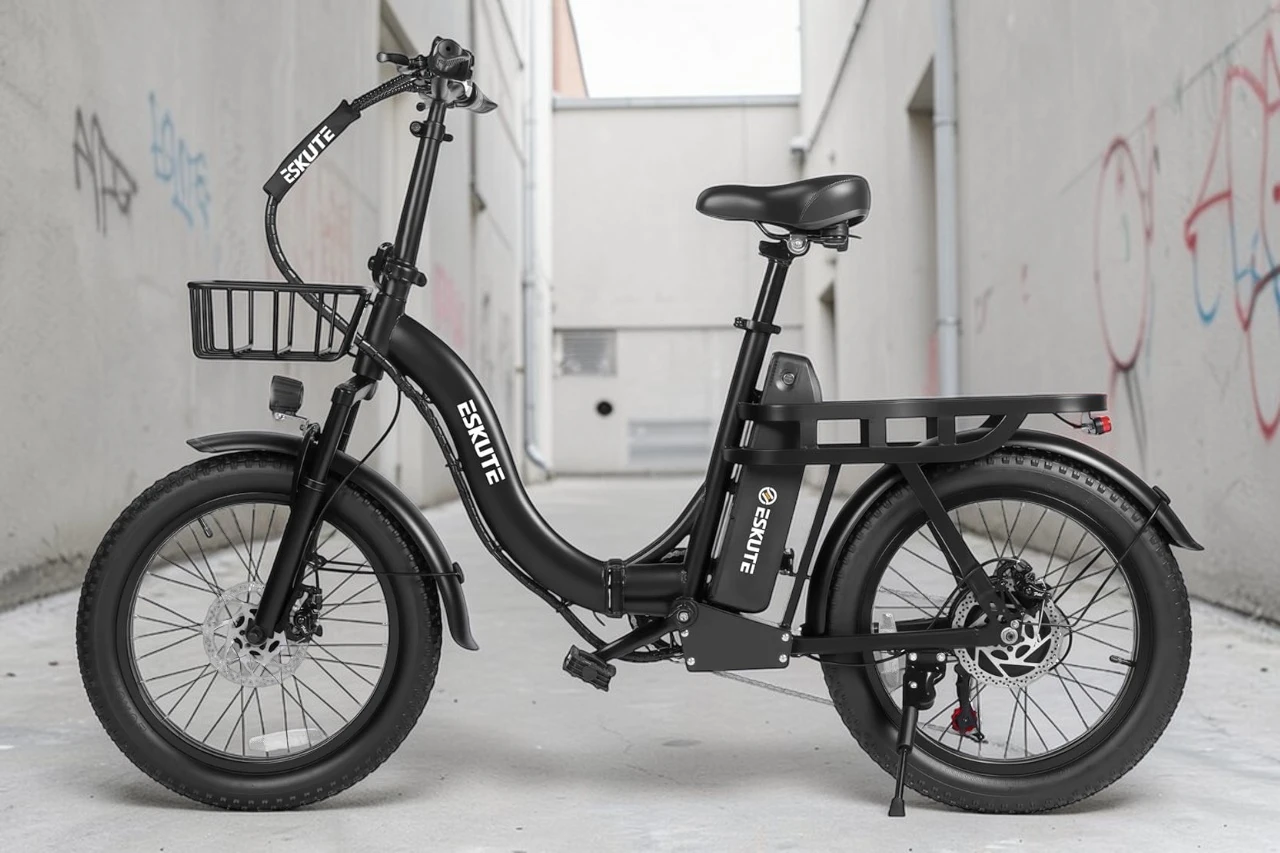
The ESKUTE D200 looks like a practical, low-cost folding utility e-bike for short commutes, neighborhood errands, and casual riders who want comfort and cargo features, but it is not the best choice for riders who need long real-world range, true portability, or refined components.
Best for
Not ideal for
Biggest strength: It gives you a very usable everyday setup at a low entry price, with commuter-friendly features already included.
Biggest trade-off: The folding design is convenient for storage, but at around 70.5 lb with a modest 10.4Ah battery, it looks more like a compact utility e-bike than a truly portable one.
The D200 is a 20-inch step-thru folding e-bike aimed at practical transportation rather than performance riding. On paper, the formula is appealing: claimed 1200W peak motor, removable 48V 10.4Ah battery, 20×3-inch tires, 7-speed drivetrain, dual suspension, front basket, rear rack, and a low step-through frame. That is a lot of equipment for the money.
What matters more is how those numbers translate into daily use. The D200 looks strongest as a comfort-first commuter for shorter rides, errands, and bike-path cruising. It looks weaker as a long-range commuter, a true cargo hauler, or a high-mileage folding bike that gets moved around a lot.
For context, I’m evaluating this bike as a rider who is about 5’10” and 180 lb.
My use-case lens here is simple: commuting, casual paved riding, neighborhood errands, light gravel or park-path use, and the kind of ownership realities buyers run into after the first few weeks.
| Item | ESKUTE D200 |
|---|---|
| Motor | Claimed 1200W peak rear hub motor |
| Battery | 48V 10.4Ah removable battery |
| Battery capacity | 499.2Wh |
| Claimed top speed | Up to 28 mph |
| Claimed range | Up to 55 miles |
| Drivetrain | 7-speed Shimano |
| Tires | 20 x 3.0 inches |
| Frame | Folding step-thru carbon steel frame |
| Suspension | Dual suspension |
| Brakes | Mechanical disc brakes |
| Weight | About 70.5 lb |
| Max load | 330 lb |
| Suggested rider height | 5’3″ to 6’3″ |
| Utility features | Front basket, rear rack, fenders, lights, display |
The biggest appeal here is not speed. It is convenience.
A lot of budget e-bikes make you add the useful stuff later. This one already comes with the equipment many casual buyers actually want: a front basket, rear rack, fenders, lights, and a step-thru frame. That matters because it turns the bike from “something fun to try” into something you can realistically use for grocery runs, small errands, and short commutes right away.
That also makes the D200 more appealing than stripped-down budget folders that technically cost less but need upgrades before they feel complete.
The frame shape is one of the strongest points of this bike. The deep step-thru opening makes mounting easier, especially for older riders, shorter riders, riders with limited flexibility, or anyone dealing with a loaded rear rack or basket.
At my size, I would expect the bike to feel approachable rather than intimidating. The upright handlebar shape and short wheel format suggest a relaxed riding position, which is exactly what many buyers in this category want. This does not look like a bike built for aggressive riding. It looks like one built to keep getting on and off comfortably.
Some buyers see “fat tire” and assume bigger is always better. I actually think the 20×3 setup is a reasonable middle ground for this kind of bike.
Compared with tiny city tires, 20×3-inch tires should give the D200 noticeably better comfort, stability, and confidence on broken pavement, curb cuts, gravel paths, and rougher neighborhood roads. At the same time, they should roll a little easier and feel less sluggish than many 20×4 folding e-bikes.
That is a good match for a utility-focused commuter. You get some cushioning and grip, but without going full oversized-fat-bike mode.
The listing pushes the “1200W peak” number hard, and as usual, peak figures sound more dramatic than they feel in daily riding. Even so, for a bike of this type, the motor should still be more than adequate for flat-to-moderate urban riding, stop-and-go traffic, and mild hills.
What matters to me is less the headline wattage and more the likely use case. On a compact 20-inch wheel bike, even modest hub-motor output can feel punchy enough from a stop. I would expect the D200 to feel lively at lower speeds and perfectly usable for city riding, especially with pedal assist helping it along.
This affects riders who live in apartments, carry bikes up stairs, or plan to load the bike into a trunk often.
It shows up the moment you treat the D200 like a portable folding bike instead of a storage-friendly e-bike.
Why it matters: 70.5 lb is heavy. Even if the frame folds, that does not magically make it easy to lift. In practical terms, this is closer to a bulky compact e-bike than a grab-and-go folder. For many buyers, folding will be useful mainly for reducing storage footprint, not for frequent carrying.
Practical workaround: If your goal is to fit it in a tighter garage corner, RV compartment, or apartment entry area, the folding design still helps. If you need regular stair carries or frequent car loading, I would skip it and look for a meaningfully lighter folder.
This affects commuters who ride fast, rely heavily on throttle, carry cargo, climb hills, or weigh more than average.
It shows up on longer rides, windy days, cold-weather rides, or whenever you use higher assist levels.
Why it matters: a 48V 10.4Ah battery gives you 499.2Wh, which is usable but not generous for a 70-plus-pound bike claiming up to 28 mph. The advertised 55-mile range is almost certainly based on light assist, favorable conditions, and conservative riding. In normal mixed use, I would set my expectations much lower.
Practical workaround: For most buyers, I would mentally budget for something closer to short-to-moderate errand and commute duty rather than all-day riding. Keep tire pressure right, use lower assist when possible, and do not buy this model if long range is your main priority.
This affects riders who see the tire size and suspension marketing and expect true trail performance.
It shows up when the surface gets rougher than gravel paths, packed dirt, or broken pavement.
Why it matters: the D200 has features that improve comfort, but the overall design still looks commuter-first. The step-thru folding frame, utility accessories, steel build, and budget component level all point toward casual mixed-surface use, not technical riding. I would be cautious about treating this as a serious trail machine.
Practical workaround: Use it the way it appears to be intended: pavement, neighborhood shortcuts, park paths, and light gravel. That is where the comfort setup makes sense.
This affects first-time buyers who expect premium out-of-box tuning and easy long-term parts support.
It shows up during assembly, brake setup, shifting adjustment, and the first few weeks of riding.
Why it matters: at this price, you should expect some owner involvement. Mechanical disc brakes may need fine-tuning. Budget derailleurs often need adjustment after shipping. Fold joints, rack hardware, and accessory bolts deserve re-checks early on. Also, the listing information appears a bit inconsistent in branding, which is never my favorite sign for long-term support confidence.
Practical workaround: Buy this only if you are comfortable doing basic setup checks yourself or paying a local shop for a once-over. That small extra cost can make a cheap e-bike much more enjoyable.
At my size, I think the D200 would likely feel accessible, compact, and easy to manage at everyday speeds. The published fit range says up to 6’3″, but I would be more confident recommending it to average-height riders than to tall riders who want lots of cockpit room.
I would expect the upright bar and short wheel format to feel calm at neighborhood and commuting speeds, especially on paved routes. The 20×3 tires should take the edge off cracks and rough patches, and the step-thru frame should make frequent stop-and-go riding easy.
Where I would be more cautious is speed. A bike can claim 28 mph, but whether it feels truly happy there depends on frame stiffness, geometry, tire feel, brake quality, and overall refinement. On a compact folding utility bike like this, I would treat the higher-speed capability as something nice to have rather than the main reason to buy it. This looks like a bike I would rather ride comfortably at moderate speeds than push hard all the time.
The listing suggests a rider fit range of 5’3″ to 6’3″. I think the lower end is plausible because the step-thru frame and compact wheels help. The upper end may be possible, but not ideal for everyone.
For shorter riders, the low frame is a real advantage. The easier mount-and-dismount experience is one of this bike’s best selling points. The compact frame and approachable geometry should also feel less awkward than many full-size e-bikes.
For taller riders, I would be more careful. At 5’10”, I think I would likely fit it well enough for casual riding. At 6’1″ to 6’3″, the bike may still technically work, but taller riders may want more saddle-to-bar distance and a less compact overall feel.
For heavier riders, the claimed 330-lb capacity is encouraging, but weight capacity and ride quality are not the same thing. If you are a heavier rider planning to add cargo and ride faster, battery drain and braking performance matter more. In that case, I would pay close attention to setup, brake tuning, and realistic range expectations.
The D200 makes sense for buyers who want a low-cost, utility-ready, comfort-oriented e-bike and who care more about day-to-day practicality than brand prestige.
It is a strong fit for:
I would skip the D200 if your priorities are portability, long range, premium refinement, or serious trail use.
It is a weaker fit for:
The easiest way to understand the D200 is to compare it with two nearby categories.
Against cheaper mini folding e-bikes, the D200 looks more useful. You get a step-thru frame, basket, rear rack, fenders, and a more practical commuter setup. For many people, that makes it a better buy even if the price is a little higher than the bare-bones alternatives.
Against more established folding commuter e-bikes from stronger-known brands, the D200 looks like the budget compromise option. You get a lot of features for the money, but likely less refinement, less support confidence, and a smaller battery than what you would get by spending more.
That is really the D200 in one sentence: a value-focused utility e-bike, not a polished premium one.
I would rate assembly as moderate rather than difficult. The bike appears to come mostly equipped, but buyers should still expect the usual final steps: handlebar alignment, pedals, front basket attachment, light checks, tire pressure, brake inspection, and possibly derailleur adjustment.
If you are new to e-bikes, a basic safety check from a local shop is money well spent.
After the first 10 to 20 miles, I would re-check:
That early re-check is especially important on budget e-bikes because shipping vibration and first rides often reveal what still needs tightening.
This is where I would stay realistic.
For low-cost e-bikes like this, the biggest risk is not always the motor or battery. It is support clarity, replacement part availability, and how easy it is to get answers when something small goes wrong. The more generic the bike platform appears, the more I would rely on standard bike-shop service for brakes, tires, drivetrain tuning, and general hardware, rather than expecting a premium ownership experience.
That does not make the D200 a bad buy. It just means buyers should go in with the right expectations.
The ESKUTE D200 has a clear lane, and I think it stays in that lane pretty well.
It is not a high-end folding bike. It is not a true off-road machine. It is not the best choice for riders who need long range or easy carrying. But as a budget-friendly, comfort-first, utility-focused e-bike for shorter daily use, it makes sense.
The included basket, rear rack, fenders, step-thru frame, and approachable geometry give it real everyday value. That matters more than flashy marketing claims. The weak points are also easy to see: it is heavy for a folder, the battery is modest for the claimed speed, and the budget nature of the bike means the owner will probably need to do more setup and maintenance checking than on a better-supported model.
Buy it if you want an affordable commuter-style folding e-bike for neighborhood use, errands, and shorter paved rides, and you care more about practicality and comfort than outright refinement.
Skip it if you need stronger real-world range, frequent portability, better support confidence, or a bike that feels more premium and more stable when pushed hard.
If I wanted a low-cost second e-bike mainly for short trips, casual riding, and basic utility use, I could justify it at this price. If I were shopping for my primary daily commuter or something I planned to keep for years with heavy mileage, I would probably spend more for a better-supported bike with a larger battery and a more confidence-inspiring overall package.
| Preview | Product | Price | |
|---|---|---|---|

|
Elecby 1200W Peak Folding Electric Bike for Adults, 28MPH 48V 10.4Ah Removable Battery, 55-Mile… | $579 | View on Amazon |