Real rides. Real notes. No hype.

Experience-based EOEOTWO E01 Electric Bike review with real speed and range expectations, brake feel, comfort, handling, and clear drawbacks.
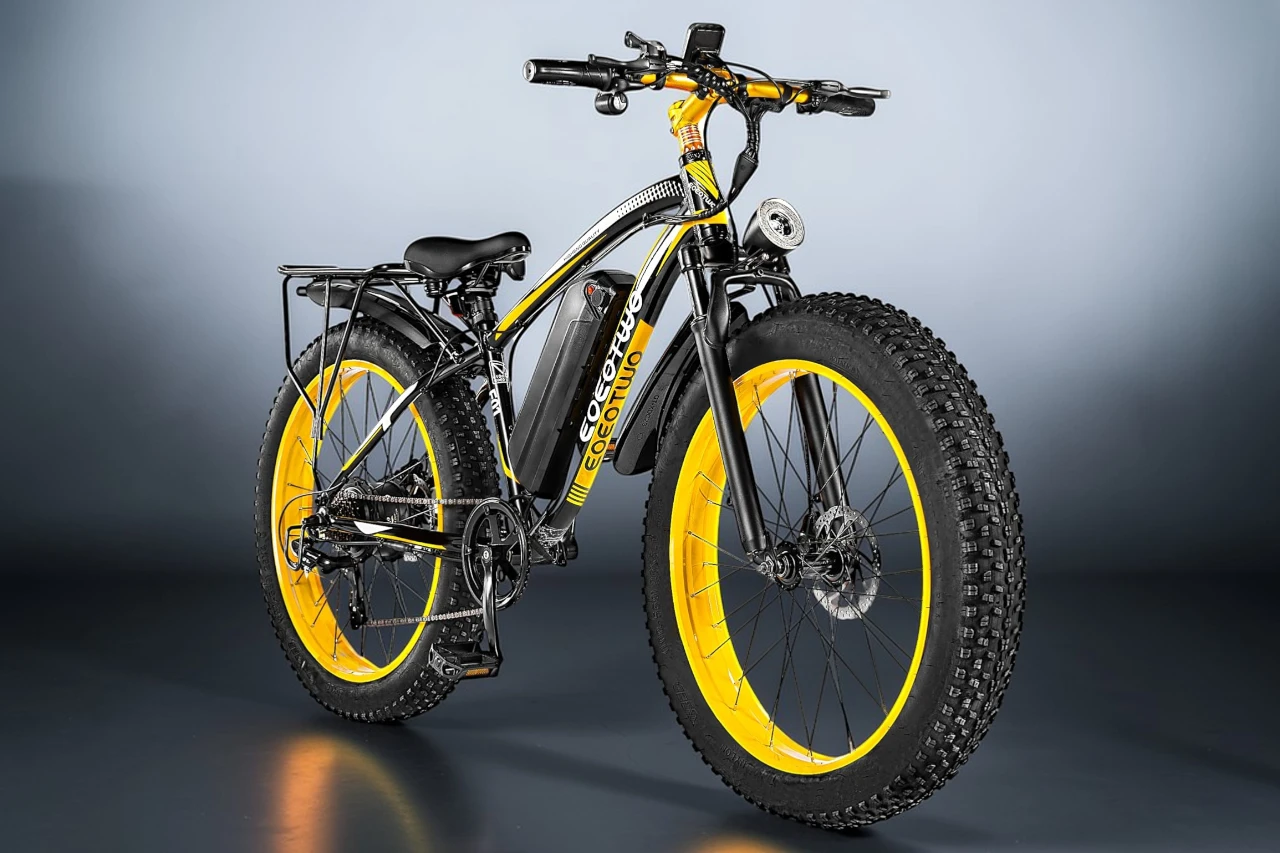
If you look at the EOEOTWO E01 purely as a “numbers-for-the-money” purchase, it’s easy to see why it gets attention. The price I saw was $579.99, and on the road it feels much faster than most entry-level fat-tire e-bikes in that range.
In my rides, it delivered strong acceleration, a surprisingly high top speed on a full battery, and a stable, confidence-inspiring ride thanks to the 26×4.0 tires and front suspension.
At the same time, it’s still a budget build. A few details—especially the mechanical disc brakes, the lighting setup, and the weight—are exactly where you feel the price point.
What I liked most: the E01 feels genuinely quick for the money, and it rides like a planted, stable fat-tire bike that can handle mixed surfaces without feeling sketchy.
What to know before buying: it’s heavy, it needs some setup attention (tire pressure + brake adjustment), and the out-of-the-box “commuter readiness” is not perfect—especially the lighting.
If you want a budget fat-tire e-bike that feels fast and fun, and you’re okay doing basic tuning and adding a couple of small upgrades, the E01 is one of the more compelling low-cost options I’ve tested in this style.
This is a high-value, budget fat-tire e-bike that prioritizes speed feel and versatility over refinement. The fat tires and suspension give you comfort and stability, and the motor tune makes it feel lively—especially when the battery is full. It’s not a lightweight commuter you carry up stairs, and it’s not a premium, “perfectly dialed out of the box” bike either.
The best way to enjoy it is to treat it like a tough, fun utility bike: check it over carefully on day one, get the brakes adjusted properly, keep tire pressure consistent, and accept that a couple of small upgrades will make it feel far more complete.
~20–30 minutes. It arrived mostly assembled. For me, the main steps were handlebars/front end/pedals, then doing basic safety checks.
I don’t treat budget e-bikes as “pull it out and immediately rip it” products. Before my first ride, I did a quick but careful once-over:
None of that was difficult, but it’s part of the reality of buying at this price point.
The bike comes with two sets of keys to lock/unlock the bike and the battery. That sounds minor until you’ve owned an e-bike that only ships with one key set—having a spare is genuinely useful.
The E01’s look is bold (that yellow rim theme is hard to miss), but the more important part is how the bike is built around fat-tire stability:
It’s not a minimalist, sleek commuter. It’s a “go anywhere, carry stuff, don’t baby it” style build.
For a budget fat-tire e-bike, the E01 feels quick off the line. It doesn’t have that sluggish, “wait… is the motor even helping?” feeling that some entry-level bikes have. Power comes in strong, and once it’s moving, it stays energetic.
This is the part that surprised me most at the price.
On a flat road in all-electric mode, I got it up to 36 mph. That’s higher than the listing’s “up to 33 mph” claim, but I want to be very clear about what affects this:
The takeaway isn’t “this always does 36.” The takeaway is: it’s legitimately fast for the money, and the bike’s speed claim doesn’t feel fake in real riding.
On typical neighborhood hills, the E01 pulls confidently in assist. On steeper climbs, I still needed to downshift and pedal, but it held momentum better than a lot of cheaper fat-tire e-bikes.
The listing claims it can handle hills up to about a 12° incline, and from what I felt, “good on moderate hills” is a fair expectation for this power class.
If you live somewhere very steep and you expect throttle-only climbing at high speed, I wouldn’t buy this assuming it will feel like a premium mid-drive. But for normal hills and everyday grades, it performs like a bike with real shove.
The battery is listed as 48V 15Ah, with claims up to ~60 miles per charge depending on assist level and conditions. There’s also marketing that mentions max 25 miles on throttle and max 60 miles on pedal assist, which is a more grounded way to think about it.
In my experience, the range you get depends heavily on:
Here’s how I’d plan for it in real use:
That lines up with my experience that throttle-only range can be “as advertised” if you’re not doing full-speed blasts nonstop. If you ride it aggressively—especially near top speed—range will drop quickly, because fat tires and high speed both demand more energy.
The combination of fat tires + front suspension makes the E01 feel stable and forgiving. Over broken pavement and light trails, it takes the edge off bumps in a way that normal commuter tires simply can’t.
This is one of the big reasons people buy fat-tire bikes in the first place, and the E01 delivers that “floaty stability” feeling.
At 5’10”, I fit the bike comfortably and didn’t feel cramped. The listing’s geometry info shows a 32.2″–42.1″ seat height range and a recommended height range of 5’4″–6’5″, which seems plausible for a standard adult fat-tire frame.
The bike is listed at about 65 lb, and it feels like it. While riding, that weight contributes to stability. But in daily life, it matters:
If you need something you regularly carry or lift, this is not the right style of e-bike.
The E01 feels planted and stable, especially in straight-line cruising and on rougher surfaces. The fat tires add confidence on sketchier pavement and mixed terrain.
The trade-off is that steering feels slower than a normal-tire commuter. That’s not a flaw—it’s typical for a 4″ tire setup. You don’t get razor-sharp, lightweight handling. You get stability and forgiveness.
Braking felt reliable once adjusted, but it behaves like a typical mechanical disc brake setup:
This isn’t a deal-breaker to me, but it’s something I’d expect most buyers to spend a few minutes dialing in to get the best result.
The digital display is straightforward and useful. It shows key basics like speed and battery, and it uses a bar-style battery indicator.
One thing I flag here: one owner reported their display was very dim and needed a replacement. I did not personally experience that, but it’s worth knowing before you assume every unit is perfect out of the box.
The E01 is advertised with five modes, plus a 7-speed drivetrain:
In real use, the modes are mostly about how you want to manage effort and range. I treated throttle as the “fun / quick errands” mode and PAS as the “actually go places without killing the battery” mode.
The bike includes a front light, and the rear setup is described as a tail reflector, not a powered tail light. That’s important if you plan to commute or ride in traffic.
This section is intentionally direct. These are the issues I think matter most in real ownership, and I’m spelling out who it affects / when it shows up / why it matters.
What I would do: Add a reliable rear light immediately, even if you only ride “occasionally” at night. It’s a small upgrade with a big safety payoff.
What I would do: Spend time on caliper alignment and cable tension early, then re-check after a few rides. If you’re picky about braking feel, hydraulic brakes are the upgrade you’ll eventually want (even though that’s not the point of a $579 bike).
What I would do: If you’ll store it on the ground and roll it in/out, the weight is fine. If you have stairs or frequent lifting, I’d choose a lighter category of e-bike instead of trying to “tolerate” a 65 lb fat-tire build.
What I would do: Test display brightness immediately after assembly. If it’s dim or hard to read, address it early while support/warranty is straightforward.
What I would do: Keep tire pressure consistent, and if you ride rough streets regularly, consider upgrading tires or adding flat protection. This bike’s “value” disappears fast if you’re constantly patching tubes.
The EOEOTWO E01 was one of those bikes where I immediately understood the appeal: for the money, it feels quick and capable. The top speed I saw on flat ground with a full battery was legitimately surprising, and the fat-tire stability makes it easy to ride with confidence on imperfect surfaces.
But I don’t view it as “perfect out of the box.” I view it as “excellent value if you do the basics”: check tire pressure, tighten and align what needs aligning, dial in the brakes, and treat lighting as something you’ll improve.
If your goal is maximum performance feel per dollar—and you understand the trade-offs of a heavy, budget fat-tire bike—the EOEOTWO E01 is a strong pick in its price lane.
| Preview | Product | Price | |
|---|---|---|---|

|
EOEOTWO Fat Tire Electric Bike for Adults, 1500W Peak Motor Fast Electric Bicycle, 30/33 MPH… | $599 | View on Amazon |