Real rides. Real notes. No hype.

Looking for the best budget electric bike under $500? Here are 5 ranked picks, real-world trade-offs, and how to choose safely without regret.
Buying an e-bike under $500 is absolutely possible—but you need to shop with your eyes open. At this price, you’re trading premium ride feel and long-term service support for simple, practical transportation that can still be genuinely useful for commuting, errands, and light fitness.
For this guide, I evaluated five popular budget models using the same “real life” lens: stop-and-go city riding, rough pavement, short hills, curb cuts, and how annoying (or easy) the bike feels to live with day-to-day.
I’m about 5’10” and ~180 lb, and I focused on the things that actually decide whether you’ll keep riding after the honeymoon phase: stability, braking confidence, battery convenience, comfort, and how predictable the assist feels.
Best overall pick: Jasion YC1 — a balanced commuter-style bike with a removable battery, a clean, practical setup, and a price that leaves room in your budget for a helmet and a good lock.
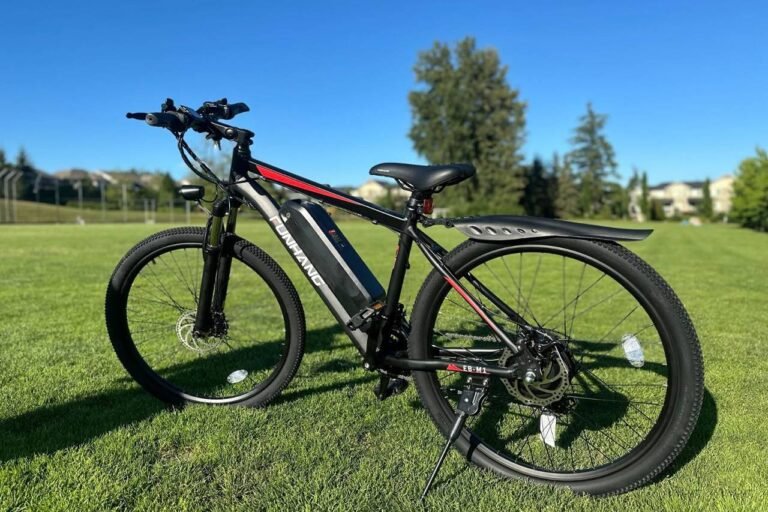
Best value pick: Funhang EB-S1 — fat tires + a strong feature set for the money, especially if your roads are rough or you want more “go anywhere” confidence.
Who should buy from this list:
Who may want to look elsewhere:
| Model | Best for | Key strength | Main drawback |
|---|---|---|---|
| Jasion YC1 | Everyday commuting + simple ownership | Balanced, practical commuter design | Still a budget build—expect basic brakes/suspension |
| Funhang EB-S1 | Rough roads, comfort-first riding, light off-pavement | Fat-tire stability + strong feature set | Fat tires add weight and drag (slower pedaling feel) |
| ESKUTE D200 | Small storage, apartment life, multimodal commuting | Folding + step-through utility vibe | Folding hinges add long-term maintenance considerations |
| Jasion EB5 | Simple, no-drama commuter rides | Straightforward layout and handling | Lower top-end feel vs the faster-claimed models |
| Heybike YM1 | Faster-paced riding feel + larger wheels | “Bigger bike” road feel | More speed potential = higher responsibility for braking/fit |
When I think “under $500 e-bike that most people will actually enjoy owning,” the YC1 hits the sweet spot. It’s positioned as a city-commuter style bike: normal 26″ wheels, familiar 7-speed setup, and a removable battery that’s easy to charge at home or work. In everyday riding, that practicality matters more than flashy claims.
What stood out in my evaluation is how uncomplicated it feels. The bike doesn’t try to be a mini-moped, and it doesn’t lean too hard into extreme tires or folding hardware. It’s the kind of budget e-bike I’d recommend to a friend who just wants a reliable assist for getting around.
Predictable city riding: On stop-and-go streets, the YC1 style of e-bike tends to feel easy to manage—less “lurchy” than some high-power budget setups. It’s the type of bike where you can settle into a steady pace without constantly fighting the assist.
Battery convenience actually changes behavior: Removable batteries sound like a bullet point until you live with a bike for a week. Being able to charge indoors is one of the biggest quality-of-life upgrades in budget e-bikes—especially if your garage/outlet situation is annoying.
Comfort is “enough” for daily use: The front suspension and standard tires reduce the harshness of rough pavement. It’s not plush, but it’s not punishing either—important if your roads aren’t perfect.
Budget braking feel: Dual disc brakes are good to see, but under-$500 setups often feel more “functional” than “confidence inspiring.” Plan on bedding in the brakes carefully, and don’t ignore squeal or rubbing—fix it early.
Expect basic components: At this price, small things can show up: a saddle you’ll want to swap, grips that feel cheap, or a display/buttons that aren’t premium. None are deal-breakers, but they’re part of budget ownership.
Steel-frame weight reality: Many bikes in this class use steel. That’s not automatically bad, but it usually means more weight. If you need to carry the bike up stairs daily, this matters.
| Pros | Cons |
|---|---|
| Balanced commuter layout that feels familiar | Likely heavier than it looks (common under $500) |
| Removable battery is a real daily convenience | Budget disc brakes require setup attention |
| Front suspension helps rough pavement comfort | Not a “true off-road” bike despite the fork |
| Good fit for typical city/campus use |
If your roads look like a patchwork of potholes and broken pavement, the EB-S1’s fat tires can be a legitimate advantage. In my evaluation, fat tires usually make a budget e-bike feel more forgiving and stable—especially for newer riders who don’t love twitchy steering or harsh impacts.
It also comes across as a “feature heavy” value pick: utility rack, lighting, fenders, and a battery size that aims for practical range in pedal assist.
Comfort-first ride feel: Fat tires can mask a lot of budget-bike harshness. Over cracks, curb ramps, and rough paths, the EB-S1 style of setup feels calmer and less jarring.
Confidence for mixed surfaces: If your “commute” includes gravel shortcuts, park paths, or dirt connectors, fat tires help you stay relaxed instead of constantly scanning for perfect pavement.
Utility is built-in: A rack and solid lights are not just nice-to-haves—on an everyday e-bike, they change how often you actually use it for errands.
Fat tires add drag: The downside is real: it usually takes more effort to pedal when the motor isn’t helping much, and it can feel slower to accelerate under human power.
Weight and storage: Most fat-tire budget e-bikes are bulky. If you store the bike in a tight hallway or have narrow doorways, measure first.
Brake heat and speed responsibility: Bigger tires and higher potential speed demand more from the brakes. On long descents, you’ll want to brake smart—short, firm braking rather than dragging the levers continuously.
| Pros | Cons |
|---|---|
| Very stable, comfort-forward ride | Heavy and bulky compared to commuter tires |
| Good for rough pavement and mixed surfaces | Fat tires reduce efficiency when pedaling |
| Useful rack/lights for daily errands | Brakes must be adjusted and maintained |
| Strong “value features” package | Not ideal for tight apartments/stair carrying |
Under-$500 folding e-bikes can be a smart solution for apartments and small storage—if you understand the compromise. The D200’s value is the space-saving concept: fold it, store it, transport it, and still get fat-tire-ish stability (20×3) plus a practical basket/rack approach.
This is the kind of bike I’d consider when the main problem isn’t “How fast?” but “Where do I put this thing?”
Apartment-friendly concept: Folding matters when you’re fighting for storage space. If you can fold it and tuck it away, you’ll ride more because it’s not constantly in your way.
Low-speed maneuvering is usually easier: Smaller wheels often feel more nimble at walking speeds, which helps in crowded areas, tight bike rooms, or rolling through doors.
Utility touches encourage real usage: Basket + rack makes this feel like a daily tool, not a weekend toy.
Folding hinges are a long-term responsibility: Any folding bike adds a mechanical complexity point. You want to periodically inspect and keep hardware tight. If you don’t like that idea, choose a non-folding frame.
Small wheels feel different at speed: 20″ wheels can feel more sensitive over sharp edges and potholes compared to bigger 26″/27.5″ wheels. Tire volume helps, but it’s still a different ride.
Heavier than “folding” sounds: Folding does not automatically mean light. Many budget folders are still heavy—just compact.
| Pros | Cons |
|---|---|
| Folding solves real storage problems | Hinges/latches need periodic checks |
| Step-through + cargo features are practical | Small wheels feel different at higher speeds |
| Cushioned tire size without full fat bulk | Still not “light” in most cases |
| Great for short trips and errands | Not ideal for long, fast road rides |
The EB5 is the straightforward “basic commuter e-bike” in this lineup. In my experience, bikes like this are often the easiest to recommend to cautious buyers: standard tires, standard riding posture, and a more conservative speed focus that can feel safer for beginners.
It’s not the flashiest pick, but it’s the type that can quietly do the job for daily rides without constant drama.
Approachable for new riders: A “normal-bike” layout reduces the learning curve. If you’re nervous about e-bikes, that matters.
Less temptation to ride beyond your braking comfort: When an e-bike isn’t pushing extreme speed claims, it often matches better with the braking systems you get at this price.
Light utility potential: It’s not a cargo bike, but it’s a practical commuter platform.
If you want faster pacing, you may outgrow it: If your goal is to keep up with faster riders or cover longer distances quickly, you might prefer a higher-speed-leaning model.
Budget suspension reality: A basic fork helps with harshness, but it won’t feel like quality suspension. Treat it as comfort smoothing, not trail capability.
Expect more DIY adjustment: Budget bikes often arrive needing brake alignment and bolt checks. It’s manageable, but you must do it.
| Pros | Cons |
|---|---|
| Simple, commuter-friendly design | May feel underpowered for steep hills/fast riding |
| Removable battery for convenient charging | Basic suspension—comfort only, not trail-ready |
| Generally approachable for beginners | Brakes/derailleur often need tuning out of box |
| Standard tires are efficient on pavement |
The YM1 stands out because it reads like a more “full-size” mountain-style platform—27.5″ wheels, a bigger overall stance, and higher performance intent. In riding feel terms, larger wheels often roll smoother and feel more stable on typical road imperfections.
That said, more speed potential under $500 is not automatically a win. It raises the importance of fit, braking setup, and riding judgment.
Stable rolling feel: Bigger wheels often feel calmer on rough asphalt and shallow potholes, which can reduce fatigue on longer rides.
Good choice for taller riders who dislike small frames: The “bigger bike” vibe can matter if you hate cramped cockpit feel.
Versatile use: Commute, fitness rides, park paths—it aims to cover a lot.
Speed claims vs real safety: Even if the bike can reach higher speeds, you need to ask: Do the brakes, tires, and your routes support that safely? Under $500, braking performance is rarely “premium.”
More performance intent = more setup matters: A higher-speed e-bike needs careful brake bedding and proper tire pressure. If you’re not willing to do that, choose a calmer model.
Not the cheapest pick: Still under $500, but you’re paying more than the simplest commuters. Make sure the use case justifies it.
| Pros | Cons |
|---|---|
| Larger wheels can feel smoother and more stable | Higher speed potential increases brake demands |
| Good “full-size bike” feel | Setup quality matters more at higher speeds |
| Versatile for commuting and fitness | Not the best choice for small storage spaces |
| Removable battery convenience |
At this price, I care more about battery convenience and safety than marketing range numbers. A removable battery makes daily life easier and reduces the odds you stop riding because charging is a hassle.
My rule: If charging feels annoying, you will ride less. Period.
“Disc brakes” can still feel weak if they’re poorly adjusted or poorly bedded in. Plan to:
If you’re not comfortable doing that, budget for a local bike shop tune-up.
Budget suspension forks vary wildly. Tires are more predictable:
If your streets are rough, tires matter more than almost anything else.
Most budget e-bikes deliver assist that works—but may feel less natural than expensive systems.
Common budget behavior:
The best budget bikes are the ones that feel predictable—even if they’re not “buttery smooth.”
Under $500, you should expect:
This isn’t meant to scare you—it’s just the cost of entry for a budget e-bike.
If I had to pick one under-$500 e-bike for the widest range of riders, I’d go Jasion YC1. It’s practical, commuter-friendly, and built around the features that actually keep you riding: straightforward handling, removable battery convenience, and a balanced setup that doesn’t demand you become a mechanic on day one.
If your roads are rough, you want more cush, and you value stability over efficiency, the Funhang EB-S1 is the best value move—just be honest about the weight and fat-tire drag.
| Preview | Product | Price | |
|---|---|---|---|

|
Jasion 26″ Electric Bike for Adults, Internal Removable Battery Ebike with 4 Modes & 7-Speed, UL… | $429 $299 | View on Amazon |
1) Is an e-bike under $500 actually worth it?
Yes—if you treat it as budget transportation and accept you’ll do basic setup and maintenance.
2) What’s the biggest downside of sub-$500 e-bikes?
Consistency and refinement: braking feel, component quality, and assist smoothness vary more than in higher-priced bikes.
3) Are fat tires better at this price?
They’re often more comfortable and stable, but they add weight and reduce pedaling efficiency.
4) How far can I realistically ride on these?
Expect real range to vary heavily by speed, hills, rider weight, and tire type. Use claimed range as an optimistic ceiling, not a guarantee.
5) What should I check after assembly?
Brakes (alignment + bedding), axle nuts/quick releases, handlebar/stem bolts, crank tightness, and tire pressure.
6) Are these good for steep hills?
They can handle mild-to-moderate hills, but daily steep climbs are where budget drivetrains and tuning show their limits.
7) Do I need a suspension fork?
Not necessarily. For comfort, tires often matter more than a basic budget fork.
8) What upgrades make the biggest difference first?
Brake pads (if needed), a better saddle, and puncture protection—those three improve daily riding fast.