Best Electric Bike for Teenager in 2026: Top Picks With Real-World Trade-Offs
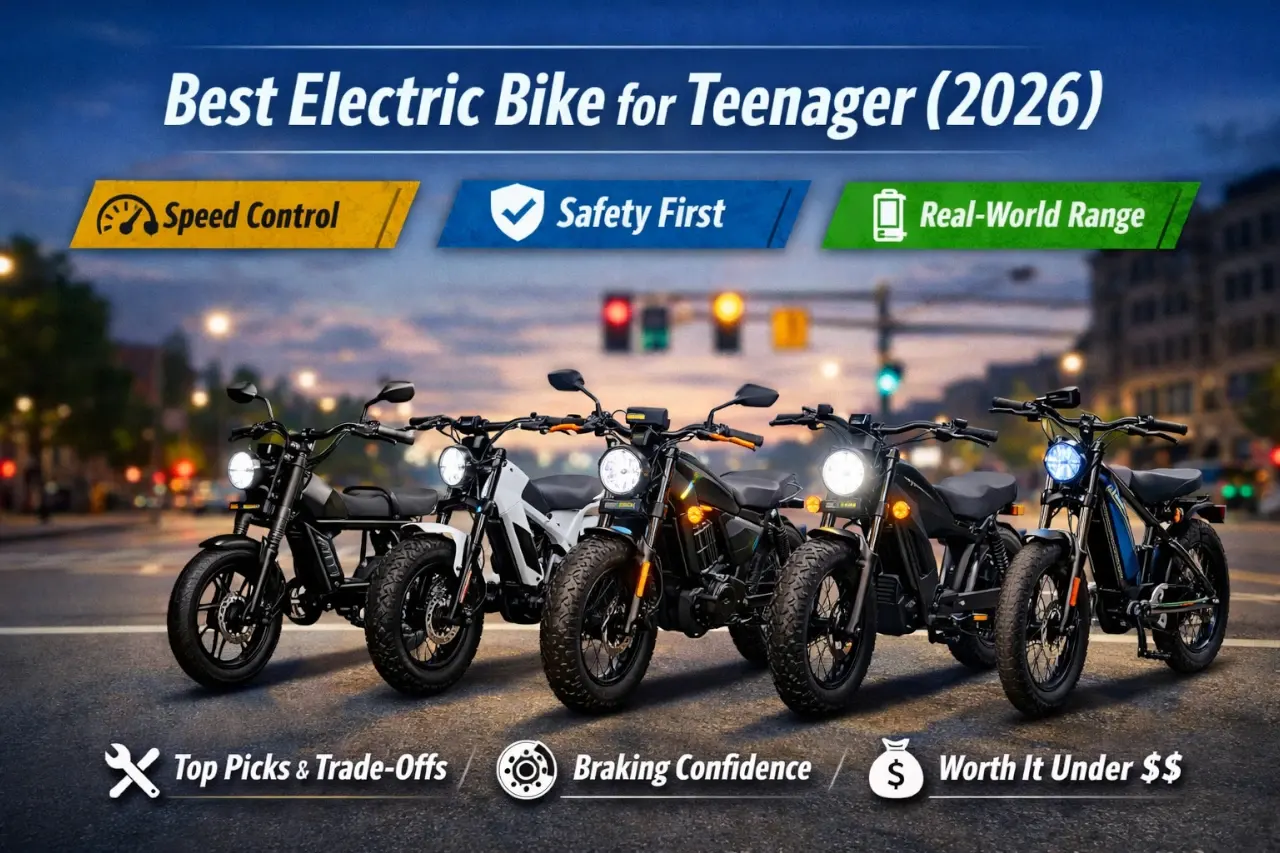
This guide compares five teen-ready e-bikes using real-world safety factors, speed control, braking confidence, and “worth it under $1000” price limits.
Teen riders need an e-bike that feels stable and predictable in real traffic, not just fast on paper, and the biggest “gotcha” is that many powerful fat-tire models are heavy, high-speed, and legally treated differently depending on where you live.
Before we get into the picks: a lot of these bikes can reach Class 3 speeds (up to ~28 mph in pedal assist), and some listings claim even higher. For most families, the safest approach is choosing a model with speed limiting (app/settings), strong lights, and confidence-inspiring brakes, then setting house rules (helmet, no passengers, no night riding until proven skills, etc.).
Best Overall (teen-ready controls): TST R002 — App-adjustable max speed + strong lighting package makes it easier to keep a teen ride “fast enough, not reckless,” but it’s still a heavy fat-tire bike with mechanical brakes. Best Value (tight budget): Askmy E500 — A lot of performance for the money with full suspension and a removable battery, but the speed claims and unknown long-term support make it a “buy carefully” pick. Best Comfort (rough roads): Windone E2 — Plush seating and full suspension help new riders feel stable and less fatigued, but it’s pricier and sized for taller riders. Best for Occasional Passenger Use (where legal): TST R9 — Dual seats and a very high stated load rating sound practical, but passenger riding adds risk, braking demands, and legal complications. Best Braking Confidence (hardware): Likebike U12 — Hydraulic disc brakes plus turn signals/horn are meaningful safety upgrades, but the higher power/speed potential demands stricter settings and discipline.
The best e-bike for a teenager is the one that stays predictable under real mistakes—panic braking, sudden swerves, uneven pavement—not the one with the biggest peak watt number.
Price range considered: about $499–$930 (based on the provided prices). Teen rider reality we optimized for: learning curve, visibility, braking confidence, speed control, battery safety, and day-to-day ease (charging + moving a heavy bike). We prioritized:
Speed control (settings/app limits, sensible assist levels)
Safety visibility (good headlight/taillight/turn signals where available)
Braking confidence (hydraulic > mechanical when all else is equal)
Battery safety signals (UL 2849 / UL 2271 mentions are a plus)
Stability (fat tires + suspension can help new riders feel planted)
We avoided (as much as possible): unrealistic range expectations, “35 mph” hype, and setups that encourage passenger riding before skills are ready.
Best Picks
Best Overall: TST R002 — Best for Teen-Ready Speed Control + Night Visibility
Verdict (1 sentence): The TST R002 is the most teen-manageable option here because the app-set max speed and strong lighting coverage help keep riding controlled, but it’s still a heavy fat-tire bike with mechanical braking limits you need to respect.
Evidence Snapshot (fast facts that matter):
Typical price: $688.99 (list)
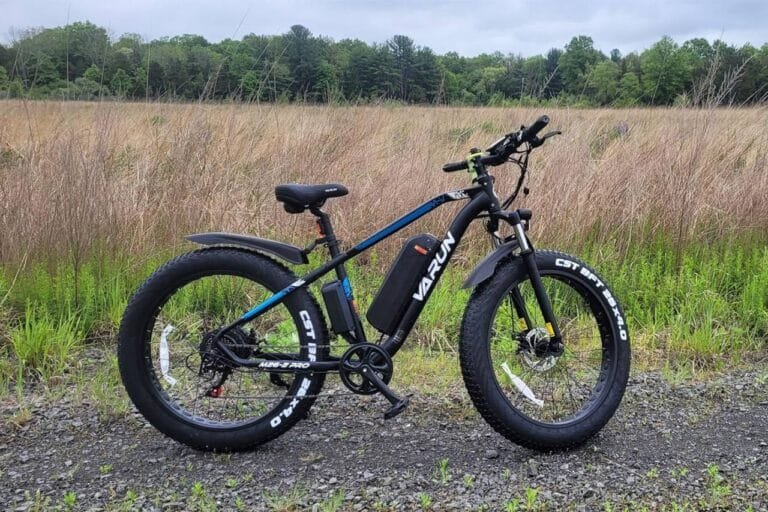
Motor class (real use): 1500W peak / ~90 Nm claimed torque = quick acceleration and strong hill starts
Battery size: 48V 15Ah or 48V 25Ah options (energy matters more than voltage for range)
Realistic range (what to plan for):
15Ah: ~20–35 miles mixed PAS riding for many teens; throttle-heavy can drop closer to ~12–20
25Ah: ~35–60 miles mixed PAS is more realistic than triple-digit expectations unless speeds are low and terrain is easy
Top speed expectation: up to ~28 mph (app-set max speed mentioned)
Weight / portability: typically very heavy for this category; expect awkward stair carrying
Brakes (confidence note): dual mechanical disc brakes (works, but requires more hand force and better adjustment)
Tires: 20″ x 4.0″ fat tires = stability + comfort, but more rolling resistance (range penalty)
What it’s great at (real-life wins):
✅ Speed governance: Being able to cap speed is a real parenting tool, not a gimmick.
✅ Visibility package: 360° lighting + turn signals reduces “I didn’t see you” risk at dusk.
✅ Confidence on mixed terrain: Fat tires + full suspension are forgiving for newer riders.
Trade-offs (what you give up):
⚠️ Mechanical brakes under load: If your teen rides fast, downhill, or with a backpack, mechanical discs may feel less “one-finger confident.” You’ll want frequent brake checks and pad adjustments.
⚠️ Heavy bike reality: Storage, transport, and recovery from mistakes (like tipping) are harder when the bike is bulky.
Buy it if:
✅ You want a built-in way to limit speed while skills develop.
✅ Your teen will ride at dawn/dusk and you care about signals + visibility.
Verdict (1 sentence): The Askmy E500 is the best value here because it offers full suspension, a removable 48V 15Ah battery, and strong peak power for the price, but the speed claims make it a bike you should buy only if you’re committed to setting conservative limits.
Evidence Snapshot:
Typical price: $499.00
Motor class (real use): 750W nominal / 1500W peak = quick starts and decent hill help
Battery size: 48V 15Ah removable
Realistic range:~20–35 miles mixed PAS for many teens; ~12–20 throttle-heavy
Top speed expectation: listing suggests 28–35 mph depending on conditions (treat this as a red-flag area; plan around lower safe speeds)
Brakes: front + rear disc (type not specified)
Tires: 20″ x 4″ fat tires
Safety signals: UL 2271 + UL 2849 compliance validated by SGS (as stated)
What it’s great at:
✅ Budget-friendly entry: It’s the easiest way to get full-suspension + fat tires at a low upfront cost.
✅ Removable battery convenience: Charging inside is simpler for families.
✅ Forgiving ride feel: Suspension helps reduce “bouncing” that can scare newer riders.
Trade-offs:
⚠️ Speed temptation: Higher claimed speed increases risk for teens; if your household can’t enforce limits, this isn’t the right direction.
⚠️ Unclear brake details: Without knowing whether the brakes are hydraulic or mechanical, you should assume you may need tuning/upgrades for best control.
Buy it if:
✅ You need the lowest price and still want full suspension + removable battery.
✅ Your teen will mostly ride casually and you’ll keep settings conservative.
✅ You’re comfortable checking bolt torque and brake setup regularly.
Skip it if:
❌ You want the most proven “set it and forget it” ownership experience.
❌ You need confident braking feel without tinkering.
Worth it under:$499
At this price it’s compelling; above that, you’re paying closer to models with clearer safety/feature positioning.
Best Comfort: Windone E2 — Best for Smooth, Stable Riding on Rough Streets
Verdict (1 sentence): The Windone E2 is the most comfort-focused option because the seating and suspension setup are built to reduce harshness, but it’s expensive for the category and its sizing target may exclude smaller teens.
Evidence Snapshot:
List price: $929.99
Motor class (real use): 1000W peak hub motor = strong assistance, especially for starts and moderate hills
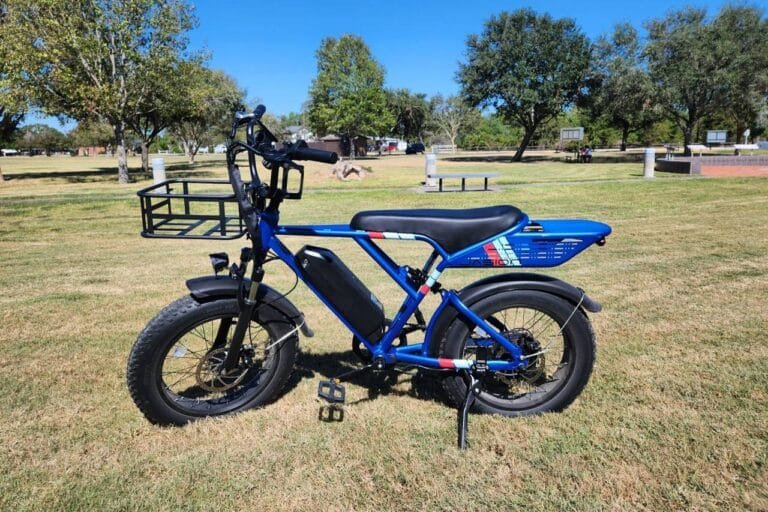
Verdict (1 sentence): The TST R9 is the utility-minded pick because it pairs a 48V 15Ah battery with full suspension and a two-seat layout, but the weight and passenger implications raise the safety bar significantly for teen riders.
Evidence Snapshot:
Price: $599.99
Motor class (real use): 750W / 1500W peak with 90 Nm claimed torque = strong hill starts
Battery: 48V 15Ah removable (UL 2849 certified as stated)
Realistic range:~20–35 miles mixed PAS; throttle-heavy ~12–20
Top speed: up to ~28 mph stated
Weight / portability: listed around 87.74 lb (very heavy)
Load rating: stated up to 450 lb
Tires: 20″ x 4″ puncture-proof snow tires (as stated)
Safety features: front light + tail light/reflecting + braking system (type not specified)
What it’s great at:
✅ High carrying capacity (on paper): Useful for backpacks, sports gear, or groceries.
✅ Two-seat layout: Can be practical for adults, but teens must treat this carefully.
✅ Comfort: Full suspension + fat tires are forgiving.
Trade-offs:
⚠️ Very heavy bike: Harder to maneuver slowly, harder to stop quickly, harder to recover from wobble.
⚠️ Passenger risk + legal rules: Carrying a second person changes braking distance, handling, and legality in many areas.
Buy it if:
✅ Passenger riding is legal where you live, and you’re willing to enforce strict rules (skills first, speed limits, daylight only).
✅ Your teen is physically strong enough to handle a very heavy bike.
✅ You want a utility-style ride and you’ll maintain brakes and bolts consistently.
Skip it if:
❌ Your teen is new to riding in traffic or struggles with bike handling.
❌ You need anything portable, apartment-friendly, or easy to load in a car.
Worth it under:$600
Above that, you’re paying more for a heavy platform that still needs careful safety management.
Best Braking Confidence: Likebike U12 — Best for Safety Hardware (Brakes + Signals)
Verdict (1 sentence): The Likebike U12 is the best choice for braking confidence because it explicitly includes hydraulic disc brakes plus turn signals and horn, but the higher power and speed potential mean it only makes sense if you’re committed to conservative settings.
Evidence Snapshot:
Typical price: $649.99
Motor class (real use): 2000W peak = quick acceleration and strong hill assistance (also easier to get into trouble)
Battery: 20Ah removable/hidden with BMS protections described
Realistic range: “100+ miles” claims are usually best-case; plan on ~30–55 miles mixed PAS for many riders, more if speeds are low and terrain is flat
Top speed: up to ~32 mph claimed (compliance-dependent)
The safest teen e-bike is the one that reduces the consequences of mistakes, even when the teen is confident.
1) Start with legality and speed class, not motor watts
Many areas treat Class 3 (~28 mph PAS) differently: helmet rules, age minimums, and road/path restrictions can change. If your teen is under 16, assume you’ll need a more conservative setup (and possibly a different category of bike entirely).
2) Prioritize braking confidence over “peak power”
For teens, the feel of braking matters as much as raw stopping distance. Hydraulic brakes generally provide:
More consistent lever feel
Easier modulation (less jerky stops)
Better confidence under stress
If you’re choosing between similar bikes, hydraulic brakes are a real safety upgrade.
3) Treat fat tires and suspension as “confidence tools,” not performance tools
Fat tires and full suspension can make a teen feel safer because the bike tracks over cracks and uneven pavement. The trade-off is:
More weight
Less efficiency (range drops)
More maintenance points (suspension bolts, pivots, alignment)
4) Think hard about weight and storage
Most moped-style fat-tire e-bikes are too heavy for stairs, small apartments, or frequent car transport. If your teen must lift the bike, it’s not “occasionally annoying”—it becomes a reason they ride less.
5) Make speed limiting and riding rules part of the purchase
For teens, we strongly prefer:
A model with speed cap settings (like the TST R002’s app)
Starting on lower assist levels
Throttle use only after consistent braking/traffic behavior
A simple rule that works: “Earn speed” (time + safe riding) instead of giving it on day one.
Realistic Range Guide
Real-world range is usually lower than marketing range, especially on 20″ x 4″ fat tires.
A practical planning rule for many fat-tire e-bikes:
Low assist / calm riding: ~60–80% of claimed range
Mixed riding (typical teen behavior): ~45–65% of claimed range
Throttle-heavy / high speed: ~30–50% of claimed range
Range drops with: higher speed, hills, heavy backpacks, underinflated tires, cold weather, and frequent full-throttle starts.
Red Flags to Avoid
The wrong teen e-bike is the one that “works great” until the first bad decision.
Very high top-speed claims without clear speed limiting tools
Unclear brake type (you want to know what you’re buying)
Passenger-friendly seats if you can’t enforce passenger rules
No clear safety certification language (UL references help, even if they’re not the whole story)
Too heavy to move safely (tipping + awkward handling increases beginner risk)
Worth-It Price Thresholds
Price discipline matters because the category is full of “almost the same bike” listings.
TST R002 is worth it under $699 for the speed-control + visibility advantage.
Askmy E500 is worth it under $499 as the budget pick.
Windone E2 is worth it under $930 only if comfort + fit are perfect for your teen.
TST R9 is worth it under $600 if (and only if) you truly need the utility/two-seat layout.
Likebike U12 is worth it under $650 for hydraulic brakes + signals—features that actually change safety.
If any of these climb significantly above the thresholds, the smarter move is usually switching categories (lighter, lower-speed commuter-style e-bike) rather than paying extra for more peak watts.
FAQ
1) What is a realistic speed for a teenager on an e-bike?
For most teens, a realistic “safe learning” target is 15–20 mph until they prove consistent braking, signaling, and hazard awareness. Higher speeds shrink reaction time fast.
2) Is 28 mph pedal assist too fast for a teen?
It can be, depending on maturity, experience, and local roads. If you can cap speed and enforce rules, it can be manageable for older teens; without controls, it’s often a bad idea.
3) How much does rider weight affect range?
A lighter teen may see modestly better range than a 180 lb adult, but fat tires and high speeds can erase that advantage quickly. Speed and terrain usually matter more than weight alone.
4) Are fat tires safer for teens?
They can feel safer because they’re stable and forgiving on cracks and gravel. The trade-off is extra weight and longer stopping distances at speed if braking isn’t strong.
5) Hydraulic vs mechanical brakes: what will a teen actually notice?
Hydraulic brakes usually feel smoother and require less hand force. Teens often notice they can stop more confidently without “grabbing” the lever.
6) Should a teen use throttle mode?
Throttle mode is fine in controlled settings, but it increases risk if used for speed games. A good approach is throttle only after the teen demonstrates consistent control on pedal assist.
7) Is riding with a passenger safe on these bikes?
It adds risk: longer stopping distances, more wobble at low speed, and more legal restrictions. For teen riders, it’s best treated as “no passengers” until skill and rules are proven.
8) How often should parents check the bike?
At minimum: weekly quick checks for the first month (brakes, tire pressure, axle nuts, handlebar tightness), then every 2–4 weeks depending on riding frequency.
9) What’s the safest way to charge an e-bike battery at home?
Charge in a dry, ventilated area, away from exits, use the original charger, avoid overnight charging until you trust the routine, and don’t charge a battery that looks damaged.
10) What features matter most for teen visibility?
A bright headlight, a visible taillight, reflectors, and (ideally) turn signals. Even better: requiring a high-visibility jacket/vest at dusk.
11) Can these bikes handle hills for a teen rider?
Yes—most of these have ample peak power for typical hills. The bigger issue is controlling speed downhill and having braking that feels confident.
12) What’s the single biggest mistake families make buying a teen e-bike?
Buying based on top speed and motor peak power instead of fit, braking confidence, speed control, and rules.
Final Recommendation
Safest pick for most teen riders (with controlled settings):TST R002 Best value for the money:Askmy E500 Best for braking confidence and safety hardware:Likebike U12 Best comfort-focused choice (for taller teens):Windone E2
Did this guide help?
GoEBikeLife is reader-supported. If this guide helped with your research, using the links in this article may help support our work. It helps us keep publishing practical e-bike reviews and buying guides at no extra cost to you.
Disclosure: As an Amazon Associate I earn from qualifying purchases.
At GoEBikeLife, we love sharing e-bike knowledge, but maintaining this blog takes time and resources. If you find our content helpful, we’d appreciate it if you shop through our trusted affiliate links, such as Amazon. When you make a purchase, we earn a small commission at no extra cost to you. It’s a simple, anonymous way to support our work. Thanks for helping us keep the wheels turning!