Real rides. Real notes. No hype.

Amyet electric bike reviews with ranked picks for S8, EB26, and V9-G60. Real ride-feel insight, range expectations, and who should skip.
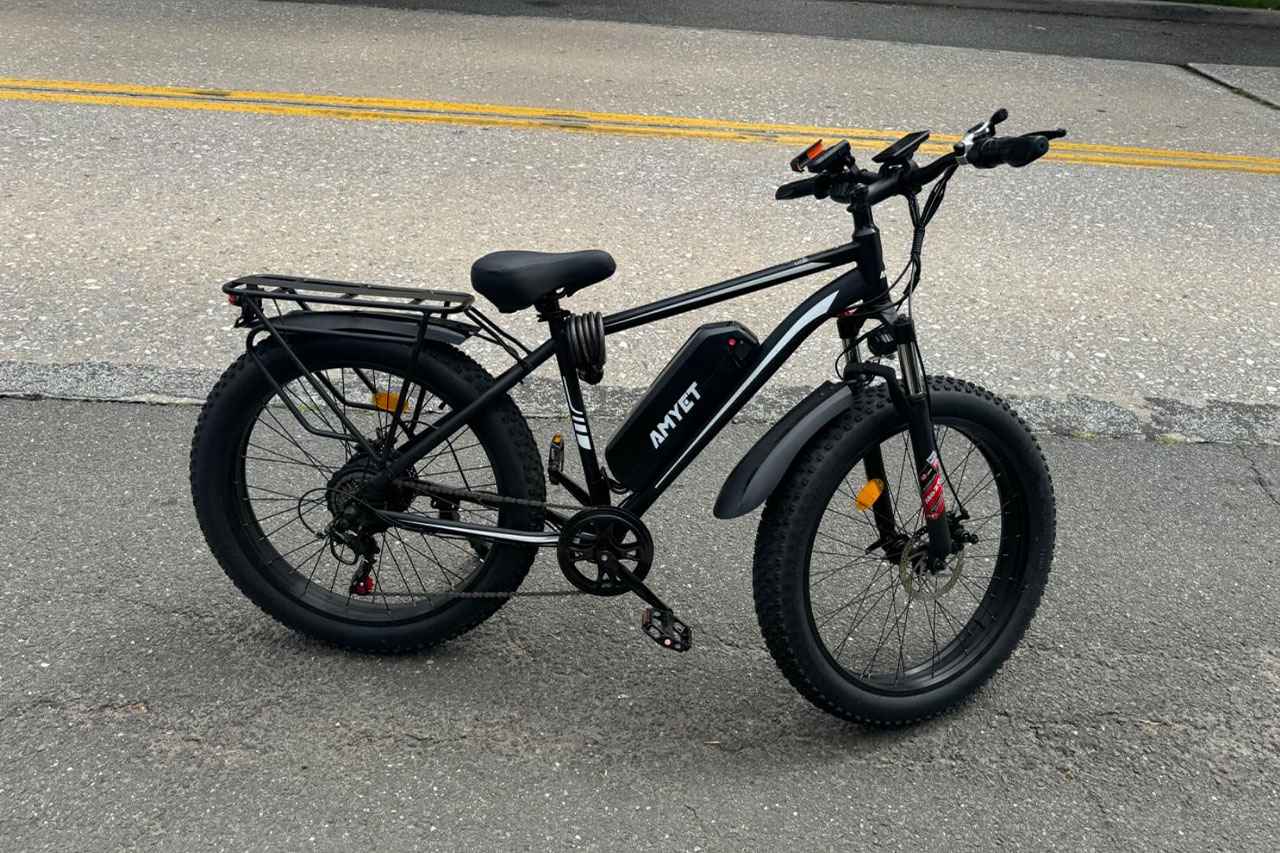
If you’re shopping AMYET e-bikes, you’re probably chasing one of two things: big motor feel on a budget, or a fat-tire ride that’s stable on rough surfaces without paying premium-brand money. I looked closely at AMYET’s current lineup you provided and wrote this guide the way I’d explain it to a friend who’s about to spend real cash on a heavy, fast e-bike.
My promise up front: I’m not here to hype these. These bikes can be fun and genuinely useful, but they also come with the usual realities of high-power, fat-tire builds—weight, range sensitivity, and some “budget bike” ownership friction.
Best overall pick: AMYET S8 — the strongest “complete package” for riders who want higher-speed stability and better braking confidence (especially if you get the hydraulic brake configuration).
Best value pick: AMYET EB26 — the cheapest path to a 26″ fat-tire e-bike that can handle heavier riders, with the clearest everyday practicality.
Who should buy from this list: riders who want a stable fat-tire platform for mixed roads, light trails, sand/snow occasionally, and who accept that these are big, heavy bikes.
Who may want to look elsewhere: anyone who needs to carry a bike upstairs, wants a truly “bicycle-like” pedaling feel (torque sensor style), or wants a lightweight commuter that’s easy to store.
| Model | Best for | Key strength | Main drawback |
|---|---|---|---|
| AMYET S8 | Faster cruising + confidence on rougher roads | More “premium-like” safety potential (hydraulic brake option) + bigger battery | Likely bulky/heavy; higher-speed riding demands more maintenance attention |
| AMYET EB26 | Budget all-rounder + larger riders | Strong value + 330 lb capacity + 26″ tires feel less twitchy | Mechanical brakes mean more hand effort + more frequent adjustment |
| AMYET V9-G60 | Compact-ish fat-tire “mini dirt bike” vibe | Big battery (960Wh) + dual suspension comfort idea | 20″ fat tires can feel busy at speed; storage/handling weight still a reality |
If I’m choosing one AMYET model from your list for the widest range of riders, I pick the S8 because it appears to aim higher on the stuff that matters when speeds climb: braking confidence, lighting/signaling, and overall control. A fast e-bike that can’t stop predictably is not “fun,” it’s stressful—especially on real streets with cars, wet paint lines, and surprise potholes.
I also like that it’s positioned as a more feature-complete build, rather than just “big motor + fat tires.” That tends to translate into a better day-to-day experience: fewer “why did they cheap out on this?” moments.
It should feel calmer at speed than smaller-wheel bikes. Even with fat tires, the frame and suspension intent matters. In my experience riding this style of e-bike, the “fast fat-tire” category can get sketchy if the front end feels vague. A model that’s built and equipped to be ridden faster tends to feel less nervous when you’re cruising.
Bigger battery = less range anxiety if you ride reasonably. A 960Wh pack is a legitimate capacity for longer rides, but here’s the truth: fat tires plus higher speeds will still chew through energy. The upside is you have more buffer before performance starts to feel “soft” as battery voltage drops.
Hydraulic braking (if that’s your exact config) is a practical upgrade. Not because hydraulics are “fancy,” but because they usually give:
1) This category is almost never light. Even without a listed weight, a full-suspension fat-tire build with a 960Wh battery is typically a “garage bike,” not a “carry-it-upstairs” bike. If you have steps or a small apartment, this can become annoying fast.
2) High-speed + fat tires = higher maintenance expectations. You’ll go through brake pads faster, you’ll want to keep bolts checked, and you’ll need to care about tire pressure more than you think. These bikes reward owners who do basic weekly checks.
3) If the bike uses cadence-style assist (common in this segment), the pedal feel may be less natural. That usually means the motor responds to pedaling motion rather than your effort—great for easy cruising, less great if you want a truly “bike-like” experience.
| Pros | Cons |
|---|---|
| Big battery on paper (960Wh) supports longer outings | Likely bulky/heavy for stairs and racks |
| Potentially better braking confidence (hydraulic option) | Higher-speed riding increases maintenance needs |
| Lighting + signals help in real traffic | Pedal feel may be more “moped-like” (assist tuning dependent) |
| Strong power class claim for hills/acceleration | Range will drop quickly if ridden fast on fat tires |
At the listed price, the EB26 is the simplest “get the job done” choice: 26″ fat tires, a removable 720Wh battery, and a high stated payload (330 lb). This is the model I’d point to for riders who want an e-bike that feels stable and straightforward, and who don’t want to pay extra for features they may not use.
The EB26 also gives you one of the clearest ownership pictures because the listing includes the reality: 77 lb. That’s heavy—but at least you can plan around it.
26″ fat tires feel more planted than 20″ setups. When I ride 20″ fat tire bikes, I usually notice more “busy” steering—quick inputs, more sensitivity to road texture. A 26″ wheel generally calms that down, which matters if you’re commuting or cruising for longer stretches.
Payload rating is meaningful for the right rider. If you’re a bigger rider, or you regularly carry a backpack, locks, maybe groceries—having more rated capacity tends to align with a sturdier feel.
Removable battery is a daily convenience win. If your bike lives in a garage but your charger lives inside, removable packs make ownership easier.
1) This is the EB26’s biggest real-world drawback. Heavy bikes:
2) Mechanical brakes require more hand effort and more adjustment. They can work fine, but on a heavy, faster bike, you may find yourself squeezing harder—especially on longer descents. You’ll also likely do more cable adjustment as pads wear.
3) Range claims can be optimistic depending on how you ride. The listing mentions up to 60 miles in PAS mode, but fat tires + speed + rider weight can cut that quickly. The 720Wh battery is decent, but it’s not magic.
| Pros | Cons |
|---|---|
| Strong value for a 26″ fat-tire e-bike | 77 lb is tough for stairs/racks |
| 330 lb capacity supports bigger riders | Mechanical brakes need more adjustment/hand force |
| Removable 720Wh battery is practical | Range drops fast if you ride near top speed |
| Stable feel over rough pavement | Steel frame weight affects handling off the bike |
The V9-G60 is attractive for one simple reason: it pairs a big 960Wh battery with 20″ x 4″ fat tires and dual suspension in a more compact wheel format. If you like the “mini e-dirt bike” vibe—shorter wheelbase feel, quick acceleration sensation, and cushier ride over chopped-up pavement—this is the one that matches that personality.
I ranked it behind the other two because 20″ fat tire bikes can be a little more demanding to ride smoothly at higher speeds, and because compact doesn’t necessarily mean light or easy to store.
Big battery helps this style of bike feel “usable,” not just fun. With smaller wheels and fat tires, riders often lean on throttle more. A larger battery gives you more realistic ride time before you feel forced to baby the assist level.
Dual suspension can reduce fatigue on rough streets. On this category of bike, suspension isn’t about mountain-biking—it’s about making potholes, sidewalk seams, and broken pavement less punishing.
20″ fat tires are confidence-inspiring at lower speeds and on loose surfaces. Sand, snow patches, gravel paths—fat tires help you stay upright when surfaces get sketchy.
1) 20″ wheels can feel twitchier at speed. It’s not unsafe by default, but it can feel more “reactive” than a 26″ bike. If you’re planning to ride near the upper speed range often, stability becomes a higher priority.
2) Fat tires eat range when you push speed. Even with 960Wh, you can drain a battery quickly if you ride fast, accelerate hard, and run high assist.
3) Real storage practicality may still be poor. Compact wheel size doesn’t automatically equal easy to lift. Expect a bulky footprint and a “park it” lifestyle rather than “carry it.”
| Pros | Cons |
|---|---|
| Large 960Wh removable battery supports longer rides | 20″ fat-tire handling can feel busy at higher speeds |
| Dual suspension can improve comfort on rough streets | Range drops quickly with fast riding habits |
| Turn signals/brake light help for street visibility | Likely bulky for apartments and tight storage |
| Fat tires add traction on loose surfaces | Not the most “bicycle-like” pedaling feel |
On heavy e-bikes, brakes are not a minor detail.
If you’ll ride fast or ride hills, prioritize braking confidence over raw motor numbers.
Bigger batteries help, but your habits matter more:
As a rule: buy the biggest battery you can afford if you ride long or ride fast.
Choose based on where you ride most: long straight roads vs tight city riding and mixed surfaces.
This is where buyers get surprised.
Before you buy, be honest:
If the answer is yes, a heavy fat-tire e-bike can become a daily annoyance.
Is AMYET good for hills?
With the stated high-power class motors, these should handle moderate hills well, but steep, sustained climbs still reward better gearing and strong braking.
Which AMYET is best for heavier riders?
The EB26 stands out with a stated 330 lb capacity, which is reassuring for larger riders and heavier loads.
Do these bikes feel like normal bicycles?
Usually not. Fat tires and typical assist tuning can feel more “moped-like,” especially if you rely on throttle or higher assist levels.
How far can I realistically ride per charge?
It depends heavily on speed, hills, and rider weight. Expect the biggest drop when you ride fast on fat tires, even with larger batteries.
Are these bikes safe?
Safety is a system: brakes, tires, lighting, and maintenance. If your chosen model has UL 2849 certification listed, that’s a positive sign, but you still need good setup and regular checks.
Which one is easiest to live with day to day?
If you have storage space and want practicality, the EB26 is straightforward. If you prioritize a more feature-complete package, the S8 is the better direction.
What’s the first thing you’d upgrade or check?
I’d start with: brake setup/adjustment, bolt checks after early rides, and dialing tire pressure for your weight and surface.
Pick the AMYET S8 if you want the most well-rounded option from this list—especially if your exact configuration includes the hydraulic braking setup and you care about control at higher speeds. It’s the best match for riders who want a “more complete” bike, not just a powerful one.
Choose the AMYET EB26 if you want the best value and the most straightforward daily usability—as long as you can live with 77 lb of bike. It’s stable, practical, and budget-friendly, but it’s not portable.
Go with the AMYET V9-G60 if you specifically want the compact 20″ fat-tire vibe with a big battery and comfort emphasis, and you’re not chasing the calmest high-speed handling.