A little joy belongs in every day.

My real-world PUJH PU3 review: huge torque, strong braking feel, and stable cruising—plus the heavy weight and ownership issues to know first.
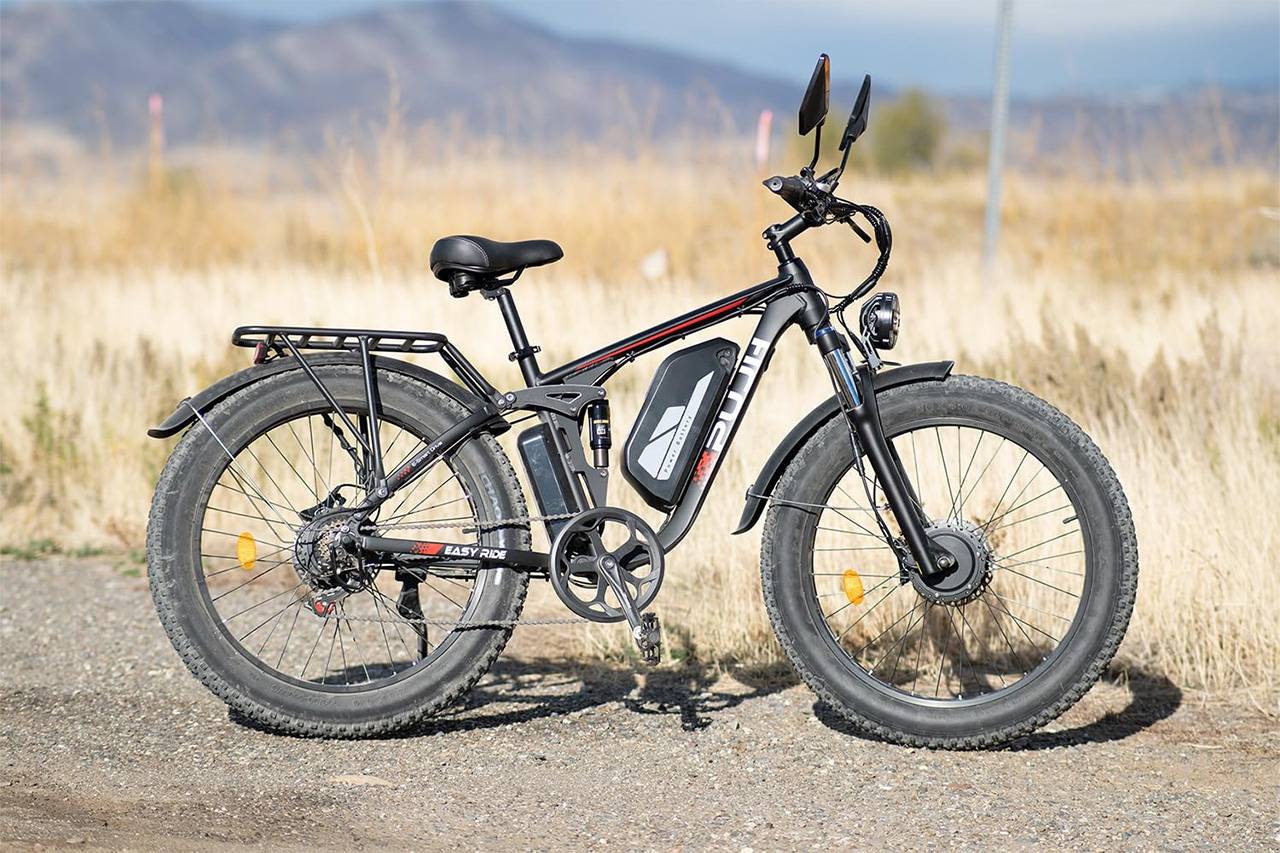
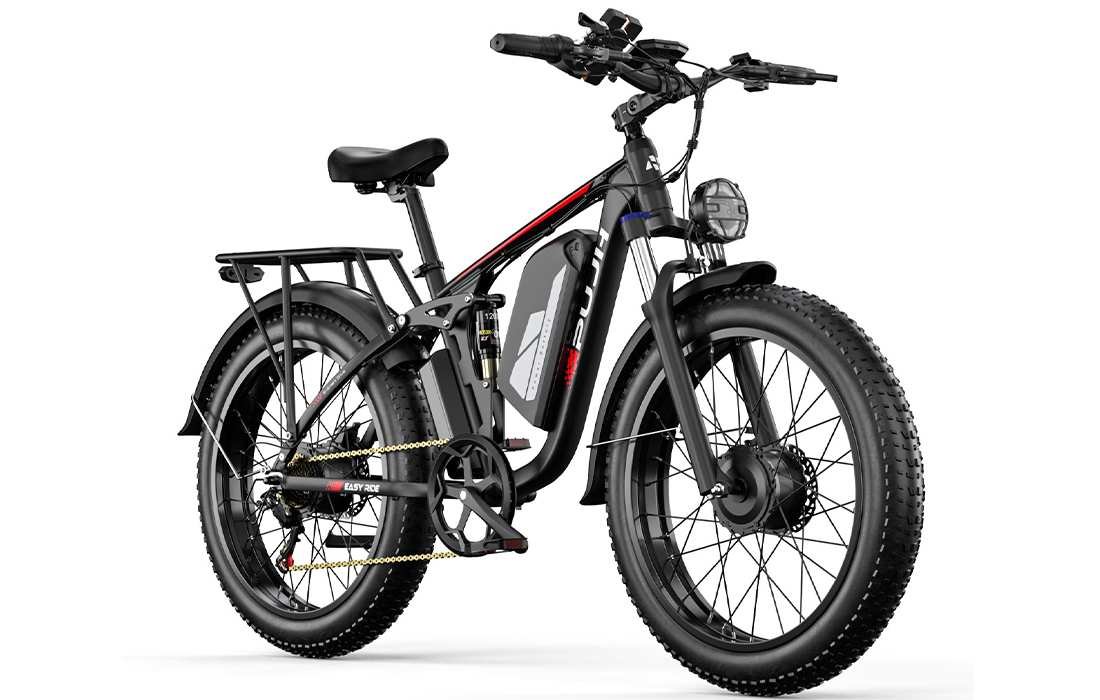
Fast and confidence-inspiring on open roads with strong braking feel, but the weight and high-speed trade-offs matter for everyday commuting.
Tested: ~40-mile long ride + short trips. Rider: 5′10″ / ~180 lb. Best fit for: open-road cruising, wind, and hills.
The PUJH PU3 is the kind of e-bike that makes you grin the first time you roll into the throttle. It’s a dual-motor fat-tire bike built around one clear promise: massive torque and fast acceleration—the “I want to keep up with traffic (or ride far outside the bike lane)” kind of energy.
I spent my time on the PU3 the same way most real owners will: mixed pavement, some rougher surfaces, plenty of stop-and-go starts, and at least one longer day where I wanted to see how it behaves when you ride it like you actually bought it for—fast, confident, and a little irresponsible if you’re not paying attention.
Here’s the honest summary: the PUJH PU3 delivers serious punch and surprisingly confident braking, but it also comes with very real ownership friction (shipping/fitment issues, weight, and legality/safety concerns at its higher speeds).
One-sentence verdict: The PUJH PU3 is a strong choice for riders who want maximum torque and fast, stable cruising, but it’s not ideal if you need a light, easy-to-own commuter or you plan to ride strictly within typical e-bike class limits.
Best for:
Not ideal for:
Biggest strength: The bike’s torque-forward acceleration makes hills and headwinds feel smaller than they are.
Biggest trade-off: Weight + high-speed reality (safety, legal limits, and extra wear) is the price you pay for that power.
In plain English, the PUJH PU3 is a high-power dual-motor fat-tire e-bike that aims to do three things:
It’s positioned more like an “electric mini-moped in bicycle clothing” than a traditional commuter e-bike. That’s not a criticism—just the most accurate way to set expectations before you spend real money.
| Item | What to know |
|---|---|
| Motors | Dual hub motors; marketed as very high peak output |
| Torque | Marketed as extremely high (torque-forward feel matches that) |
| Battery | 60V system; capacity may be listed differently depending on version |
| Range | Claimed range spans a huge window; real range depends on speed, throttle, and terrain |
| Top speed | Marketed as very fast; I saw speeds in the low-40s mph range during testing |
| Tires | Fat tires 24×4.0 inch |
| Brakes | Dual hydraulic disc brakes |
| Suspension | Front + rear suspension; plus fat tires doing real comfort work |
| Drivetrain | 7-speed mechanical gearing |
| Lights | Bright headlight; brake light and turn signals are commonly included |
| Fit | Typically marketed for a wide height range; heavy overall package |
You should be looking at the PUJH PU3 if:
This bike makes the most sense for riders who treat it as a serious powered vehicle—because that’s how it behaves once you start using the performance it offers.
Be blunt with yourself here—this is where returns (and regrets) usually come from.
The first thing I noticed was how quickly the bike responds once you’re rolling. It doesn’t feel like a gentle commuter that ramps up politely—it feels like a machine that wants to move.
The second thing I noticed: the PU3’s “power personality” means you need to ride it with intention. I recommend starting in a lower assist setting and getting a feel for how it steps up, because the jump can surprise you if you’re used to softer cadence-style commuters.
One early downside showed up immediately during setup: the rear rack situation. Mine came in very bent, and even once I got it into usable shape, lining it up during install took more time than it should have.
I hit up to about 42 mph during my higher-speed testing. At that pace, here’s what mattered most:
If you buy this bike because you want speed, ride it like speed is dangerous—because it is.
Range on a high-power dual-motor bike is always a story of how you ride.
On my longer day (about 40 miles) using a mix of pedal assist and throttle, I finished with around 3 bars remaining on the display. That tells me the bike can do real distance, but it also tells me the display “bars” are not precise enough to promise a specific max range.
Here’s a realistic way to think about it:
Top 3 range killers on this bike:
Translate to life: If your commute is a 10-mile round trip, you’re likely looking at multiple days per charge—but only if you ride it like a commuter, not like a speed build.
The PU3 rides smoother than its size suggests, largely because fat tires naturally mute chatter, and the suspension helps on broken pavement and rough patches.
Body-feel notes:
This kind of bike often feels “vehicle-like” because of the battery/motor weight. That’s good for planted cruising, but it also means you should brake early and ride predictably around other people.
The hydraulic brakes were a highlight for me. On the 40-mile day, braking remained consistent, and stopping power felt strong and confidence-inspiring.
That said, here’s the safety reality: when you ride 35–40+ mph, you’re outside the comfort zone of typical bicycle expectations. Even with good brakes, your stopping distance grows fast, and your risk tolerance should shrink.
My practical safety advice if you buy a bike like this:
Certification note: Some listings mention “UL,” but unless you can verify the exact certification standard and coverage, treat it as “needs confirmation,” not a guarantee.
The PU3 is presented as having multiple modes (including cruise-type behavior, walk assist, and different throttle/assist behaviors depending on settings). In real use, what mattered most to me was:
If you’re new to high-power e-bikes, give yourself time in a lower setting before you start chasing top-speed numbers.
I’m 5′10″ and felt comfortable on the PU3 with basic adjustments (saddle height and cockpit setup). The bike’s general fit feels aimed at a wide range of riders.
Shorter riders:
This is still a tall, heavy fat-tire platform. Even if the height range says you fit, make sure you’re confident handling the weight at stops.
Taller/heavier riders:
Power is not the concern here—the bigger concern is braking demands at speed and ensuring bolts, spokes, and key hardware stay tight.
Tuning tips I’d actually do:
The bike was easy to assemble overall, but the rear rack alignment was the time thief for me—especially because mine arrived badly bent.
Expect normal wear items—pads, chain, tires—to matter more because this bike invites faster riding and stronger acceleration. Also: replacement parts and long-term support depend heavily on the seller channel, so I recommend documenting what you receive (photos) in case you need parts support.
Commonly included (varies by listing/version):
Compared to a typical single-motor 750W-class fat-tire commuter, the PU3 wins decisively on:
But it loses on:
If your goal is a normal commute with minimal drama, a lighter, clearly class-limited commuter can be the smarter buy. If your goal is power and grin-factor, the PU3 is more aligned with that mission.
Is it good for hills?
Yes—this is one of its best use cases. The torque-forward feel makes climbing less stressful, but you’ll pay in battery usage if you throttle hard uphill.
Is it comfortable for longer rides?
In my experience, yes. The fat tires and suspension reduce harshness, and I finished a 40-mile day feeling better than I expected.
Can shorter riders fit it?
Fit and confidence are different. Even if the height range says yes, you need to be comfortable managing a heavy bike at stops.
Is the battery removable / easy to charge?
Many versions are marketed as removable/lockable. Confirm your exact listing, and plan for longer charge times typical of big batteries.
How long does charging take?
Often listed as a long window (commonly around overnight). Your real time depends on charger output and battery capacity.
What maintenance should I expect?
Brake pads, tires, chain, and bolt checks matter more than normal because higher speeds and stronger launches increase wear.
Is it safe?
It can be safe when ridden responsibly, but safety depends heavily on rider choices. At higher speeds, your risk and required gear go up fast.
What’s the biggest thing you’d upgrade first?
If you plan to ride fast regularly: higher-quality brake pads (and a full bolt check/torque routine) would be my first “serious owner” move.
Buy it if: You want a dual-motor fat-tire e-bike with real torque, strong braking feel, and the ability to cruise fast on open roads.
Skip it if: You need lightweight practicality, strict class compliance, or you don’t want to deal with potential shipping/fitment issues like a bent rack.
Best use case: Open-road cruising, windy areas, hillier routes, and mixed terrain where power and stability matter more than nimble handling.
Main compromise: You’re trading convenience and “normal e-bike simplicity” for power—plus you’re accepting the safety/legal reality that comes with higher speeds.
Personal judgment: If I specifically wanted a powerful, fun, torque-heavy ride and I had the space to store it, I’d consider spending my own money on it. If my goal was a clean, simple commuter with minimal hassle, I’d buy something lighter and more clearly class-limited.




Are there service centers in metropolitan areas in the event there is a problem. I know it comes from Hong Kong. Thank you.
Hi John,
Thanks for your question.
Most direct-to-consumer e-bike brands like PUJH typically do not operate traditional service centers in major cities. Instead, they usually provide customer support online and ship replacement parts if something needs to be repaired.
For basic maintenance (such as brakes, tires, or drivetrain adjustments), many riders simply visit a local bicycle shop, since most standard bike components can be serviced there.
If you are considering the PUJH PU3 and want to confirm warranty support or parts availability, I would recommend contacting the brand directly before purchasing. They can provide the most accurate information about their current support options.
Hope this helps!
— GoEBikeLife