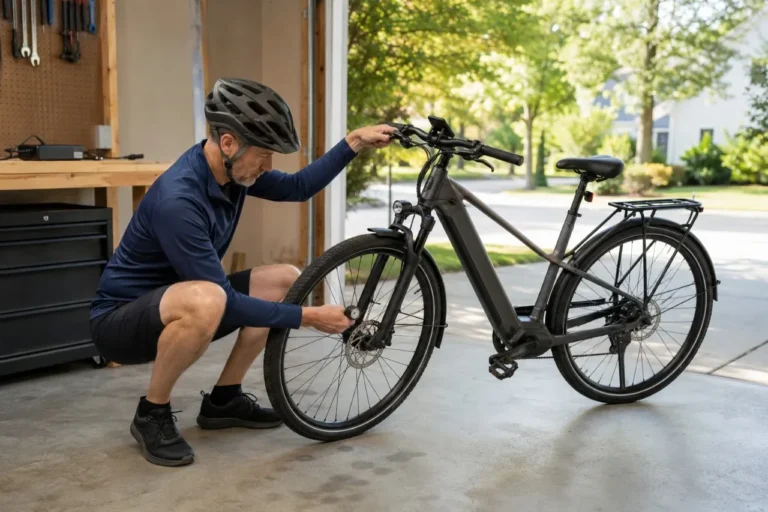
To prevent e-bike chain rust, dry the chain after wet rides, remove road salt and grime promptly, use a bicycle-specific lubricant compatible with your chain’s existing lubrication system, and store the bike somewhere dry. Pay particular attention after winter commutes and washing. A thin, properly applied protective lubricant film is more useful than coating the outside of the chain with excess oil.
Most conventional e-bike chains contain steel parts that can corrode when moisture remains on them. Mid-drive e-bikes can place substantial motor-assisted loads through the chain, making regular drivetrain inspection especially worthwhile. The steps below focus on preventing corrosion rather than performing a full drivetrain overhaul.
Why E-Bike Chains Rust
Moisture and oxygen cause exposed steel to corrode. Rain alone does not guarantee rust, but water left on a chain—especially when lubricant has washed away—raises the risk. Winter road salt, coastal spray, mud, and condensation in poorly ventilated storage areas make the problem worse.
Surface discoloration and damage inside the chain are not the same thing. Light orange marks on the outside may be removable. Stiff links, substantial pitting, or deteriorated rollers are more serious because they can interfere with smooth chain movement and reliable shifting.
A Simple Routine to Prevent Chain Rust
1. Switch Off the E-Bike and Dry the Chain
Park the bike securely and switch off its electrical system. Follow the manufacturer’s instructions about battery removal and cleaning. Keep hands, loose clothing, and cleaning materials away from moving sprockets and chainrings.
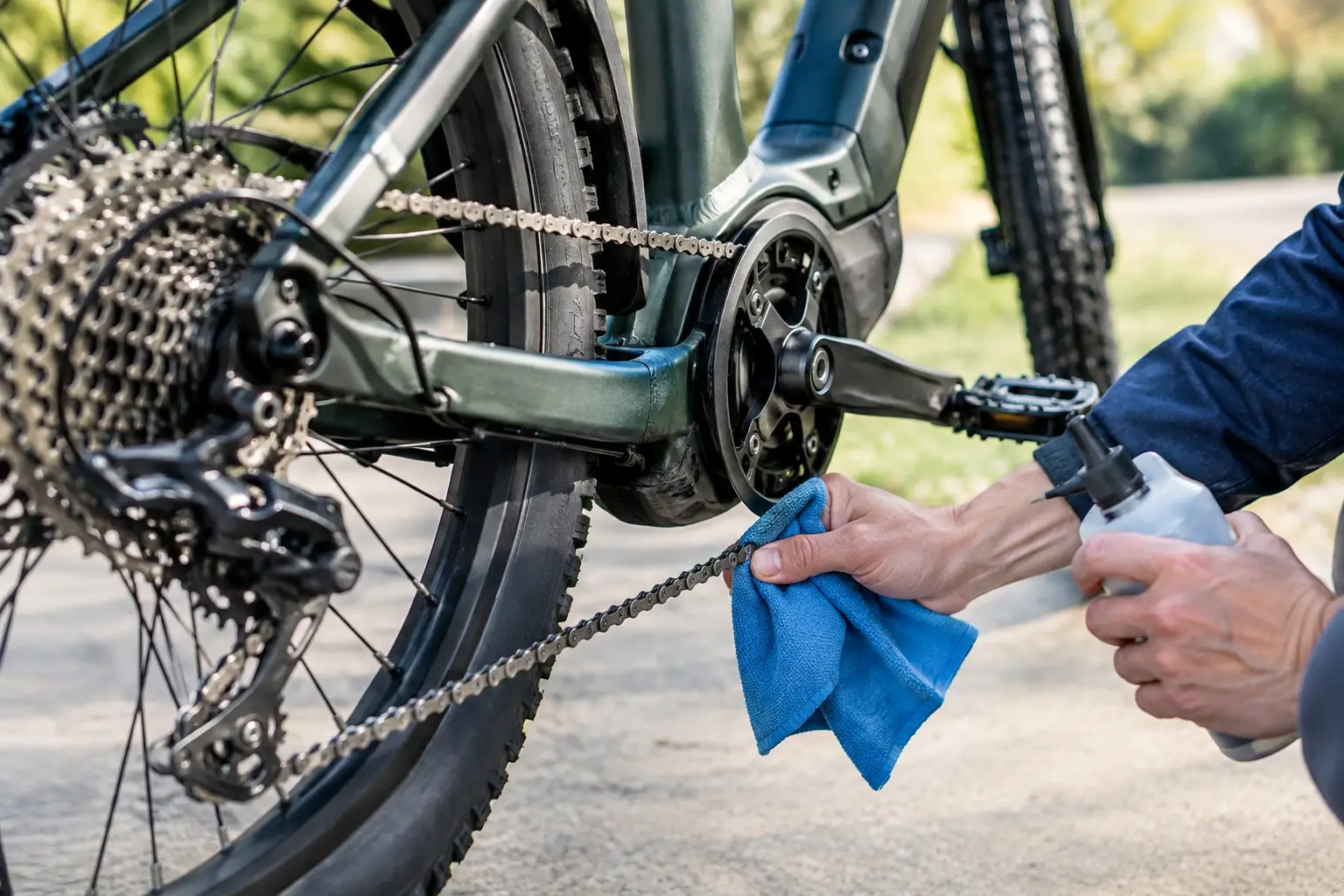
Use a clean, dry cloth to wipe the accessible chain sections while the drivetrain is stationary. Move to another section only after repositioning the chain safely. If the bike permits manual backpedaling, move the pedals with your hands clear of the drivetrain, stop, and then wipe the next section. Never hold a cloth around the chain while turning the cranks.
Some mid-drive e-bikes do not move the chain when backpedaled. Do not force the drivetrain or power the motor to make cleaning easier. Use the manufacturer’s recommended method or ask a bicycle mechanic for help.
Also dry accessible rear cogs, chainring surfaces, and derailleur pulleys without putting fingers between moving parts. If the chain is still damp, allow it to dry before applying lubricant.
2. Remove Road Salt and Grit

After a salty, muddy, or particularly dirty ride, wipe away contamination promptly. For stubborn grime, use a bicycle-chain-compatible cleaner sparingly on a cloth or appropriate brush, following the product label and drivetrain manufacturer’s instructions.
Keep degreaser and lubricant away from brake rotors, brake pads, electrical connectors, battery contacts, and motor openings. Avoid pressure washers and concentrated jets of water. If gentle rinsing is permitted by your e-bike manufacturer, dry the chain and surrounding drivetrain thoroughly afterward.
For a detailed cleaning procedure, see how to clean an e-bike drivetrain safely.
3. Choose Lubricant for Your Conditions


Use a bicycle-specific chain lubricant approved for your chain and current lubrication system. Wet-condition lubes are generally suited to rainy riding; dry-condition lubes often attract less dirt in dusty conditions. All-weather formulas may suit mixed use. Product labels and drivetrain manufacturer guidance take priority.
If the chain uses a wax-based treatment or a manufacturer-specified coating, follow that system’s cleaning and reapplication directions. Do not automatically mix conventional oil with wax. Likewise, check the instructions for a new, factory-lubricated chain before adding anything.
For conventional drip lubricants, apply a small amount at each link’s roller or pin area using the product’s directions. Allow the specified penetration or curing time, then wipe excess lubricant off the chain’s exterior. Do not allow oil to reach the brakes or tires. Never use the motor or throttle to rotate the chain during lubrication.
4. Inspect After Wet or Winter Rides
After rain, slush, or salted roads, look for trapped water, orange discoloration, gritty buildup, and stiff links. The lower chain run and rear derailleur pulleys are common places for road spray and dirt to accumulate. On single-speed or internally geared bikes, inspect the accessible chain and rear cog areas as well.
Clean and dry promptly when contamination is present. Reapply lubricant when washing, exposure, or the product instructions call for it. There is no need to add more oil after every ride if the chain is already clean and properly protected.
How Often Should You Lubricate an E-Bike Chain?
There is no universal mileage schedule. Frequency depends on weather, riding surfaces, the lubricant, chain design, and the manufacturer’s maintenance instructions.
| Riding conditions | Practical maintenance approach |
|---|---|
| Mostly dry pavement | Inspect periodically; wipe grit and lubricate when the chain or product instructions indicate. |
| Rainy commuting | Dry after wet rides and check whether lubrication needs renewal. |
| Salted winter roads | Remove salt contamination promptly, dry thoroughly, and renew protection as needed. |
| Dusty trails | Remove abrasive dust before adding more lubricant; avoid a heavy oily coating. |
| Storage for several weeks | Clean, dry, and protect the chain before storage; check it again before riding. |
Squeaking, rough movement, and visible dryness can indicate that the chain needs attention, but sound alone does not establish its condition. Mid-drive riders should pay close attention to chain wear because motor assistance is transmitted through the chain and rear sprockets. Follow any more specific service interval in the owner’s manual.
Storage Habits That Reduce Corrosion
Store the e-bike in a dry, sheltered, ventilated location. Avoid places where rainwater, vehicle spray, snowmelt, or condensation repeatedly reaches the drivetrain. A garage is not automatically dry: check for damp floors and moisture accumulating on metal surfaces.
If outdoor storage is unavoidable, choose a sheltered spot and a cover that does not trap condensation. Remove the cover periodically to inspect and dry the bike. Before longer storage, clean and lubricate the chain according to its product instructions.
Battery storage is a separate safety issue. Follow the battery manufacturer’s temperature, charge-level, and storage requirements rather than assuming the ideal conditions for the chain apply to the battery.
What If the Chain Is Already Rusty?
Light, superficial orange discoloration does not always require immediate replacement. With the e-bike switched off and the drivetrain stationary, wipe away loose contamination, use a chain-safe cleaner if appropriate, dry completely, and lubricate according to the chain’s instructions. Check for smooth link movement without placing fingers near moving sprockets.
Stop riding and arrange a professional drivetrain inspection if you find any of the following:
- Links that remain stiff or seized after appropriate cleaning
- Deep pitting, heavy flaky rust, or visibly damaged rollers or side plates
- Repeated chain skipping, binding, or derailment
- Cracked, bent, or otherwise damaged chain or drivetrain components
- Unreliable shifting or unusual drivetrain behavior that persists after basic maintenance
A qualified mechanic can measure chain wear and determine whether the chain or associated sprockets need replacement. Corrosion and elongation-related wear are different problems: a chain can look clean yet be worn out, or show minor surface staining without being beyond its service limit.
Mistakes That Make Chain Rust Worse
Leaving the bike wet: Moisture trapped between links can remain long after the frame looks dry. Dry the drivetrain after wet rides.
Adding lubricant over salt and grit: Fresh oil does not remove abrasive contamination. Clean first, then dry and lubricate.
Using too much lubricant: Excess on the outside of the chain attracts dirt and may spread onto other components. Follow the product’s dosage and wipe off surplus.
Using unsuitable household oils or penetrating sprays: Cooking oil, heavy grease, and general-purpose penetrating products are not substitutes for an appropriate bicycle-chain lubrication system.
Contaminating the brakes: Keep chain cleaners and lubricants off brake rotors and pads. If braking performance changes or the brakes become contaminated, do not ride until a qualified mechanic has assessed and corrected the problem.
Forcing the drivetrain to move: Never activate the motor for cleaning. Do not force backpedaling on a mid-drive system whose chain does not move backward.
The Bottom Line
Preventing e-bike chain rust is mostly about timely drying, removing salt and grime, using compatible lubrication, and controlling moisture during storage. Inspect the chain more often in wet or winter conditions. If rust is accompanied by stiff links, deep corrosion, or skipping, stop riding and have the drivetrain inspected rather than relying on another coat of lubricant.
GoEBikeLife publishes independent e-bike reviews, comparisons, and practical buying guides. Some links on this page are affiliate links. If you make a purchase through an eligible link, we may earn a commission at no additional cost to you.