A little joy belongs in every day.

E-bike visibility depends on working lights, clean reflectors, visible clothing, and predictable riding habits. Use this checklist before every ride.
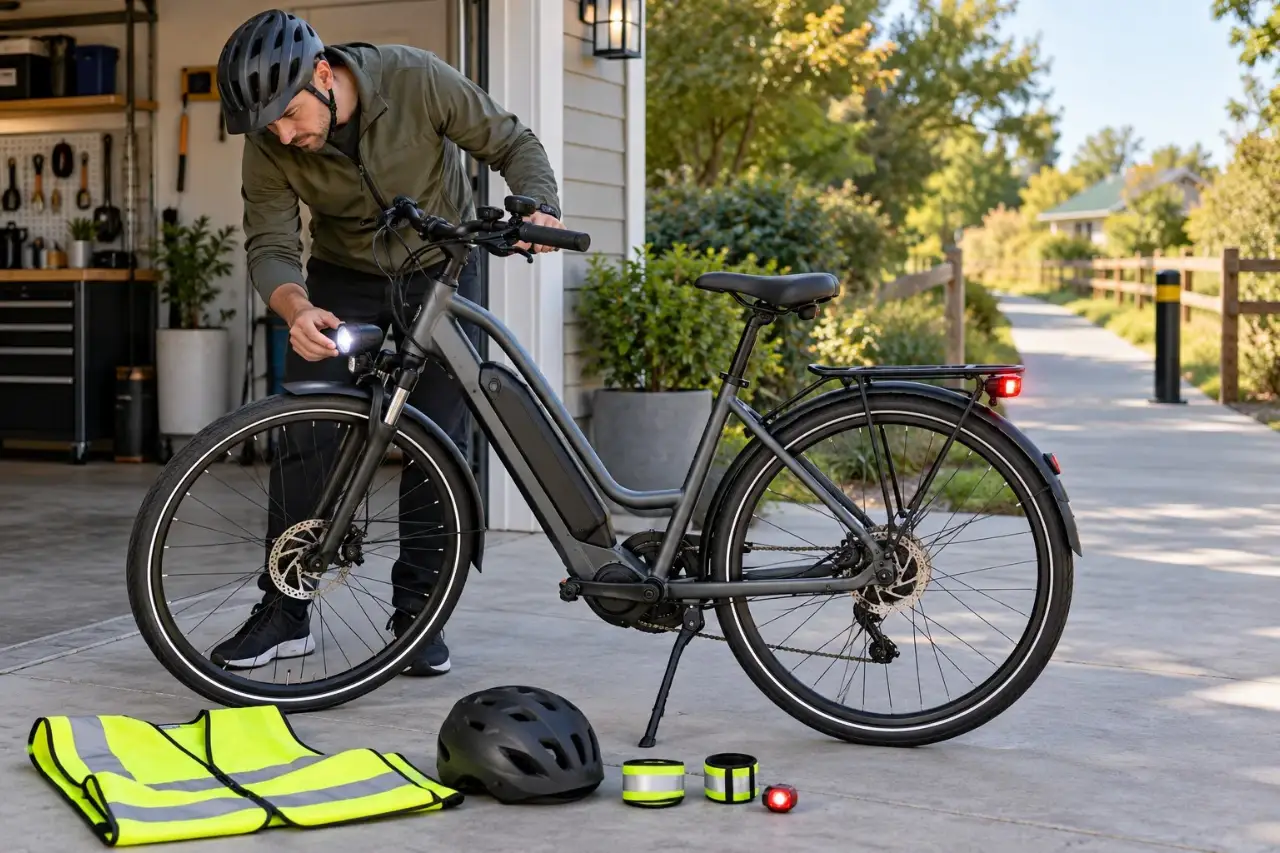
A practical e-bike visibility checklist starts with working front and rear lights, required reflectors, and gear that helps other road users recognize you in different conditions.
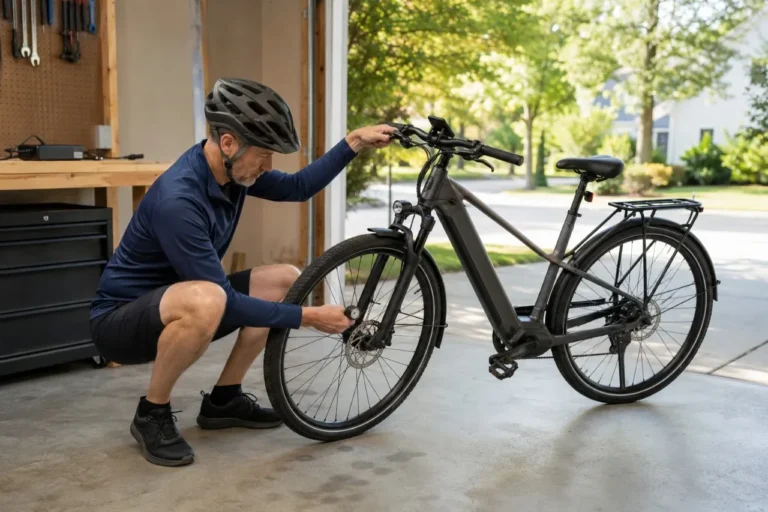
Before every ride, check that your lights work, your rear equipment is visible, and nothing blocks reflective surfaces. Visibility gear improves the chance that others notice you, but it does not replace predictable riding, proper lane position, and caution at intersections.
For a broader pre-ride routine covering brakes, tires, battery, controls, and rider preparation, see our E-Bike Pre-Ride Safety Checklist.
Use this checklist before commuting, riding at dusk, or traveling on roads with frequent turning traffic. Not every rider needs the same setup for every trip, but lights and reflectors provide a useful baseline for many e-bike riders.
If you use clip-on lights, confirm that the mount is secure and the beam points where intended. A light that is rotated, loose, or aimed incorrectly may provide little benefit.
Bright clothing can help during daylight, but color alone may be less effective at night. Active lights create their own visibility, while reflectors work by returning light from vehicle headlights.
Using lights, reflectors, and contrasting clothing together creates a more complete visibility system.
A front light helps other road users recognize your approach. In darker conditions, it can also help you identify pavement changes, debris, and uneven surfaces.
Aim the beam so it provides useful forward visibility without unnecessarily shining into the eyes of approaching riders, pedestrians, or drivers.
The appropriate light output depends on where you ride. A well-lit city street and a dark trail require different amounts of illumination. A brighter light is not automatically better if it creates glare or is poorly aimed.
If your e-bike has an integrated headlight, check the owner’s manual to understand whether it operates independently or only when the main battery is installed and powered on.
A rear light helps approaching traffic identify your position and movement. Mount it where it remains visible, such as a compatible seatpost, rack, or fender location.
Before riding after dark, check your bike from several steps behind. Cargo bags, jackets, and accessories frequently block rear-facing equipment.
Some riders may choose additional approved lighting for cargo setups or riding conditions where the standard rear light is difficult to see.
Reflectors do not require batteries, making them useful as a backup when a light is unavailable or accidentally switched off.
Front, rear, wheel, and pedal reflectors can help reveal the shape and movement of a bicycle when illuminated by vehicle headlights.
However, reflectors are not a replacement for active lights at night. They only work when another light source shines on them, and performance depends on angle, cleanliness, and visibility.
Reflective ankle straps, shoe details, and pedal reflectors can be especially noticeable because the moving pattern helps identify a cyclist. Reflective material on bags or jackets can also help if it does not cover required equipment or create a safety issue.
Visibility clothing is about contrast, not simply choosing one “safe” color.
A bright jacket may stand out against dark pavement but blend into certain backgrounds such as construction areas, autumn vegetation, or brightly colored surroundings. Reflective material becomes especially useful when illuminated by vehicle headlights.
For regular commuters, a lightweight reflective vest or outer layer can be practical because it can be added over normal clothing and removed when you arrive.
Do not assume bright clothing guarantees visibility at every intersection. Low sun, rain, windshield glare, parked vehicles, and driver attention can all affect whether someone notices you.
The most important visibility habit is anticipating situations where other people may not see you.
Pay extra attention near:
When legal and practical, choose a riding position that improves visibility rather than placing yourself where parked vehicles or roadside objects can hide you.
Avoid passing stopped traffic on the right when a vehicle may turn or a door may open. Signal early, check before changing position, and ride predictably.
Do not rely only on eye contact at intersections. Glare, tinted windows, and distractions can make it unreliable. Watch vehicle movement and be prepared to brake.
Rain can reduce contrast and scatter light across wet surfaces. Turn lights on earlier, keep lenses clean, and ensure rain gear does not cover rear-facing equipment.
Water resistance varies between lights and e-bike electrical systems. Follow manufacturer instructions instead of assuming any component is designed for prolonged exposure to heavy rain.
At dawn and dusk, use extra caution because drivers may have difficulty adjusting to changing light conditions. Low sun can also reduce visibility for people approaching from the opposite direction.
For night riding, match your speed and route to your lighting capability. If your light does not allow enough time to identify hazards and react safely, reduce speed or choose a better-lit route.
E-bike lighting and reflector requirements vary across the United States. State laws may establish general bicycle equipment requirements, while cities, parks, trails, or land-management agencies may have additional rules. Confirm current requirements with the relevant authority before riding in unfamiliar areas. Our guide to Federal and State E-Bike Laws explains why equipment, access, and riding rules can vary between locations.
Rules may differ between public roads, shared-use paths, and off-road locations.
Replace damaged mounts, cloudy lenses, loose reflectors, or lights that flicker or shut off unexpectedly. If an integrated e-bike light stops working, follow the owner’s manual or consult a qualified bicycle service provider. Do not modify electrical wiring unless specifically approved by the manufacturer.
The goal of visibility gear is simple: help others notice you earlier and understand your movement. Turn on your lights, keep reflective equipment visible, and continue using safe riding habits when visibility equipment cannot solve every situation.
GoEBikeLife is reader-supported. We test and review e-bikes, create detailed comparisons, and publish practical buying guides for riders. Some links on this page are affiliate links, which means we may earn a commission at no extra cost to you.