An ebike brake failure means you should stop riding as soon as you can do so safely and have the bike inspected before its next trip. If one brake is weak or unavailable, the other may still help you slow down, but it is not a reason to continue your ride. E-bikes are often heavier and faster than standard bicycles, so a small brake problem can become a serious stopping problem quickly.
Brake trouble does not always look dramatic. A lever that pulls closer to the handlebar than usual, a new scraping sound, reduced stopping power, or a bike that pulls to one side can all be early warnings. Treat changes in brake feel as useful information, not something to ride through.
What to do during an ebike brake failure
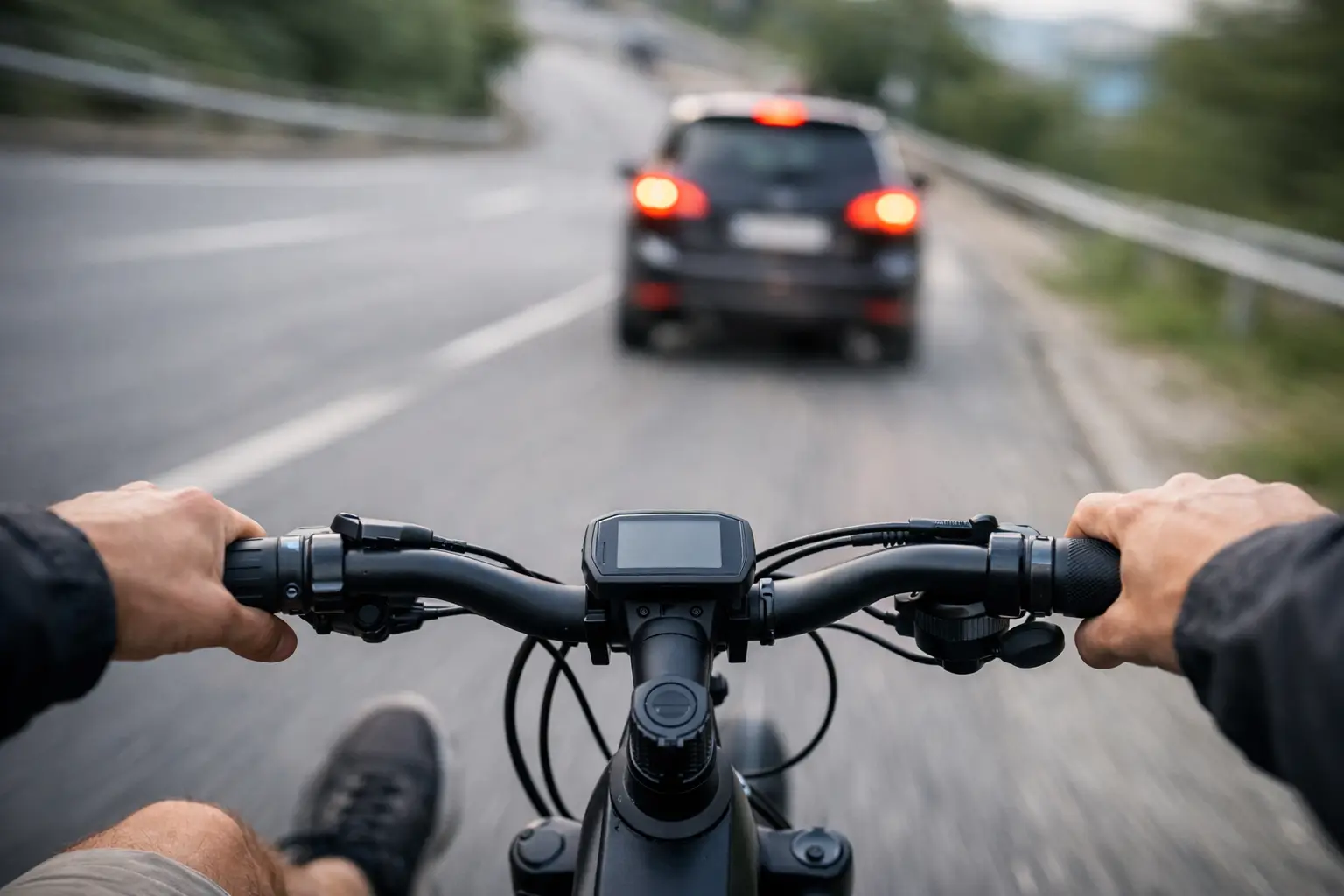
If your brakes feel weak while riding, stay calm and focus on reducing speed. Do not abruptly grab whichever brake still seems to work. A hard front-brake application, especially on loose pavement, wet leaves, gravel, or a turn, can cause a skid or throw the rider forward.
- Stop pedaling and reduce motor assistance if you can do it without taking attention off the road. On many e-bikes, stopping pedaling ends pedal assist. If it is safe and familiar, use the control pad or power button to reduce assistance. Do not fumble with settings while approaching traffic, an intersection, or an obstacle.
- Use the brake that still works with steady, progressive pressure. Keep your body low and shift your weight slightly rearward. Look where you want to go, not down at the brake lever or front wheel.
- Choose the safest available place to slow down. An open, level shoulder, empty driveway, or clear section of path is generally better than trying to thread through people, parked cars, or a narrow gap. If you are descending, steer toward a safe uphill section or a level area when possible.
- Get off the road or path and do not ride again until the problem is identified. If you cannot slow the bike safely, or a crash, injury, or immediate traffic hazard occurs, seek emergency help.
If a brake lever suddenly pulls all the way to the grip, do not assume pumping it repeatedly will restore dependable braking. It can indicate a hydraulic fluid leak, air in the system, or another issue that needs service. If a cable-operated brake lever feels loose or has no resistance, the cable, its anchor bolt, or the brake mechanism may be damaged.
Why e-bike brakes need closer attention
Brakes convert motion into heat. That heat builds faster when the bike carries a rider, cargo, child seat, or trailer, and when riding involves hills or frequent stop-and-go traffic. The motor does not make brakes fail by itself, but extra speed and total bike weight can expose worn pads, poorly adjusted components, or contaminated rotors sooner.
Most e-bikes use either disc brakes or rim brakes. Disc brakes squeeze a metal rotor at the wheel hub. They are common on heavier e-bikes because they generally offer consistent braking in varied weather. Rim brakes squeeze the wheel rim and can work well when properly maintained, but wet or dirty rims may reduce their performance.
Disc brakes may be cable-operated, also called mechanical, or hydraulic. Mechanical disc brakes use a cable between the lever and caliper. Hydraulic brakes use sealed fluid-filled hoses. Owners can often perform basic visual checks on either type, but bleeding hydraulic brakes, replacing damaged hoses, and correcting fluid leaks are jobs for a qualified bicycle mechanic unless the owner has appropriate training and follows the manufacturer’s procedure.
Warning signs to catch before a ride
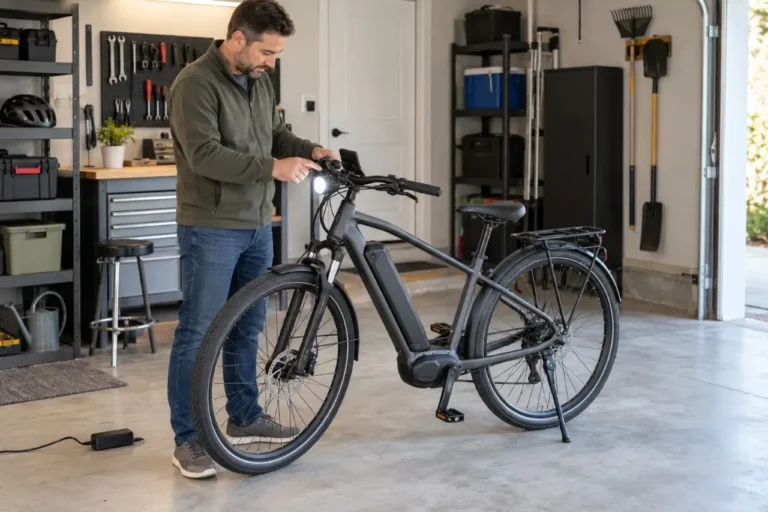
A 30-second check before leaving can reveal many problems. With the e-bike stationary, squeeze each brake lever separately. Each lever should feel firm and should not pull all the way to the handlebar. Roll the bike slowly and test each brake in a clear area. The wheel should slow decisively without a grinding sound, severe vibration, or a lever that feels unusually soft.
Look at the brake system before longer rides, after transporting the bike, and after a fall. Check that the wheels are fully seated and securely fastened, since a loose or misaligned wheel can affect brake alignment. Inspect the brake cable or hydraulic hose for fraying, kinks, crushing, or fluid residue. Do not ride if you see a damaged hose, a leaking fitting, or a cable with broken strands.
For disc brakes, listen for a light, occasional rotor rub after reinstalling a wheel or moving the bike. A mild sound may be an alignment issue, but persistent scraping, a bent rotor, or a wheel that does not spin freely deserves attention. Never touch a rotor immediately after a long descent. It can be hot enough to burn skin.
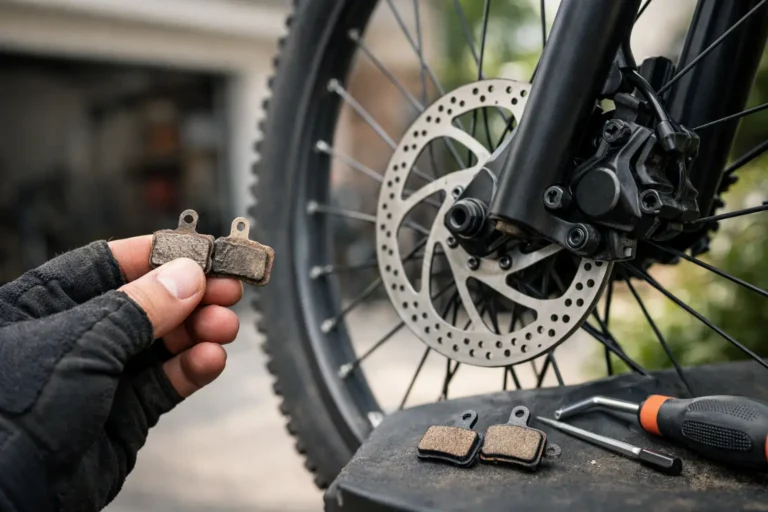
Brake pads wear gradually, which makes them easy to overlook. Check pad thickness according to your e-bike and brake manufacturer’s instructions. If you are unsure how to inspect them, a bike shop can check pad wear, rotor condition, and brake adjustment during routine service.
Common causes of reduced braking
Reduced braking power has several possible causes, and the correct fix depends on the brake type. The most common are worn pads, stretched or damaged cables, hydraulic problems, rotor or rim contamination, and loose or poorly aligned components.
Contamination is especially common with disc brakes. Chain lubricant, grease, cleaning products, or other residues can get on the rotor or pads and cause squealing or weak braking. Keep lubricants away from brake parts. If lubricant reaches the rotor or pads, stop riding until the manufacturer-approved cleaning or service procedure has been completed. Simply spraying random household cleaners on the brake is not a reliable solution.
A loud squeal does not automatically mean the brakes are unsafe, but it should not be ignored if it comes with reduced power, vibration, or a pulsing lever. In wet conditions, some noise can be normal as water clears from the braking surface. Braking performance should return quickly once the surfaces dry.
Basic care owners can safely handle
Follow your owner’s manual first, since brake designs and adjustment procedures vary. General owner-level care includes keeping the bike clean, checking lever feel, inspecting cables and hoses, and making sure mounting bolts appear present and secure. If your manual gives a specific torque value, use that value and an appropriate torque wrench rather than guessing.
Keep tires properly inflated within the tire’s stated pressure range. Tires are part of your stopping system: low pressure can make handling vague, while badly worn tread can reduce grip on wet roads. Also keep cargo secured and within the e-bike’s rated load limit. A shifting load changes how the bike responds under braking.
Avoid hanging an e-bike by a brake hose or forcing the bike into a rack that pinches a cable, caliper, or rotor. After transport, test both brakes before entering traffic. A rotor can bend slightly in a crowded vehicle rack, and a cable can be pulled out of position.
When professional service is the right call
Arrange qualified bicycle service if a hydraulic brake leaks, the lever feels spongy, a hose is damaged, a rotor is bent, braking is uneven, or the bike will not stop confidently after a basic inspection. Professional help is also appropriate after a significant crash, even if the brakes appear to work at first.
Do not ride an e-bike with only one dependable brake, and do not rely on a motor cutoff feature as a substitute for mechanical braking. Some e-bikes reduce motor power when a brake lever is pulled, but that feature does not slow the bike on its own.
A brake check is one of the simplest habits that protects every ride. Give both levers a quick test before rolling out, pay attention when the bike feels different, and treat reliable stopping power as non-negotiable.
Frequently Asked Questions
What does e-bike brake failure feel like?
E-bike brake failure may feel like reduced stopping power, a soft or loose brake lever, a lever that reaches the handlebar, severe vibration, or the bike pulling to one side. New scraping or grinding sounds can also indicate a problem.
What should I do if my e-bike brakes fail while riding?
Stop pedaling and apply the brake that still works with steady, progressive pressure. Keep your body low, shift your weight slightly rearward, and steer toward a clear, level area. Do not ride again until the braking system has been inspected.
Can I ride an e-bike if only one brake works?
No. One working brake may help you stop during an emergency, but it does not provide dependable braking for continued riding. Walk or transport the e-bike and have the failed brake repaired before using it again.
Why does my brake lever pull all the way to the handlebar?
This may indicate worn brake pads, a loose or damaged cable, air in a hydraulic system, or a fluid leak. Stop riding and inspect the brake. Hydraulic leaks, damaged hoses, and bleeding procedures should generally be handled by a qualified bicycle mechanic.
Does a squealing e-bike brake mean it is failing?
Not always. Moisture can temporarily cause brake noise, but persistent squealing accompanied by weak braking, vibration, or a pulsing lever requires inspection. Contaminated pads or rotors, poor alignment, and worn components are possible causes.
How should I check my e-bike brakes before riding?
Squeeze each brake lever separately while the bike is stationary. The levers should feel firm and should not reach the handlebar. Then roll the bike slowly in a clear area and confirm that each brake stops its wheel without grinding, severe vibration, or unusual softness.
When should an e-bike brake be serviced professionally?
Arrange professional service if you notice a hydraulic fluid leak, damaged hose, frayed cable, spongy lever, bent rotor, uneven braking, or unreliable stopping power. The brakes should also be inspected after a significant crash or impact.