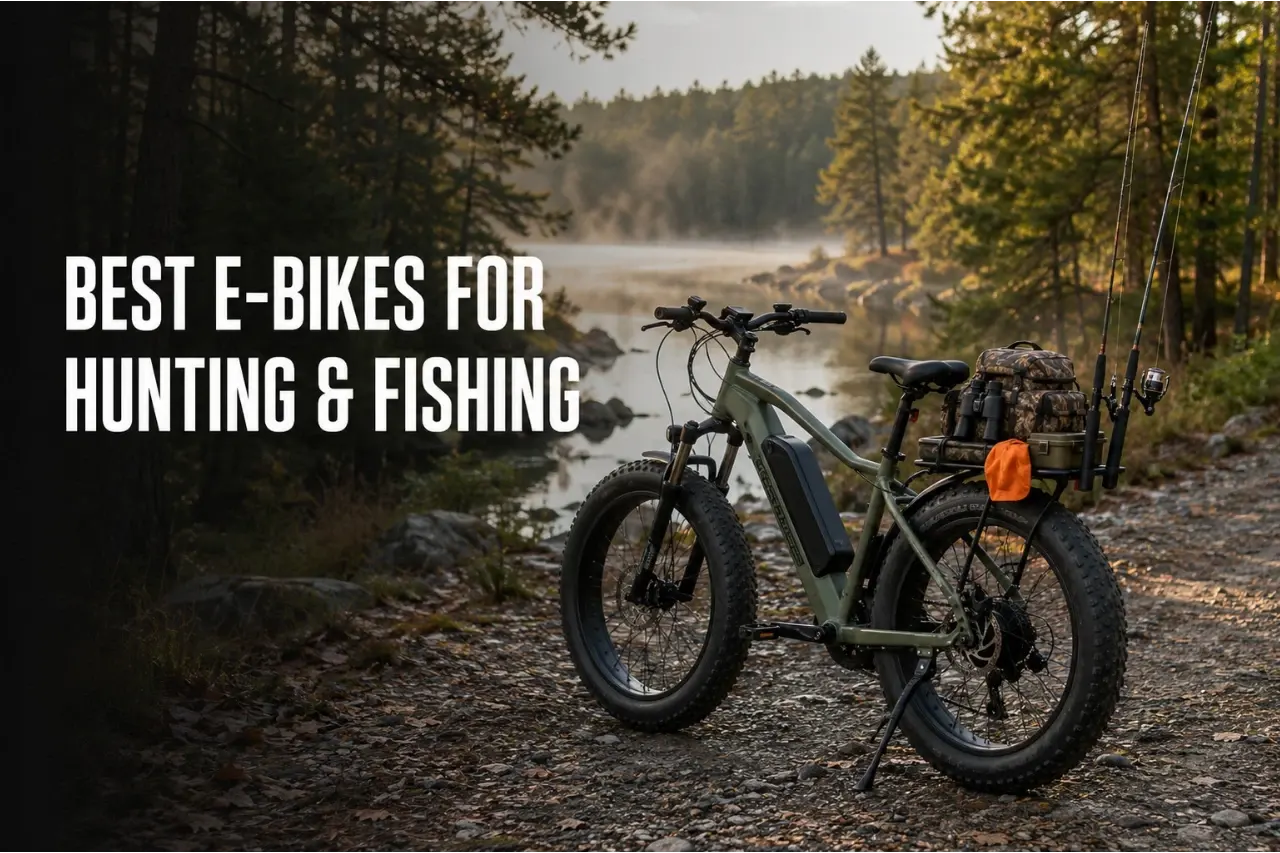
Choosing the best ebike for hunting and fishing means weighing terrain, cargo, and legal access as much as motor size. A bike built for scouting a steep forest lease needs different specs than one meant to haul rods to a boat launch or fold into a truck bed for a weekend trip. Rider weight, gear load, realistic range on rough ground, and how the bike gets to the property all shape which model actually works in the field.
The most capable hunting and fishing e-bike is the one whose payload, tire size, suspension, and range match your specific terrain and access rules, not simply the one with the highest peak wattage. Fat tires and dual suspension help on sand, mud, and washed-out trail beds, while a removable battery and rack compatibility matter more than horsepower once gear, decoys, or a cooler get loaded on. Manufacturer range and speed figures are useful starting points, but they shift with hills, wind, tire pressure, and total weight carried.
This roundup, based on our research-based analysis of listed specifications, compares eight fat-tire e-bikes marketed for hunting, fishing, and off-road access. We did not test, ride, or hunt from these bikes; our job is to translate published specs into practical buying decisions. Prices, availability, and exact specifications can change, so always confirm current listing details before ordering.
Best Overall: PUCKIPUPPY Boxer Electric Bike
Best for Rough Terrain Comfort: PUCKIPUPPY Labrador Pro
Best for Fishing Cargo: PUCKIPUPPY Beagle with Rear Storage Shelf
Best Budget Option: EUYBIKE Step-Thru Fat Tire Ebike
Best for Folding Transport: Jasion X Hunter PRO/ST
Best for Long Range: PHILODO Falcon 60V Dual Motor Ebike
Best for Steep Hills and Heavy Loads: PHILODO 5000W Dual Motor Ebike
Best for Trailer Use: Aipas M1 Pro Step-Thru Ebike
1. PUCKIPUPPY Boxer Electric Bike for Adults 500W, 48V 20AH Battery Ebike, Full Suspension 26″ Fat Tire E Bike

Best Overall. The Boxer balances motor output, battery capacity, and payload rating better than most bikes in this lineup, making it a reasonable starting point for hunters who need one bike for multiple jobs.
| Spec | Detail |
|---|---|
| Motor | 500W nominal (spec sheet also lists 750W); 960W peak claimed |
| Battery | 48V 20Ah = 960Wh, removable |
| Range | Manufacturer claims up to 80 miles pedal-assist |
| Top Speed | Listed as 20-28 mph depending on mode |
| Tires | 26″x4″ fat tires |
| Suspension | Marketed as full/hidden suspension; spec sheet lists front only |
| Brakes | Hydraulic disc, 7-speed |
| Weight Capacity | 400 lbs |
The included rack, fender, and phone mount help with basic gear hauling, though the suspension claim versus the spec sheet’s “front” listing is worth confirming before buying.
Pros
- High 400-lb payload rating for gear and rider combined
- Hydraulic disc brakes for wet or muddy stops
- Accessory bundle included (rack, fender, cover)
Limitations
- Suspension marketing and spec sheet disagree on rear suspension
- Wattage figures vary between listing fields
- 85% pre-assembly still requires mechanical comfort
Who Should Buy It: Hunters wanting one versatile bike for trails, gravel roads, and moderate loads. Who Should Skip It: Riders needing confirmed rear suspension for rock or root-heavy terrain.
2. PUCKIPUPPY Electric Bike 1350W Max, 28 MPH, Labrador Pro

Best for Rough Terrain Comfort. The torque sensor and transverse suspension design set the Labrador Pro apart for riders covering washboard roads or uneven trail beds.
| Spec | Detail |
|---|---|
| Motor | 750W nominal, 1350W peak, 85Nm torque |
| Battery | 48V 20Ah = 960Wh (spec listing shows an inconsistent mAh figure) |
| Range | Manufacturer claims 40-80 miles |
| Tires | 26″x4″ fat tires |
| Suspension | Dual, lateral design per manufacturer |
| Brakes | Dual 180mm hydraulic disc |
| Speeds | 8-speed, Shimano derailleur |
| Weight Capacity | 300 lbs |
The torque sensor responds to pedaling force rather than a simple on/off assist, which may smooth power delivery on climbs. The 300-lb capacity is lower than several competitors here.
Pros
- Torque sensor for proportional pedal assist
- Strong climbing torque rating (85Nm)
- Dual suspension aids comfort over rough ground
Limitations
- Lower payload rating than several rivals
- Reported assembly and reliability issues in customer feedback
- Reported reliability complaints in some owner reviews
Who Should Buy It: Riders prioritizing pedaling efficiency and trail comfort over maximum payload. Who Should Skip It: Heavier riders or those hauling substantial gear loads.
3. PUCKIPUPPY Electric Bike 960W Peak, Rear Storage Shelf

Best for Fishing Cargo. The built-in rear storage shelf makes this model the most straightforward choice for hauling tackle boxes, coolers, or rod cases without adding aftermarket racks.
| Spec | Detail |
|---|---|
| Motor | Peak 960W, 80Nm torque; nominal not clearly listed |
| Battery | 48V 15Ah = 720Wh |
| Range | Manufacturer claims up to 60 miles |
| Tires | 26″x4″ fat tires |
| Suspension | Front only |
| Brakes | Disc (hydraulic vs. mechanical not clearly specified) |
| Speeds | 7-speed |
| Weight Capacity | 400 lbs |
The 400-lb rating and rear shelf combine well for anglers moving gear short distances to shoreline access points. Front-only suspension means less cushioning on rutted trails than dual-suspension competitors.
Pros
- Integrated rear storage shelf for cargo
- High 400-lb weight capacity
- Aluminum frame with embedded battery protection
Limitations
- No rear suspension
- Brake type not clearly specified as hydraulic
- Some owners report electrical and display issues
Who Should Buy It: Anglers needing built-in cargo capacity for shoreline or campsite trips. Who Should Skip It: Riders tackling rough backcountry terrain that benefits from rear suspension.
4. Electric Bike 1400W Peak, Step-Thru Hunting Ebike

Best Budget Option. Among this group, the EUYBIKE C3 offers a competitively priced package with dual suspension and dual disc brakes, though the frame material and reported brake issues warrant a closer look.
| Spec | Detail |
|---|---|
| Motor | 750W nominal, 1400W peak, 82Nm torque |
| Battery | 48V 20Ah = 960Wh |
| Range | Manufacturer claims up to 80 miles PAS, 40 miles throttle-only |
| Tires | 20″x4″ fat tires |
| Suspension | Dual (front fork + rear linkage) |
| Brakes | Dual 180mm disc |
| Frame | High carbon steel, step-thru |
| Weight Capacity | Not clearly listed |
The step-thru frame helps riders mount and dismount easily with waders or gear on. Some owner reviews mention brake and seat post issues shortly after purchase.
Pros
- Competitively priced for the included motor and battery specs
- Step-thru frame for easier mounting
- USB charging port and integrated lighting
Limitations
- Reported brake caliper failures in customer feedback
- Steel frame adds weight versus aluminum competitors
- Maximum weight capacity not clearly listed
Who Should Buy It: Budget-conscious buyers wanting a step-thru frame for easier access. Who Should Skip It: Riders prioritizing lightweight aluminum frames or confirmed payload ratings.
5. Jasion X Hunter PRO/ST Foldable Electric Bike

Best for Folding Transport. The X Hunter folds down for easier storage in a truck bed, RV, or trunk, addressing a transport problem that fixed-frame bikes cannot solve.
| Spec | Detail |
|---|---|
| Motor | 750W nominal, 1400W (ST) / 1800W (Pro) peak, 85Nm torque |
| Battery | ST: 48V 13Ah = 624Wh; Pro: 720Wh per listing |
| Range | ST up to 70 miles; Pro up to 80 miles claimed |
| Tires | 20″x4″ fat tires |
| Suspension | Dual (front + 4-link rear) |
| Brakes | Hydraulic disc |
| Certification | UL2849 |
| Bike Weight | 71 lbs |
UL2849 certification addresses electrical system safety, which matters for anyone storing a battery in an enclosed vehicle. Folding frames add hinge points that need periodic inspection.
Pros
- Folds for compact vehicle or RV storage
- UL2849 certified electrical system
- Hydraulic brakes standard across trims
Limitations
- 71-lb bike weight is heavy to lift when folded
- Maximum weight capacity not clearly listed
- Folding hinges require regular fastener checks
Who Should Buy It: Hunters and anglers who need to transport an e-bike inside a vehicle rather than on a rack. Who Should Skip It: Riders who won’t need to fold or frequently relocate the bike.
6. Falcon 60V Off-Road Electric Bike, Dual Motor

Best for Long Range. The Falcon’s 60V battery system is built around extended trips, with manufacturer claims reaching triple the range of several single-motor competitors.
| Spec | Detail |
|---|---|
| Motor | Dual motor; wattage not clearly listed |
| Battery | 60V 32Ah per feature bullet (~1,920Wh); spec sheet separately lists 1,460Wh |
| Range | Manufacturer claims up to 100 miles PAS, 50 miles throttle-only |
| Tires | 26″x4″ fat tires |
| Suspension | Full, lockable front fork + rear air shock |
| Brakes | Disc |
| Speeds | 7-speed |
The battery capacity discrepancy between listing fields means buyers should confirm actual watt-hours before relying on range claims for remote trips. Dual motor systems also add mechanical complexity for field repairs.
Pros
- Manufacturer-claimed range among the highest in this roundup
- Full suspension with lockable front fork
- Multiple ride modes for single or dual motor operation
Limitations
- Battery capacity figures conflict between listing sections
- Motor wattage not clearly specified
- Dual motor systems complicate troubleshooting away from a shop
Who Should Buy It: Riders planning long backcountry days where charging access is limited. Who Should Skip It: Buyers who want precise, consistent battery specifications before purchase.
7. 5000W Peak Motor Electric Bike, Dual Motor, UL2849 Certified

Best for Steep Hills and Heavy Loads. With dual 2,500W peak motors and 210Nm of combined torque, this PHILODO model lists the highest climbing capability and payload rating in this lineup.
| Spec | Detail |
|---|---|
| Motor | Dual 2,500W peak motors (5,000W combined peak); nominal not clearly listed |
| Battery | 60V 25Ah = 1,500Wh |
| Range | Manufacturer claims up to 100 miles |
| Tires | 26″x4″ fat tires, 450-lb max load |
| Suspension | Front suspension confirmed; spec sheet lists dual |
| Brakes | Dual hydraulic disc |
| Certification | UL2849 (bike), UL2271 (battery) |
The 450-lb load rating and 40-degree climbing claim make this the strongest listed option for steep, loaded ascents. Dual-certified electrical systems add a safety layer, though dual motors mean more components to maintain.
Pros
- Highest listed payload capacity (450 lbs) in this roundup
- UL2849 and UL2271 dual certification
- Strong torque rating for steep terrain
Limitations
- Nominal motor wattage not clearly listed
- Suspension description inconsistent between bullet and spec sheet
- Dual motor drivetrain adds maintenance complexity
Who Should Buy It: Hunters hauling heavy packs or gear up steep, loaded forest roads. Who Should Skip It: Riders wanting a simpler single-motor drivetrain with fewer parts to service.
8. Aipas M1 Pro Electric Bike, 1800W Peak Motor

Best for Trailer Use. The step-thru frame, dual suspension, and 110Nm torque rating may be better suited to towing a small gear trailer than the higher-set frames in this group, though the listing does not specify a trailer hitch or tow rating.
| Spec | Detail |
|---|---|
| Motor | Peak 1800W, 110Nm torque; nominal not clearly listed |
| Battery | 48V 17.5Ah = 840Wh |
| Range | Manufacturer claims 25-85 miles |
| Tires | 26″x4″ fat tires |
| Suspension | Dual, lockable front fork + rear shock |
| Brakes | 180mm mechanical disc |
| Frame | Step-thru, adjustable saddle |
Brakes here are listed as mechanical rather than hydraulic, which typically requires more frequent cable adjustment. Confirm trailer hitch compatibility directly with the seller before planning to tow gear.
Pros
- Step-thru frame for easy mounting with gear
- Dual suspension for rough-terrain comfort
- Strong torque rating (110Nm) for its motor class
Limitations
- Mechanical rather than hydraulic disc brakes
- Trailer hitch compatibility not specified in the listing
- Some owners report shipping damage and part delays
Who Should Buy It: Riders wanting a step-thru frame with strong torque for varied terrain. Who Should Skip It: Buyers who specifically require hydraulic brakes or confirmed trailer mounts.
Buying Guide
Matching an e-bike to hunting and fishing use starts with terrain. Fat tires (4 inches wide) and full or dual suspension help absorb impact on rutted forest roads, sand, and mud, while narrower tires or front-only suspension suit smoother gravel and pavement.
Payload matters as much as motor power. Add rider weight, clothing, and gear like decoys, rods, or a cooler, then compare that total against each bike’s listed maximum weight recommendation. Several listings in this roundup do not specify a weight limit, so contact the seller before loading heavy gear.
Range figures are manufacturer claims tested under specific conditions. Hills, headwind, cold weather, tire pressure, cargo weight, and throttle use all reduce real-world range below advertised numbers. Plan remote trips around a conservative estimate, not the maximum figure.
Hub motors, used in most bikes here, are simpler to maintain than mid-drive systems but place more stress on the rear wheel under heavy loads. Higher peak wattage does not guarantee better legal standing; check state e-bike classification rules, since Class 1, 2, and 3 designations affect where a bike can legally travel.
Before every wet-weather trip, inspect brake pads, tire pressure, fasteners, and battery mount hardware. No e-bike in this category is waterproof, silent, or scent-free, and mud, water crossings, and cold weather accelerate corrosion on chains, cassettes, and electrical contacts. Rinse and dry components after wet trips rather than pressure-washing electrical housings directly.
Always verify access rules with the relevant state agency, land manager, or private property owner before riding an e-bike on trails, refuges, or leased land. Never rely on remaining battery charge as your only exit plan; carry basic repair tools and a pedal-only backup plan for remote routes.
Frequently Asked Questions
What features should a hunting and fishing e-bike have?
Look for 4-inch fat tires, a removable battery for easy charging away from camp, disc brakes (hydraulic preferred), and a weight rating that covers rider plus gear. A rear rack or cargo mount helps with tackle boxes, decoys, or coolers.
Are electric bikes worth using for hunting?
Based on listed specifications, e-bikes can extend range on permitted forest roads and reduce fatigue when hauling gear to a stand or blind. They are not silent or scent-free, so riders should still follow standard scent-control and approach practices.
What is the best hunting e-bike under $2,000?
Among the models reviewed here, the EUYBIKE step-thru and PUCKIPUPPY Beagle are positioned as more budget-friendly options with dual suspension or integrated cargo shelving, based on their listed feature sets. Confirm current pricing before purchase, since availability and promotions change.
Is an AWD e-bike better for hunting in rough terrain?
Dual-motor bikes like the PHILODO Falcon and PHILODO 5000W offer more combined torque for steep or loose terrain, per manufacturer specifications. They also add mechanical complexity, so weigh climbing performance against maintenance considerations before choosing dual motors over a single hub motor.
What e-bike size and tire type are best for hunting and fishing?
A 26-inch wheel with a 4-inch-wide tire generally offers stable footing across sand, mud, and gravel, based on the specifications reviewed here. Step-thru frames can help riders mount and dismount more easily while wearing waders or carrying gear.
Which e-bike brands or models should hunters avoid?
Rather than avoiding brands outright, review individual listings for unclear weight ratings, conflicting suspension or battery specifications, and repeated owner complaints about brakes or electrical components. Several models in this roundup show inconsistencies between marketing bullets and specification sheets, so confirm details directly with the seller before buying.
GoEBikeLife is reader-supported. We test and review e-bikes, create detailed comparisons, and publish practical buying guides for riders. Some links on this page are affiliate links, which means we may earn a commission at no extra cost to you.