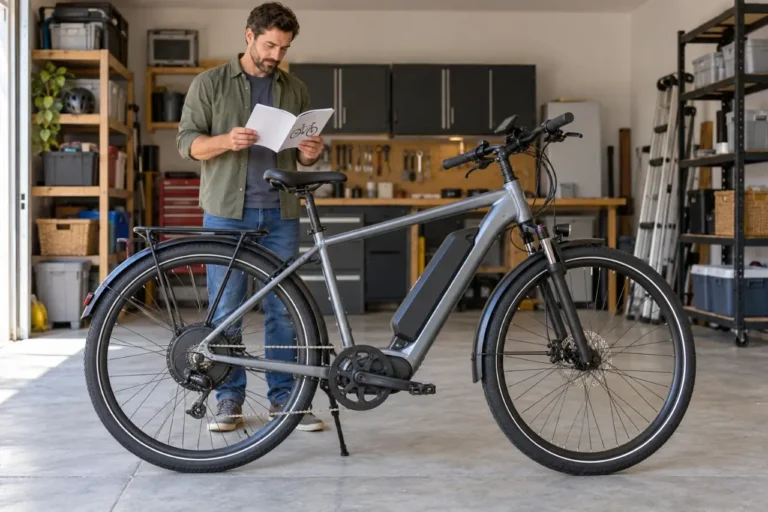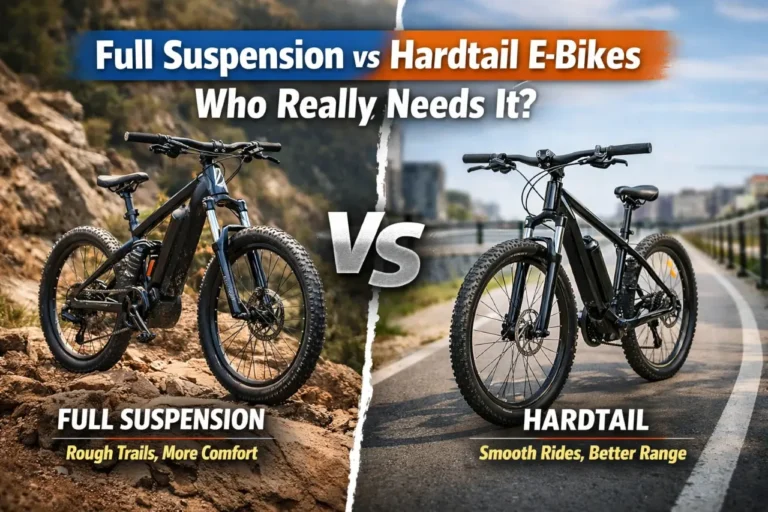
Choosing the right e-bike frame style might seem like a minor detail, but it shapes how every commute feels from the moment you swing a leg over the bike.
If you ride in stop-and-go traffic, deal with frequent red lights, or need to mount and dismount quickly at transit stops, frame design matters far more than most buyers expect.
The difference between a step-thru and a step-over e-bike shows up in small daily moments: whether you can get on cleanly in dress pants, how confident you feel stopping at a crosswalk, and how your body feels after 30 minutes in the saddle.
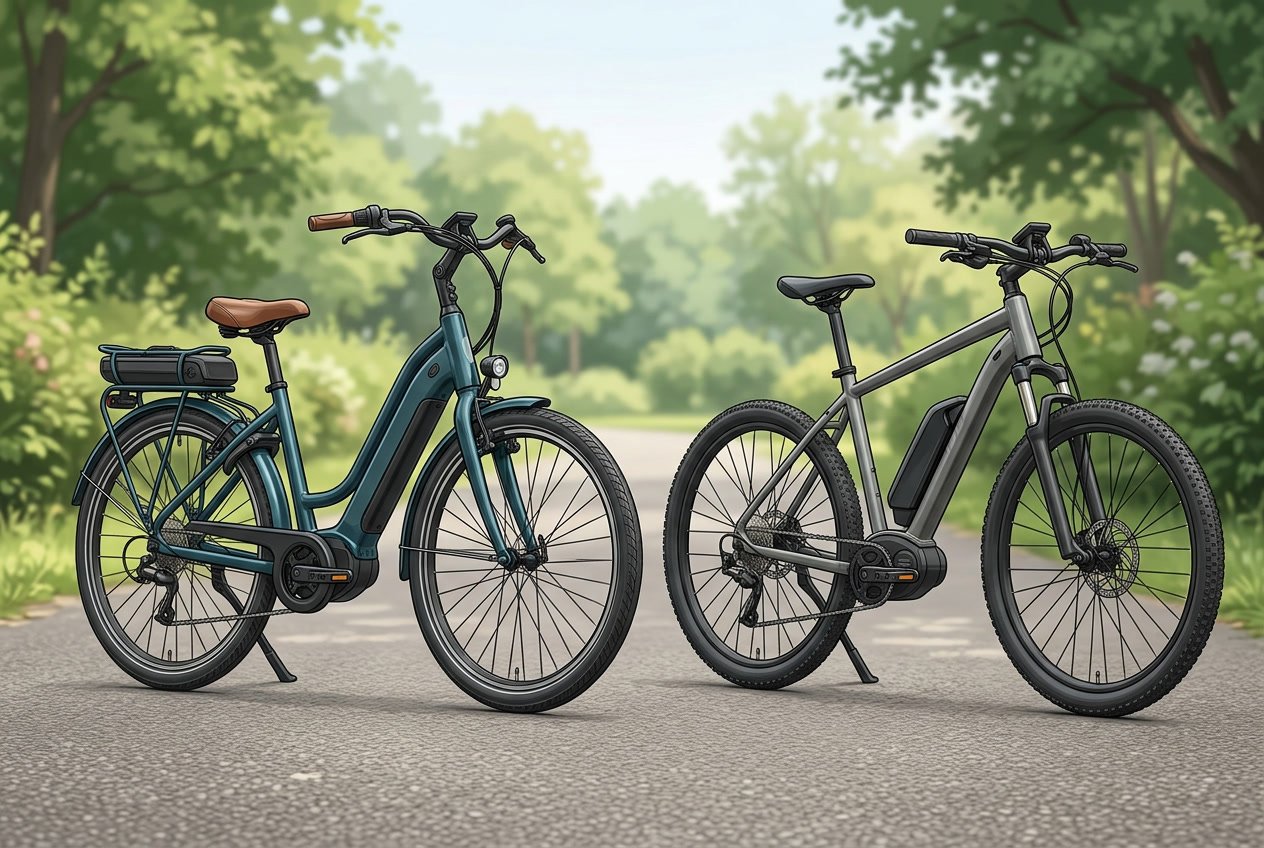
This guide breaks down the real-world differences between the two frame styles, specifically for commuters. You will not find vague generalizations here. Instead, you will get practical trade-offs, clear use cases, and honest guidance so you can choose the frame that actually fits your route, your body, and your daily routine.
Key Takeaways
- Step-thru frames make mounting and dismounting easier, which is a clear advantage in city riding with frequent stops.
- Step-over frames offer slightly stiffer ride feel and suit faster or longer commutes where stability matters more.
- Neither frame type is better for everyone; the right choice depends on your route, flexibility, and daily habits.
Quick Answer
A step-thru e-bike has a low or absent top tube, making it easy to mount and dismount without lifting your leg high. A step-over e-bike has a traditional high top tube that requires swinging your leg over the frame.
For most city commuters, especially those dealing with frequent stops, tight work clothes, or any hip or knee stiffness, a step-thru frame is the more practical daily choice. For longer, faster commutes where a stiffer frame feel and more aggressive posture are useful, a step-over frame holds a slight edge.
Neither style is universally better. The right pick depends on your specific commute, your body, and how you plan to use the bike every day.
| Factor | Step-Thru | Step-Over |
|---|---|---|
| Mounting ease | Much easier | Requires high leg lift |
| Frame stiffness | Slightly less rigid | Slightly more rigid |
| Clothing friendliness | Better for skirts, trousers | More limiting |
| Beginner confidence | Higher | Moderate |
| Speed and longer rides | Adequate | Slight edge |
| Rider flexibility needed | Minimal | Moderate to high |
What Is a Step-Thru E-Bike?
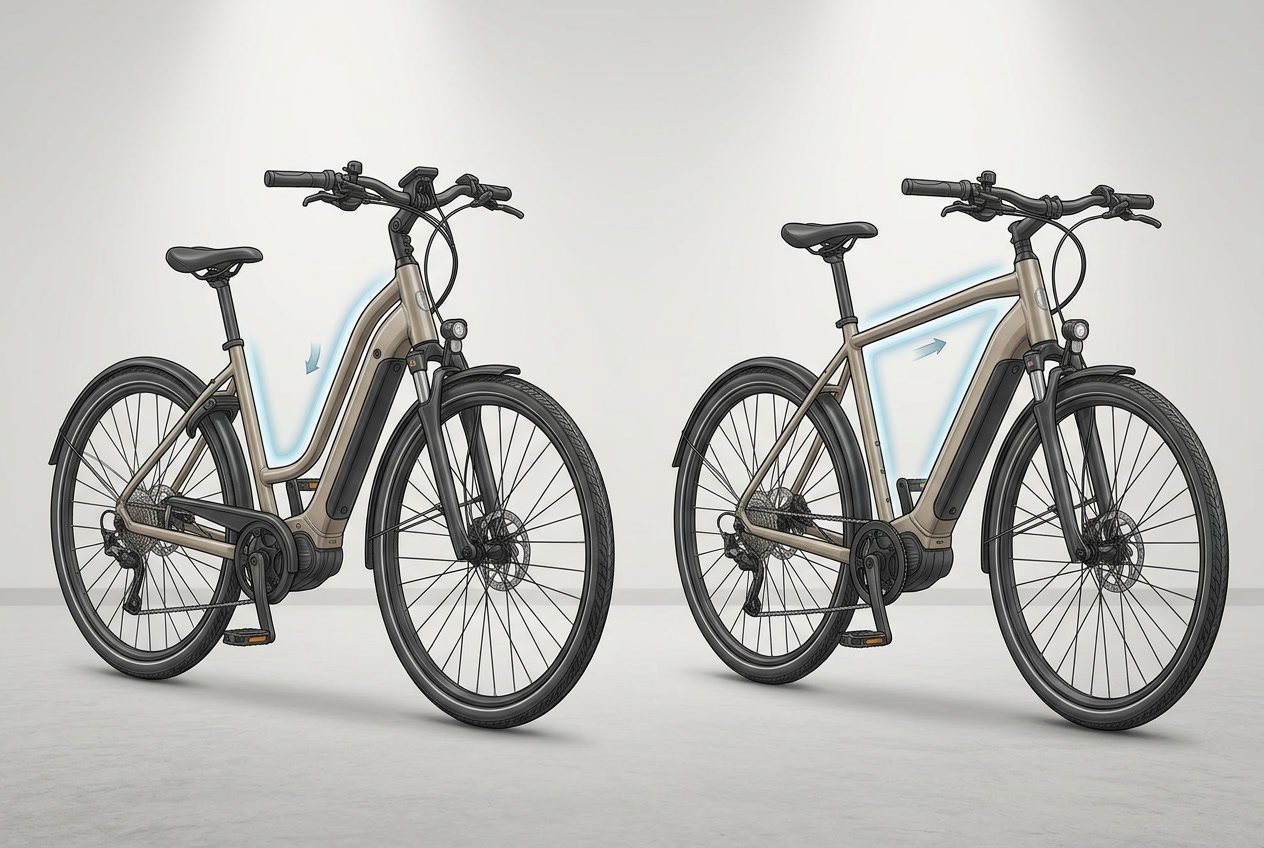
A step-thru e-bike uses a frame design where the top tube is dropped very low or removed entirely. Instead of a straight bar running from the headtube to the seat tube, the step-through frame swoops downward, leaving a wide open space between the saddle and handlebars.
This open design lets you mount the bike by simply stepping through the frame, placing one foot on the ground, and lifting the other leg forward rather than up and over. You do not need to raise your leg above hip height at any point.
Step-thru frames are sometimes called low-step frames or low-step-through frames. Some models use a very slight curve while others have a dramatically open design. The result is similar in all cases: easier on and off access with minimal flexibility required.
These frames are common in commuter e-bikes, city bikes, and cruiser-style builds. They work for a wide range of riders, not just those with mobility concerns. Many everyday commuters simply prefer the ease and confidence of a step-thru e-bike regardless of fitness level or age.
One thing to note: the step-thru frame is sometimes confused with a women’s-specific frame due to historical bike design conventions. In practice, the step-thru frame suits any rider who values ease of access.
What Is a Step-Over E-Bike?
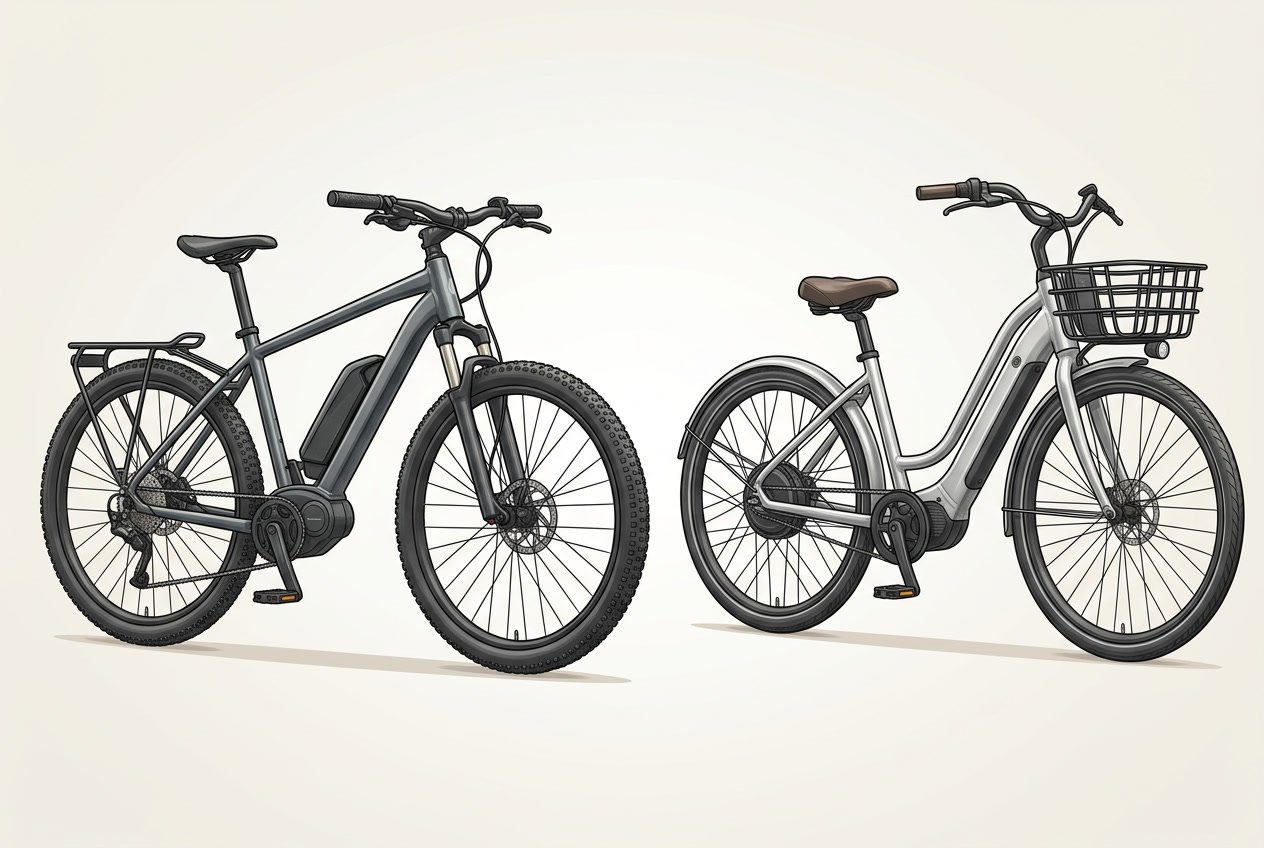
A step-over e-bike uses what most people recognize as a traditional bicycle frame, often called a diamond frame. It features a straight or slightly angled top tube that runs from the headtube down to the seat tube, forming a triangulated structure.
To mount a step-over frame, you lift your leg over the top tube and seat. This requires a reasonable degree of hip flexibility and a clear path over the frame. On a heavier e-bike, this motion can feel awkward, especially for new riders or anyone carrying a bag.
Step-over frames are valued for their structural rigidity. The triangulated geometry distributes pedaling forces efficiently across the frame, which can feel firmer and more responsive under hard pedaling or at higher speeds.
This frame style is common in road-influenced commuter bikes, performance-oriented builds, and many mid-drive motor setups. The top tube adds structural strength and can make the bike feel planted at speed.
The main trade-off is access. On a loaded e-bike that weighs 50 to 70 pounds, swinging your leg over a high top tube requires more effort and balance than most riders anticipate. That can become a real inconvenience on a daily commute with many stops.
Key Differences for Commuting
The differences between step-thru and step-over frames become most visible in everyday commuting conditions. The factors that matter most come down to access, comfort, confidence, cargo, ride feel, and how practical each frame is when you are dressed for work and loaded with gear.
Mounting and Dismounting
This is where the two frame styles differ most clearly. A step-thru frame lets you plant your foot and step through the opening without lifting your leg high. A step-over frame requires swinging your leg up and over the top tube.
On a typical city commute with four to eight traffic stops per mile, you may mount and dismount your bike dozens of times. That repeated leg lift adds up, especially if the bike is heavy, if you are tired, or if you are wearing work clothes that limit your range of motion.
Step-thru frames win here for most urban commuters.
Comfort in Stop-and-Go Traffic
In stop-and-go conditions, you constantly put a foot down and remount. The step-thru frame makes this motion natural and low-effort. You barely have to think about it.
With a step-over frame, you have to plan each stop slightly more carefully. You need to make sure you have enough clearance and balance to get your leg back over the top tube cleanly. It is not difficult, but it adds a small layer of cognitive effort on a busy commute.
Confidence for Beginners
New riders often underestimate how much mounting and dismounting affects their confidence in traffic. A step-thru frame removes one source of hesitation. You can get on and off quickly without worrying about clearing the top tube.
This makes step-thru e-bikes a better starting point for beginners riding in city conditions. Confidence builds faster when mounting feels easy and natural from the first ride.
Carrying Bags or Cargo
When you are carrying a backpack, pannier bag, or groceries, getting a leg over a step-over top tube becomes more complicated. The extra weight on your body shifts your balance and makes the motion less smooth.
A step-thru frame handles this situation better because the open design gives your body room to move without obstacle. You can mount cleanly even with a loaded rack or a heavy bag on your back.
Ride Feel and Frame Stiffness
Step-over frames use a triangulated structure that is inherently stiffer under load. You may notice a slightly firmer, more direct response when accelerating or climbing.
Step-thru frames sacrifice some of that rigidity to open up the frame. In real-world commuting, most riders do not notice a meaningful difference in stiffness unless they are riding at higher speeds or pushing hard up steep hills. For moderate city commutes, the difference is minor.
Clothing and Work Commute Practicality
If you commute in a skirt, dress, or tailored trousers, a step-thru frame is far more practical. The open design means you never have to awkwardly hike fabric over a top tube.
Step-over frames are more limiting here. Some commuters solve this by changing clothes at work, but for those who prefer to ride in their work attire, the step-thru design removes a genuine daily inconvenience.
Suitability for Riders With Limited Mobility or Flexibility
Riders with knee replacements, hip tightness, arthritis, or recovering from injury will find step-thru frames significantly more usable. The low mounting point reduces joint stress on every single trip.
A step-over frame asks your hip to rotate through a wide range of motion each time you get on the bike. For some riders, that motion is painful or simply not possible safely.
Long-Term Daily Convenience
After a few weeks of daily commuting, small inconveniences become large irritants. A step-thru frame’s ease of access stays consistent regardless of how tired you are, what you are carrying, or what you are wearing.
Step-over frames require a bit more care and attention at each stop. For short commutes, this is barely noticeable. For longer or more frequent rides, it adds up over time.
When a Step-Thru E-Bike Makes More Sense for Commuting

A step-thru e-bike is the stronger choice in several specific commuting situations.
You ride in a city with frequent stops. If your route involves traffic lights, crosswalks, pedestrians, and transit intersections, you will mount and dismount constantly. The step-thru frame makes each of those moments smooth and effortless.
You wear work clothes or dress attire. Skirts, dresses, slim-fit trousers, and formal wear all interact badly with a high top tube. A step-thru frame removes that friction entirely.
You have hip, knee, or lower back stiffness. The reduced range of motion required to mount a step-thru e-bike makes it significantly more comfortable for riders dealing with joint limitations, injury recovery, or age-related flexibility changes.
You are a newer rider building confidence. Knowing you can get on and off cleanly without catching your leg on the frame helps you focus on traffic and navigation rather than the mechanics of mounting.
You carry cargo or a loaded bag regularly. A step-thru frame gives you more room to move freely when mounting under load.
You want a relaxed upright riding position. Many step-thru commuter e-bikes pair their open frame with a more upright geometry that suits short to medium city rides.
If most of those points match your situation, a step-thru e-bike will likely feel more natural and practical from day one.
When a Step-Over E-Bike Makes More Sense for Commuting

A step-over e-bike fits certain commuters better, particularly those prioritizing speed, distance, or a more performance-oriented ride.
Your commute is longer and faster. If you ride five to fifteen miles each way, mostly in bike lanes or on roads with fewer stops, the step-over frame’s stiffer feel and more efficient pedaling response become more relevant.
You prefer a more aggressive or forward-leaning riding posture. Step-over frames often pair with geometry that leans you slightly forward, which suits riders who want to pedal actively rather than cruise upright.
You ride on mixed terrain or rougher surfaces. The structural rigidity of a step-over frame can feel more stable when navigating cracked pavement, speed bumps, or gravel sections of a commute route.
You have no issues with hip flexibility. If mounting a high top tube feels natural and painless, you lose nothing by choosing a step-over frame.
You prioritize frame durability on a heavily loaded commuter. Step-over frames distribute stress more evenly under heavy use, though the practical difference on a daily commute is modest for most riders.
You are buying an e-bike primarily for fitness or active commuting. Riders who want more physical engagement from their pedaling often prefer the step-over frame’s road-bike heritage and geometry.
If your commute is longer, faster, and lower in stops, or if you simply prefer the ride dynamics of a traditional frame, a step-over e-bike is a sensible choice.
Common Buying Mistakes
Choosing a frame style based on looks alone is the most common mistake. Many buyers pick the frame that looks more traditional or sporty, then discover within a week that it does not suit their actual commute.
Here are the buying mistakes worth avoiding:
- Ignoring how many stops your route has. A step-over frame feels fine on a smooth 10-mile ride with few interruptions. On a busy city route with stops every block, mounting and dismounting a high top tube becomes tiring fast.
- Underestimating the weight of a loaded e-bike. Many commuter e-bikes weigh 50 to 65 pounds. Swinging your leg over a high top tube on a heavy, loaded bike is harder than it looks on a showroom floor.
- Assuming step-thru means lower quality. Step-thru frames were once associated with lower-end builds, but modern step-thru e-bikes use the same quality components and motor setups as comparable step-over models.
- Ignoring clothing reality. If you plan to ride in work clothes even occasionally, test how your typical outfit interacts with the frame before you buy.
- Choosing by standover height alone. Standover clearance matters, but it is not the only measure of ease of access. The full mounting motion, including how you swing your leg, is what you will experience daily.
- Not factoring in cargo. If you plan to add a rear rack, a basket, or panniers, try mounting the bike while simulating the weight or bulk of what you will carry.
Which Frame Style Is Better for Different Commuters?

Different commuting situations call for different frame choices. The key factors are route type, physical comfort, riding confidence, and how you use the bike day to day.
Best for City Commuters
For urban commuting with frequent stops, traffic lights, and mixed road conditions, a step-thru frame is the more practical choice for most riders. The ease of mounting and dismounting directly reduces fatigue and improves confidence in dense traffic environments.
Best for Beginners
New riders benefit most from a step-thru frame. The lower mounting point removes a common source of anxiety, letting you focus on road awareness and bike handling from day one rather than worrying about clearing the frame.
Best for Riders With Knee or Hip Limitations
A step-thru frame is the clear recommendation here. Riders managing arthritis, knee replacements, hip tightness, or post-surgery recovery will find the low-entry design significantly easier and less painful to use on a daily basis.
Best for Faster or Longer Commutes
If your commute is mostly uninterrupted, covers more than five miles each way, and involves faster speeds, a step-over frame gives you a slightly stiffer and more efficient ride platform. The frame geometry also tends to support a more active pedaling posture.
Best for Practical Everyday Errands
Riders who mix their commute with grocery runs, errand stops, and cargo loads will find a step-thru frame more convenient. The open frame makes getting on and off easier when you are loaded up, in a hurry, or wearing everyday clothes.
Final Verdict
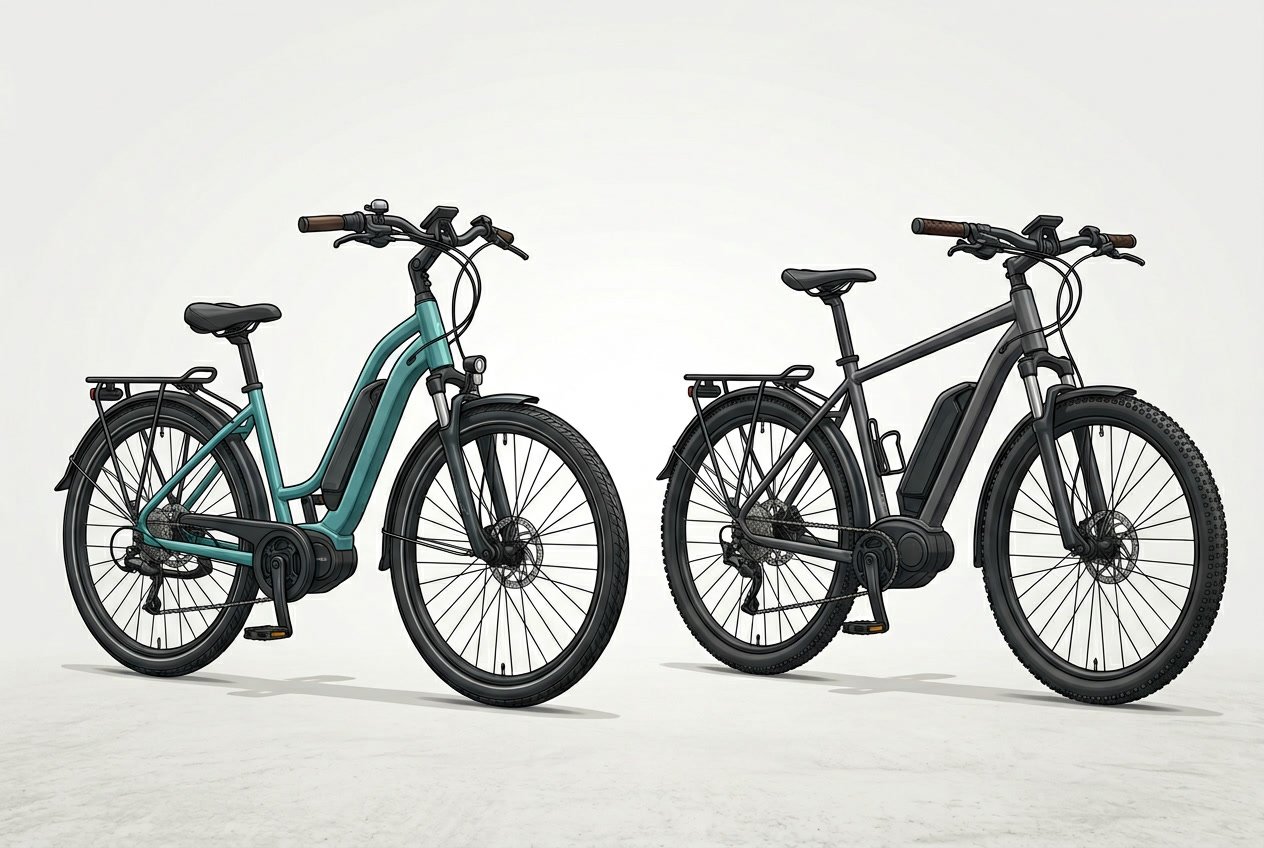
Both frame styles work well for commuting. Neither is objectively better. The right choice depends entirely on your specific situation.
Choose a step-thru e-bike if you ride in a city with frequent stops, wear work clothes, carry cargo, have any joint stiffness, or are newer to riding. The ease of access pays off every single day in a real urban commute.
Choose a step-over e-bike if your route is longer, faster, and less interrupted, if you prefer a more active riding posture, or if mounting ease is not a priority for your particular routine.
The one thing worth avoiding is choosing based on appearance alone. Test how each frame feels when mounting with a bag on your back, in your typical commute clothing, and after a tiring day. That experience will tell you more than any spec sheet.
If you are weighing specific models in each category, the GoEBikeLife commuter e-bike buying guides break down individual options by frame type, motor setup, and real-world use case so you can compare side by side before committing.
Frequently Asked Questions
Which frame style is easier to mount and dismount when you’re carrying a bag or wearing work clothes?
A step-thru frame is noticeably easier in both situations.
The open design lets you step through without raising your leg high, which matters when a heavy bag shifts your balance or when dress clothing limits your range of motion.
For daily commuters who regularly carry gear or arrive at work in their riding clothes, this difference is practical and immediate.
How do step-through and step-over frames compare for stability and handling at higher speeds?
Step-over frames have a slight edge in stability at higher speeds due to their triangulated structure, which distributes load more evenly.
In real-world commuting at typical Class 2 speeds of around 20 mph, most riders will not notice a meaningful handling difference between the two frame styles.
The gap becomes more relevant if you are riding fast on longer open routes.
What are the main downsides of a step-through frame, and who will notice them most?
The main downsides are slightly reduced frame rigidity and occasionally less aggressive geometry options.
Riders who pedal hard, push through hills frequently, or prefer a forward-leaning posture may find step-over frames feel more responsive.
Casual city commuters and shorter-distance riders are unlikely to notice the stiffness difference in daily use.
Is a step-through frame a good choice for taller riders, or does it feel less stiff?
Most modern step-thru e-bikes are engineered to accommodate taller riders, and many models are available in sizes that fit riders up to 6 feet 2 inches or more.
The perceived flex in step-thru frames is minimal for normal commuting use. Taller riders should check the specific frame sizing and standover height for any model they consider rather than ruling out the frame style on principle.
Do step-through frames work well with mid-drive motors and battery placement, or are there compromises?
Mid-drive motors are increasingly common in step-thru frames and work well in that configuration.
The battery is typically integrated into the down tube or rear rack area, and the open frame design does not compromise motor placement or battery capacity in any meaningful way for commuter-grade builds.
You will find capable step-thru models with mid-drive motors at a range of price points.
Which frame style tends to last longer and need fewer repairs for daily commuting and rough roads?
Both frame styles, when made from quality aluminum alloy, are durable enough for years of daily commuting.
Step-over frames have a structural advantage on particularly rough surfaces due to their triangulated geometry, but the practical durability difference for most paved and mixed-surface commutes is small.
Build quality, weld quality, and component choices matter more to long-term reliability than frame style alone.