A little joy belongs in every day.

The EcoE 6000W delivers strong dual-motor hill power and stable all-terrain comfort, but its weight and speed claims require realistic expectations.
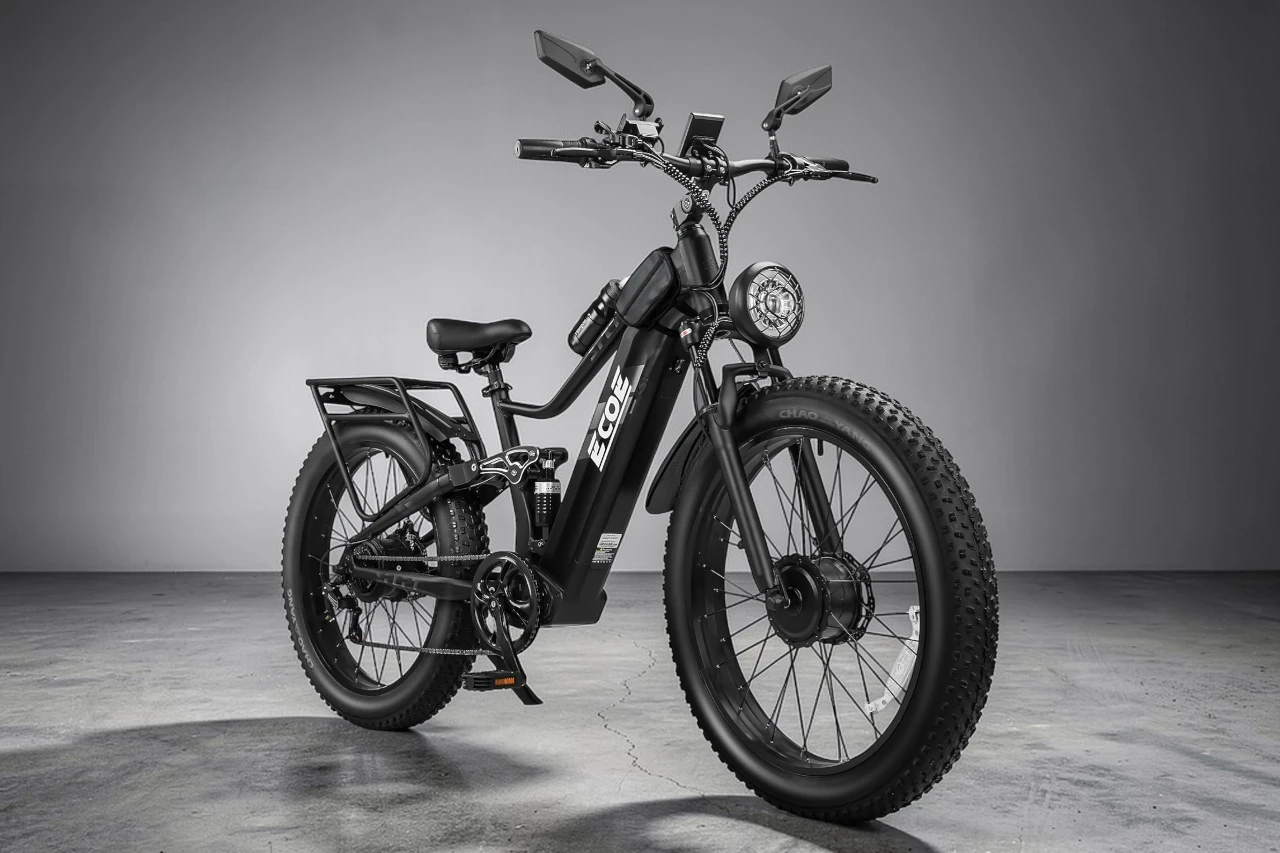
The EcoE 6000W is one of those bikes that immediately tells you what it wants to be: a big-power, fat-tire, dual-motor machine for riders who care more about torque, traction, and rough-terrain confidence than light weight or simplicity. The official product page position it as a 60V 32Ah, dual-motor, full-suspension 26×4 e-bike with a claimed 35-80 mile range and a headline top speed of up to 52 mph.
At around the low-$1,300 price point, it sits in an unusual spot. On paper, the power-per-dollar looks extremely aggressive. In practice, that means I would judge it less like a normal commuter e-bike and more like a budget high-power off-road-style machine that happens to have pedals.
Quick Verdict
A great choice for riders who want strong dual-motor hill power and a planted all-terrain feel on a budget, but not ideal for buyers who want a light, polished, city-friendly e-bike with predictable real-world speed claims.
Best for
Not ideal for
Biggest strength: The power delivery feels far more serious than a normal fat-tire commuter, especially when both motors are engaged.
Biggest trade-off: It is a large, heavy, niche machine, and the marketing headline speed is not the part I would build my buying decision around.
Category: High-power dual-motor fat-tire all-terrain e-bike
Motor: Dual motor, marketed at 6000W
Battery & range: 60V 32Ah removable battery; claimed 35-80 miles
Top speed: Marketed up to 52 mph
Drivetrain: 7-speed
Suspension: Front and rear suspension
Tires: 26×4 fat tires
Fit range: Published sizing graphics suggest roughly 5’7″ to 6’4″
Payload: Product images indicate up to 330 lb
Best for: Steep hills, rough pavement, dirt, gravel, mud, and riders who prioritize power over elegance
Assembly time: It took me about 40 to 60 minutes to get everything ready. The bike arrived mostly pre-assembled, so I mainly had to install and straighten the remaining parts and accessories.
First-ride setup issues: Setup was not difficult, but I would inspect the bike carefully for shipping damage, missing hardware, mirror alignment, and any bent accessory parts before riding.
Power feel: The first thing I noticed was the torque. It has a much more aggressive takeoff than a typical commuter e-bike, especially in dual-motor use.
Hill performance: Very strong. On steep grades, it pulled much better than I expected for a bike this size.
Comfort & fit: Smooth and planted. The full suspension and 26×4 tires take the edge off rough surfaces, but the bike feels better suited to riders who want stability and brute force than to someone looking for a light, simple daily city bike.
Braking feel: Responsive enough for ordinary riding, but at higher speeds I would still leave extra stopping distance.
Range reality: Reasonable if I ride moderately. Much less impressive if I stay in the high-power settings and use both motors hard.
Handling: Stable and confidence-inspiring rather than quick or nimble.
Noise / rattles: Generally quiet and solid, though I would still re-check accessory hardware after the first few rides.
Biggest surprise: It felt smoother and more planted than I expected from a budget high-power bike.
Biggest disappointment: The gap between the marketing headline and what I would consider a realistic, repeatable real-world speed expectation.
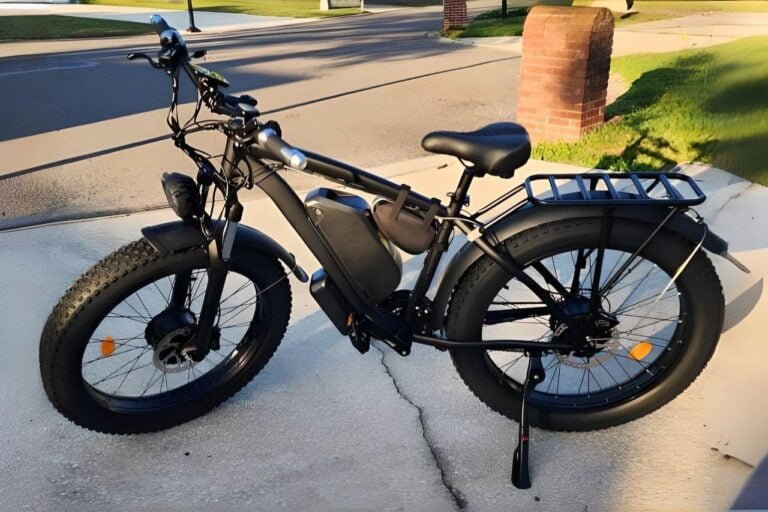
This is a full-suspension, fat-tire, dual-motor e-bike aimed at riders who want maximum thrust for hills, dirt, rough pavement, and mixed-terrain fun. It is not pretending to be a sleek urban commuter. The frame layout, 26×4 tires, big removable battery, and included utility accessories all point to a bike built around power, traction, and general-purpose rough-surface riding.
EcoE is clearly positioning this model as a value-heavy performance option. The main appeal is simple: on paper, you get a lot of battery, a lot of claimed motor output, full suspension, and fat-tire stability for much less money than more polished premium alternatives. The official pages and Amazon listing consistently highlight the dual-motor setup, removable 60V 32Ah battery, fat tires, suspension, and accessories as the main selling points.
| Spec | EcoE 6000W E-Bike |
|---|---|
| Motor | Dual motor, marketed at 6000W |
| Battery | 60V 32Ah removable battery |
| Claimed range | 35-80 miles |
| Claimed top speed | Up to 52 mph |
| Tires | 26×4 fat tires |
| Suspension | Front and rear suspension |
| Drivetrain | 7-speed |
| Brakes | Disc brakes; product images indicate 4-piston hydraulic setup |
| Frame | Aluminum |
| Payload | 330 lb shown in product graphics |
| Rider fit | Product graphics suggest about 5’7″ to 6’4″ |
| Included accessories | Mirrors, bottle and holder, phone mount, waterproof pouch, rear rack, LCD display |
This bike makes the most sense for someone who rides on hills, rough roads, gravel, dirt, or mixed terrain and wants a lot of motor help without paying premium-brand money. If your idea of a good ride is more about traction, acceleration, and a planted feel than about elegance or easy portability, the EcoE starts to make sense.
I also think it fits riders who are realistic about what this category is. This is a budget high-power fat-tire bike. If that sounds exciting rather than worrying, you are probably closer to the target buyer. If you want something mellow, polished, and easy to live with in a tight city apartment, you are not.
You should skip this bike if you need to carry it upstairs, lift it onto small vehicle racks, or squeeze it into tight storage spaces regularly. You should also skip it if you want a bike that feels refined at very high speed, or if your buying decision depends on a guaranteed real-world 52 mph outcome.
I would also steer new riders away from this one if they are not already comfortable managing a powerful throttle bike. There is a big difference between a friendly 750W commuter and a dual-motor fat-tire machine with aggressive takeoff.
If that sounds like you, I would look instead at one of two directions: a lighter single-motor commuter fat-tire bike for everyday usability, or a more established high-power e-bike brand if you are serious about top-end performance and long-term support.
Who it affects: Buyers choosing this bike mainly for the advertised 52 mph top speed.
When it shows up: The moment expectations are based on the listing headline rather than real-world conditions.
Why it matters: Speed claims on bikes like this are often best-case numbers. Rider weight, terrain, battery state, wind, and setup all change the result. If top speed is your whole reason for buying, disappointment is likely.
Workaround: Treat the speed claim as a ceiling, not a promise. Buy it for torque, hill strength, and rough-surface stability instead.
Who it affects: Shorter riders, apartment dwellers, and anyone who needs easy lifting or tight storage.
When it shows up: Parking, loading, turning in cramped spaces, and moving the bike with no motor help.
Why it matters: A heavy full-suspension fat-tire bike feels secure when moving, but that same mass becomes a burden off the bike. Daily ownership can feel more work than expected.
Workaround: Make sure your storage setup is easy before buying. Ground-floor storage or roll-in garage access makes a big difference.
Who it affects: Riders who plan to use the higher speed range often.
When it shows up: Fast descending, emergency stops, and loose-surface riding with a heavy bike.
Why it matters: Even if the brakes are competent, weight and speed raise the demands quickly. A bike that can accelerate this hard deserves defensive braking habits.
Workaround: Leave extra stopping distance, keep the brakes bedded in and adjusted, and do not assume motorcycle-like stopping just because the motor power is big.
Who it affects: Buyers who want simple long-term servicing or like to change display settings casually.
When it shows up: After delivery, during setup, or later when troubleshooting display, battery, or electronics issues.
Why it matters: Tires and basic 7-speed wear items are easier to replace than proprietary battery, display, or controller-related parts. The listing itself warns against randomly changing LCD settings, which is a clue that setup matters.
Workaround: Leave the display settings alone unless you know exactly what you are changing, keep the packaging for the first month, and document the bike as delivered in case support is needed.
This is the part of the bike that feels most convincing. My first impression was torque. The takeoff is strong, acceleration comes quickly, and the dual-motor setup gives it a much more aggressive personality than the average commuter-style fat-tire e-bike.
On steep hills, the bike felt genuinely capable. I did not get the sense that I was asking too much from it on climbs. That matters, because many budget fat-tire bikes look rugged but still feel strained on steep grades. This one feels like it was actually built for that use case.
What I liked most is that the power did not automatically translate into chaos. I expected something wilder and more awkward. Instead, the EcoE felt more planted than unruly.
The EcoE feels happiest when I treat it like a high-power stability bike, not a nimble trail weapon. It tracks with confidence, and the long, planted feel works well on rough pavement, dirt, and mixed terrain.
That said, this is not a bike I would describe as quick-handling. It is more secure than agile. The steering and overall mass make more sense on open paths and rough surfaces than in tight urban weaving.
The throttle and higher assist levels are the kind of thing I would use in doses. Lower and mid settings feel more practical for everyday riding. The higher settings are where the bike delivers its fun factor, but they are also where battery consumption and stopping-distance awareness start to matter more.
EcoE markets the 60V 32Ah removable battery as good for 35 to 80 miles, depending on mode and conditions. The official pages clearly push range as one of the bike’s headline features.
In real use, I would treat that claim the way I treat most high-power fat-tire range claims: possible at the easy end, optimistic at the hard end. If I ride calmly in lower or mid assist and use the bike more as a torquey cruiser, the range story becomes believable. If I ride it like a power toy, use both motors aggressively, climb often, and spend time at higher speeds, the battery will drain much faster.
For a real buyer, that translates into a simple rule: buy this bike expecting strong performance first, long range second.
The comfort story is better than I expected. The full suspension and 26×4 tires smooth out rough pavement, dirt, and broken surfaces well enough that the bike feels settled instead of harsh. That is one of the main reasons the EcoE comes across as more controlled than its marketing might suggest.
The riding position felt more about stability than sport. I would not call it elegant, but I would call it reassuring. On a bike like this, that is the right trade.
At low speed, I felt the bulk. In tighter spaces, I had to manage the bike rather than flick it around. Once rolling, though, the added size became an advantage. The EcoE feels planted, and that planted feel is a big part of the ownership appeal.
On loose or rough surfaces, that stability matters more than sharp steering. I would take this bike onto broken pavement, gravel, dirt paths, and mild mud without hesitation. That is where the fat tires and suspension justify themselves.
The brakes felt responsive enough for normal riding, and the bike stayed controlled on rough surfaces. But this is still a heavy, fast-capable machine, so my main safety note is simple: leave margin.
The lighting and utility setup are nice practical bonuses. The included mirrors, rack, bottle setup, phone mount, and storage pouch make it feel more complete out of the box than many bikes in the same price tier. The listing and official page both emphasize those included accessories and the general all-terrain safety setup.
The display gives the usual essential information, and I like that the bike includes enough accessories to feel immediately usable. The riding modes themselves make sense in practice: lower settings for calm cruising, higher settings for hills and short bursts of fun, and dual-motor use when I want the full effect.
My one caution is the same one the seller gives: do not start changing LCD settings randomly. That is not where I would want a new owner experimenting.
The EcoE is aimed at riders from about 5’7″ to 6’4″. At 5’10”, I fall comfortably inside that zone, and that feels believable to me.
For shorter riders, the main concern is not just saddle height. It is the full package: the bike’s size, weight, and general heft. Even if the seat height works, the bike may still feel like a lot to manage. For taller riders, the published range looks accommodating, though I would still check cockpit comfort if you are well over six feet and plan long rides.
For heavier riders, the 330 lb published max-load figure is reassuring on paper, but I would still think about performance expectations honestly. A heavier rider using high power on hills will naturally see more battery drain and more demand on the brakes.
Assembly was pretty reasonable. Mine took about 40 to 60 minutes because the bike arrived mostly pre-assembled. What took time was not complex wrenching. It was the usual finishing work: straightening, installing remaining parts, checking accessory alignment, and making sure everything looked right before the first ride.
After the first 10 to 20 miles, I would re-check:
For parts and service, I would separate common wear items from proprietary items. A 26×4 tire, basic drivetrain consumables, and routine hardware are one thing. Battery, display, controller, and brand-specific electronics are another. That is why I always like budget high-power bikes better for buyers who are at least somewhat comfortable with basic owner checks.
Based on the listing and your supplied materials, buyers should expect the bike, charger, LCD display, rear rack, mirrors, bottle and cage, phone mount, waterproof pouch, and basic accessories to get started. The listing also mentions optional add-ons like a detachable storage rack, passenger seat, and trailer options.
Compared with a lighter 750W to 1000W fat-tire commuter e-bike, the EcoE feels like a completely different category. It gives you much more punch on takeoff, much better hill confidence, and a more planted feel on rough terrain. If your routes include steep grades, loose surfaces, or you simply want a bike that feels powerful every time you twist the throttle, the EcoE is more exciting.
But the lighter commuter-style alternative wins on everyday practicality. It is usually easier to store, easier to pedal unassisted, less intimidating for new riders, and often easier to live with long term. So the question is not whether the EcoE has more performance. It clearly does. The question is whether you actually need that performance badly enough to accept the extra weight, bulk, and trade-offs.
Is the EcoE 6000W good for hills?
Yes. Hill performance is one of its strongest arguments. The dual-motor setup gives it much more climbing confidence than a typical single-motor fat-tire commuter.
Is it comfortable for longer rides?
It can be, especially on rougher surfaces where the suspension and fat tires help. I would describe it as stable and cushioned rather than sporty.
Can shorter riders fit it?
Possibly, but fit is only part of the issue. The published range starts around 5’7″, but shorter riders also need to think about the bike’s overall size and weight.
Is the battery removable?
Yes. The listing and official page both describe it as a removable 60V 32Ah battery.
Is the claimed 35-80 mile range realistic?
Only in context. Easy riding can get you much closer to the good end of that claim. Hard dual-motor riding will cut range down significantly.
What maintenance should I expect?
Routine checks matter. I would pay extra attention to brake condition, tire pressure, accessory hardware, and any bolts related to rack, suspension, and cockpit setup after the first few rides.
Buy it if: you want a budget-friendly, high-power fat-tire e-bike for hills, rough roads, dirt, and general all-terrain fun, and you value torque and stability more than portability or polish.
Skip it if: you need a light everyday commuter, live with stairs, want truly refined high-speed behavior, or are buying it mainly because the listing says 52 mph.
The EcoE 6000W works best when I judge it by what it actually does well: strong takeoff, real hill ability, planted handling, rough-surface comfort, and unusually aggressive paper specs for the money. It works worst when I judge it like a polished premium performance e-bike or assume every marketing number will show up exactly the same in real life.
Would I spend my own money on it? I would, but only for the right reason. I would buy it if I wanted an affordable power-focused fat-tire bike for mixed terrain and steep hills, and I was comfortable doing the usual early ownership checks myself. I would not buy it if I wanted a clean, low-hassle commuter or if my main goal was bragging-rights top speed.
| Preview | Product | Price | |
|---|---|---|---|

| EcoE 6000W Dual Motor Electric Bike for Adults 52MPH 60V 32A, 26×4 Fat Tire All Terrain… | View on Amazon |