A little joy belongs in every day.

The Arkveld Apex1 reached 37.4 mph in testing and impressed with strong climbing, capable hydraulic brakes, full suspension, and a 1,536Wh battery.
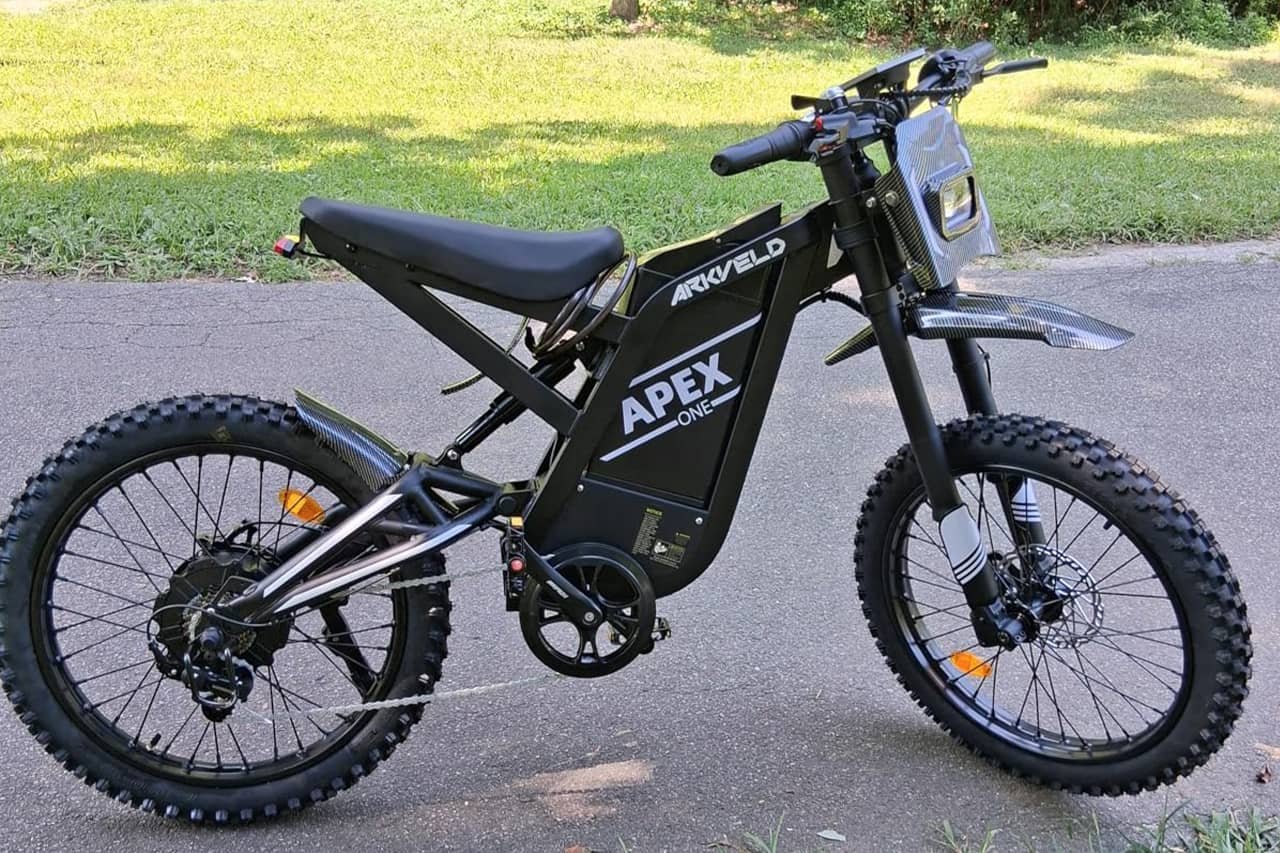
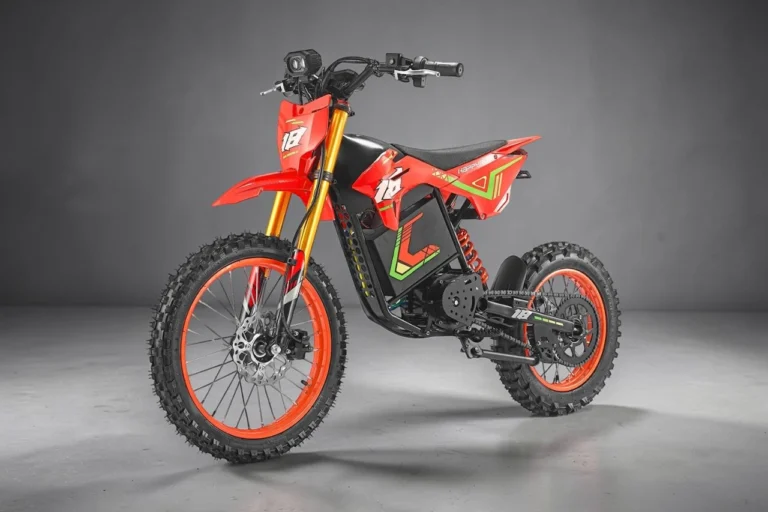
The Arkveld Apex1 is not a conventional commuter e-bike with slightly wider tires. It is a 120-pound, moped-style electric dirt bike built around a 2,000W rear-hub motor, a large 48V 32Ah battery, full suspension, hydraulic brakes, and a long motorcycle-style seat.
After riding it on pavement, loose sand, rough ground, bumps, and a demanding off-road climb, I came away impressed by how much speed, range potential, and hardware Arkveld has packed into it. My GPS recorded 37.4 mph, the hydraulic brakes delivered a short and controlled stop, and the hub motor made it up a climb that I genuinely expected it to fail.
It is not flawless. The bike is heavy, its rear suspension can feel a little bouncy, and my test bike arrived with a loose, noisy chain. Its speed also means buyers need to take local e-bike laws, protective equipment, and riding location seriously. Still, for riders who want a powerful recreational machine with pedals and dirt-bike styling, the Apex1 offers a compelling amount of performance for the money.
The Arkveld Apex1 combines a 2,000W motor, massive 1,536Wh battery, full suspension, and hydraulic brakes in one capable electric dirt bike. Check today’s price and available offers on Amazon.
The Arkveld Apex1 is best for adults who want a fast, long-range, moped-style e-bike for private property, trails where it is permitted, gravel roads, and recreational riding. Its strongest qualities are its powerful motor, huge battery, stable chassis, comfortable seat, capable brakes, and useful lighting package.
I would not choose it for carrying upstairs, frequent lifting, or riding primarily in crowded bike lanes. At up to roughly 40 mph, it also falls outside standard Class 1, 2, and 3 e-bike limits in many jurisdictions. Check the applicable rules before riding it on public roads or trails.
Overall rating: 4.4/5
| Specification | Details |
|---|---|
| Bike type | Moped-style electric dirt bike |
| Motor | Brushless rear-hub motor |
| Rated / peak power | 2,000W / 3,000W claimed |
| Maximum torque | 110 Nm claimed |
| Advertised top speed | Up to 40 mph |
| Tested top speed | 37.4 mph by GPS |
| Battery | 48V 32Ah removable lithium-ion |
| Energy capacity | 1,536Wh |
| Claimed range | About 44–45 miles electric-only; up to 80–90 miles with pedal assist |
| Charger | 4.5A fast charger |
| Claimed charge time | Approximately 6–7 hours |
| Drivetrain | Shimano 7-speed |
| Throttle | Right-hand half-twist throttle |
| Assist levels | Five, plus level 0 |
| Front suspension | Dual-crown hydraulic fork with compression adjustment |
| Rear suspension | Hydraulic monoshock |
| Brakes | Front and rear hydraulic discs with 203mm rotors |
| Tires | 70/100-19 off-road tires, front and rear |
| Lighting | Headlight with halo, taillight, active brake light, and turn signals |
| Display | Color multifunction display with NFC access |
| Frame | High-carbon steel |
| Bike weight | 120 lb claimed |
| Maximum load | 330 lb claimed |
| USB output | USB-C, 5V/2A |
| Assembly | Approximately 90% preassembled |
Note: Arkveld’s promotional materials contain conflicting figures. Some show a 48V 30Ah battery, 38 mph, 80 miles, or a 45-degree climb. For ASIN B0FJ2SYZD2, the most consistently listed configuration is 48V 32Ah, up to 40 mph, up to 80–90 miles with pedal assist, and a claimed climbing capability of approximately 35 degrees. Confirm the current configuration on the seller’s listing before ordering.
The first thing I noticed about the Apex1 was its hybrid appearance. The long seat, extended fenders, number-plate-style headlight surround, dual-crown fork, and angular central battery compartment give it the stance of a compact electric motorcycle. The large enclosed frame area also gives it some of the visual character of a high-powered bomber-style e-bike.
The high-carbon-steel chassis feels substantial. Once moving, that weight works in the bike’s favor: it feels planted, stable, and reassuring at speed. It was also more agile than its 120-pound figure might suggest. I could place it confidently through loose and uneven sections without feeling as though the chassis was wandering beneath me.
The tradeoff is obvious when the motor is off. This is not a bike I would want to lift regularly, carry up stairs, or pedal home for a long distance with a depleted battery. The pedals are useful for assistance and legal classification where applicable, but the Apex1’s mass and riding position make it a motor-first machine.
The rear hub motor is rated at 2,000W and advertised to reach 3,000W at peak, with 110 Nm of torque. Those are ambitious numbers, but the real-world performance supported the bike’s high-power positioning.
Acceleration from a stop was immediate without being abrupt. The Apex1 did not violently pull my arms or make low-speed control difficult. Instead, the power built quickly and predictably, which made it easier to feather the throttle when maneuvering slowly.
In the highest assist setting, the display showed 37.2 mph while my GPS app recorded a maximum of 37.4 mph. That is close enough to Arkveld’s 38–40 mph advertising to call the speed test successful. Rider weight, tire pressure, wind, temperature, battery charge, and terrain will all affect the result, so not every rider should expect the same number.
The motor also reached its upper speed relatively quickly. This gives the Apex1 exciting road performance, but it requires considerably more judgment and stopping distance than a typical 20 mph e-bike. A certified helmet and appropriate protective equipment are essential.
The off-road test was where the Apex1 surprised me most. I rode it across loose sand, rough sections, bumps, and a steep climb that I have used to challenge other electric bikes.
The first smaller incline caused a modest reduction in speed, but the motor kept pulling without difficulty. On the main climb, I started without carrying extra momentum and let the hub motor do the work. The bike slowed as the grade increased and sounded as though it was working hard, but it continued to climb and made it to the top without pedal assistance.
That result was genuinely impressive for a rear-hub system. A mid-drive can use the bike’s gears to multiply torque on steep terrain, whereas a hub motor cannot. The Apex1 compensated with raw output and strong low-speed torque.
I would still treat the advertised 35-degree climbing figure cautiously. Manufacturers rarely explain how those tests are measured, and sustained steep climbing can generate significant heat in a hub motor and controller. Rider weight, surface traction, starting speed, and climb length matter just as much as the headline angle.
The dual-crown hydraulic fork felt plush and absorbed broken surfaces and larger bumps well. It includes compression adjustment, which gives riders some control over how firm the front end feels. The rear monoshock also contributed to a much smoother ride than a rigid-frame moped-style e-bike could provide.
Over a series of bumps, the chassis remained composed and the suspension used its travel effectively. The rear end did feel a little bouncy on harder impacts, however. I would describe the suspension as good-quality generic hardware rather than premium mountain-bike equipment. It is entirely appropriate for recreational trail riding and rough roads, but riders should not expect the damping control of high-end components from Fox, RockShox, or a true off-road motorcycle.
The long padded seat was another highlight. At 5 feet 9 inches and 180 pounds, I found the reach to the handlebar natural, with only a slight forward lean. I also had enough legroom to pedal without my knees feeling excessively cramped. The seat resembles the narrow profile used on lightweight electric dirt bikes, but its cushioning is considerably softer than many seats in that style.
The supplied 70/100-19 tires have an aggressive off-road tread and a taller, narrower motorcycle-style profile than the familiar 20-by-4-inch fat tires used on many moped e-bikes. They provided reasonable grip on dirt and crossed loose sand without stopping the bike.
I could feel the rear move around on the softest section, but my tires were also inflated too firmly for that terrain. Reducing pressure within the manufacturer’s safe range would increase the contact patch and should improve traction. Tire pressure always needs to reflect rider weight, surface, speed, and the risk of rim damage or pinch flats.
On firmer ground, the Apex1 felt stable and planted. Its weight, wheelbase, and tire profile helped it track confidently at speed. That same weight requires more deliberate input in tight, slow maneuvers, especially for smaller or less experienced riders.
With a bike this fast and heavy, strong brakes are not optional. The Apex1 uses hydraulic calipers and large 203mm rotors at both ends.
From approximately 20 mph, I estimated that the bike stopped in about 10 feet during my informal test. The brake engaged firmly enough to lock the wheel, and the system offered the power I expected for this class of machine. This was performed on a specific surface and was not a laboratory test; stopping distance will vary with tire grip, rider technique, total load, pad condition, weather, and terrain.
My main complaint was the lever arrangement on the test bike: the rear brake was operated by the right lever and the front by the left. That arrangement is common for bicycles in the United States, but riders coming from motorcycles may expect the front brake on the right. Whatever your background, verify which lever controls each wheel before the first ride and build muscle memory at low speed.
New brake pads also require a proper bedding-in procedure before they deliver their most consistent performance. Given the Apex1’s speed, I would inspect caliper alignment, rotor condition, lever feel, and all wheel fasteners during assembly and before every serious ride.
The 48V 32Ah battery stores 1,536Wh, nearly twice the energy of many everyday commuter e-bike batteries. It is removable and protected inside the center of the frame. Beneath the battery cover are the main power switch, charging port, and key lock used for removal.
Arkveld claims approximately 44–45 miles in pure-electric use and up to 80–90 miles with pedal assistance. I did not perform a controlled full-discharge range test, so I cannot independently verify those figures. The 90-mile result would likely require a lighter rider, low assist, moderate speed, frequent pedaling, favorable weather, and relatively flat terrain.
Expect substantially less range when riding near top speed, accelerating repeatedly, using the throttle continuously, climbing steep grades, or traveling through sand. Even so, the unusually large 1,536Wh capacity gives the Apex1 better range potential than most affordable moped-style models.
The included 4.5A charger is rated for a claimed six-to-seven-hour recharge. Allow the battery to return to room temperature before charging, use the supplied charger, and charge in a dry, ventilated location away from combustible materials. Never charge a battery that is swollen, damaged, wet, unusually hot, or behaving abnormally.
The cockpit is easy to understand. The right side includes the rear-brake lever, Shimano shifter, and half-twist throttle. The left side houses the other brake lever and controls for power, assist level, lighting, turn signals, and horn. A color screen sits centrally and displays speed, battery status, assist level, and trip information.
There are five powered levels plus level 0. On my test bike, the throttle was disabled at level 0. Pedal assist engaged after slightly less than one full crank revolution and then delivered power promptly. The response was quick, so new riders should begin in a low setting in an open area.
The throttle calibration was one of the pleasant surprises. Even in level 5, I could feed in a small amount of power rather than receiving an all-or-nothing surge. I would personally prefer a full-twist throttle on a machine with this visual style, but the half-twist design worked well and helps reduce accidental activation.
For security, the Apex1 includes an alarm remote, battery keys, and NFC cards. The bike can request an NFC tap after the power button is pressed, or it can start when the card is placed near the display. These features are useful deterrents, but they do not replace a heavy-duty lock anchored to a fixed object.
The lighting package is more complete than I expected. It includes a bright front light with a halo, rear light, active brake light, and turn signals. These improve visibility and communication, although riders should still use reflective gear and never assume a driver has seen a small turn signal.
The Shimano seven-speed drivetrain provides enough gear selection for starting, assisting the motor on hills, and pedaling at moderate speeds. It is not intended to match the bike’s maximum motor-powered speed with a natural bicycle cadence.
During rough riding, my test bike’s chain was loose enough to slap and produce a noticeable clanking sound. The noise was not coming from the suspension. Chain tension, derailleur alignment, and fastener torque should therefore be checked carefully during initial setup. If you are not comfortable making those adjustments, have a qualified bicycle or e-bike technician inspect the bike before riding it aggressively.
The Apex1 is advertised as roughly 90% assembled, but the remaining work still affects safety. Because of the bike’s weight and speed, I recommend professional assembly if you have any uncertainty.
Before the first ride, verify:
Begin in the lowest powered mode in a traffic-free area. Practice throttle control, braking with both wheels, turning, and emergency stops before exploring the faster settings.
The Apex1 makes the most sense for:
It is a poor fit for:
Do not assume the pedals make the Apex1 legal everywhere a regular e-bike is allowed. Its advertised power and 38–40 mph capability exceed common U.S. Class 1, Class 2, and Class 3 definitions. Depending on the jurisdiction and how the bike is configured, it may be treated as an off-highway vehicle, moped, motor-driven cycle, or unclassified motor vehicle.
Rules can differ between states, cities, parks, and trail systems. Confirm the current local requirements for speed, motor power, registration, licensing, insurance, lighting, helmets, and permitted riding areas before use. For many owners, private-property and designated off-road recreation will be the clearest use case.
Pricing can change, so I recommend checking the current Amazon listing rather than relying on a fixed figure. At the approximately $1,499 price presented during the original evaluation, the Apex1 offered unusually strong hardware for the cost: a 1,536Wh battery, high-output motor, hydraulic brakes with large rotors, full suspension, signals, alarm, NFC start, and a color display.
The value equation depends on expectations. This is an affordable, high-performance direct-to-consumer bike, not a premium electric motorcycle backed by a nationwide dealer network. Some initial adjustment may be required, and replacement parts, warranty responsiveness, and local service access should be considered before buying.
| Preview | Product | Price | |
|---|---|---|---|

| Arkveld Electric Bike,e Dirt Bike Adult,ebike Dirtbike,Peak 3000W | $1,499.99 | View on Amazon |
The Arkveld Apex1 performed better than I expected. Its 37.4 mph GPS result was close to the advertised top speed, its hydraulic brakes felt appropriately powerful, and its hub motor completed a steep off-road climb from a low-speed start. The chassis felt planted, the front suspension was plush, and the large battery gives it serious range potential.
The compromises are manageable but important. At 120 pounds, it is difficult to move without power. The rear shock is not premium-level, my test bike needed chain adjustment, and the performance puts it outside ordinary e-bike rules in many places. Riders must also verify the exact battery and specifications because Arkveld’s promotional graphics are not fully consistent.
For an experienced adult who understands those limitations and has a suitable place to ride, the Apex1 delivers a rare combination of speed, comfort, equipment, and value. It feels less like a conventional fat-tire e-bike and more like an accessible electric dirt-bike hybrid—and that is exactly where its appeal lies.
How fast is the Arkveld Apex1?
Arkveld advertises up to 38–40 mph. In my test, a GPS app recorded a maximum speed of 37.4 mph. Actual speed varies with rider weight, battery charge, terrain, tire pressure, weather, and controller configuration.
What battery does the Apex1 use?
The current specification associated with ASIN B0FJ2SYZD2 is a removable 48V 32Ah lithium-ion battery with 1,536Wh of capacity. One promotional graphic shows 30Ah/1,440Wh, so buyers should confirm the configuration on the live listing.
How far can it travel on one charge?
Arkveld claims around 44–45 miles in electric-only riding and as much as 80–90 miles with pedal assist. These are advertised estimates, not results from my controlled full-battery range test. High speeds, hills, soft terrain, cold weather, and heavy throttle use will reduce range.
Can the Arkveld Apex1 climb steep hills?
The Apex1 climbed the demanding off-road hill used in my evaluation without pedal assistance, although it slowed near the steepest section. Arkveld claims up to 110 Nm of torque and approximately a 35-degree climbing capability, but real performance depends heavily on the surface, load, speed, and climb length.
Is the battery removable?
Yes. The battery is locked inside the center frame compartment and can be removed with the supplied key. The compartment also contains the battery power switch and charging port.
Does it have turn signals and a brake light?
Yes. The Apex1 includes a headlight, taillight, active brake light, and front and rear turn signals, along with a horn.
Is the Apex1 suitable for beginners?
Its controllable throttle helps, but the combination of approximately 120 pounds and nearly 40 mph makes it better suited to experienced adult riders. New owners should practice in a low power mode away from traffic and wear appropriate protective equipment.
Does the Arkveld Apex1 arrive assembled?
It is advertised as approximately 90% preassembled. Final assembly and safety checks may include the front wheel, handlebar, pedals, brakes, tires, drivetrain, suspension, and fasteners. Professional setup is advisable if you lack experience with heavy, high-powered e-bikes.