A good ride can change your day.

This guide compares hunting e-bikes by torque, battery range, tire size, payload, suspension, brakes, and rack support for field use on rough terrain.
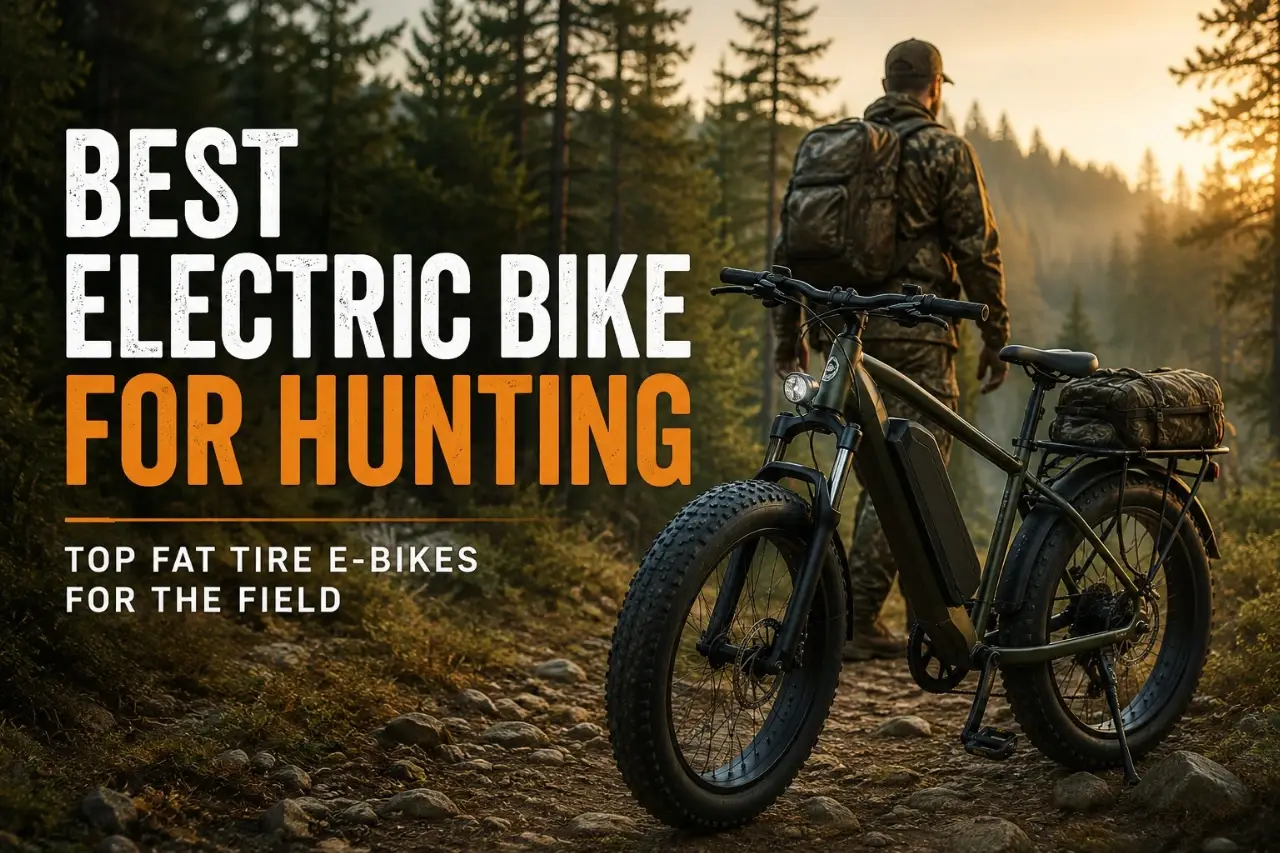
Hunting from an e-bike has become a practical strategy for reaching remote blinds, hauling gear across farm tracks, and moving quietly through wooded terrain where a truck or ATV would spook game. Fat-tire electric bikes offer real advantages: near-silent motors, stable traction on soft ground, and enough payload capacity to carry a pack, bow, or rifle case without leaving deep ruts. Choosing the right model comes down to motor torque, battery range under load, tire width for soft soil, suspension quality for rough descents, and rack or trailer compatibility for heavy hauls.
This guide from GoEBikeLife compares six hunting-capable electric bikes available on Amazon, evaluated against field-specific criteria rather than generic spec sheets. We looked at motor power and quietness, realistic range with gear on board, payload limits, suspension design, braking performance on descents, and how well each bike works with racks or trailers.
Here is how each model ranks for specific hunting use cases:
Best for long-range backcountry access: PHILODO Falcon 60V Dual Motor Hunting Ebike
Best budget entry for trail and farm track riding: PUCKIPUPPY Beagle Electric Mountain Bike
Best torque-sensor full suspension for mixed terrain: PUCKIPUPPY Labrador Pro Electric Mountain Bike
Best for high-speed dual-motor power and heavy riders: PUJH 6000W Dual Motor Electric Bike
Best for serious off-road speed and AWD traction: TUTTIO Adria26 Dual Motor Electric Mountain Bike
Best compact foldable for truck bed or ATV trailer storage: Jasion X Hunter PRO Foldable Fat Tire Ebike
| Model | Motor (Peak) | Battery | Tire Size | Suspension | Payload | Rack Ready |
|---|---|---|---|---|---|---|
| PHILODO Falcon | Dual motor, 60V | 60V 32Ah | 26×4″ | Full | 450 lbs | Yes |
| PUCKIPUPPY Beagle | 960W | 48V 15Ah | 26×4″ | Front only | 400 lbs | Yes |
| PUCKIPUPPY Labrador Pro | 1350W | 48V 20Ah | 26×4″ | Full | 300 lbs | Yes |
| PUJH 6000W | 6000W dual | 60V 20Ah | 26×4″ | Full | 330 lbs | Yes |
| TUTTIO Adria26 | 5000W dual | 52V 25Ah | 26×4″ | Full | 264 lbs | Yes (bag) |
| Jasion X Hunter PRO | 1800W | 720Wh | 20×4″ | Full | 330 lbs | Yes |
Best for: Long-range backcountry access and extended hunting trips
The PHILODO Falcon is built around a massive 60V 32Ah battery and a dual-motor drivetrain, making it one of the highest-capacity options in this roundup for hunters who need to cover serious distance before reaching a blind. GoEBikeLife recommends it for landowners and hunters who regularly cross large properties or need all-day range without recharging.
The full suspension system uses a lockable front fork and a rear air shock, which handles rutted farm tracks and wooded paths better than budget single-shock setups. Six riding modes let you switch between dual-motor full power, single-motor efficiency, and pedal assist to conserve battery on flat ground and save power for climbs.
The 10-12 hour recharge time is a drawback if you need overnight turnaround. At 50 pounds, it is manageable but not lightweight.
| Preview | Product | Price | |
|---|---|---|---|

| PHILODO Falcon 60V Off-Road Electric Bike – Dual Motor Hunting Ebike, 26″ Fat Tire Full… | $1,299.00 | View on Amazon |
Pros:
Cons:
| Spec | Detail |
|---|---|
| Motor | Dual motor, 60V system |
| Battery | 60V 32Ah (1460Wh) |
| Range (PAS) | Up to 100 miles |
| Tires | 26×4″ fat tires |
| Suspension | Full (lockable fork + rear air shock) |
| Brakes | Disc |
| Weight | 50 lbs |
Best for: Budget-conscious hunters on trails, gravel roads, and farm tracks
The PUCKIPUPPY Beagle offers one of the highest listed payload capacities in this roundup at 400 pounds, which matters when you are a heavier rider or need to carry a loaded pack. Its 960W peak brushless hub motor handles 35-degree slopes according to the spec sheet, and real buyers confirm solid hill performance even at heavier rider weights.
The 48V 15Ah battery is smaller than the Falcon or Labrador Pro, so expect realistic range closer to 30-40 miles with mixed riding and gear on board. The front-only suspension is the biggest trade-off for rough, technical terrain; it softens trail chop but will transmit more impact than a full-suspension design on rocky or rooted paths.
The rear storage shelf is a practical addition for hunters carrying a dry bag or small cooler.
| Preview | Product | Price | |
|---|---|---|---|

| PUCKIPUPPY Electric Bike for Adults with 960W(Peak), 26″ Fat Tire Electric Mountain… | $899.99 | View on Amazon |
Pros:
Cons:
| Spec | Detail |
|---|---|
| Motor | 960W peak hub motor |
| Battery | 48V 15Ah (720Wh) |
| Range (PAS) | Up to 60 miles (estimated 30-40 under load) |
| Tires | 26×4″ fat tires |
| Suspension | Front only |
| Brakes | Disc |
| Payload | 400 lbs |
Best for: Mixed terrain hunting with torque-sensor pedal assist and full suspension
The Labrador Pro is PUCKIPUPPY’s flagship model and the most technically refined option in this roundup for hunters who want a natural-feeling ride on varied terrain. The torque sensor measures how hard you pedal and adjusts motor output in real time, which is more efficient and quieter than a basic cadence sensor. That translates to better battery conservation on long approaches and a more controlled feel when navigating narrow wooded paths.
Full suspension with PUCKIPUPPY’s lateral rear shock system adds comfort on rough trails. Dual hydraulic disc brakes with 180mm rotors provide reliable stopping on steep, muddy descents. The included accessories pack (air pump, lock, rear rack, fender, mirrors, phone mount, bottle holder) adds real field value.
Payload is listed at 300 pounds, which is lower than the Beagle.
| Preview | Product | Rating | Price | |
|---|---|---|---|---|

| PUCKIPUPPY Electric Bike for Adults 1350W Max, 28 MPH, 48V 20AH Battery Ebike, 26″x4″ Fat… | $1,299.99 $1,239.99 | View on Amazon |
Pros:
Cons:
| Spec | Detail |
|---|---|
| Motor | 1350W peak (750W rated) |
| Battery | 48V 20Ah |
| Range (PAS) | 40-80 miles depending on terrain |
| Tires | 26×4″ fat tires |
| Suspension | Full (lateral rear shock) |
| Brakes | Dual hydraulic disc |
| Payload | 300 lbs |
Best for: Heavy riders and hunters who need maximum torque and dual-motor power
The PUJH is the most powerful bike in this roundup on paper, with a 6000W dual-motor system and a claimed top speed around 50 mph in full throttle dual-motor mode. For hunting, that speed is largely irrelevant; what matters is the 200Nm of combined torque, which makes short work of steep grades with a loaded gear rack. Buyers report real-world speeds over 40 mph with dual motors engaged, confirming the motor system is genuinely capable.
At 85 pounds, this is the heaviest bike in the group by a significant margin. Loading it onto a truck bed or trailer will require two people or a ramp. The seven-level suspension system (two front shocks, rear shock, seat springs, and fat tires) is unusually thorough and contributes to a stable, planted feel on rough terrain.
One buyer reported a rear fender failure that caused an injury. Inspect fender mounting before riding.
| Preview | Product | Price | |
|---|---|---|---|

| PUJH 6000W Dual Motors Electric Bike for Adults,60V 20Ah 1200Wh Removable Battery,26″ Fat… | $999.00 | View on Amazon |
Pros:
Cons:
| Spec | Detail |
|---|---|
| Motor | 6000W peak dual motor |
| Battery | 60V 20Ah (1200Wh) |
| Range | 35-110 miles |
| Tires | 26×4″ fat tires |
| Suspension | Full (7-level system) |
| Brakes | Dual hydraulic disc |
| Payload | 330 lbs |
Best for: Off-road speed, AWD traction, and hunters who want dual-motor capability under $1,500
The TUTTIO Adria26 sits in a competitive price bracket for dual-motor performance and has built up a meaningful review base over roughly a year on the market. One buyer mounted gun holders to the handlebars for deer season and put over 150 miles on the bike with no issues, which is exactly the kind of field evidence that matters for hunting use. GoEBikeLife notes the Adria26 as a strong value pick for hunters on rough or hilly terrain who want AWD traction without paying full premium-brand pricing.
The 52V 25Ah battery is the largest in this roundup by capacity, and the oil disc brakes provide confident stopping on wet or muddy descents. Payload is the lowest listed here at 264 pounds, so heavier riders or those carrying substantial gear should factor that in. Realistic battery range runs closer to 20 miles per charge under actual load, per verified buyer feedback.
| Preview | Product | Price | |
|---|---|---|---|

| koonkex Electric Bike for Adults, Peak 5000W Dual Motor Ebike, 52V 25AH Battery, 26″ Fat… | $1,399.00 $998.99 | View on Amazon |
Pros:
Cons:
| Spec | Detail |
|---|---|
| Motor | 5000W peak dual motor |
| Battery | 52V 25Ah (1300Wh) |
| Range (PAS) | Up to 100 miles (spec); ~20 miles typical under load |
| Tires | 26×4″ fat tires |
| Suspension | Full dual suspension |
| Brakes | 180mm oil disc brakes |
| Payload | 264 lbs |
Best for: Hunters who transport their bike in a truck bed, car trunk, or ATV trailer
The Jasion X Hunter PRO is the only foldable model in this roundup, which gives it a clear advantage for hunters who need to store or transport their bike compactly. It fits in most truck beds folded, making it a practical choice for hunters who drive to a trailhead and then ride in. The UL2849 certification and app connectivity (for remote locking, mode switching, and real-time data) add modern convenience features the other bikes lack.
The 20-inch fat tires are narrower in diameter than the 26-inch wheels on the other models, which affects ground clearance on deep ruts or fallen logs. The 1800W peak motor and dual hydraulic disc brakes are genuinely capable, and the full suspension (front fork plus four-bar rear linkage) handles trail chop well. Payload is listed at 330 pounds.
Some buyers noted hydraulic brake assembly issues out of the box; verify brake setup before the first ride.
| Preview | Product | Price | |
|---|---|---|---|

| Jasion Hunter Pro Electric Bike for Adults, 720WH Removable Battery, 1800W Peak Motor, Max… | $949.99 $899.99 | View on Amazon |
Pros:
Cons:
| Spec | Detail |
|---|---|
| Motor | 1800W peak brushless |
| Battery | 720Wh removable |
| Range (PAS) | Up to 80 miles |
| Tires | 20×4″ fat tires |
| Suspension | Full (front fork + 4-bar rear) |
| Brakes | Dual hydraulic disc |
| Payload | 330 lbs |
Picking the right hunting e-bike means matching the bike’s strengths to your actual terrain, gear weight, and transport needs. GoEBikeLife recommends working through these key categories before buying.
Hub-drive motors (mounted in the rear wheel) are the most common on these bikes and work well for flat to moderate terrain. They are simple, low maintenance, and quiet. Mid-drive motors (mounted at the crank) are better for steep, technical climbing because they use the bike’s gears for mechanical advantage, but none of the models in this roundup use mid-drive.
For hunting, torque matters more than top speed. A motor with 80Nm or more of torque will handle hills with a loaded pack. Dual-motor bikes multiply that torque significantly but add weight and battery drain.
Spec sheet range figures assume light riders on flat ground with pedal assist. In the field, expect roughly 40-60 percent of the listed range when carrying gear, riding soft terrain, or climbing hills. A 1,000Wh or larger battery gives you more cushion. Always check the watt-hour (Wh) figure rather than just voltage and amp-hours separately.
All six bikes use 4-inch-wide fat tires, which is the sweet spot for soft ground like mud, sand, and leaf litter. Wider tires distribute weight and reduce sinking on wet soil. The 26-inch wheel diameter on most models also improves rollover ability on rocks and roots compared to the 20-inch wheels on the Jasion folder.
Add your body weight, gear weight, and any rack cargo together before comparing to the listed payload limit. Leave a margin of at least 20-30 pounds. Check whether the bike ships with a rear rack or whether one is available as an add-on. Trailer hitch adapters are available aftermarket for most bikes with a standard rear dropout.
Full suspension is worth the extra cost on rocky, rooted, or steep terrain. Front-only suspension is adequate on gravel roads and maintained trails. Hydraulic disc brakes outperform mechanical disc brakes on steep or wet descents and require less hand force. Oil-actuated (hydraulic) brakes are standard on the higher-end models here and are worth prioritizing if you ride significant hills.
Hub motors are generally quiet at low to moderate speeds. The biggest noise sources are tire noise on pavement and drivetrain rattle on rough terrain. Riding in pedal assist at lower assist levels minimizes motor noise. Torque-sensor systems (like the Labrador Pro) tend to run quieter than cadence-sensor systems because the motor engages more smoothly.
Which features matter most when choosing an e-bike for hunting, such as motor type, torque, and battery range?
For hunting, torque and realistic battery range under load matter more than top speed.
Look for at least 80Nm of torque for hill climbing with gear, and choose a battery with 720Wh or more for practical all-day range.
Tire width, suspension quality, and payload capacity should also factor into the decision based on your terrain and gear weight.
What are the best hunting-capable e-bikes under $1,000 that still offer reliable power and durability?
The PUCKIPUPPY Beagle sits in the more accessible price range and offers a 400-pound payload, rear storage shelf, and solid motor performance for trail and farm track riding.
At that budget, expect front-only suspension and a smaller battery, which limits range under load.
Buyers new to e-bikes should also budget for a basic toolkit, spare tube, and tire sealant for field repairs.
Is a mid-drive motor or a hub-drive motor better for steep trails and hauling gear in the backcountry?
Mid-drive motors are technically superior for steep, technical terrain because they leverage the bike’s gears for climbing efficiency, which also conserves battery.
All six bikes in this roundup use hub-drive motors, which are quieter, lower maintenance, and adequate for most hunting terrain including moderate hills.
If your property has very steep grades with full gear, a mid-drive model from a different category would be worth considering.
Are dual-motor or AWD e-bikes worth it for hunting, and when do they provide a real advantage?
Dual-motor bikes provide real advantages on loose, steep, or slippery terrain where a single rear motor would spin out.
AWD traction is particularly useful in wet mud, snow, or on steep embankments. The trade-off is higher battery drain, more weight, and added mechanical complexity.
For hunters on flat to moderate terrain, a single well-torqued motor is usually sufficient and easier to maintain.
How quiet are hunting-focused e-bikes in real-world conditions, and what affects noise the most?
Hub-drive e-bikes are very quiet at low speeds in pedal assist mode, typically producing less noise than a person walking through leaves.
The main noise sources are tire contact on hard surfaces, chain and derailleur chatter on rough terrain, and any loose fender or rack hardware.
Torque-sensor systems engage the motor more smoothly than cadence-sensor systems, which reduces audible motor surge.
What should you look for in an e-bike setup for towing a game trailer or carrying heavy loads?
Look for a bike with a solid rear rack rated for at least 50 pounds, a standard rear axle dropout compatible with aftermarket trailer hitches, and a total payload limit that accounts for your body weight plus the trailer tongue weight.
Full suspension bikes distribute load stress more evenly on rough terrain. Hydraulic disc brakes become especially important when towing because the added weight significantly increases stopping distance.