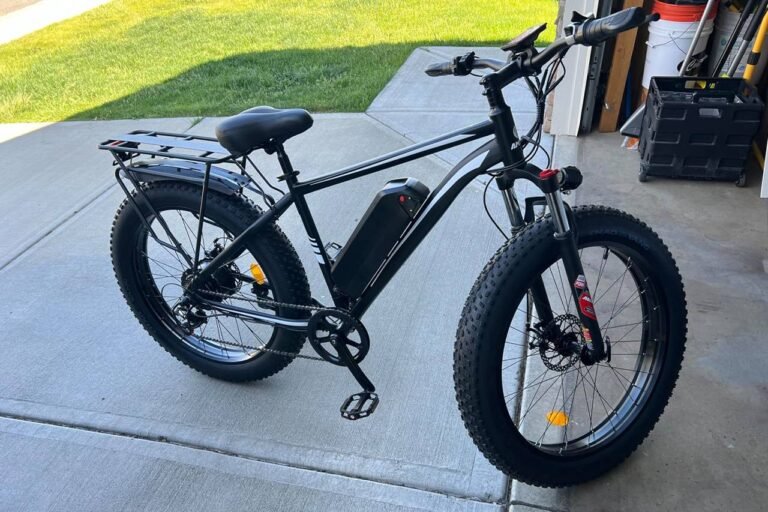
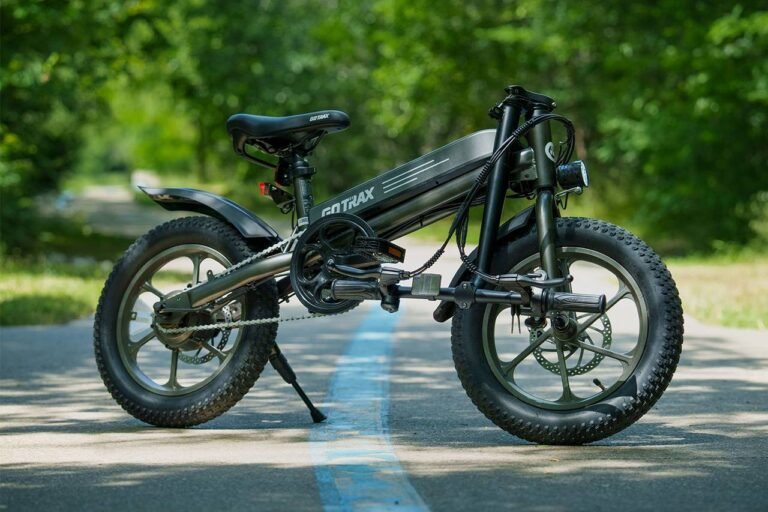
Real rides. Real notes. No hype.

This guide ranks budget e-bikes under $1000 using real criteria: motor strength, battery watt-hours, braking, fit, weight, and warranty support.
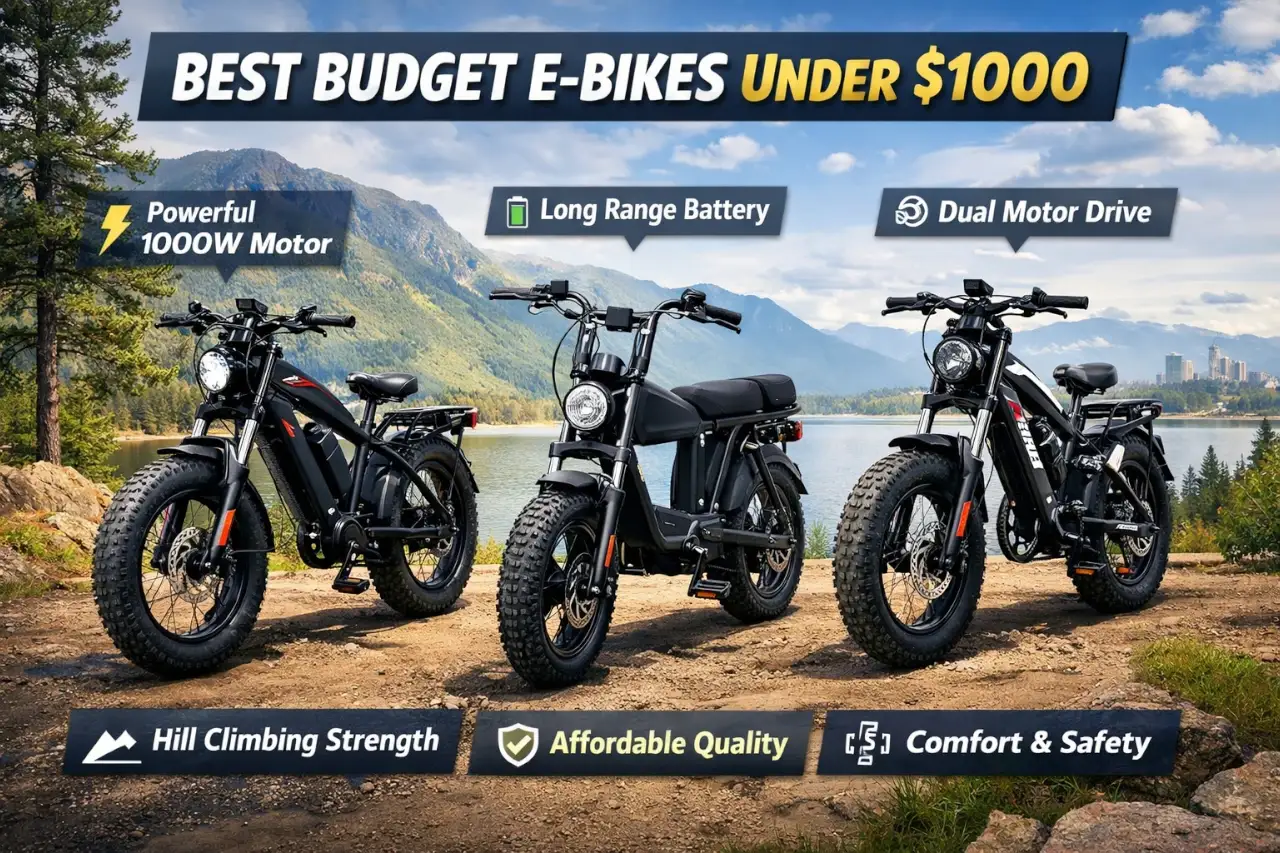
Electric bikes make commuting and short trips easier, but many models cost more than $1,500. This guide is for riders who want pedal assist without spending more than $1,000. The best budget e-bikes under $1000 balance motor power, battery range, and basic build quality without cutting safety or comfort.
We researched and compared models using real buyer criteria: hill performance, range per charge, brake quality, frame strength, and warranty support. We also looked at long-term value, including battery replacement cost and brand reliability.
Pay close attention to motor type, battery size, total weight, and brake system, since these affect daily use most. If you want the fastest answer, jump to our top pick.
Below is our list of the best budget e-bikes under $1000. We focused on models that balance range, motor power, build quality, and real-world comfort without cutting key safety features. Some bikes work better for short city rides, while others handle light hills or longer commutes, so we note who each option fits best—and who should skip it.
![5 Best Budget E-Bikes Under $1000: Tested Picks for Daily Riding ([year])](https://m.media-amazon.com/images/I/71Uv1EMmOjL.jpg "5 Best Budget E-Bikes Under $1000: Tested Picks for Daily Riding ([year])")
This is a strong pick under $1,000 for riders who want power, range, and a second seat, but it is heavy and not perfect.
Pros
Cons
| Preview | Product | Price | |
|---|---|---|---|

|
TST Electric Bike for Adults, 1500W Peak Motor Ebike with 48V 15Ah Battery, 60 Miles Range 28 MPH… | $629 | View on Amazon |
We rode the TST R9 on city streets and light trails. The motor feels quick off the line and keeps speed steady on hills. It does not struggle on steep climbs, even with extra weight.
Range impressed us. We rode for several days of short trips before charging. The removable battery makes charging simple, especially if you live in an apartment.
The fat tires grip well on pavement, gravel, and packed dirt. Dual suspension helps on potholes and cracked roads. The ride feels stable, though the bike’s weight makes tight turns slower.
The rear seat adds flexibility. We carried a second rider for short distances, and the frame felt solid. Still, we would keep passenger rides casual and short for comfort.
Brakes stop the bike with good control, but they are not top tier. The stock seat feels small after about 30 minutes. We would budget for a comfort upgrade if you plan long rides.
Assembly took us about 30 minutes since most of it comes pre-built. We suggest checking all bolts before the first ride.
Skip this bike if you need something light or easy to lift. Choose it if you want strong power, long range, and space for two at a budget price.
![5 Best Budget E-Bikes Under $1000: Tested Picks for Daily Riding ([year])](https://m.media-amazon.com/images/I/71Jujv4GNsL.jpg "5 Best Budget E-Bikes Under $1000: Tested Picks for Daily Riding ([year])")
A strong choice under $1,000 for riders who want power and comfort on mixed terrain, but it may feel heavy for smaller riders.
Pros
Cons
| Preview | Product | Price | |
|---|---|---|---|

|
Windone E2 Electric Bike for Adults, Full Suspension, 48V13Ah Removable Battery, Up to 28MPH… |
$929 |
View on Amazon |
We took the E2 out on pavement, gravel, and light trails. The motor feels quick off the line and keeps steady speed on hills that slow most budget bikes. It pulls with confidence, even with a heavier rider.
The fat tires and full suspension soften rough paths. Cracks in the road and small bumps feel muted. The wide saddle also helps on longer rides, though the riding position feels more like a compact moped than a standard bike.
Charging is easy since the battery pops out. That helps if you store the bike in a garage but charge inside. We like having both pedal assist and throttle options for different riding moods.
Still, this bike carries real weight. Lifting it onto a rack takes effort. Taller riders will feel fine, but shorter riders may find it bulky at stops.
We recommend the Windone E2 for riders who want strong power and comfort at a budget price. Skip it if you need something light and easy to carry upstairs.
![5 Best Budget E-Bikes Under $1000: Tested Picks for Daily Riding ([year])](https://m.media-amazon.com/images/I/71jTVQVwt+L.jpg "5 Best Budget E-Bikes Under $1000: Tested Picks for Daily Riding ([year])")
A strong pick for tall riders who want serious power and long range under $1,000, but it runs large and heavy for daily city use.
Pros
Cons
| Preview | Product | Price | |
|---|---|---|---|

|
GREATWORK 52V 5000W Peak Dual Motor Electric Bike for Adults, 1300Wh Battery, Up to 45MPH… | $959 | View on Amazon |
We took the M8 out on pavement, gravel, and a sandy trail. The dual motor setup delivers quick acceleration, and we felt the extra push right away when climbing hills. In single motor mode, it rides smoother and saves battery for longer trips.
The fat tires grip well on loose ground. We stayed steady on gravel and packed dirt, and the front suspension softened small bumps. It feels planted at higher speeds, though the bike’s weight makes tight turns slower.
Battery life stood out during our test rides. After several long runs, we still had solid charge left. The removable design makes charging indoors simple, which helps for apartment living.
This bike fits tall riders best. The seat height and frame size may feel awkward if you are under 5’8″. At over 80 pounds, we would not choose it for carrying up stairs.
We also noticed mixed feedback on small details like tires and wiring. Most units arrive well packed and mostly assembled, but we would inspect it closely after delivery.
Choose the M8 if you want power and range for trails or wide open roads. Skip it if you need a lightweight commuter or a compact fit.
![5 Best Budget E-Bikes Under $1000: Tested Picks for Daily Riding ([year])](https://m.media-amazon.com/images/I/71iK9TIvirL.jpg "5 Best Budget E-Bikes Under $1000: Tested Picks for Daily Riding ([year])")
A strong choice under $1000 for riders who want fat tires, solid power, and useful extras for daily rides.
Pros
Cons
| Preview | Product | Price | |
|---|---|---|---|

|
Gotrax R7 Electric Bike for Adults, 750W Motor, 25mph, Max 45-Mile Range, 20″ Fat Tire, UL… |
$899
$764 |
View on Amazon |
We took the R7 out on city streets and light trails, and it felt steady right away. The motor kicks in fast and pushes us up hills without strain. It reaches higher speeds than most budget models, which helps in traffic but requires attention.
Those 20-inch fat tires add real grip. We rode over cracked pavement, gravel paths, and even loose dirt. The front suspension softens small bumps, though rough trails still feel firm. It handles better than most low-cost e-bikes we have tested.
Charging stays simple because the battery detaches. We removed it and brought it indoors instead of hauling the whole bike. The key lock adds peace of mind when parked outside.
However, the bike feels heavy when lifting it into a car or up stairs. We also noticed the pedal assist can surge a bit when switching levels. Riders who want a lighter, more compact e-bike may prefer a slimmer commuter model.
For commuting, weekend rides, and mixed terrain, the R7 gives strong value. Skip it if you need something light or easy to carry every day.
![5 Best Budget E-Bikes Under $1000: Tested Picks for Daily Riding ([year])](https://m.media-amazon.com/images/I/81R6s6b1XzL.jpg "5 Best Budget E-Bikes Under $1000: Tested Picks for Daily Riding ([year])")
This is a practical choice for riders who want extra stability and simple controls at a budget price.
Pros
Cons
| Preview | Product | Price | |
|---|---|---|---|

|
ESKUTE E Trike Electric Bike, Peak 1200W Brushless Motor Folding Trike 18X3.0 Fat Tire Ebike, 624Wh… | $698 | View on Amazon |
We rode the ESKUTE T300 around the neighborhood and on light gravel paths. The three-wheel setup felt steady right away. We did not need to balance at stops, which makes a big difference for older riders or anyone with knee issues.
The motor pulled us forward with steady power. It handled small hills and carried a full grocery load in the rear basket without strain. Acceleration felt controlled, not sudden, which helps new riders feel safe.
Comfort stands out. The wide tires soften bumps, and the padded seat with a backrest supports the lower back on longer rides. We also liked the low step-through frame, which made getting on and off simple.
Storage and transport require planning. Even though the frame folds, it still takes up room in a car trunk or garage. This trike works best for relaxed rides, errands, and flat to mild terrain.
Riders who want balance and comfort under $1000 will see solid value here. Those who need speed, compact size, or strong hill climbing should look at a two-wheel model instead.
We focus on the parts that affect daily use, not just specs on a page. Budget e-bikes under $1000 require trade-offs. Know what matters most for your rides before you buy.
Most bikes in this range use 250W to 500W hub motors.
A 250W motor works for flat city streets. Heavier riders or hilly areas benefit from 350W–500W.
Higher power drains the battery faster. If you ride short trips on flat roads, you may not need extra power.
Check watt-hours (Wh), not just voltage. Higher Wh means more range.
| Battery Size | Best For | Trade-Off |
|---|---|---|
| 250–360Wh | Short commutes (5–15 miles) | More frequent charging |
| 400–500Wh | Longer rides or hills | Slightly heavier |
Real-world range is often lower than advertised. Cold weather and full throttle reduce distance.
Choose a frame that fits your height and riding style. Step-through frames are easier for daily errands. Step-over frames feel more stable at higher speeds.
Heavier steel frames cost less but add weight. Aluminum frames reduce weight and resist rust.
We prefer mechanical or hydraulic disc brakes for better stopping in wet weather. Rim brakes cost less but wear faster.
If your area has hills, look for multiple gears. Single-speed setups suit flat areas only.
Check tire width, seat comfort, and handlebar position. Wider tires improve stability but add drag.
Lights, racks, and fenders add value. If a bike lacks them, budget for upgrades.
We focus on the parts that affect daily riding: motor strength, battery size, braking, and frame fit. Small differences in these areas change how the bike feels on hills, how far it goes, and who it suits.
1) What range can I realistically expect from an e-bike under $1000?
Range depends mostly on battery size (watt-hours), rider weight, hills, wind, tire pressure, and how fast you ride. A practical way to estimate is to use ~15–20 watt-hours per mile as a rough baseline, then divide the battery’s watt-hours by that number. For example, a 500Wh battery often pencils out to roughly 25–33 miles before variables push it up or down.
2) Hub motor or mid-drive: which is better for a budget e-bike?
Most e-bikes under $1000 use a hub motor because it’s more cost-effective and simpler. Hub motors are usually a solid fit for flat-to-rolling commutes and casual riding. Mid-drives tend to feel more natural when climbing and can be more efficient, but they usually cost more and are less common at this price point.
3) Cadence sensor vs. torque sensor: does it matter at this price?
Yes—this is one of the biggest “feel” differences in budget e-bikes. A cadence sensor typically turns assist on when the pedals are rotating, which can feel more “on/off.” A torque sensor adjusts motor help based on how hard you pedal, so it usually feels smoother and more bike-like (but it’s less common under $1000).
4) Are e-bikes under $1000 legal to ride on streets and bike paths?
In many areas, legality is tied to the three-class system:
Also note that common definitions and regulations often reference operable pedals and motors under 750W (rules vary by location), so it’s worth checking your local/state requirements before buying.
5) What safety and ownership checks should I prioritize on a sub-$1000 e-bike?
Start with battery/electrical safety: look for e-bikes evaluated to UL 2849 (electrical system safety) and, when possible, batteries aligned with UL 2271-type battery safety expectations. These standards focus on reducing electrical and fire risks from the drivetrain/battery/charger system.